The Ten Commandments (Part 9): What Does the Bible Say About Lying?

Why is truth so hard to find today? We live in a world where misinformation, deception, rumors, and half-truths seem to be everywhere. Trust in leaders, institutions, media, and even personal relationships has steadily eroded. In such an environment, many people ask: What does the Bible say about lying? The answer begins with God’s command in Exodus 20:16: “You shall not bear false witness against your neighbor.”

In this article, we examine the ninth commandment found in Exodus 20:16.

👉 Follow the complete Ten Commandments series:

Exodus 20:16

  1. “You shall not bear false witness against your neighbor.”

Have You Ever Broken the Ninth Commandment?

Lying—giving false testimony about others—is something all of us have done. At one time or another, we have all:

  • told a small “white lie”
  • distorted the truth
  • told only part of the truth
  • repeated gossip without knowing the facts
  • damaged someone’s reputation
  • spoke falsely against someone
  • avoided blame by bending the truth
  • shifted blame by withholding the truth
  • hinted at or implied something false about another person
  • exaggerated the truth to make ourselves look better
  • used a gesture or expression to suggest something false or to avoid revealing the truth

Scripture unequivocally declares, in Psalm 116:11 (NKJV), “All men are liars.”

  1. I said in my haste, “All men are liars.”

The Meaning of the Ninth Commandment

Lying is so common in our culture that many people now tolerate it, expect it, or simply stop questioning it. Public statements are often treated with suspicion, trust in leaders and institutions has eroded, and truth is increasingly treated as something subjective rather than objective. Yet giving new labels to falsehood does not change what it is: a lie remains a lie.

This erosion of truth has serious consequences. When dishonesty becomes normal, trust breaks down in families, friendships, churches, businesses, and society as a whole. That is why the ninth commandment still matters so deeply: God calls His people to be truthful in word and character, building their lives and relationships on what is true.

This is the heart of the ninth commandment: truth matters. We are to build our lives—and our families, friendships, businesses, schools, churches, communities, and governments—on truth. Commandment Nine concerns our words and character: never lie.

Who is to obey this commandment? Some commentators say that this commandment was initially given to govern testimony in legal courts, to make absolutely sure that no one lied or gave false testimony in court.

There is no question that this commandment does direct an individual who gives evidence in court: his testimony must always be true. But the commandment is considerably broader than that; it covers far more than legal testimony. God is affirming that no person is ever to lie against a neighbor. We must not at any time bear false witness against a neighbor, and we must never bear false witness to a neighbor. We must always tell the truth, the whole truth, and nothing but the truth.

The Ongoing Relevance of the Commandment

So, was this commandment just for the ancient Israelites, or perhaps only for people who lived before Christ? Was lying merely a problem back then, or is it something we still struggle with today? The answer is clear: this commandment is just as important now as it was then. God still cares deeply about righteousness in our world. When He says, “You shall not bear false witness,” He means it for us too. We are called not to lie—ever.

The New Testament addresses lying in the same way as the Old Testament.

Ephesians 4:25 (NKJV) begins a passage that addresses grieving the Holy Spirit.

  1. Therefore, putting away LYING, “Let each one of you speak truth with his neighbor,” for we are members of one another.

Colossians 3:9 NKJV

  1. Do not LIE to one another, since you have put off the old man with his deeds,

Adopting a new identity in Christ naturally changes how we behave. This transformation means leaving behind all forms of dishonesty—every attitude or action that belongs to our former life and does not reflect Christ’s teachings. Just as we set aside our old nature to embrace a new one, we reject deceit and commit ourselves to honesty.

When we lie to one another, we undermine our unity, spark disagreements, and break down trust. Dishonesty damages relationships and can even create serious divisions within the church, the home, and work. On the other hand, being truthful encourages understanding. To preserve unity, believers need to be completely honest with each other.

Forms of False Witness

Lies come in many shapes, and we must be vigilant to avoid them. Here are a few.

One example is slander: this means having negative thoughts about someone and telling others, distorting the truth about them, or damaging a person’s reputation by spreading harmful stories.

Psalm 101:5 NKJV

  1. Whoever secretly slanders his neighbor, Him I will destroy; The one who has a haughty look and a proud heart, Him I will not endure.

Proverbs 10:18 NKJV

  1. Whoever hides hatred has lying lips, And whoever spreads slander is a fool.

Another form is gossip or spreading rumors. This involves sharing stories—big or small, whether fabricated or based on something heard. It means passing along negative information, whether it is a product of our imagination or something we have been told.

1 Timothy 5:13 NKJV

  1. And besides they learn to be idle, wandering about from house to house, and not only idle but also gossips and busybodies, saying things which they ought not.

Then there are subtle suggestions or insinuations: these create negative impressions about a person, raise suspicions that something could be true, or lead others to consider the possibility of inappropriate or questionable behavior.

Exodus 23:1 NKJV

  1. You shall not circulate a false report. Do not put your hand with the wicked to be an unrighteous witness.

Deception is another kind of lie: it happens when we convince ourselves or others that something is true simply because we wish it to be, or when we share information as fact without really knowing the truth. It involves misleading both ourselves and others, especially when we accept and spread negative reports that might not actually be accurate.

Proverbs 12:17 NKJV

  1. He who speaks truth declares righteousness, But a false witness, deceit.

Another form is making false accusations or offering harsh criticism: this includes bringing complaints about someone to others, discussing their shortcomings or mistakes with people beside them, and criticizing or judging someone in conversations where they aren’t present.

Exaggeration and excessive flattery are also forms of dishonesty: this means overstating the truth about someone, giving them undeserved praise, misrepresenting who they are, or creating an inaccurate image of that person.

Proverbs 29:5 NKJV

  1. A man who flatters his neighbor Spreads a net for his feet.

Psalm 12:3 NKJV

  1. May the Lord cut off all flattering lips, And the tongue that speaks proud things,

Now that covers the types of lies. Let’s look at how these lies can be applied.

There are countless ways people can be dishonest, including:

  • giving false testimony under oath
  • spreading misleading information for a purpose
  • exaggerating achievements
  • only sharing part of the truth
  • not keeping promises
  • distorting facts to avoid blame
  • placing responsibility on others
  • trying to damage someone’s reputation
  • telling a lie for personal benefit
  • inventing reasons to avoid consequences
  • trying to avoid accountability or discipline
  • using gestures or expressions, like raising an eyebrow or shrugging, to deny the truth or suggest something false

Three Serious Consequences of Lying

Telling a lie creates at least three serious consequences.

1) Lying distorts reality. It hides what is true, leaving people in the dark and causing them to make decisions based on falsehood. When the lie is significant, the damage can be severe:

  • Dishonesty in business can cause financial loss and hardship.
  • Pretending to love someone can lead to heartbreak and harm.
  • Lying about the gospel can obscure a person’s hope of eternal life.

2) Lying misleads people. It sends them off course for selfish or destructive purposes, such as:

  • to gain a personal advantage
  • to manipulate or tempt another person
  • to conceal the truth
  • to bring harm or distress

The result is confusion, disappointment, uncertainty, helplessness, emotional pain, and sometimes even moral ruin.

3) Lying destabilizes relationships. No friendship, family, marriage, church, or partnership can remain healthy when built on dishonesty. Lying tears down:

  • confidence
  • peace of mind
  • sense of safety
  • love
  • mutual trust
  • hope for the future

In addition, Scripture highlights three sobering realities about false witness.

1) False witness spreads quickly. It is often shared first with people we trust, but those people may pass it on to others. In this way, the damage multiplies, harming both people and the cause of Christ.
2) Whether true or false, harmful talk still wounds. Repeating a person’s failures or shame can deeply hurt that person and those close to them.

Proverbs 18:8 NKJV

  1. The words of a talebearer are like tasty trifles, And they go down into the inmost body.

3) God holds false witnesses accountable. No one escapes His judgment for spreading lies or rumors.

Proverbs 19:9 NKJV

  1. A false witness will not go unpunished, And he who speaks lies shall perish.

The Father of Lies vs. The God of Truth

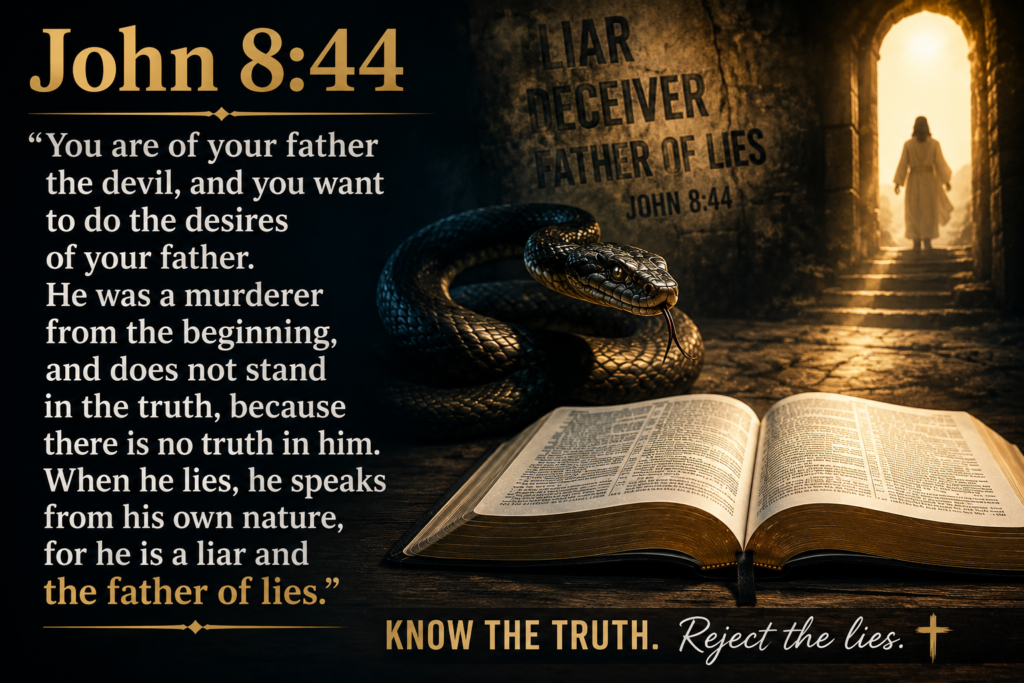
Satan is the originator of lies and deceit. He was the first to ever speak a falsehood, which is why he is known as the father of lies. When someone chooses to lie, they are imitating Satan’s example and, according to the Bible, are described as a “child of the devil.”

John 8:44 NKJV

  1. 44. You are of your father the devil, and the desires of your father you want to do. He was a murderer from the beginning, and does not stand in the truth, because there is no truth in him. When he speaks a lie, he speaks from his own resources, for he is a liar and the father of it.

What Does the Bible say About Lying

On the other hand, God is the ultimate source of truth. Throughout Scripture, it is repeatedly affirmed that God is the God of truth.

Numbers 23:19 NKJV

  1. “God is not a man, that He should lie, Nor a son of man, that He should repent.

Has He said, and will He not do? Or has He spoken, and will He not make it good?

20 Behold, I have received a command to bless; He has blessed, and I cannot reverse it.

Deuteronomy 32:4 NKJV

  1. He is the Rock, His work is perfect; For all His ways are justice, A God of TRUTH and without injustice; Righteous and upright is He.

Titus 1:1-2 NKJV

  1. 1. Paul, a bondservant of God and an apostle of Jesus Christ, according to the faith of God’s elect and the acknowledgment of the truth which accords with godliness,
  2.  in hope of eternal life which God, WHO CANNOT LIE, promised before time began,

There are others.

Because truth reflects God’s own character, dishonesty brings real damage wherever it takes root. Bearing false witness can destroy relationships, destabilize homes and organizations, and lead to painful consequences such as the following:

  • divorce
  • losing a job
  • unemployment
  • broken relationships
  • emotional pain
  • failure
  • bankruptcy
  • collapse of organizations or families
  • acts of revenge
  • retaliation
  • abuse
  • accidents
  • suffering
  • imprisonment
  • even death

When considering honesty and how we communicate the truth, it is important to ask: Should truth always be delivered bluntly or without compassion?

In legal settings, truth must be presented clearly and directly. However, in our personal interactions, we should be careful not to inflict unnecessary pain, embarrassment, or shame. We are never called to use the truth as a weapon to hurt others. Instead, we should always express truth with kindness and love, not with harshness or cruelty.

Ephesians 4:15 (NKJV)

  1. but, speaking the truth in love, may grow up in all things into Him who is the head—Christ—

Blessings of Obedience

What are the rewards of obeying this commandment? Our word is our bond. When our word is trustworthy, it is reflected in our character. According to Scripture, those whose words can be relied upon will experience great blessings.

Someone who speaks honestly and embraces God’s wonderful gift of salvation will receive both blessings and righteousness from the Lord.

Psalm 24:4-5 NKJV

  1. He who has clean hands and a pure heart, Who has not lifted up his soul to an idol,

Nor sworn deceitfully.

  1. He shall receive blessing from the Lord, And righteousness from the God of his salvation.

A person who genuinely loves others will not spread falsehoods about anyone. When faced with a concern or a troubling rumor, he will approach the individual directly, aiming to help restore them in their faith. It’s important to remember that true love avoids harshness or belittling. Instead, it addresses others with compassion, gentleness, and strength, always guided by the Holy Spirit.

Galatians 6:1-2 NKJV

  1. Brethren, if a man is overtaken in any trespass, you who are spiritual restore such a one in a spirit of gentleness, considering yourself lest you also be tempted. Bear one another’s burdens, and so fulfill the law of Christ.

Conclusion

I’m going to close with this Scripture: Romans 12:18 (NKJV).

  1. If it is possible, as much as depends on you, live peaceably with all men.

One clear way to fulfill this Scripture is to obey the ninth commandment: “You shall not bear false witness against your neighbor.”

Amen

Questions, comments, and concerns may be left below

Blessings!

👉Videos

Watch the full video presentation:

For the short version, click the link

https://youtube.com/shorts/fruS-BTrFnI


👉 Follow the complete Ten Commandments series:


The Ten Commandments (Part 8): What Does “You Shall Not Steal” Mean?

What does “You shall not steal” mean? What do you think stealing really is? Have you ever seriously thought about it? And can you honestly say you have never stolen anything? In this article, we will examine what stealing really means as we study the Eighth Commandment: “You shall not steal.”

Today, we look at the Eighth Commandment in Exodus 20:15 NKJV:

15 “You shall not steal.”

Many people know this commandment in the older form, “Thou shalt not steal.”

As we have seen in the previous commandments of this series, our society has moved far away from them. But this eighth commandment has been violated on a massive scale. It has permeated our society to the point that it affects everybody, and everybody has contributed to it in one form or another.

Modern Examples of Theft

Let’s look at some statistics.

Theft today often happens digitally, invisibly, and remotely. One major form of theft is identity theft.

Identity theft

The FTC reported more than 1.1 million identity theft reports in 2024 through IdentityTheft.gov.

The FTC’s Consumer Sentinel Network received roughly 6.5 million consumer reports involving fraud, identity theft, and scams in 2024.

Credit card fraud was the most commonly reported form of identity theft in 2024.

Motor Vehicle Theft

According to the FBI, the nationwide motor vehicle theft rate rose significantly between 2019 and 2023.

According to the National Highway Traffic Safety Administration, more than 850,000 vehicles were stolen in the United States during 2024.

However, vehicle thefts reportedly declined about 17% from 2023 to 2024, marking the largest annual drop in decades.

However, despite improvements, vehicle theft remains an enormous nationwide problem.

Retail Theft / Shoplifting

The National Retail Federation reported that shoplifting incidents in 2023 increased 93% compared to 2019 levels.

Retailers also reported approximately a 90% increase in dollar losses due to shoplifting over the same period.

Many retailers reported increased violence associated with theft incidents.

So, we see that theft increasingly affects not only property, but public safety and social trust.

Broader Property Crime Context

FBI reporting for 2024 showed property crime overall declined nationally, but theft-related offenses still affected millions of Americans.

According to Cybersecurity Ventures, theft is not limited to one nation. Around the world, theft-related crimes cost governments, businesses, and individuals hundreds of billions of dollars every year—from shoplifting and fraud to cybercrime and identity theft.

“Worldwide, theft has become increasingly digital. Global cybercrime and theft-related fraud are now estimated to cost the world trillions of dollars annually.”

Stealing has become a major quality-of-life issue. Just think about how you feel when something has been stolen from you. You feel violated, angry, and even helpless.

What Does “You Shall Not Steal” Mean in Scripture?

But here is the point: stealing is not merely taking property—it is violating trust, ownership, honesty, and ultimately God’s order. Not only do we steal from one another, but we can also steal from God.

As we continue, we will see more clearly what that means.

We need to understand that stealing is a serious sin. It hurts the person who loses something—whether it’s something small like jewelry or electronics, or something much more important like money, food, a job, or even life itself.

That is why “You shall not steal” is one of God’s Ten Commandments—the very basis of His Law.

Now think about this: what is the most frequent crime in your community, in our country, and across the world? In most places, the answer is theft. It has become so common that people barely notice it anymore. You see it everywhere, and examples come to mind quickly:

Here are some common examples:

  • People in government who dip into public funds as though they were personal resources.
  • Workers who help themselves to what belongs to the company.
  • Businesses that exploit others through unfair pay or inflated prices.
  • Athletes and public figures who cut corners and act dishonestly.
  • Friends, neighbors, and acquaintances who lie, cheat, or take what is not theirs.
  • Scammers who steal someone’s identity to commit fraud.
  • People who selfishly hoard resources while ignoring the needs of others.
  • Those who claim far more than their share of the earth’s wealth and resources.

Here is the point: stealing is not just about taking things. It shows a lack of respect for other individuals’ property and even for human life. Once stealing becomes normal, it breeds lawlessness, and it can spiral into violence, even assault and murder. It always leaves damage behind. It can devastate families, ruin businesses, harm entire communities, and in some cases even weaken a nation. In the end, everybody loses: the victim is left without what was taken—sometimes something so personal that it cannot truly be replaced—and the thief, even if no one else finds out, loses integrity before God and, unless he repents, risks losing his soul.

So, who is this command for? Does “You shall not steal” apply only to ancient Israel, or does it still speak to us today? The truth is that theft has been around as long as people have. And God gave this command because He cares about people—about their lives, their homes, and what they work hard to provide. It doesn’t make sense to say God cared about those things then but doesn’t care about them now.

Listen to how simple—and personal—the command is: “You shall not steal.” That is not just for one time and place; it is for you, for me, and for every generation. Stealing was wrong then, a serious offense against both people and God, and it is still wrong today. This commandment stands just as firmly now as it did for Israel.

Now let’s look at what the New Testament says:

Ephesians 4:28 NKJV

28 Let him who stole steal no longer, but rather let him labor, working with his hands what is good, that he may have something to give him who has need.

In the New Testament, “thief” usually refers to someone who steals as a way of life—a bandit or habitual thief. Paul taught that when such a person comes to Christ, the old pattern must be put away and replaced with honest work. Because stealing often stems from idleness or laziness, his instruction was both negative and positive: stop stealing and start working.

He may also have had slaves in mind, since many served in households and were tempted to take what was not theirs, and many of them became believers. In any case, Christians are called to work diligently, contribute responsibly, and not live off others. But our purpose goes beyond self-support. We labor not just to provide for ourselves, but so we can share generously with those in need. Giving is at the heart of the Christian life because our true treasure is in heaven.

Remember, stealing is ultimately a heart problem. Its source is not the hand but the heart—an inner desire, craving, or coveting. Once that desire takes root and we act on it, theft follows. That is exactly what God says in James 1:14–15 NKJV:

14 But each one is tempted when he is drawn away by his own desires and enticed.
15 Then, when desire has conceived, it gives birth to sin; and sin, when it is full-grown, brings forth death.

Desires can be fed or starved. When a desire is sinful, we must refuse it—with God’s help. If we nurture it instead, it quickly turns into action. The responsibility for that sin is ours. James is describing a desire that has broken its boundaries—selfish, seductive, and out of control.

In other words, every sinful action begins as a thought in the heart.

So, how is this commandment broken? In more ways than we often realize. Because theft is so common—and so damaging—we need to be clear about what it looks like in everyday life. The following examples show how this sin appears in both obvious and overlooked ways.

Left unrepentant, it leads to death—eternal death. That is why it is helpful to examine common forms of theft.

Common Ways People Break “You Shall Not Steal”

A person breaks God’s commandment against stealing in many ways, including the following:

  • robbing a person, store, company, organization, or bank
  • shoplifting
  • loafing on the job
  • keeping items that were borrowed
  • failing to repay debts—not paying our bills
  • withholding taxes that are due—cheating on our income taxes
  • using false or deceptive advertising
  • keeping an overpayment, excessive refund, or extra shipment of goods
  • overcharging or price-gouging
  • paying unfair or unjust wages
  • giving less than a full day’s work
  • unjustly extending business trips at the company’s expense
  • manipulating information or stocks for personal gain
  • abusing sick days
  • arriving late or leaving early without permission
  • stealing someone’s reputation through lies, gossip, or rumor
  • denying a person justice (Is. 10:1–3)
  • taking from one’s employer (pens, paperclips, staplers)
  • making unauthorized phone calls at work
  • padding expense reports
  • kidnapping and enslaving people for work and profit
  • breaking rules or cheating to win a game, prize, or advantage*

We are often too casual about some of these things. They have become common everyday practices woven into our culture. But the fact remains: they break God’s commandment, “You shall not steal.”

How We Rob God

All acts of stealing are wrong, but there is one form of theft that is especially serious: robbing God. After considering how people steal from one another, we now turn to the ways people withhold from the One to whom everything ultimately belongs.

For starters, a person robs God by failing to give tithes and offerings to Him. This is not an article on tithing, but I would be remiss not to mention it in connection with this commandment.

Let’s look at what God said through His prophet Malachi.

Malachi 3:8–9 NKJV

8 “Will a man rob God? Yet you have robbed Me! But you say, ‘In what way have we robbed You?’ In tithes and offerings.

9 You are cursed with a curse, for you have robbed Me, even this whole nation.

The bottom line is: everything we have comes from God; that is the first rule of Biblical stewardship. So, when we hold back and refuse to give Him a portion of what He’s already given us, we’re really taking from Him. The question is simple—are we going to keep it all for ourselves, or will we joyfully return at least ten percent to support His work and advance His Kingdom?

But that is not the only way we can rob God. A person also robs God by living a hypocritical, inconsistent life. When someone professes to believe and follow God but fails to follow through, he robs God and others of a godly testimony.

We also rob God when we live for ourselves and the world rather than for Him. God is our Creator, so we owe Him our very lives—everything we are and everything we have. When a person insists on living his own way, he is taking his life back from God.

1 John 2:15–16 NKJV

15 Do not love the world or the things in the world. If anyone loves the world, the love of the Father is not in him.

16 For all that is in the world—the lust of the flesh, the lust of the eyes, and the pride of life—is not of the Father but is of the world.

These are some of the ways people rob God.

Scriptural Instruction for Christians

Scripture not only forbids stealing; it also teaches Christian believers what to avoid and how to live instead. These passages move from warning to instruction, showing both what must be rejected and what must be practiced.

First, what not to do: We must never withhold tithes and offerings from God. Now, we’ve already seen the Scripture addressing this.

Next, we must never cheat our brothers or sisters in anything.

1 Thessalonians 4:6–7 NKJV

6 that no one should take advantage of and defraud his brother in this matter, because the Lord is the avenger of all such, as we also forewarned you and testified.

7 For God did not call us to uncleanness, but in holiness.

We must never steal people—by kidnapping, enslaving, or holding them in bondage—because it strips them of their right to their own life.

Exodus 21:16 NKJV

16 “He who kidnaps a man and sells him, or if he is found in his hand, shall surely be put to death.”

Scripture also tells us what to do.

We need to live by the golden rule: be honest and fair with people and simply treat them the way we’d want them to treat us.

Matthew 7:12 NKJV

12 Therefore, whatever you want men to do to you, do also to them, for this is the Law and the Prophets.

Next, we need to learn contentment, remembering that we brought nothing into this world, and we will take nothing out.

Hebrews 13:5 NKJV

5 Let your conduct be without covetousness; be content with such things as you have. For He Himself has said, “I will never leave you nor forsake you.”

Therefore, stealing is futile.

Lastly, we’re called to work hard and trust God to meet our needs. When we steal, we’re really saying we don’t trust Him.

Philippians 4:19 NKJV

19 And my God shall supply all your need according to His riches in glory by Christ Jesus.

Consequences of Disobedience

So, what are the consequences of disobeying this Commandment?

What happens when we break this commandment and steal from others? Look around—respect for what belongs to someone else is collapsing. And when crisis hits—hurricanes, floods, and the like—some people do not wait for help; they rush to loot while the dust is still settling.

God hates stealing, not only because of the harm it causes, but stealing reflects the destructive nature of Satan, whom Scripture associates with theft, destruction, and death.. Scripture is blunt about him: he is a thief.

John 10:10 NKJV

  1. The thief does not come except to steal, and to kill, and to destroy. I have come that they may have life, and that they may have it more abundantly.

God will judge the greatest thief of all, and He will also repay every thief according to his deeds. Whoever breaks this holy commandment will face serious consequences.

Without repentance, condemnation is inevitable.

1 Corinthians 6:9–10 NKJV

9 Do you not know that the unrighteous will not inherit the kingdom of God? Do not be deceived. Neither fornicators, nor idolaters, nor adulterers, nor homosexuals, nor sodomites,

10 nor THIEVES, … will inherit the kingdom of God.

Stealing also corrupts the thief and makes him spiritually unclean.

Matthew 15:19–20 NKJV

19 For out of the heart proceed evil thoughts, murders, adulteries, fornications, THEFTS, false witness, blasphemies.

20 These are the things which defile a man

You Shall Not Steal
You Shall Not Steal

Blessings of Honesty and Obedience

Now, imagine a world where everyone obeyed this command—where theft did not exist. The blessings of honesty would be far-reaching, both spiritually and socially. Consider some of the blessings that follow obedience.

An honest believer walks in righteousness and lives securely.

Proverbs 10:9 NKJV

9 He who walks with integrity walks securely, but he who perverts his ways [Steals] will become known.

Honesty and devotion to the Lord free a person from falsehood and deceit.

Proverbs 30:7–9 NKJV

7 Two things I request of You (deprive me not before I die):

8 Remove falsehood and lies far from me; give me neither poverty nor riches—feed me with the food allotted to me;

9 Lest I be full and deny You, and say, “Who is the Lord?” Or lest I be poor and steal, and profane the name of my God.

Riches can tempt the soul, but so can lack. Poverty can crush the body and weigh down the spirit, and wealth is certainly no savior. Only the Lord is enough.

Therefore the best position to take is to be content with what the Lord has already blessed us with—be content with what we have.

1 Timothy 6:6 NKJV

6 Now godliness with contentment is great gain.

This statement is a key to spiritual growth and personal fulfillment. We should honor God, center our desires on Him, and be content with what He is doing in our lives. As Jesus said in Matthew 6:33, “But seek first the kingdom of God and His righteousness, and all these things shall be added to you.”

Therefore, we have no need to steal.

If we seek God’s kingdom and righteousness and learn contentment, stealing will be the last thing on our minds.

Conclusion

My friends, we must be content and obey the Eighth Commandment: “You shall not steal.”

Amen!

May the Lord give us grace to obey His Word.

Please leave any questions, comments, or concerns below.

Blessings!

Watch the full video teaching and the companion Short below.

👉 Videos

The Meaning of God’s Name in Vain

The Meaning of God’s Name in Vain. It is often misunderstood by many today. Most people assume it only refers to using God’s name as a curse, but this command reaches much deeper. It speaks to how we live, how we represent God, and whether we truly honor His name in our daily lives.

📖 The Ten Commandments Series

Does this Commandment apply today? Is it being violated? The answer may surprise you. And what this commandment really covers might surprise you as well.

Let’s look at this Commandment.

  1. “You shall not take the name of the Lord your God in vain, for the Lord will not hold him guiltless who takes His name in vain.

What Does it Mean to Take the Lord’s Name in Vain?

What does it mean to take the Lord’s name in vain?

According to the Strong’s Greek-Hebrew Dictionary, the Hebrew word translated as “in vain” is shav’ (shawv), which means “to desolate, destroy, or ruin.” To make useless.

So, in other words, in the context of this Scripture, it means to use God’s name in a useless, profane, or unholy way.

The way we refer to and regard the name of God is considered highly significant. As the Creator and Supreme Ruler of the universe, His name is to be treated with respect and reverence. Due to His status and attributes, it is expected that His name will not be used improperly or without due consideration.

In the Old Testament, misuse of God’s Name carried severe consequences. In fact, over time, the Israelites treated God’s Name with such reverence that many became afraid to even pronounce it, lest they misuse it.

But bringing this to today:

This Commandment requires us to never, under any circumstances, misuse God’s name.

Therefore, His name is always to be honored, praised, and worshipped. And:

⇒ We must never curse nor abuse His name.

⇒ We must never use His name in a frivolous or insincere way.

⇒ We must never take the name of the LORD God in vain.

We must understand that this commandment is not only for the Jews. It is directed to you. It is directed to me. It is directed at every human being on the face of the earth.

The Importance of God’s Name in Scripture 

Let’s look at a couple of examples of how God’s name is used in the Scriptures:

PS. 8:1 NKJV 

  1. O Lord, our Lord, How excellent is Your name in all the earth, Who have set Your glory above the heavens! 

Ps. 111:9 KJV

  1. He sent redemption unto his people: he hath commanded his covenant for ever: holy and reverend is his name.

God’s name is recognized as excellent, Holy, and it is revered in the Scriptures.

How Do We Misuse God’s Name?

Now, take note that there are four ways we can misuse God’s name. We’re going to look at all four.

Cursing or Abusing God’s Name 

This is the most well-known way, and the one most of us think of when considering this Commandment, and it involves profanity.

Profanity refers to the use of language that is considered offensive, including cursing, abusive, or irreverent expressions involving the name of God. The improper use of such language includes vulgarity and profanity: for example, foul or distasteful slang, as well as terms such as “damn,” “hell,” “darn,” and similar words.

The connection between these words and the misuse of God’s name lies in the disrespect they express toward Him. It is highly regarded as inappropriate to profane or curse Him or any aspect of His creation.

Therefore, maintaining respect for language use is encouraged. Our present culture has lost respect for language. Profanity is ubiquitous in our culture.

One of the things I treasure about no longer being involved in secular work is that I don’t have to listen to the copious profanity that permeates the workplace. It is even amongst our youth. Any Christian should be offended by it.

Profanity becomes especially serious when it involves cursing God or using His name in vain. Such actions are considered direct insults to God and, according to belief, lead to severe consequences for the person who uses His name disrespectfully.

An individual’s name represents their identity. Hearing someone’s name typically suggests thoughts of their personality, behavior, values, and reputation. This association is even stronger regarding God’s name.

The descriptions of God highlight that He is holy, just, loving, compassionate, and gracious. He is portrayed as the Creator, Sustainer, and Sovereign Ruler of the Universe, as well as the Redeemer and Savior of humanity. Names given to God, such as Wonderful, Counselor, Mighty God, Everlasting Father, and Prince of Peace (Isaiah 9:6), emphasize His greatness and uniqueness.

God’s name is considered sacred and distinct—exalted above all other names, whether in heaven or on earth. Because of this, we are urged to treat God’s name with deep respect and reverence, never using it carelessly or as a curse. Instead, God’s name should inspire awe, reverence, and even a sense of humility and fear. Misusing God’s name, especially as a curse word, is strongly discouraged.

I even saw in a church bulletin once: “God’s last name is not dam.” Now that was direct!

God’s name is important because it represents who He is. Many people use it carelessly or as part of a curse without thinking about how serious that can be. The way we speak God’s name shows our true feelings toward him. Because of this, it’s important to treat his name with respect, using it for praise or worship instead of jokes or swearing. Therefore, we shouldn’t ignore or take lightly any misuse of his name.

Using God’s name in an honorable way is part of worship to Him. This builds on what we saw in Part 1: No Other Gods, where God established that He alone is worthy of our worship.

Moving on:

Using God’s Name Carelessly or Irreverently 

Addressing the second point, we must never use His name in a frivolous or insincere way.

Now here is where we fall into dangerous territory in a big way. The fact is, we don’t have to curse to use the Lord’s name in vain.

We misuse God’s name by using His name in some irreverent way, in some frivolous, dishonoring, or light way. How do we do this? Reverence is the keyword. When God’s name is used, it is always to be done reverently. God’s name is never to be used in any irreverent way whatsoever.

All the little common everyday sayings that use God’s name in an irreverent or careless way are wrong. For example:

⇒  God Almighty

⇒  Sweet Jesus

⇒  Lord have mercy

⇒  Oh God

⇒  The Man upstairs

⇒  Somebody up
there

⇒  God damn

⇒  God or Jesus Christ or Christ (by themselves, when spoken carelessly

Now, how many times have we heard or used these expressions?

Let’s look at some common usages:

Lord, God almighty, what on earth is going on?

Oh, sweet Jesus, I have never heard anything so funny!

Lord have mercy! How can that be possible?

Oh God, I can’t believe you said that!

I don’t know, the man upstairs must be looking after me.

It is a miracle that no one was injured or killed—somebody up there must have intervened.

Jesus Christ, what the hell is going on?

Jesus, Mary, and Joseph, that’s the most ridiculous thing I’ve ever heard! 

For God’s sake, turn that God-damned music down! 

And I even heard someone say, God be damned! Now that is especially the personification of disrespect for God!

Even in music, there was a soul singer who, in the middle of his secular songs, would say:  Good God! 

Leading the youth to run around saying the same thing

And the most common one of all time: Oh my God!  

Now, how many times have we heard that?! If only I had a dollar for every time I heard it! 

Oh my God, I can’t believe it’s you!

Oh my God, I’m so happy!

Oh my God, I’m late!

Oh my God, my wife, my husband, is going to kill me!

Oh my God, Oh my God, Oh my God! 

We really wear this one out! 

And it has gotten so popular that it has become an insignia—OMG!

Let’s look at this insignia in detail: This is the definition according to Google:

What does omg mean?

AI Overview

“OMG is an abbreviation for “Oh My God!” used in texts, online chats, and social media to express strong emotions like surprise, shock, excitement, disbelief, or even frustration, becoming popular with digital communication after an early appearance in a 1917 letter.”

As if that isn’t enough, in 2012 there was a movie titled, OMG – OH MY GOD a satirical comedy-drama.

Using OMG casually in text messages as an example of taking God’s name in vain.The Meaning of God's name in vain
Using OMG (Oh my God) casually in text messages as an example of taking God’s name in vain

Now, notice in all these contexts that they have nothing to do with God. This is our culture that has moved so far from God that it’s downright pathetic! No regard for God’s name!

Now there are those who will say: Oh, it’s just a figure of speech, God knows my heart. But that’s not what God says. Again, He says, “for the Lord will not hold him guiltless who takes His name in vain. There is nothing in this Scripture that says, unless He knows your heart! 

But for those who insist that it’s the heart, let’s look at what Jesus said in Matthew 15:18-20 KJV

  1. But those things which proceed out of the mouth come forth from the HEART; and they defile the man.
  2. For out of the heart proceed evil thoughts, murders, adulteries, fornications, thefts, false witness, BLASPHEMIES:
  3. These are the things which defile a man:

So, we see that God does know the heart!

Let’s quickly examine the word ” blasphemies.

In the original Greek, the term, which is blasphemiai, denotes slander, detraction, or language that damages the reputation of others and or of God. Modern English limits Blasphemy to God alone.

Jesus emphasized that these sins are fashioned—in the corrupt heart of man.

So, for us to use the Lord’s name in vain—blasphemies, whether it’s Oh my God, or any other way, that’s what comes from the heart. It must be in your heart for it to come out of your mouth.

So, oh yes, God knows your heart, do you?

What is truly in your heart about God? Do you have the reverence for Him that He deserves?

The Subtle Danger of Cultural Language 

We Christians pacify ourselves by saying, “Oh my gosh.”

Well, while it is true that it isn’t using God’s name, it’s only a heartbeat away. Think about what we’re doing. We’re imitating the world—alluding to God in the process.

Let’s look at what the Scripture says about that, James 4:2 NKJV

  1. Adulterers and adulteresses! Do you not know that friendship with the world is enmity with God? Whoever therefore wants to be a friend of the world makes himself an enemy of God.

God is not an allusion. An allusion is a type of figurative language. It functions as a figure of speech by making a subtle, indirect reference to a well-known person, place, event, or literary work to add deeper meaning or emotional context without overtly addressing it.

Now, the fact that we adopt this approach illustrates that we know saying “oh my God” is wrong, so we replace it with “gosh”. But that’s like putting a Band-Aid on a gunshot wound. We are simply attempting to blend in with the world—Period!

My friends, we are not to copy, imitate, or emulate the world. It’s a slippery slope heading to become, as the Scripture reads, “an enemy of God.”

Let’s look at what David wrote to God about His enemies in Ps. 139:20: NKJV 

  1. For they speak against You wickedly; Your enemies take Your name in vain.

It is a dangerous position to profess Christianity and claim to be a disciple of Christ, yet use God’s name in vain. Profession alone is not enough, because it must be followed by action.

Let’s look at what Jesus said in Matthew 7:21 NKJV 

  1. “Not everyone who says to Me, ‘Lord, Lord,’ shall enter the kingdom of heaven, but he who does the will of My Father in heaven.

Not everyone who professes Christ, “Lord, Lord” is saved, but the ones who genuinely love Him and do His will.

And the will of the Father, as He expressed in the third Commandment, is: honor His name. “You shall not take the name of the Lord your God in vain.”

Understand that there is nothing wrong with calling on the name of the Lord! Scripture says in Acts 2:21 NKJV 

  1. And it shall come to pass That whoever calls on the name of the Lord Shall be saved.

The point: when we call on the name of the Lord, mean it—with honor, reverence, and respect. Not flippantly, and as a figure of speech—as slang.

Using God’s name in a way that disrespects Him or His character is considered taking His name in vain.

Hypocrisy — Claiming God but Living Contrary 

Thirdly, we must never take the name of the LORD God in vain hypocritically what we call a hypocrite. A hypocrite in this context is a person who professes the name of God but lives for themselves and the world.

They claim belief in God, but they act for personal gain. They use religious actions (praying, tithing, fasting) as works to be seen by others rather than as an earnest expression of love for God. There is a sharp contrast between their public persona and their private actions, with their daily lives often filled with selfish pursuits, greed, or immorality.

A marked discrepancy exists between their public façade and private conduct, as their daily activities frequently reflect self-interest, materialism, or actions not aligned with widely accepted ethical standards.

Now, Jesus called out this behavior. Matthew 15:8 NKJV

  1. “These people draw near to Me with their mouth, And honor Me with their lips, But their heart is far from Me.

He went into greater detail in Matthew 23:23-28 NKJV

  1. Woe to you, scribes and Pharisees, hypocrites! For you pay tithe of mint and anise and cummin, and have neglected the weightier matters of the law: justice and mercy and faith. These you ought to have done, without leaving the others undone.

You see, they (the religious leaders) were tithing, but not practicing the serious matters of the law. Jesus said, they should have done it all! 

  1. Blind guides, who strain out a gnat and swallow a camel!
  2. “Woe to you, scribes and Pharisees, hypocrites! For you cleanse the outside of the cup and dish, but inside they are full of extortion and self-indulgence.
  3. Blind Pharisee, first cleanse the inside of the cup and dish, that the outside of them may be clean also.

“Woe to you, scribes and Pharisees, hypocrites! For you are like whitewashed tombs which indeed appear beautiful outwardly, but inside are full of dead men’s bones and all uncleanness.

  1. Even so you also outwardly appear righteous to men, but inside you are full of hypocrisy and lawlessness.

These religious leaders were hypocrites to the core. Squeaky clean on the outside, stinky and filthy on the inside. They were a dishonor to God’s name.

False Swearing and Oaths

Moving to the fourth and last, an individual misuses God’s name through false swearing. Perjury—providing false testimony under oath—is improper. Invoking God as a witness to deliberate untruths constitutes misuse of the divine name. False swearing may occur before various parties, including neighbors, business associates, spouses, or judicial authorities. Unfortunately, when called upon to testify or affirm our honesty, individuals sometimes resort to dishonesty and make false oaths. God hates false oaths, and He gets extremely specific about this.

Lev. 19:12 NKJV

  1. And you shall not swear by My name falsely, nor shall you profane the name of your God: I am the Lord.

And lastly

Zech. 8:16-17 NKJV 

  1. These are the things you shall do: Speak each man the truth to his neighbor; Give judgment in your gates for truth, justice, and peace;
  2. Let none of you think evil in your heart against your neighbor; And do not love a FALSE OATH. For all these are things that I hate,’ Says the Lord.”

What is Required by the Third Commandment?

So, what is required by this commandment? We are expected to refrain from cursing and swearing; instead, we should seek salvation and forgiveness from God. Specifically, one should:

  • abstain from cursing and swearing,
  • avoid using God’s name irreverently or carelessly,
  • refrain from invoking God’s name hypocritically.
  • Avoid using God’s name falsely in oaths.

Why This Commandment Still Matters Today

We need to take God seriously. Scripture says in Prov 9:10, NKJV “The fear of the Lord is the beginning of wisdom, And the knowledge of the Holy One is understanding.” In the Bible context, “fear of the Lord” is to have reverence for Him, not be afraid.

Now, we say that we want to have a relationship with Him, but how can we if we dishonor His name? How many of us would have a relationship with someone who dishonored our name?

Honoring and having reverence for God—fearing Him—is the beginning. That’s step one after recognizing God for who He is (the first Commandment). Remember the last part of the third Commandment, “for the Lord will not hold him guiltless who takes His name in vain.

To use God’s name in vain is a violation of His Law and is sin. As we saw in Part 2: No Idols, sin is idolatry.

God’s name is sacred; God’s name is powerful. Let’s look at what Peter said during his sermon to the Sanhedrin concerning God’s name in Acts 4:12:

  1. Nor is there salvation in any other, for there is no other name under heaven given among men by which we must be saved.”

The third commandment is “You shall not take the name of the Lord your God in vain.

Amen!

Questions, comments, and concerns may be left below.

👉 Videos

Watch the full presentation

Watch the short


📖 Continue the Ten Commandments Series

All About Spiritual Warfare

With this post, I am going to start a new series on Spiritual Warfare. This is the first of seven articles, and we’re going to look at the issue of Christians and Spiritual Warfare, explaining all about spiritual warfare.All About Spiritual Warfare

The objective of this series is to address the subtle and practical ways that Satan engages in his attacks on Christians. This first message of the series, however, is foundational, laying down the basic truths of spiritual warfare and our enemy.

The Reality of Spiritual Warfare

In addressing spiritual warfare, the first thing that we must recois the fact that there is a battle, a war going on—a very serious war indeed.

Man’s Fallen Nature and the Need for Spiritual Rebirth

When we first left our mother’s womb and entered the world, we were born with a sinful nature. David addressed this when he wrote in Ps 51:5, reading NIV: “Surely I was sinful at birth, sinful from the time my mother conceived me.”

After the transgression of Adam and Eve, from that time on, sin fell on every subsequent member of their seed. Sin breeds sin. As Job wrote in Job 14:4: “Who can bring a clean thing out of an unclean? not one.”  This placed man in a terrible state.

But because of God’s grace and mercy, He sent His son Jesus as the ultimate sacrifice for our resulting sins. [Romans 6:23] But because of man’s corrupted seed, He had to be born of a virgin in order to be the perfect sacrifice. Jesus said during His ministry here on earth: “you [must] be born again.” [John 3:7]

Now let’s take a closer look at this new birth. Let’s take a look at John 3:3

3 Jesus answered and said unto him, Verily, verily, I say unto thee, Except a man be born again, he cannot see the kingdom of God.

Let’s now go down to verses 5-8

5 Jesus answered, Verily, verily, I say unto thee, Except a man be born of water and of the Spirit, he cannot enter into the kingdom of God.

6 That which is born of the flesh is flesh; and that which is born of the Spirit is spirit.

7 Marvel not that I said unto thee, Ye must be born again.

8 The wind bloweth where it listeth, and thou hearest the sound thereof, but canst not tell whence it cometh, and whither it goeth: so is every one that is born of the Spirit.

What we see in this passage is that this rebirth is indeed spiritual. 

From Death to Life: Our Transfer of Spiritual Allegiance

Now the Apostle Paul went into much more detail to describe the nuts and bolts, if you will, of our spiritual rebirth. Let’s look at Ephesians 2:1-10

1 And you hath he quickened, who were dead in trespasses and sins;

2 Wherein in time past ye walked according to the course of this world,

Now, this goes back to what I said earlier, at our natural birth, we were automatically put on the worldly course. What Jesus called: the broad road to destruction. [Matt. 7:13] We had nothing to say about it. Once we stepped out of our mother’s womb, we were put on this broad road. Let’s read on:

…according to the prince of the power of the air, the spirit that now worketh in the children of disobedience:

…according to the “prince of the power of the air.”  Now that’s Satan—the one and only. Notice what else this verse says about him: “the spirit that now
worketh.”
  Satan is a spirit: the adversarial spirit to God, that is: “now working in the children of disobedience.”  Now the picture is starting to form.

3 Among whom also we all had our conversation in times past in the lusts of our flesh, fulfilling the desires of the flesh [and of the mind;]and were by nature the children of wrath, even as others.

“by nature the children of wrath.” Now here’s that point again. All of us by nature, were “children of wrath.”  In our complete naturalness, we were walking in the flesh—fulfilling the desires of the flesh, and of the mind. [2 Cor. 11:3]  We’re going to get back to the mind (next article/post). So what we have are individuals who were once dead in sins and trespasses, being spiritually reborn.

4 But God, who is rich in mercy, for his great love wherewith he loved us,

5 Even when we were dead in sins, hath quickened us together with Christ, (by grace ye are saved;)

6 And hath raised us up together, and made us sit together in heavenly places in Christ Jesus:

7 That in the ages to come he might shew the exceeding riches of his grace in his kindness toward us through Christ Jesus.

8 For by grace are ye saved through faith; and that not of yourselves: it is the gift of God:

9 Not of works, lest any man should boast.

10 For we are his workmanship, created in Christ Jesus unto good works, which God hath before ordained that we should walk in them.

Why Spiritual Rebirth Declares War on Satan

So now the picture is complete. What we have here are people who were All About Spiritual Warfareonce under the control and power of Satan (who, by the way, is a spirit); who become born again spiritually, reconciled to God, who is also a spirit, [John 4: 24] through Christ. So people whose spirits were under Satan’s control, were and still are today, being literally snatchedspiritually from him by God. Do you think that Satan is going to sit back and let this happen without a fight? Absolutely not!.  What does this mean?   W A R! Spiritual War! The moment we accept Christ as Lord and Savior and are born again, war is declared against us with a target on our backs.



The Nature of the Battle: Not Flesh and Blood

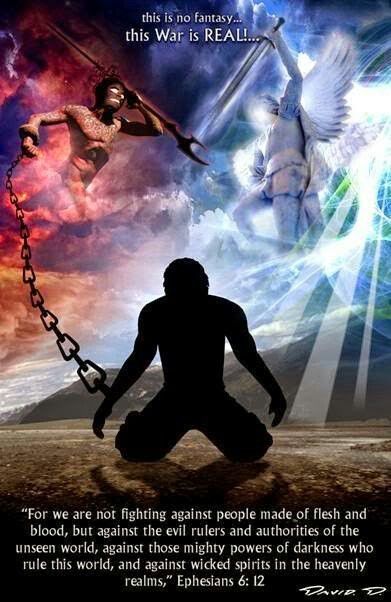
So, what we have is     [Spiritual]  Warfare. Now I emphasize the word spiritual because it’s crucial for us to know what kind of war this really is. It is not in the flesh, but it is spiritual. This is what Paul is addressing in Ephesians 6:12. Let’s take a look: All About Spiritual Warfare

12 For we wrestle not against flesh and blood,

Now this is clear. It’s not against our parents, it’s not against our siblings, or aunts and uncles, cousins and friends, but against principalities… The word “principalities” refers to principal rulers, or group leaders.

…against powers, that being those who had power, or to whom the name of “powers” was given, that being, Satan and his demons.

…against the rulers of the darkness of this world,

These are the rulers that preside over the regions of ignorance, and sin with which the earth abounds.

… against spiritual wickedness in high places.

Now this refers to the spiritual things of wickedness; evil spirits, in celestial or heavenly places, and to their influences on earth. So now we’ve covered the breakdown, or the makeup, of the adversarial kingdom, which is headed by Satan.

Now, let us not be deceived. Because this war is spiritual, not in the flesh, it doesn’t mean we shouldn’t take it seriously. Because we can’t see it, it doesn’t mean that it doesn’t exist. It actually makes it more dangerous. When we can’t see the enemy, and we don’t know who he is, we can’t defend ourselves. But with our sword of the Spirit, which is the Word of God, we can see him for what he is and defend ourselves.All Abut Spiritual Warfare

The Inevitable Opposition Against Every Christian

Now, moving on, it is important for Christians to realize that the battle is going on and that there is going to be opposition in our lives.   Let’s look at John 15:18-19

18 If the world hate you, ye know that it hated me before it hated you.

19 If ye were of the world, the world would love his own…

The point: anyone who’s part of the enemy’s camp doesn’t have to be concerned about being attacked by the enemy. AMEN?

…but because ye are not of the world, but I have chosen you out of the world, therefore the world hateth you.

Jesus told His disciples here that because they are not of the world, the world would hate them. But just like He chose them, He has chosen us—making us disciples as well. [John 12:32]  The bottom line is that every Christian, whether we know it or not –  whether we like it or not— is engaged in war. And we have to realize that: if we walk in the ways of God, Satan is going to oppose our – lifestyle, our conversation, our character, and our conduct. He will do everything to frustrate, bring anxiety and confusion, and steal from us the Word of God. He will do everything to keep us from serving God by creating confusion and disharmony—working morning, noon, and night—24/7/365. Therefore, we must be ready for battle. There’s no ifs, ands, or buts about it. This is a daily war—around the clock. We must pray for protection while we sleep because he can even torment and tempt us while we’re sleeping. This war is perpetual throughout our lives here on earth as a born-again Christian.

Who Is Satan? Names, Nature, and Origin

Let’s now look at the head of this adversarial organization. He is called by several names in the bible. He is also called by several names in the flesh, of which I won’t repeat. The most popular ones are: Satan and the devil. Now the word devil means accuser. So Satan is his name, and devil is his game. Devil is what he is—the accuser or deceiver. This is the main title for this fallen angelic being, who is the supreme—the highest enemy of God and man. The term comes from a Greek word that means “a false witness” or “malicious accuser.”

Lucifer’s Creation, Pride, and Fall

So who is this Satan? Well, as I mentioned earlier, he’s a fallen angel. First of all, Satan was created by Christ along with other beings, principalities, and powers in heaven and on earth. Let’s look at this in a passage of scripture: Colossians 1:15-17. Now, this is concerning Christ.

15 Who is the image of the invisible God, the firstborn of every creature:

16 For by him were all things created, that are in heaven, and that are in earth, visible and invisible, whether they be thrones, or dominions, or principalities, or powers: all things were created by him, and for him:

17 And he is before all things, and by him all things consist.

Christ created all things, including Satan, whose name was originally Lucifer, which means—morning star. A morning star or star of the morning is a bright star. For a star to shine in the brightness of morning, it has to be very bright.   Lucifer was a high and bright angel in heaven. He was beautiful and had a kingdom on earth, long before the creation account in Genesis. [He was the leader of praise and worship] But Lucifer became full of pride, and rebelled against God, and led an invasion in heaven, which he lost. Now, let’s look at this in scripture. Isaiah 14:12-15

12 How art thou fallen from heaven, O Lucifer , son of the morning! how art thou cut down to the ground, which didst weaken the nations!

13 For thou hast said in thine heart, I will ascend into heaven, I will exalt my throne above the stars of God: I will sit also upon the mount of the congregation, in the sides of the north:

14 I will ascend above the heights of the clouds; I will be like the most High.

15 Yet thou shalt be brought down to hell, to the sides of the pit.

Now, this is actually a prophecy of Babylon’s downfall—this is judgment against the king of Babylon. But it is allegorical (symbolic) of Lucifer’s downfall, because the king of Babylon became a king who was driven by the spirit of Lucifer or Satan, and exhaled himself – rebelled against God.

Let’s look at another one: Ezekiel 28:  Now here we have a lamentation [expression of grief] for the king of Tyre, when he has consequently fallen, though his own iniquity. But again, it is allegorical (symbolic) to Satan and his fall. Verses 12 –17 The Lord said to Ezekiel:

12 Son of man, take up a lamentation upon the king of Tyrus, and say unto him, Thus saith the Lord GOD;
thou sealest up the sum, full of wisdom, and perfect in beauty.

13 Thou hast been in Eden the garden of God; every precious stone was thy covering, the sardius, topaz, and the diamond, the beryl, the onyx, and the jasper, the sapphire, the emerald, and the carbuncle, [kar’-bun-k’-l] and gold: the workmanship of thy tabrets and of thy pipes was prepared in thee in the day that thou wast created.

The original creation was like the Garden of Eden. In that, it was a paradise of splendor and glamour. As the scripture reads: “every precious stone” was present.

Now tabrets are drums, and pipes represent music. This goes back to what I wrote earlier, about Satan’s involvement in praise and worship in heaven.

14 Thou art the anointed cherub that covereth; and I have set thee so: thou wast upon the holy mountain of God; thou hast walked up and down in the midst of the stones of fire.

Now this goes back to what I mentioned about him being, at one time, very high in the kingdom of God. God said: “and I have set thee so.” He was appointed or anointed as a guardian angel (cherub) and had access to the “holy mountain of God,” meaning that he had direct contact with God. He was God’s prince—so much that he walked amongst ‘Stones of fire,” i.e., bright and shining. Decked with bright jewels, this prince walked among jewels in gorgeous splendor. This again refers to the original earth, which was full of splendor and beauty.

15 Thou wast perfect in thy ways from the day that thou wast created, till iniquity was found in thee.

He was perfect: after all, he was created by God. But here’s where the party ended—he fell off the wagon. He was perfect until – iniquity was found in him.

16 By the multitude of thy merchandise they have filled the midst of thee with violence, and thou hast sinned: therefore I will cast thee as profane out of the mountain of God: and I will destroy thee, O covering cherub, from the midst of the stones of fire.All About Spiritual Warfare

“by the multitude of thy merchandise.” His greatness—his wealth filled him with internal turmoil, and he sinned, and there was a war in heaven.

So now we see that this highly exalted and perfect prince, created by God, was cast down from his high place. From the “midst of the stones of fire” that was earth, which was voided out as a result of the prince’s iniquity. Verse 17 describes this iniquity:

17 Thine heart was lifted up because of thy beauty, thou hast corrupted thy wisdom by reason of thy brightness: I will cast thee to the ground, I will lay thee before kings, that they may behold thee.

“thine heart was lifted up because of thy beauty, thou hast corrupted thy wisdom by reason of thy brightness.”  Now this is in a word: pride—plain and simple. This high angelic being became puffed up, arrogant, and conceited. Why? Because of his beauty. Somebody told him that he looked good—one time too many; that he was all that, and a bag of chips, and he believed it. So much so that he rebelled against God. As a result, the scripture says:  “I will cast thee to the ground.”  Now we all know that once you raise yourself up against the boss to the point that you want to take over, your time is up, and you’ve got to go. Remember what Scripture says about pride in Proverbs 16:18: Pride goes before destruction, a haughty spirit before a fall. NIV

So the kings of Tyre and Babylon were cast out of their high places, just as Satan was. What happened to these kings was a result of the spirit within them. So what do we see from these passages? Anything that is driven by Lucifer’s spirit goes the same route as he did.

Let’s look at this in 1 Timothy 3:  Here in this chapter, Paul is describing to Timothy the qualifications of an elder. And it reads that he should be among other things:

6 Not a novice, lest being lifted up with pride he fall into the condemnation of the devil.

The NIV reads: “He must not be a recent convert, or he may become conceited and fall under the same judgment as the devil.”  So again, anything or anybody who is driven by Satan’s spirit will be judged as he was. Paul also warned the Corinthians when he told them: that they should cast down arguments, and [every high thing], that exalts itself against the knowledge of God. [2 Cor. 10:5.]

So Satan, full of rebellion and pride, which God hates, was judged. [Prov. 6:16] Now because of this, all on earth was destroyed by the first flood. [Gen. 1:2]  So Genesis begins a recreation of the earth. But Satan regained rulership over the earth in Adam’s time, seizing man’s dominion by causing his fall.

Satan’s Objective: Total Destruction

Let’s now take a look at Satan’s objectives. It really only takes one word to label his objective: Destruction. His aim is to destroy our bodies, minds, and spirits. As a believer, he can’t touch our spirits, but he harasses us until he wrecks and ruins our testimony for Christ, rendering us of no use or value to God.

Now, as a result, we are living in a world that’s asleep. We live with our minds clouded in darkness, accepting wrong for right. We accept this immoral age as a moral age. We are now living Romans 1—right now, today. Let’s take a look at this: Romans 1:18-31 describes God’s wrath against unrighteousness. Verse 21 describes the problem, it reads:

20 For the invisible things of him from the creation of the world are clearly seen, being understood by the things that are made, even his eternal power and Godhead; so that they are without excuse.

21 Because that, when they knew God, they glorified him not as God, neither were thankful; but became vain in their imaginations, and their foolish heart was darkened. 

22 Professing themselves to be wise, they became fools,”

Now what do we have here? Again: pride! Verses 24-31 explain the result

24 Wherefore God also gave them up to uncleanness through the lusts of their own hearts, to dishonour their own bodies between themselves:

25 Who changed the truth of God into a lie, and worshipped and served the creature more than the Creator, who is blessed for ever. Amen.

26 For this cause God gave them up unto vile affections: Let’s skip down to verse 28.

28 And even as they did not like to retain God in their knowledge, God gave them over to a reprobate mind, to do those things which are not convenient;

29 Being filled with all unrighteousness, fornication, wickedness, covetousness, maliciousness; full of envy, murder, debate, deceit, malignity; whisperers,

30 Backbiters, haters of God, despiteful, proud, boasters, inventors of evil things, disobedient to parents,

31 Without understanding, covenantbreakers, without natural affection, implacable, unmerciful:

Now, if this isn’t today, I don’t know what is. We have become so acclimated to the darkness that even the “very elect” are deceived by Satanic devices. Jesus stated this would happen in Matthew 24:24.

Moving on, we must know that, as powerful as Satan is, he is not omnipotent. He isn’t all-powerful. But he can possess unbelievers with his demons, but they can only harass believers. No believer can be possessed, but greatly harassed and oppressed by demonic powers.

Satan’s Primary Method: Deception

Now, what is his method of operation? This can also be summed up in one word: All About Spiritual Warfaredeception. His main tool is deception. If he can deceive a believer, they become one of his most effective tools. Remember what Paul said in Gal 5:9:



“A little leaven leaveneth the whole lump.”  Any time two or more believers get together, Satan’s work begins. Whether it’s a marriage, a friendship, an association, or a church group, he’ll do all he can to divide and separate that union. Once he gets saints fighting amongst themselves, he just sits back and watches, laughing all the way to the bank (sort of speaking). It’s just another feather in his cap.

Satan and his servants (demons) disguise themselves as believers, which requires discernment on our part. Let’s look at this in 2 Corinthians 11:13-15

13 For such are false apostles, deceitful workers, transforming themselves into the apostles of Christ. 

14 And no marvel; for Satan himself is transformed into an angel of light. 15 Therefore it is no great thing if his ministers also be transformed as the ministers of righteousness; whose end shall be according to their works.

We must be ever so sober and vigilant, because Satan’s methods of deception can be difficult to recognize. Let’s look at one passage regarding this:

2 Corinthians 2:10-11

10 To whom ye forgive any thing, I forgive also: for if I forgave any thing, to whom I forgave it, for your sakes forgave I it in the person of Christ;

11 Lest Satan should get an advantage of us: for we are not ignorant of his devices.

Now, here Paul addresses the issue of forgiving others. One of Satan’s devices or designs is to cheat the believer out of true forgiveness. Unforgiveness enslaves an individual and can divide the church. Satan will try to divide the church in any way he can, and we must not be ignorant of his devices. Now this is only one of them

The Three Primary Areas of Satanic Attack

Satan works on us in three areas:All About Spiritual Warfare

First, he operates in our minds by injecting his thoughts into us. It’s up to us, however, to accept or reject these thoughts. Satan uses the mind as his playground. He takes our natural curiosity and carries it beyond God’s intentions until we cross His line of disobedience. Now again I want to mention that we’ll address the issue concerning the mind in the next article/post.

Now, one of Satan’s tactics is to get people to not believe that he exists—he blinds them to enslave them (the unbelievers). Let’s look at this in

2 Corinthians 4:4:

4. In whom the god of this world hath blinded the minds of them which believe not, lest the light of the glorious gospel of Christ, who is the image of God, should shine unto them.

Now this is how Satan keeps his kingdom thriving: by keeping the unbelievers, unbelieving. In addition, he keeps believers enslaved in their flesh by attacking and harassing them so subtly that they don’t even realize that there’s a war going on. He is the prince of this world,[Eph. 2:2] having dominion of all the world’s forces under his control; and he uses these forces to harass us, to tempt us, and enslave us, and can eventually deem us useless to God.

Satan’s ultimate and only objective is to destroy. There never has been, nor ever will be, any good objective in the mind of Satan. Moving into the next area that he works on:All About Spiritual Warfare

He also works on our consciences. For example, when we feel guilty because we don’t do what is wrong, that is a Satanic attack on our conscience–our thoughts. Which is why Satan is called “an accuser of our bretheren;”  in Rev 12:10  “a liar, and the father of it” [John 8:44] a deceiver; [Gen 3:13 NKJV] and,  a destroyer; [Job 15:21, I Cor. 10:10] and Jesus said that he seeks to accuse and wipe out—destroy. As Jesus stated in John 10:8 regarding the works of Satan: “The thief cometh not, but for to steal, and to kill, and to destroy: I am come that they might have life, and that they might have it more abundantly.”  He is, in no uncertain terms – a thief. Moving into the final area:

The third area that he works on is our bodies. Now, not all sickness is from Satan, but a lot of it is. For example, if we violate a law of health, we’re going to get sick. It doesn’t have anything to do with Satan: at least not directly.

A Call to Wakefulness and Readiness

Bottom Line: Satan is a deceitful, scheming, cunning, liar, and his ultimate and only objective is to destroy and maim: testimonies, families, finances, friendships, churches, and business; and will use anybody willing to be used to do it.

It’s time for Christians to stop sleeping—to wake up, and see things as they are. To smell the stench of Satan, our enemy, and the ongoing battle that must be fought. We can’t fight this battle: sleeping and keeping our heads stuck in the sand. You know when the ostrich sticks its head in the sand, its tail is still out—leaving itself open to be rear-ended and blind sided.All About Spiritual Warfare

It behooves every Christian to take heed to the word of God, which says in 1 Peter 5:8: “Be sober, be vigilant; because your adversary the devil, as a roaring lion, walketh about, seeking whom he may devour:”

For part 2: Spiritual Warfare: The Mind is the Battlefield, click here.

Please leave any questions, comments, or concerns regarding spiritual warfare below.

Blessings!

Watch the companion videos for this teaching series. Each one expands on the key truths shared in the All About Spiritual Warfare articles.

📺 Watch the Companion Teaching Videos (Full & Shorts)

Prefer a quick message? Watch the Short here:


error

Enjoying this blog? Please spread the word :)