The Ten Commandments Part 10: What Does The Bible Say About Coveting?

What does the Bible say about coveting? This article is an in-depth exegesis of the Tenth Commandment. It explains the true meaning of coveting and the consequences it can produce in individuals, families, and nations.

👉 Follow the complete Ten Commandments series:

Scripture Foundation

Exodus 20:17 NKJV

  1. “You shall not covet your neighbor’s house; you shall not covet your neighbor’s wife, nor his male servant, nor his female servant, nor his ox, nor his donkey, nor anything that is your neighbor’s.”

Understanding Covetousness

The Scripture says, “You shall not covet.” But what does it mean to covet? According to Merriam-Webster, to covet is to desire something earnestly, especially something that belongs to another person, in an excessive or wrongful way.

In simple terms, coveting is an uncontrolled desire for wealth, possessions, status, or anything that belongs to someone else.

Biblically, covetousness is a selfish, excessive desire to possess what another person has. It goes beyond ordinary desire and becomes a craving for wealth, position, or possessions that replaces contentment in God. Scripture identifies this kind of desire as idolatry.

Colossians 3:5 NKJV

  1. Therefore put to death your members which are on the earth: fornication, uncleanness, passion, evil desire, and covetousness, which is idolatry.

Colossians uses the word “covetousness,” which means the state of being covetous. The root word is covet.

Coveting is destructive because it often begins quietly—as a thought or desire—but can gradually take control of the heart and mind. If it is not confronted, it can grow into a temptation that feels difficult to resist. That is why we need God’s strength to help us reject the desire to take or pursue what does not belong to us. Covetousness is rooted in human nature and lies behind many problems in society.

The Tenth Commandment Addresses the Heart

This commandment is different from all the others.

Most of the previous commandments deal with actions, such as:

  • Murder
  • Adultery
  • Stealing
  • Lying

But coveting deals with something that may never become visible to anyone else.

It addresses the heart.

Although covetousness appears last in the Ten Commandments, it is not a lesser sin. It is often overlooked because, unlike murder or theft, it may remain hidden. Yet it is dangerous precisely because it can take hold of us before we recognize it.

Few sermons, lessons, or books focus on covetousness, even though it is one of society’s most common struggles. At its core, covetousness is a craving that can capture the heart, and our culture is saturated with it, just as Israel was.

Covetousness in Society and Culture

Let’s look at what God said through His prophet Jeremiah as He pronounced judgment upon Israel.

Jeremiah 6:13 NKJV

  1. “Because from the least of them even to the greatest of them, Everyone is given to covetousness; And from the prophet even to the priest, Everyone deals falsely.

Unchecked covetousness produces the condition Jeremiah described: “Everyone deals falsely.”

Modern culture often encourages coveting. Entire industries profit by creating dissatisfaction, and advertising frequently pushes the idea that we need more than we have.

For example, five mornings a week, I power walk outside and use an app to track my steps, time, and distance. Before I can begin, advertisements often interrupt the app, forcing me to wait. Those few seconds may seem small, but they show how aggressively advertising inserts itself into our lives. If we are not careful, it trains us to want what we do not need.

Advertising frequently says:

  • You must have more
  • You deserve more.
  • You need what they have.
  • Your life would be better if you owned this.
  • Compare yourself to others.

We live in a comparison-driven society, and social media has intensified that pressure.

People constantly see:

  • Other people’s homes
  • Vacations
  • Cars
  • Relationships
  • Success

When we focus on what others have, admiration can turn into envy, envy into resentment, and resentment into obsession.

Examples of Covetousness and Its Destruction

Covetousness is deeply destructive. It harms individuals, families, and even nations. Let’s consider both a biblical example and a modern-day example.

Biblical Example: Israel Desiring a King

First, the biblical example: Israel had been delivered from slavery in Egypt and was led by God. But over time, the people decided that God’s leadership was not enough.

1 Samuel 8:4-22 NKJV

This passage is lengthy, but it is important to read it fully. Afterward, we will consider what it reveals.

This is the account of Israel’s request to Samuel for a king.

  1. Then all the elders of Israel gathered together and came to Samuel at Ramah,
  2.  and said to him, “Look, you are old, and your sons do not walk in your ways. Now make us a king to judge us like all the nations.”
  3. But the thing displeased Samuel when they said, “Give us a king to judge us.” So Samuel prayed to the Lord.
  4. And the Lord said to Samuel, “Heed the voice of the people in all that they say to you; for they have not rejected you, but they have rejected Me, that I should not reign over them. 8. According to all the works which they have done since the day that I brought them up out of Egypt, even to this day—with which they have forsaken Me and served other gods—so they are doing to you also.
  5. Now therefore, heed their voice. However, you shall solemnly forewarn them, and show them the behavior of the king who will reign over them.”
  6. So Samuel told all the words of the Lord to the people who asked him for a king.
  7. And he said, “This will be the behavior of the king who will reign over you: He will take your sons and appoint them for his own chariots and to be his horsemen, and some will run before his chariots.
  8. He will appoint captains over his thousands and captains over his fifties, will set some to plow his ground and reap his harvest, and some to make his weapons of war and equipment for his chariots.
  9. He will take your daughters to be perfumers, cooks, and bakers.
  10. And he will take the best of your fields, your vineyards, and your olive groves, and give them to his servants.
  11. He will take a tenth of your grain and your vintage, and give it to his officers and servants.
  12. And he will take your male servants, your female servants, your finest young men, and your donkeys, and put them to his work.
  13. He will take a tenth of your sheep. And you will be his servants.
  14. And you will cry out in that day because of your king whom you have chosen for yourselves, and the Lord will not hear you in that day.”
  15. NEVERTHELESS the people refused to obey the voice of Samuel; and they said, “No, but we will have a king over us,
  16. that we also may be like all the nations, and that our king may judge us and go out before us and fight our battles.”
  17. And Samuel heard all the words of the people, and he repeated them in the hearing of the Lord.
  18. So the Lord said to Samuel, “Heed their voice, and make them a king.”

And Samuel said to the men of Israel, “Every man go to his city.”

If Israel chose to live under a monarchy, their freedom would be greatly limited. Samuel warned them of several consequences.

1) In verses 11–12, their sons would be taken for military service. They would care for horses and chariots, serve in the king’s forces, and many would be removed from their homes for war.

2) In verse 12, people would be forced into labor, working in fields and producing food, weapons, and equipment for the king.

3) In verse 13, their daughters would be taken to serve in the royal household as perfumers, cooks, and bakers.

4) In verse 14, the king would take their best fields, vineyards, and olive groves for his servants and officials.

5) In verse 15, he would impose taxes to support his government and reward his officers.

6) In verse 16, he would take servants, workers, and valuable animals for his own use.

7) In verse 17, he would take a portion of their flocks and increase their burdens.

8) In short, the people would lose freedoms and become servants of the king. His demands would come first, and their liberty would depend on his character and justice.

Yet even after hearing these warnings, the people insisted in verses 19–20: “No, but we will have a king over us, that we also may be like all the nations, and that our king may judge us and go out before us and fight our battles.”

It is important to understand that wanting a king was not wrong in itself. God had already allowed for a king in His law (Deuteronomy 17:14–20; see also Genesis 49:10; Numbers 24:7, 17).

Deuteronomy 17:15, 20 NKJV

  1. you shall surely set a king over you whom THE LORD YOUR GOD CHOOSES; one from among your brethren you shall set as king over you; you may not set a foreigner over you, who is not your brother.
  2. that his heart may not be lifted above his brethren, that he may not turn aside from the commandment to the right hand or to the left, and that he may prolong his days in his kingdom, he and his children in the midst of Israel.

The problem was their motive. They wanted a king “like all the nations,” instead of a leader chosen and shaped by God. In doing so, they rejected God’s rule and broke the covenant with Him.

There is a saying: Be careful what you ask for—you just might get it. Israel asked, and God gave them what they wanted.

As pointed out earlier, the king’s demands would come first, and their liberty would depend on his character and justice.

Because of Solomon’s sins, God divided the kingdom, leaving only one tribe, Judah in the south because of His covenant with David (1 Kings 11:13). The northern kingdom of Israel eventually had nineteen kings, all of whom were evil. Judah had twenty kings, twelve of whom were evil.

Those wicked kings led Israel and Judah into idolatry and destruction. Eventually, both kingdoms fell, and many survivors were exiled to Babylon for 70 years.

All of this began with a covetous desire to be like the surrounding nations. They wanted what others had, without considering the spiritual cost.

The lesson is clear: we must not covet what others have because we do not know the cost behind it. We may not know why they have it, how they got it, or what burdens came with it. The grass may look greener on the other side—until we get there.

The consequences of sin are not always immediate. Israel’s downfall unfolded over hundreds of years, but it still came.

Now, there are other Biblical examples of covetousness, but this is the one I was led to share.

Modern Example: Coveting What Belongs to Another Nation

Now, let’s look at a modern example of the destruction of covetousness.

Now let’s consider a modern example. Russia is geographically the largest country in the world, yet its leader desired control over Ukraine. The consequences have been devastating.

According to reports from the World Bank and Reuters:

If we use mid-range estimates:

  • Military dead: roughly 300,000–450,000+
  • Military wounded/missing: well over 1 million
  • Civilian dead: 15,000+ verified, likely more
  • Civilians injured: 40,000+ verified
  • Property damage in Ukraine alone: about $195 billion
  • Reconstruction cost: roughly $588 billion

And those figures do not fully account for economic losses, lost productivity, demographic decline, refugees, or the destruction inside Russia from Ukrainian strikes. The true economic cost on both sides is far higher.

From a historical perspective, it is already one of the bloodiest and most destructive wars in Europe since World War II.

The numbers are staggering, and the war is not over. This is what covetousness can produce when one leader desires what belongs to another nation. We must ask: is it worth it?

So, we have two examples of covetousness destroying nations. Now imagine what can happen in individual lives and families.

Covetousness Today: The Financial Cost of Wanting More

One way we see covetousness today is in the financial state of our society. According to the Federal Reserve Bank of New York, Americans together owe about $18.8 trillion in household debt. This includes mortgages, auto loans, student loans, and credit card debt. Most of this is from mortgages, but the average household still has about $21,600 in other types of debt.
Some debt is necessary, but a lot of it is optional and could be avoided. Many people take on extra debt because they spend more than they can afford, not out of need, but because they want things they see, hear about, or notice others have. This is at the heart of covetousness: always wanting more, no matter the need or the future cost.
Scripture offers a sobering perspective on such behavior. Proverbs 22:7 states:
7. “The rich rules over the poor, and the borrower is servant to the lender.”
This verse shows that too much debt can trap us financially. What starts as a wish for a better life or more comfort can end up making us dependent and less free, and it can hurt our ability to manage what we have.
Spiritually, the effects are even more serious. “If we let jealousy, envy, and the constant pursuit of material things rule our lives, we go against the values of contentment and trust in God. It makes us ask: how can we hope to inherit God’s kingdom if we are always wanting what others have?
In the end, covetousness is not just a personal issue. It is a problem in our culture that affects us financially and spiritually. To change, we need to practice careful management, be thankful, and focus on being content with what God has already given us.

Scriptural Warnings Against Coveting

We are so warned about coveting in the Scriptures.

Again, the tenth Commandment reads in  Exodus 20:17: NKJV

  1. “You shall not covet your neighbor’s house; you shall not covet your neighbor’s wife, nor his male servant, nor his female servant, nor his ox, nor his donkey, nor anything that is your neighbor’s.”

We are not to covet, as the Scripture reads, “anything that is your neighbor’s.”

That means we should not be consumed with our neighbor’s possessions, business, or blessings. Instead, we are to focus faithfully on what God has entrusted to us.

As we do, we should live with thanksgiving and contentment.

Hebrews 13:5 NKJV

  1. Let your conduct be without covetousness; be content with such things as you have. For He Himself has said, “I will never leave you nor forsake you.”

1 Timothy 6:6 NKJV

  1. Now godliness with contentment is great gain.

Our focus should be on God and godliness, not on our neighbor’s possessions or the temporary things of this world.

When we put our trust in man rather than in God, there is a price to pay.

Jeremiah 17:5 NKJV

  1. Thus says the Lord: “Cursed is the man who trusts in man And makes flesh his strength, Whose heart departs from the Lord.

This is what Israel did, and we have seen the result. The same warning applies to individuals who place their trust in people or possessions rather than in God.

And now we look at the end result.

Ephesians 5:5 NKJV

  1. For this you know, that no fornicator, unclean person, nor COVETOUS man, who is an idolater, has any inheritance in the kingdom of Christ and God.

Notice that these warnings appear in both the Old and New Testaments.

How Covetousness Leads to Other Sins

The Tenth Commandment ties the others together because covetousness can lead us to break every commandment. It can lead us to:

Have other gods before God #1

Bow down to idols #2

Take the Lord’s name in vain #3

Not honor the Sabbath #4

Dishonor our fathers and mothers #5

Kill one another #6

Commit adultery #7

To steal #8

To bear false witness #9

A covetous person cannot covet without breaking at least one or more of these commandments; depending on how severe a case may be.

Bottom line: They will not inherit the Kingdom of God.

Choosing Contentment and Trusting God

The Tenth Commandment teaches that God is concerned not only with our actions, but also with our desires.

We cannot live consumed by what our neighbors have or driven by excessive desire for the things of this world.

How can we inherit heaven while holding on to jealousy and envy? It cannot work.

But the Lord is gracious. If covetousness has taken root in us, it is not too late to turn from it and learn contentment.

My position is this: things can always be better, but they could also be worse. So I thank God for what I have and choose to be content. What is not mine was not meant for me, and what God has for me will come in His time.

As Jesus said in Matthew 6:33, But seek first the kingdom of God and His righteousness, and all these things shall be added to you.”

What Does the Bible Say About Coveting?

Seek God, trust what He has for you, and let Him bring it to pass.

Be blessed— and have a Great Day!

Amen

Questions, comments, and concerns may be left below.

👉 Videos

👉 Watch the full video presentation:

For the short version, click the link

https://youtube.com/shorts/ryDRLwZ5y6s

👉 Follow the complete Ten Commandments series:

The Ten Commandments (Part 9): What Does the Bible Say About Lying?

Why is truth so hard to find today? We live in a world where misinformation, deception, rumors, and half-truths seem to be everywhere. Trust in leaders, institutions, media, and even personal relationships has steadily eroded. In such an environment, many people ask: What does the Bible say about lying? The answer begins with God’s command in Exodus 20:16: “You shall not bear false witness against your neighbor.”

In this article, we examine the ninth commandment found in Exodus 20:16.

👉 Follow the complete Ten Commandments series:

Exodus 20:16

  1. “You shall not bear false witness against your neighbor.”

Have You Ever Broken the Ninth Commandment?

Lying—giving false testimony about others—is something all of us have done. At one time or another, we have all:

  • told a small “white lie”
  • distorted the truth
  • told only part of the truth
  • repeated gossip without knowing the facts
  • damaged someone’s reputation
  • spoke falsely against someone
  • avoided blame by bending the truth
  • shifted blame by withholding the truth
  • hinted at or implied something false about another person
  • exaggerated the truth to make ourselves look better
  • used a gesture or expression to suggest something false or to avoid revealing the truth

Scripture unequivocally declares, in Psalm 116:11 (NKJV), “All men are liars.”

  1. I said in my haste, “All men are liars.”

The Meaning of the Ninth Commandment

Lying is so common in our culture that many people now tolerate it, expect it, or simply stop questioning it. Public statements are often treated with suspicion, trust in leaders and institutions has eroded, and truth is increasingly treated as something subjective rather than objective. Yet giving new labels to falsehood does not change what it is: a lie remains a lie.

This erosion of truth has serious consequences. When dishonesty becomes normal, trust breaks down in families, friendships, churches, businesses, and society as a whole. That is why the ninth commandment still matters so deeply: God calls His people to be truthful in word and character, building their lives and relationships on what is true.

This is the heart of the ninth commandment: truth matters. We are to build our lives—and our families, friendships, businesses, schools, churches, communities, and governments—on truth. Commandment Nine concerns our words and character: never lie.

Who is to obey this commandment? Some commentators say that this commandment was initially given to govern testimony in legal courts, to make absolutely sure that no one lied or gave false testimony in court.

There is no question that this commandment does direct an individual who gives evidence in court: his testimony must always be true. But the commandment is considerably broader than that; it covers far more than legal testimony. God is affirming that no person is ever to lie against a neighbor. We must not at any time bear false witness against a neighbor, and we must never bear false witness to a neighbor. We must always tell the truth, the whole truth, and nothing but the truth.

The Ongoing Relevance of the Commandment

So, was this commandment just for the ancient Israelites, or perhaps only for people who lived before Christ? Was lying merely a problem back then, or is it something we still struggle with today? The answer is clear: this commandment is just as important now as it was then. God still cares deeply about righteousness in our world. When He says, “You shall not bear false witness,” He means it for us too. We are called not to lie—ever.

The New Testament addresses lying in the same way as the Old Testament.

Ephesians 4:25 (NKJV) begins a passage that addresses grieving the Holy Spirit.

  1. Therefore, putting away LYING, “Let each one of you speak truth with his neighbor,” for we are members of one another.

Colossians 3:9 NKJV

  1. Do not LIE to one another, since you have put off the old man with his deeds,

Adopting a new identity in Christ naturally changes how we behave. This transformation means leaving behind all forms of dishonesty—every attitude or action that belongs to our former life and does not reflect Christ’s teachings. Just as we set aside our old nature to embrace a new one, we reject deceit and commit ourselves to honesty.

When we lie to one another, we undermine our unity, spark disagreements, and break down trust. Dishonesty damages relationships and can even create serious divisions within the church, the home, and work. On the other hand, being truthful encourages understanding. To preserve unity, believers need to be completely honest with each other.

Forms of False Witness

Lies come in many shapes, and we must be vigilant to avoid them. Here are a few.

One example is slander: this means having negative thoughts about someone and telling others, distorting the truth about them, or damaging a person’s reputation by spreading harmful stories.

Psalm 101:5 NKJV

  1. Whoever secretly slanders his neighbor, Him I will destroy; The one who has a haughty look and a proud heart, Him I will not endure.

Proverbs 10:18 NKJV

  1. Whoever hides hatred has lying lips, And whoever spreads slander is a fool.

Another form is gossip or spreading rumors. This involves sharing stories—big or small, whether fabricated or based on something heard. It means passing along negative information, whether it is a product of our imagination or something we have been told.

1 Timothy 5:13 NKJV

  1. And besides they learn to be idle, wandering about from house to house, and not only idle but also gossips and busybodies, saying things which they ought not.

Then there are subtle suggestions or insinuations: these create negative impressions about a person, raise suspicions that something could be true, or lead others to consider the possibility of inappropriate or questionable behavior.

Exodus 23:1 NKJV

  1. You shall not circulate a false report. Do not put your hand with the wicked to be an unrighteous witness.

Deception is another kind of lie: it happens when we convince ourselves or others that something is true simply because we wish it to be, or when we share information as fact without really knowing the truth. It involves misleading both ourselves and others, especially when we accept and spread negative reports that might not actually be accurate.

Proverbs 12:17 NKJV

  1. He who speaks truth declares righteousness, But a false witness, deceit.

Another form is making false accusations or offering harsh criticism: this includes bringing complaints about someone to others, discussing their shortcomings or mistakes with people beside them, and criticizing or judging someone in conversations where they aren’t present.

Exaggeration and excessive flattery are also forms of dishonesty: this means overstating the truth about someone, giving them undeserved praise, misrepresenting who they are, or creating an inaccurate image of that person.

Proverbs 29:5 NKJV

  1. A man who flatters his neighbor Spreads a net for his feet.

Psalm 12:3 NKJV

  1. May the Lord cut off all flattering lips, And the tongue that speaks proud things,

Now that covers the types of lies. Let’s look at how these lies can be applied.

There are countless ways people can be dishonest, including:

  • giving false testimony under oath
  • spreading misleading information for a purpose
  • exaggerating achievements
  • only sharing part of the truth
  • not keeping promises
  • distorting facts to avoid blame
  • placing responsibility on others
  • trying to damage someone’s reputation
  • telling a lie for personal benefit
  • inventing reasons to avoid consequences
  • trying to avoid accountability or discipline
  • using gestures or expressions, like raising an eyebrow or shrugging, to deny the truth or suggest something false

Three Serious Consequences of Lying

Telling a lie creates at least three serious consequences.

1) Lying distorts reality. It hides what is true, leaving people in the dark and causing them to make decisions based on falsehood. When the lie is significant, the damage can be severe:

  • Dishonesty in business can cause financial loss and hardship.
  • Pretending to love someone can lead to heartbreak and harm.
  • Lying about the gospel can obscure a person’s hope of eternal life.

2) Lying misleads people. It sends them off course for selfish or destructive purposes, such as:

  • to gain a personal advantage
  • to manipulate or tempt another person
  • to conceal the truth
  • to bring harm or distress

The result is confusion, disappointment, uncertainty, helplessness, emotional pain, and sometimes even moral ruin.

3) Lying destabilizes relationships. No friendship, family, marriage, church, or partnership can remain healthy when built on dishonesty. Lying tears down:

  • confidence
  • peace of mind
  • sense of safety
  • love
  • mutual trust
  • hope for the future

In addition, Scripture highlights three sobering realities about false witness.

1) False witness spreads quickly. It is often shared first with people we trust, but those people may pass it on to others. In this way, the damage multiplies, harming both people and the cause of Christ.
2) Whether true or false, harmful talk still wounds. Repeating a person’s failures or shame can deeply hurt that person and those close to them.

Proverbs 18:8 NKJV

  1. The words of a talebearer are like tasty trifles, And they go down into the inmost body.

3) God holds false witnesses accountable. No one escapes His judgment for spreading lies or rumors.

Proverbs 19:9 NKJV

  1. A false witness will not go unpunished, And he who speaks lies shall perish.

The Father of Lies vs. The God of Truth

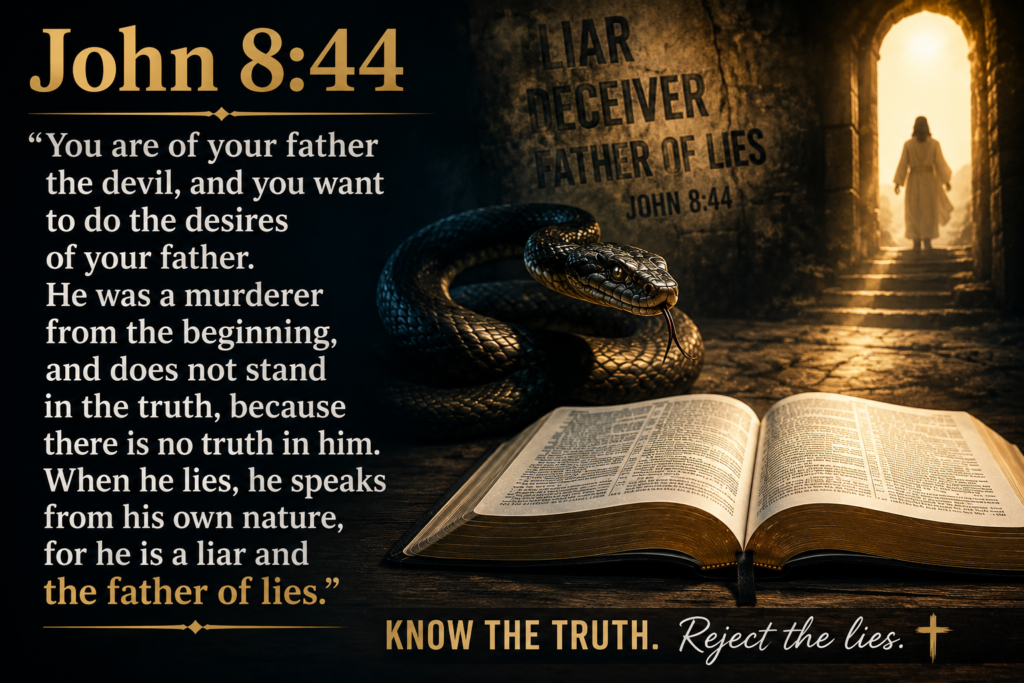
Satan is the originator of lies and deceit. He was the first to ever speak a falsehood, which is why he is known as the father of lies. When someone chooses to lie, they are imitating Satan’s example and, according to the Bible, are described as a “child of the devil.”

John 8:44 NKJV

  1. 44. You are of your father the devil, and the desires of your father you want to do. He was a murderer from the beginning, and does not stand in the truth, because there is no truth in him. When he speaks a lie, he speaks from his own resources, for he is a liar and the father of it.

What Does the Bible say About Lying

On the other hand, God is the ultimate source of truth. Throughout Scripture, it is repeatedly affirmed that God is the God of truth.

Numbers 23:19 NKJV

  1. “God is not a man, that He should lie, Nor a son of man, that He should repent.

Has He said, and will He not do? Or has He spoken, and will He not make it good?

20 Behold, I have received a command to bless; He has blessed, and I cannot reverse it.

Deuteronomy 32:4 NKJV

  1. He is the Rock, His work is perfect; For all His ways are justice, A God of TRUTH and without injustice; Righteous and upright is He.

Titus 1:1-2 NKJV

  1. 1. Paul, a bondservant of God and an apostle of Jesus Christ, according to the faith of God’s elect and the acknowledgment of the truth which accords with godliness,
  2.  in hope of eternal life which God, WHO CANNOT LIE, promised before time began,

There are others.

Because truth reflects God’s own character, dishonesty brings real damage wherever it takes root. Bearing false witness can destroy relationships, destabilize homes and organizations, and lead to painful consequences such as the following:

  • divorce
  • losing a job
  • unemployment
  • broken relationships
  • emotional pain
  • failure
  • bankruptcy
  • collapse of organizations or families
  • acts of revenge
  • retaliation
  • abuse
  • accidents
  • suffering
  • imprisonment
  • even death

When considering honesty and how we communicate the truth, it is important to ask: Should truth always be delivered bluntly or without compassion?

In legal settings, truth must be presented clearly and directly. However, in our personal interactions, we should be careful not to inflict unnecessary pain, embarrassment, or shame. We are never called to use the truth as a weapon to hurt others. Instead, we should always express truth with kindness and love, not with harshness or cruelty.

Ephesians 4:15 (NKJV)

  1. but, speaking the truth in love, may grow up in all things into Him who is the head—Christ—

Blessings of Obedience

What are the rewards of obeying this commandment? Our word is our bond. When our word is trustworthy, it is reflected in our character. According to Scripture, those whose words can be relied upon will experience great blessings.

Someone who speaks honestly and embraces God’s wonderful gift of salvation will receive both blessings and righteousness from the Lord.

Psalm 24:4-5 NKJV

  1. He who has clean hands and a pure heart, Who has not lifted up his soul to an idol,

Nor sworn deceitfully.

  1. He shall receive blessing from the Lord, And righteousness from the God of his salvation.

A person who genuinely loves others will not spread falsehoods about anyone. When faced with a concern or a troubling rumor, he will approach the individual directly, aiming to help restore them in their faith. It’s important to remember that true love avoids harshness or belittling. Instead, it addresses others with compassion, gentleness, and strength, always guided by the Holy Spirit.

Galatians 6:1-2 NKJV

  1. Brethren, if a man is overtaken in any trespass, you who are spiritual restore such a one in a spirit of gentleness, considering yourself lest you also be tempted. Bear one another’s burdens, and so fulfill the law of Christ.

Conclusion

I’m going to close with this Scripture: Romans 12:18 (NKJV).

  1. If it is possible, as much as depends on you, live peaceably with all men.

One clear way to fulfill this Scripture is to obey the ninth commandment: “You shall not bear false witness against your neighbor.”

Amen

Questions, comments, and concerns may be left below

Blessings!

👉Videos

Watch the full video presentation:

For the short version, click the link

https://youtube.com/shorts/fruS-BTrFnI


👉 Follow the complete Ten Commandments series:


Thou Shalt Not Kill? What Does It Really Mean?

Thou Shalt Not Kill? What Does It Really Mean? When the Bible says, “Do not kill,” does that mean all killing is sinful? This question has led many to believe that the Bible contradicts itself when examined alongside the events of the Old Testament.

I want to begin by taking a minute to address the state of the world as we know it today.

Across the globe, murder, lawlessness, and violence are on the rise. Each year, hundreds of thousands of individuals fall victim to heinous acts, resulting in widespread suffering. In certain societies, the sanctity of human life seems to hold little value.

Throughout history, various societies have often reduced the value of human beings, including young children, to mere property or laborers serving the interests of the ruling class and the wealthy.

Moreover, it is concerning how prevalent depictions of violence and lawlessness have become in films and other media, frequently exposed even to young audiences. This constant exposure can leave a lasting impact on the human psyche, potentially leading to significant consequences.

As a result, many people may find themselves desensitized to violence and crime. Headlines and reports often focus on horrific events, and many forms of entertainment—such as television, movies, video games, music, and literature—often center around themes of lawlessness, violence, and immorality. This can contribute to a societal perception that devalues life.

It’s worth reflecting on how much daily life is saturated with these images and narratives. For many, this bombardment of violent content through various media can complicate our understanding of human life and morality.

👉 The Ten Commandments Series

Part 1: No Other Gods
Part 2: No Idols
Part 3: Do Not Take His Name in Vain
Part 4: The Sabbath
Part 5: Honor Your Father and Mother
Part 6: Thou Shalt Not Kill (Current Article)

The Sixth Commandment — What Does It Say?

When we look at the condition of the world today, does it not make perfect sense why God gave the sixth Commandment?

Let’s look at what it is in Exodus 20:13 NKJV

  1. You shall not murder.

As indicated in the introduction, the world has moved far—far away from this Commandment.

So, let’s take a good look at this Commandment and see what it’s really all about.

Does the Bible Contradict Itself? Thou shalt not kill

First, different Bible translations can create misunderstandings about its meaning. One common misunderstanding is that the Bible contradicts itself, and it is based on the following question:

How can the Bible state “Thou shalt not kill” (KJV), with all of the killing that took place in the Old Testament? That is a reasonable observation and question.

The Difference Between Murder and Killing

The fact is, different Bible translations can create misunderstandings about this verse and the meaning of the Commandment, deeming it necessary to look below the surface.

The Hebrew word in the original text is [Rat-sakh], which is murder. Murder is the unlawful termination of an individual’s life by another individual. Especially with premeditated malice or hatred. This is the true meaning of the Commandment.

The Hebrew word for to kill is [harag], which is generally used for the putting away of animals, including sacrificially, and for ruthless, personal violence of man against man—war. This is not the word used in this Commandment. That is why most modern translations (i.e., The New King James Translation above) render the sixth commandment “You shall not murder” rather than “You shall not kill.”

Therefore, a very large issue can arise depending on which translation an individual studies.

Just think, if the intended meaning of “Thou shalt not kill” meant—no killing at all—it would include the totality of the God-endorsed conflicts implemented by the nation of Israel, a violation of God’s own commandment. But understand that God does not break His commandments; therefore, the verse does not demand a total ban on taking human life.

When Is Killing Permissible in Scripture?

This commandment does not prohibit all killing. The Bible indicates that taking a life is permissible in certain situations; let’s look at these in Scripture:

– As capital punishment

Genesis 9:6 NKJV

  1. Whoever sheds man’s blood, By man his blood shall be shed; For in the image of God He made man.

– During a justified war

1 Samuel 15:3 NKJV

This is God’s instructions to King Saul through the prophet Samuel:

  1. Now go and attack Amalek, and utterly destroy all that they have, and do not spare them. But kill both man and woman, infant and nursing child, ox and sheep, camel and donkey.’ ”

– In cases of adultery, which was meant to protect the family unit, is crucial for society’s stability.

Leviticus 20:10 NKJV

  1. ‘The man who commits adultery with another man’s wife, he who commits adultery with his neighbor’s wife, the adulterer and the adulteress, shall surely be put to death.

– In self-defense, such as when a thief breaks into a home

Exodus 22:2 NKJV

  1. If the thief is found breaking in, and he is struck so that he dies, there shall be no guilt for his bloodshed.

In cases of accidental killing

Deuteronomy 19:4-5 NKJV

4.Whoever kills his neighbor unintentionally, not having hated him in time past—

  1. as when a man goes to the woods with his neighbor to cut timber, and his hand swings a stroke with the ax to cut down the tree, and the head slips from the handle and strikes his neighbor so that he dies—he shall flee to one of these cities and live;

Lastly, For killing animals for food

Genesis 9:3 NKJV

  1. Every moving thing that lives shall be food for you. I have given you all things, even as the green herbs.

So we must understand that there is a Biblical difference between justified killing and murder, the unlawful, intentional homicide. In the same way, most nations’ laws distinguish between these acts. Accordingly, the Ten Commandments forbid murder specifically, but not all forms of killing.

This is why, when disputes arise regarding Scripture, it’s necessary to examine the original texts (Greek & Hebrew) to determine more clearly what the author was expressing.

How Far Has Society Drifted?

Now that we know the difference between murder and killing, and it is clear what this Commandment commands, let’s look at how far we are from this Commandment, and how much it matters.

Every single day in America, over 50 people are murdered. Around the world, that number exceeds 1,200 per day. The fact is, human life has become cheap in society’s eyes. Let’s look at some statistics.

U.S. Murder / Homicide Statistics

Annual U.S. Homicides

  • According to the CDC, roughly 20,000–23,000 people are murdered each year in the United States, depending on the year measured.
  • The most recent CDC data lists 20,162 homicide deaths in 2024.

U.S. Homicide Rate

  • The current U.S. homicide rate is approximately 5.9 per 100,000 people.
  • That remains well above many other developed nations.

Daily Equivalent

  • That averages to approximately:
    • 55 murders per day
    • More than 2 murders every hour

Worldwide Murder Statistics

Global Annual Murders

  • According to United Nations homicide data, the world sees approximately 450,000–470,000 intentional homicides per year.
  • Latest UN estimates place the number around 458,000+ annually.

Daily / Hourly Equivalent

  • That equals approximately:
    • 1,250 murders per day worldwide
    • 52 murders every hour globally

These are concerning statistics! How did we get here?

Well, as mentioned in the introduction, we have become desensitized to murder. It no longer shocks or causes sorrow to hear about it. We have lost our sense of self-control, which causes us to sin. We are encouraged to rein this in. As the Bible states in Ephesians 4:26, “Be angry, and do not sin.”

This commandment is broken either by a planned murderous attack upon a person(s) or by a rash, reckless attack. This commandment forbids the taking of a life because a person is—let’s look at these behaviors

  • angry
  • bitter
  • violent
  • uncontrolled
  • passionate
  • vengeful
  • selfish
  • stealing
  • lusting
  • coveting
  • rebelling

Within this list is the breaking of another commandment, which will be covered later in this series.

Murder is always wrong, no matter the reasons behind it. This belief is crucial for the safety of our community and society. We cannot allow lawlessness and violence to thrive. We must uphold God’s Holy Word: murder driven by anger, robbery, or violence should always be condemned and punished.

The Heart Behind Murder

Furthermore, there are other acts just as unacceptable as directly killing someone physically.

There are those who, while not taking life by their own hand, show reckless or intentional disregard for human life and become morally complicit in its destruction. Many people around the world engage in such acts. For example, people are being pushed to work in unsafe conditions that can injure or kill them. They’re forced to live in terrible environments that lack basic necessities, leading to premature death. Additionally, individuals are being sold drugs that enslave them and ultimately lead to their demise.

Jesus Expands the Commandment

Further, Jesus expanded the commandment against killing to include not just the physical act itself, but also the anger and wrongful motives that can lead someone to murder.

Matthew 5:21-22 NKJV

  1. “You have heard that it was said to those of old, ‘You shall not murder, and whoever murders will be in danger of the judgment.’
  2. But I say to you that whoever is angry with his brother without a cause shall be in danger of the judgment. And whoever says to his brother, ‘Raca!’ shall be in danger of the council. But whoever says, ‘You fool!’ shall be in danger of hell fire.

Calling another “Raca,” which is a transliteration of an Aramaic term implying “empty-headed,” is an insult.

Saying “you fool” to a person is another insult. Fool is a translation of the Aramaic word Mōre, which is most likely a case form of the Greek word mōros (the origin of the English word moron), implying a person who regularly acts like an idiot.

To treat a person with such contempt was to strip away their personal identity and wrongly make him or her into something he or she was not.

Jesus said this behavior subjects one to “Judgment” and “in danger of hell fire.”

You see, we can murder an individual with our tongues.

Murder is more than a physical act; it’s rooted in internal feelings such as anger, bitterness, and enmity. It stems from an uncontrolled spirit and inner turmoil. Anger is the foundational sin that violates God’s law. It encompasses negative mindsets, such as:

– Bitterness and enmity

– Indignation and wrath

– Striking out at others

– Disappointment or self-hatred

– Rage and fury

– Lack of self-control

– Desire to harm others

– Envy and resentment towards others’ happiness

– Slander and attempts to ruin another’s reputation. This is wrong especially since everyone is created in God’s image.

To God, murder is not just physical in nature but also the condition of one’s heart towards another.

So to observe what the Scripture says in Ephesians 4:26-27 NKJV

  1. “Be angry, and do not sin”: do not let the sun go down on your wrath,
  2. nor give place to the devil.

Now, understand that there is justified anger. Justified anger is essential for believers; they should be angry at those who sin, act unjustly, or behave selfishly. However, this anger must be disciplined and controlled, focusing only on wrongdoing against God or others. The key difference between justified and unjustified anger is that justified anger is not selfish and doesn’t arise from personal grievances. It serves a purpose: to address the situation peacefully and constructively.

Romans 12:18-19 NKJV

  1. If it is possible, as much as depends on you, live peaceably with all men.
  2. Beloved, do not avenge yourselves, but rather give place to wrath; for it is written, “Vengeance is Mine, I will repay,” says the Lord.

If only we could live by this verse alone! To live peaceably with all men!

Modern Violations of the Commandment

Now, thus far, we’ve looked at murder from the perspective of individual against individual. But there is another form of murder that has become highly acceptable in the societies of the world—Abortion.

Abortion, which involves ending the lives of unborn babies, has long been a significant moral failure of humanity. The sanctity of life is consistently under threat.

According to the CDC, over 20,000 people are murdered in America each year…
But over one million unborn children are aborted in America annually.
Worldwide, that number rises to roughly 73 million.

Unfortunately, public opinion often contradicts the fundamental commandment, “You shall not murder,” when it comes to abortion.

I won’t further address that topic here. However, there is a full article on this website that addresses it. Here is the link.

Another form of murder that doesn’t involve person-to-person involvement is suicide. Suicide is the termination of one’s own life,

Suicide is perceived differently across various cultures and beliefs. For instance:

– Some may wonder if a Christian can take their own life due to extreme despair.

– Others question if someone can be seen as noble for committing suicide in the name of a cause or country, like the Japanese kamikaze pilots in World War II. 4970

Regardless of circumstances, suicide as a way to escape life’s struggles is a grave mistake. It occurs all too frequently but is never a solution. Every human life reflects God’s image, and no one should end their own life. Here are three compelling reasons to avoid suicide:

  1. God forbids murder, and suicide is self-murder.
  2. It destroys the image of God within us.
  3. Jesus Christ loves us and provides the strength to face and overcome our challenges.

Hebrews 2:18 confirms this:

  1. For in that He Himself has suffered, being tempted, He is able to aid those who are tempted.

The Consequences of Murder

The Commandment is, “You shall not murder.” These four words have behind them the eternal force of God, who is the Author of life. Human life is sanctified. The sacredness of life has and always will remain unmoved in the eyes of God. Individuals who break this commandment will face the Righteous Judge who will hold them completely accountable for murder. No murderer can escape these terrible consequences. So, let’s address some of these consequences, and then we’ll look at the blessings of obedience to this command.

First, the individual who murders another will suffer the wrath of God.

Romans 1:18, 29 NKJV

  1. For the wrath of God is revealed from heaven against all ungodliness and unrighteousness of men, who suppress the truth in unrighteousness,
  2. being filled with all unrighteousness, sexual immorality, wickedness, covetousness, maliciousness; full of envy, MURDER, strife, deceit, evil-mindedness; they are whisperers,

Next, the individual who murders another will be judged and will not inherit the kingdom of God. They will not inherit eternal life.

1 John 3:15 NKJV

  1. Whoever hates his brother is a murderer, and you know that no murderer has eternal life abiding in him.

And next, the individual who murders another is to face civil court, sentencing, imprisonment, the death penalty, or some other form of retribution.

Leviticus 24:17 NKJV

  1. ‘Whoever kills any man shall surely be put to death.

Lastly, the individual who murders another confirms that he is defiled and has an evil heart.

Matthew 15:19–20 NKJV

  1. For out of the heart proceed evil thoughts, MURDERS, adulteries, fornications, thefts, false witness, blasphemies.
  2. These are the things which defile a man…

The Blessings of Obedience

To address obedience to the Command: On the other hand, obedience yields blessings.

The individual who obeys this commandment and does not murder another person has decided to value life.

The contrast is stark between a culture that allows or executes the innocent and helpless, and a culture that honors and protects the sacredness of human life.

Those who really love, defend, and protect life benefit an entire community, nation, and world.

So, what are the benefits when God’s people speak out against murder?

What are the benefits to Christian believers who respect the sanctity of life?

Well, first, an individual who honors the Lord and values life will avoid killing and live by the Spirit, showing its qualities.

Let’s look at what the fruit of the Spirit is: Galatians 5:22-25 NKJV 

  1. But the fruit of the Spirit is love, joy, peace, longsuffering, kindness, goodness, faithfulness,
  2. gentleness, self-control. Against such there is no law.
  3. And those who are Christ’s have crucified the flesh with its passions and desires.
  4. If we live in the Spirit, let us also walk in the Spirit.

Next, the individual who follows God and respects the sanctity of life will have a sacrificial love for his brother.

1 John 3:14-16 NKJV

  1. We know that we have passed from death to life, because we love the brethren. He who does not love his brother abides in death.
  2. Whoever hates his brother is a murderer, and you know that no murderer has eternal life abiding in him.
  3. By this we know love, because He laid down His life for us. And we also ought to lay down our lives for the brethren.

Those who embrace God’s salvation and value life will feel a genuine urgency, stay alert to the times, maintain a clear perspective, and recognize the fragility of life, as addressed in God’s Word.

James 4:14 NKJV

  1. whereas you do not know what will happen tomorrow. For what is your life? It is even a vapor that appears for a little time and then vanishes away.

Lastly, the individual who truly respects the sacredness of life will understand that the only way to save his life is to give it away to Christ.

Matthew 16:25-26 NKJV

  1. 25. For whoever desires to save his life will lose it, but whoever loses his life for My sake will find it.
  2. For what profit is it to a man if he gains the whole world, and loses his own soul? Or what will a man give in exchange for his soul?

A Call to Repentance

Anyone who has murdered another human being, either physically or spiritually in their heart, must repent. If you have violated this commandment—whether by your hands or by hatred in your heart—repent.

Christ still offers mercy to all who come to Him.

Jesus is ever knocking on our doors for us to let Him in and save us.

As Jesus said in Revelation 3:19-21 NKJV.

  1. As many as I love, I rebuke and chasten. Therefore be zealous and repent.
  2. Behold, I stand at the door and knock. If anyone hears My voice and opens the door, I will come in to him and dine with him, and he with Me.
  3. To him who overcomes I will grant to sit with Me on My throne, as I also overcame and sat down with My Father on His throne.

My friends, we must respect the life that God has created, ours and that of others. We must obey the sixth Commandment, “You shall not murder.”

Amen!

Questions, comments, and concerns may be left below.

Blessings!

👉 Videos

Watch the full video presentation

Short on time? Watch the Short!

👉 The Ten Commandments Series

Explore the full Ten Commandments series below:

Part 1: No Other Gods
Part 2: No Idols
Part 3: Do Not Take His Name in Vain
Part 4: The Sabbath
Part 5: Honor Your Father and Mother
Part 6: Thou Shalt Not Kill (Current Article)


10 Commandments in the New Testament

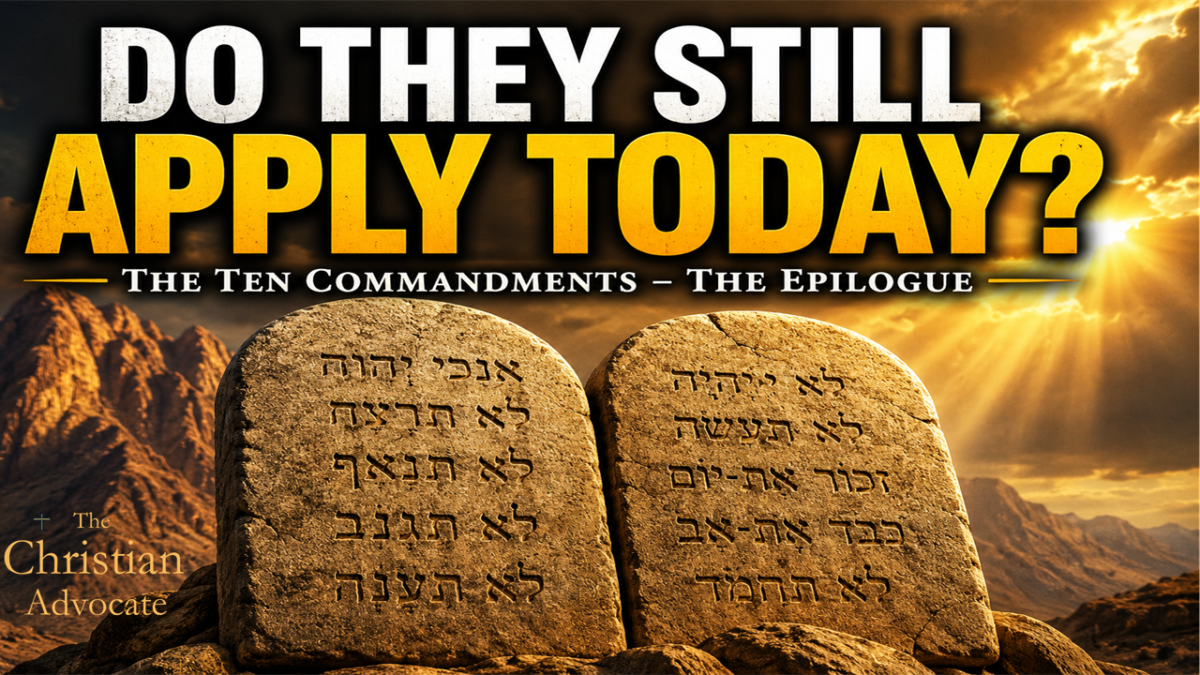
Some Christians believe the Old Testament no longer applies to today’s Christians, including the Ten Commandments. This article will address the 10 Commandments in the New Testament.

What are the Ten Commandments?

The Ten Commandments are the ten laws God gave Moses on Mount Sinai after he had led them from Egypt. These and other laws were for guidance for daily righteous living. However, the Ten Commandments form the core of the unique covenant between God and His people, the Israelites, so much so that God wrote them in stone with His finger (Exodus 31:18).

These Commandments are found in Exodus 20:1-17

1. And God spake all these words, saying,

2. I am the LORD thy God, which have brought thee out of the land of Egypt, out of the house of bondage.

3. Thou shalt have no other gods before me.

4. Thou shalt not make unto thee any graven image, or any likeness of any thing that is in heaven above, or that is in the earth beneath, or that is in the water under the earth:

5. Thou shalt not bow down thyself to them, nor serve them: for I the LORD thy God am a jealous God, visiting the iniquity of the fathers upon the children unto the third and fourth generation of them that hate me;

6. And shewing mercy unto thousands of them that love me, and keep my commandments.

7. Thou shalt not take the name of the LORD thy God in vain; for the LORD will not hold him guiltless that taketh his name in vain.

8. Remember the sabbath day, to keep it holy.

9. Six days shalt thou labour, and do all thy work:

10. But the seventh day is the sabbath of the LORD thy God: in it thou shalt not do any work, thou, nor thy son, nor thy daughter, thy manservant, nor thy maidservant, nor thy cattle, nor thy stranger that is within thy gates:

11. For in six days the LORD made heaven and earth, the sea, and all that in them is, and rested the seventh day: wherefore the LORD blessed the sabbath day, and hallowed it.

12. Honour thy father and thy mother: that thy days may be long upon the land which the LORD thy God giveth thee.

13. Thou shalt not kill.

14. Thou shalt not commit adultery.

15. Thou shalt not steal.

16. Thou shalt not bear false witness against thy neighbour.

17. Thou shalt not covet thy neighbour’s house, thou shalt not covet thy neighbour’s wife, nor his manservant, nor his maidservant, nor his ox, nor his ass, nor any thing that is thy neighbour’s.

10 Commandments in the New Testament

It is essential to understand that these Commandments were never meant to be a means by which the Israelites could earn salvation (legalism). God had already shown His favor when He delivered them from Egyptian bondage. This grace is something that He prefaced by reminding them at the commencement of providing the Commandments (vs. 2).

The Ten Commandments in the New Testament

Despite what some believe about the Old Testament, the Ten Commandments are still applicable today. What needs to be recognized is that the Old Testament is the foundation. Without the Old Testament, there would be no New Testament. The New Testament Confirms the Old Testament. There are 343 Old Testament quotes in the New Testament and 2,309 allusions and parallels. The most-utilized books are the Psalms (333 references, 79 quotes) and Isaiah (348 references, 66 quotes). The Book of Revelation contains no quotations but at least 620 allusions.

Jesus issued this confirmation in Matt. 5:17, “Think not that I am come to destroy the law, or the prophets: I am not come to destroy, but to fulfil.” Jesus ushered in the New Covenant, the New Testament (Hebrews 8:1,6), therefore fulfilling the Law. He didn’t come to abolish the Law or the prophets but to fulfill the promises in those Scripture passages.

Jesus lived the Law and gave life to the Law. He was able to live the life described by the words and rules and set the standard for us to follow. The New Testament Law that Jesus ushered in was the Law of love. Love fulfills the Law.

This truth is confirmed in other New Testament Scripture. For example, Romans 13:8-10

8. Owe no one anything except to love one another, for he who loves another has fulfilled the Law.

9. For the commandments, “You shall not commit adultery,” “You shall not murder,” “You shall not steal,” “You shall not bear false witness,” “You shall not covet,” and if there is any other commandment, are all summed up in this saying, namely, “You shall love your neighbor as yourself.”

10. Love does no harm to a neighbor; therefore love is the fulfillment of the Law. NKJV

Notice the Commandments mentioned in this passage; all contained under the description of love, “love is the fulfillment of the Law.Several Laws are quoted here, straight from the Commandments, to illustrate how they can be kept if an individual simply acts in love.

Love Fulfills the Law
Love Fulfills the Law!

Remember the response of Jesus when asked what the greatest Commandment is. His response was in Matthew 22:37-40:

37. Jesus said unto him, Thou shalt love the Lord thy God with all thy heart, and with all thy soul, and with all thy mind.

38. This is the first and great Commandment.

39. And the second is like unto it, Thou shalt love thy neighbour as thyself.

40. On these two commandments hang all the Law and the prophets.

Jesus quoted from Deuteronomy 6:5, but also stated a second Command addressing dealing with fellow human beings. The same love and care we have for ourselves should also extend to others. Jesus also clarified that these two Commands to love God and others as ourselves keep all other Laws in the Old and New Testaments.

Lastly, our eternal destiny is based on the Commandments. This truth is evident in Luke 10:25-28, which reads:

  1. On one occasion an expert in the law stood up to test Jesus. “Teacher,” he asked, “what must I do to inherit eternal life?”
  2. “What is written in the Law?” he replied. “How do you read it?”
  3. He answered: “‘Love the Lord your God with all your heart and with all your soul and with all your strength and with all your mind’; and, ‘Love your neighbor as yourself.'”
  4. “You have answered correctly,” Jesus replied. Do this and you will live. NIV

This lawyer obviously knew the Law quoted from Deuteronomy 6:5 and Leviticus 19:18, Old Testament Scripture, which demands total devotion to God and love for one’s neighbor. These two Commands go hand in hand. An individual cannot maintain a good relationship with God without having good relationships with their neighbors (their fellow human beings).

But look at Jesus’ final response in verse 28, Do this and you will live. Jesus was referring to eternal life. By following these two Commandments, we fulfill the others and will inherit eternal life. While it is impossible to obey these on our own, it is possible with the help of the Holy Spirit.

It appears clear that the Old and New Testaments are equally crucial in knowing the will of the Lord. Without the Old Testament, there would be no New Testament. They are intertwined to give us the complete picture of what was, what is, and what shall be.

Amen

Questions, comments, and concerns may be left below.

Blessings!

error

Enjoying this blog? Please spread the word :)