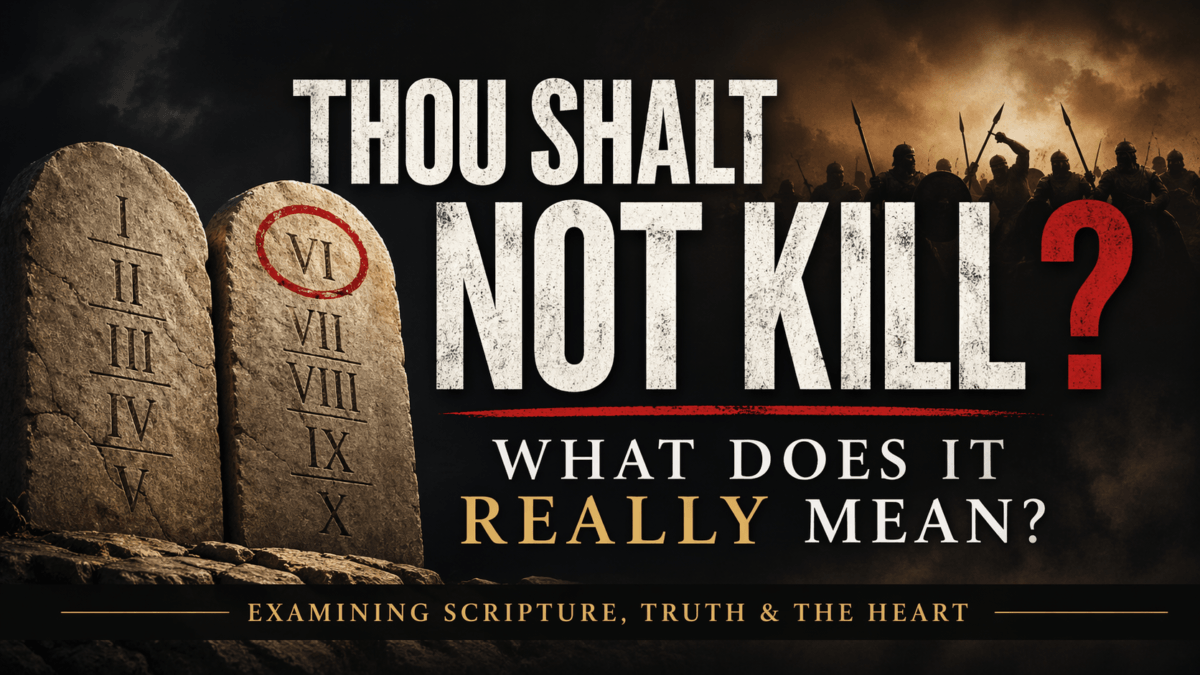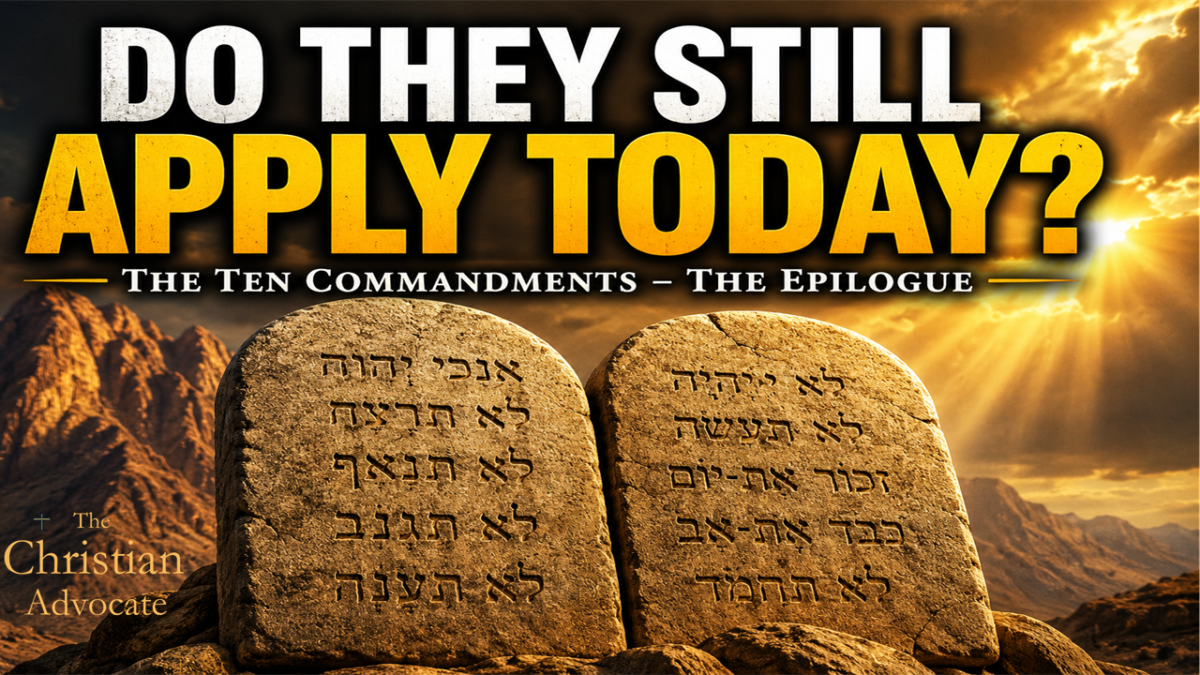
Thou Shalt Not Kill? What Does It Really Mean?

Thou Shalt Not Kill? What Does It Really Mean? When the Bible says, “Do not kill,” does that mean all killing is sinful? This question has led many to believe that the Bible contradicts itself when examined alongside the events of the Old Testament.

I want to begin by taking a minute to address the state of the world as we know it today.

Across the globe, murder, lawlessness, and violence are on the rise. Each year, hundreds of thousands of individuals fall victim to heinous acts, resulting in widespread suffering. In certain societies, the sanctity of human life seems to hold little value.

Throughout history, various societies have often reduced the value of human beings, including young children, to mere property or laborers serving the interests of the ruling class and the wealthy.

Moreover, it is concerning how prevalent depictions of violence and lawlessness have become in films and other media, frequently exposed even to young audiences. This constant exposure can leave a lasting impact on the human psyche, potentially leading to significant consequences.

As a result, many people may find themselves desensitized to violence and crime. Headlines and reports often focus on horrific events, and many forms of entertainment—such as television, movies, video games, music, and literature—often center around themes of lawlessness, violence, and immorality. This can contribute to a societal perception that devalues life.

It’s worth reflecting on how much daily life is saturated with these images and narratives. For many, this bombardment of violent content through various media can complicate our understanding of human life and morality.

👉 The Ten Commandments Series

Part 1: No Other Gods
Part 2: No Idols
Part 3: Do Not Take His Name in Vain
Part 4: The Sabbath
Part 5: Honor Your Father and Mother
Part 6: Thou Shalt Not Kill (Current Article)

The Sixth Commandment — What Does It Say?

When we look at the condition of the world today, does it not make perfect sense why God gave the sixth Commandment?

Let’s look at what it is in Exodus 20:13 NKJV

  1. You shall not murder.

As indicated in the introduction, the world has moved far—far away from this Commandment.

So, let’s take a good look at this Commandment and see what it’s really all about.

Does the Bible Contradict Itself? Thou shalt not kill

First, different Bible translations can create misunderstandings about its meaning. One common misunderstanding is that the Bible contradicts itself, and it is based on the following question:

How can the Bible state “Thou shalt not kill” (KJV), with all of the killing that took place in the Old Testament? That is a reasonable observation and question.

The Difference Between Murder and Killing

The fact is, different Bible translations can create misunderstandings about this verse and the meaning of the Commandment, deeming it necessary to look below the surface.

The Hebrew word in the original text is [Rat-sakh], which is murder. Murder is the unlawful termination of an individual’s life by another individual. Especially with premeditated malice or hatred. This is the true meaning of the Commandment.

The Hebrew word for to kill is [harag], which is generally used for the putting away of animals, including sacrificially, and for ruthless, personal violence of man against man—war. This is not the word used in this Commandment. That is why most modern translations (i.e., The New King James Translation above) render the sixth commandment “You shall not murder” rather than “You shall not kill.”

Therefore, a very large issue can arise depending on which translation an individual studies.

Just think, if the intended meaning of “Thou shalt not kill” meant—no killing at all—it would include the totality of the God-endorsed conflicts implemented by the nation of Israel, a violation of God’s own commandment. But understand that God does not break His commandments; therefore, the verse does not demand a total ban on taking human life.

When Is Killing Permissible in Scripture?

This commandment does not prohibit all killing. The Bible indicates that taking a life is permissible in certain situations; let’s look at these in Scripture:

– As capital punishment

Genesis 9:6 NKJV

  1. Whoever sheds man’s blood, By man his blood shall be shed; For in the image of God He made man.

– During a justified war

1 Samuel 15:3 NKJV

This is God’s instructions to King Saul through the prophet Samuel:

  1. Now go and attack Amalek, and utterly destroy all that they have, and do not spare them. But kill both man and woman, infant and nursing child, ox and sheep, camel and donkey.’ ”

– In cases of adultery, which was meant to protect the family unit, is crucial for society’s stability.

Leviticus 20:10 NKJV

  1. ‘The man who commits adultery with another man’s wife, he who commits adultery with his neighbor’s wife, the adulterer and the adulteress, shall surely be put to death.

– In self-defense, such as when a thief breaks into a home

Exodus 22:2 NKJV

  1. If the thief is found breaking in, and he is struck so that he dies, there shall be no guilt for his bloodshed.

In cases of accidental killing

Deuteronomy 19:4-5 NKJV

4.Whoever kills his neighbor unintentionally, not having hated him in time past—

  1. as when a man goes to the woods with his neighbor to cut timber, and his hand swings a stroke with the ax to cut down the tree, and the head slips from the handle and strikes his neighbor so that he dies—he shall flee to one of these cities and live;

Lastly, For killing animals for food

Genesis 9:3 NKJV

  1. Every moving thing that lives shall be food for you. I have given you all things, even as the green herbs.

So we must understand that there is a Biblical difference between justified killing and murder, the unlawful, intentional homicide. In the same way, most nations’ laws distinguish between these acts. Accordingly, the Ten Commandments forbid murder specifically, but not all forms of killing.

This is why, when disputes arise regarding Scripture, it’s necessary to examine the original texts (Greek & Hebrew) to determine more clearly what the author was expressing.

How Far Has Society Drifted?

Now that we know the difference between murder and killing, and it is clear what this Commandment commands, let’s look at how far we are from this Commandment, and how much it matters.

Every single day in America, over 50 people are murdered. Around the world, that number exceeds 1,200 per day. The fact is, human life has become cheap in society’s eyes. Let’s look at some statistics.

U.S. Murder / Homicide Statistics

Annual U.S. Homicides

  • According to the CDC, roughly 20,000–23,000 people are murdered each year in the United States, depending on the year measured.
  • The most recent CDC data lists 20,162 homicide deaths in 2024.

U.S. Homicide Rate

  • The current U.S. homicide rate is approximately 5.9 per 100,000 people.
  • That remains well above many other developed nations.

Daily Equivalent

  • That averages to approximately:
    • 55 murders per day
    • More than 2 murders every hour

Worldwide Murder Statistics

Global Annual Murders

  • According to United Nations homicide data, the world sees approximately 450,000–470,000 intentional homicides per year.
  • Latest UN estimates place the number around 458,000+ annually.

Daily / Hourly Equivalent

  • That equals approximately:
    • 1,250 murders per day worldwide
    • 52 murders every hour globally

These are concerning statistics! How did we get here?

Well, as mentioned in the introduction, we have become desensitized to murder. It no longer shocks or causes sorrow to hear about it. We have lost our sense of self-control, which causes us to sin. We are encouraged to rein this in. As the Bible states in Ephesians 4:26, “Be angry, and do not sin.”

This commandment is broken either by a planned murderous attack upon a person(s) or by a rash, reckless attack. This commandment forbids the taking of a life because a person is—let’s look at these behaviors

  • angry
  • bitter
  • violent
  • uncontrolled
  • passionate
  • vengeful
  • selfish
  • stealing
  • lusting
  • coveting
  • rebelling

Within this list is the breaking of another commandment, which will be covered later in this series.

Murder is always wrong, no matter the reasons behind it. This belief is crucial for the safety of our community and society. We cannot allow lawlessness and violence to thrive. We must uphold God’s Holy Word: murder driven by anger, robbery, or violence should always be condemned and punished.

The Heart Behind Murder

Furthermore, there are other acts just as unacceptable as directly killing someone physically.

There are those who, while not taking life by their own hand, show reckless or intentional disregard for human life and become morally complicit in its destruction. Many people around the world engage in such acts. For example, people are being pushed to work in unsafe conditions that can injure or kill them. They’re forced to live in terrible environments that lack basic necessities, leading to premature death. Additionally, individuals are being sold drugs that enslave them and ultimately lead to their demise.

Jesus Expands the Commandment

Further, Jesus expanded the commandment against killing to include not just the physical act itself, but also the anger and wrongful motives that can lead someone to murder.

Matthew 5:21-22 NKJV

  1. “You have heard that it was said to those of old, ‘You shall not murder, and whoever murders will be in danger of the judgment.’
  2. But I say to you that whoever is angry with his brother without a cause shall be in danger of the judgment. And whoever says to his brother, ‘Raca!’ shall be in danger of the council. But whoever says, ‘You fool!’ shall be in danger of hell fire.

Calling another “Raca,” which is a transliteration of an Aramaic term implying “empty-headed,” is an insult.

Saying “you fool” to a person is another insult. Fool is a translation of the Aramaic word Mōre, which is most likely a case form of the Greek word mōros (the origin of the English word moron), implying a person who regularly acts like an idiot.

To treat a person with such contempt was to strip away their personal identity and wrongly make him or her into something he or she was not.

Jesus said this behavior subjects one to “Judgment” and “in danger of hell fire.”

You see, we can murder an individual with our tongues.

Murder is more than a physical act; it’s rooted in internal feelings such as anger, bitterness, and enmity. It stems from an uncontrolled spirit and inner turmoil. Anger is the foundational sin that violates God’s law. It encompasses negative mindsets, such as:

– Bitterness and enmity

– Indignation and wrath

– Striking out at others

– Disappointment or self-hatred

– Rage and fury

– Lack of self-control

– Desire to harm others

– Envy and resentment towards others’ happiness

– Slander and attempts to ruin another’s reputation. This is wrong especially since everyone is created in God’s image.

To God, murder is not just physical in nature but also the condition of one’s heart towards another.

So to observe what the Scripture says in Ephesians 4:26-27 NKJV

  1. “Be angry, and do not sin”: do not let the sun go down on your wrath,
  2. nor give place to the devil.

Now, understand that there is justified anger. Justified anger is essential for believers; they should be angry at those who sin, act unjustly, or behave selfishly. However, this anger must be disciplined and controlled, focusing only on wrongdoing against God or others. The key difference between justified and unjustified anger is that justified anger is not selfish and doesn’t arise from personal grievances. It serves a purpose: to address the situation peacefully and constructively.

Romans 12:18-19 NKJV

  1. If it is possible, as much as depends on you, live peaceably with all men.
  2. Beloved, do not avenge yourselves, but rather give place to wrath; for it is written, “Vengeance is Mine, I will repay,” says the Lord.

If only we could live by this verse alone! To live peaceably with all men!

Modern Violations of the Commandment

Now, thus far, we’ve looked at murder from the perspective of individual against individual. But there is another form of murder that has become highly acceptable in the societies of the world—Abortion.

Abortion, which involves ending the lives of unborn babies, has long been a significant moral failure of humanity. The sanctity of life is consistently under threat.

According to the CDC, over 20,000 people are murdered in America each year…
But over one million unborn children are aborted in America annually.
Worldwide, that number rises to roughly 73 million.

Unfortunately, public opinion often contradicts the fundamental commandment, “You shall not murder,” when it comes to abortion.

I won’t further address that topic here. However, there is a full article on this website that addresses it. Here is the link.

Another form of murder that doesn’t involve person-to-person involvement is suicide. Suicide is the termination of one’s own life,

Suicide is perceived differently across various cultures and beliefs. For instance:

– Some may wonder if a Christian can take their own life due to extreme despair.

– Others question if someone can be seen as noble for committing suicide in the name of a cause or country, like the Japanese kamikaze pilots in World War II. 4970

Regardless of circumstances, suicide as a way to escape life’s struggles is a grave mistake. It occurs all too frequently but is never a solution. Every human life reflects God’s image, and no one should end their own life. Here are three compelling reasons to avoid suicide:

  1. God forbids murder, and suicide is self-murder.
  2. It destroys the image of God within us.
  3. Jesus Christ loves us and provides the strength to face and overcome our challenges.

Hebrews 2:18 confirms this:

  1. For in that He Himself has suffered, being tempted, He is able to aid those who are tempted.

The Consequences of Murder

The Commandment is, “You shall not murder.” These four words have behind them the eternal force of God, who is the Author of life. Human life is sanctified. The sacredness of life has and always will remain unmoved in the eyes of God. Individuals who break this commandment will face the Righteous Judge who will hold them completely accountable for murder. No murderer can escape these terrible consequences. So, let’s address some of these consequences, and then we’ll look at the blessings of obedience to this command.

First, the individual who murders another will suffer the wrath of God.

Romans 1:18, 29 NKJV

  1. For the wrath of God is revealed from heaven against all ungodliness and unrighteousness of men, who suppress the truth in unrighteousness,
  2. being filled with all unrighteousness, sexual immorality, wickedness, covetousness, maliciousness; full of envy, MURDER, strife, deceit, evil-mindedness; they are whisperers,

Next, the individual who murders another will be judged and will not inherit the kingdom of God. They will not inherit eternal life.

1 John 3:15 NKJV

  1. Whoever hates his brother is a murderer, and you know that no murderer has eternal life abiding in him.

And next, the individual who murders another is to face civil court, sentencing, imprisonment, the death penalty, or some other form of retribution.

Leviticus 24:17 NKJV

  1. ‘Whoever kills any man shall surely be put to death.

Lastly, the individual who murders another confirms that he is defiled and has an evil heart.

Matthew 15:19–20 NKJV

  1. For out of the heart proceed evil thoughts, MURDERS, adulteries, fornications, thefts, false witness, blasphemies.
  2. These are the things which defile a man…

The Blessings of Obedience

To address obedience to the Command: On the other hand, obedience yields blessings.

The individual who obeys this commandment and does not murder another person has decided to value life.

The contrast is stark between a culture that allows or executes the innocent and helpless, and a culture that honors and protects the sacredness of human life.

Those who really love, defend, and protect life benefit an entire community, nation, and world.

So, what are the benefits when God’s people speak out against murder?

What are the benefits to Christian believers who respect the sanctity of life?

Well, first, an individual who honors the Lord and values life will avoid killing and live by the Spirit, showing its qualities.

Let’s look at what the fruit of the Spirit is: Galatians 5:22-25 NKJV 

  1. But the fruit of the Spirit is love, joy, peace, longsuffering, kindness, goodness, faithfulness,
  2. gentleness, self-control. Against such there is no law.
  3. And those who are Christ’s have crucified the flesh with its passions and desires.
  4. If we live in the Spirit, let us also walk in the Spirit.

Next, the individual who follows God and respects the sanctity of life will have a sacrificial love for his brother.

1 John 3:14-16 NKJV

  1. We know that we have passed from death to life, because we love the brethren. He who does not love his brother abides in death.
  2. Whoever hates his brother is a murderer, and you know that no murderer has eternal life abiding in him.
  3. By this we know love, because He laid down His life for us. And we also ought to lay down our lives for the brethren.

Those who embrace God’s salvation and value life will feel a genuine urgency, stay alert to the times, maintain a clear perspective, and recognize the fragility of life, as addressed in God’s Word.

James 4:14 NKJV

  1. whereas you do not know what will happen tomorrow. For what is your life? It is even a vapor that appears for a little time and then vanishes away.

Lastly, the individual who truly respects the sacredness of life will understand that the only way to save his life is to give it away to Christ.

Matthew 16:25-26 NKJV

  1. 25. For whoever desires to save his life will lose it, but whoever loses his life for My sake will find it.
  2. For what profit is it to a man if he gains the whole world, and loses his own soul? Or what will a man give in exchange for his soul?

A Call to Repentance

Anyone who has murdered another human being, either physically or spiritually in their heart, must repent. If you have violated this commandment—whether by your hands or by hatred in your heart—repent.

Christ still offers mercy to all who come to Him.

Jesus is ever knocking on our doors for us to let Him in and save us.

As Jesus said in Revelation 3:19-21 NKJV.

  1. As many as I love, I rebuke and chasten. Therefore be zealous and repent.
  2. Behold, I stand at the door and knock. If anyone hears My voice and opens the door, I will come in to him and dine with him, and he with Me.
  3. To him who overcomes I will grant to sit with Me on My throne, as I also overcame and sat down with My Father on His throne.

My friends, we must respect the life that God has created, ours and that of others. We must obey the sixth Commandment, “You shall not murder.”

Amen!

Questions, comments, and concerns may be left below.

Blessings!

👉 Videos

Watch the full video presentation

Short on time? Watch the Short!

👉 The Ten Commandments Series

Explore the full Ten Commandments series below:

Part 1: No Other Gods
Part 2: No Idols
Part 3: Do Not Take His Name in Vain
Part 4: The Sabbath
Part 5: Honor Your Father and Mother
Part 6: Thou Shalt Not Kill (Current Article)


The Fifth Commandment: Honor Your Father and Mother.

The Fifth Commandment: Honor Your Father and Mother is one of the most well-known instructions in the Bible, yet it is often misunderstood. What does it truly mean to honor your parents, and how should this commandment be applied in today’s world? In this article, we will explore the biblical meaning behind this command and why it still matters.

In the previous article, we explored the Fourth Commandment and our responsibility to honor God through the Sabbath. Now, we move into the next section of the Ten Commandments, where God shifts our focus to our relationships with others—beginning with the family.

Did you know…that one of the greatest problems in society today can be traced back to one thing…to a breakdown in the family? How can we prevent this?

Today, we continue our series on the Ten Commandments…and we come to the fifth commandment: Honor Your Father and Your Mother.

👉 Continue through the Ten Commandments series:

👉 Part 4: The Fourth Commandment – The Sabbath
👉 Part 5: The Fifth Commandment – Honor Your Father and Mother
👉 Part 6: The Sixth Commandment – You Shall Not Murder

What is the Fifth Commandment?

Let’s take a look at this Commandment in Scripture: Exodus 20:12 NKJV

12.“Honor your father and your mother, that your days may be long upon the land which the Lord your God is giving you.

The family is fundamental to humanity. The family was the first institution formed upon earth. God created Adam and Eve, the first man and the first woman, and they became man and wife. Consequently, Eve bore a son. Therefore, the first family became the key institution, forming the basis for all subsequent human life and development.

It is the family that shapes the community, society, and governments of the world. From the beginning, God designed men and women not to simply exist, but to establish families and raise the next generation. They must produce children, or else everything crucial to humanity would eventually stop existing:

⇒           Human life would end.

⇒           Human society would end.

⇒           Human government would end.

Why This Commandment Still Matters Today

The main idea is that each generation has a responsibility to support and strengthen families for both their own time and for the future. Ignoring this duty is unwise, as the well-being of society and civilization relies on strong families where parents and children respect one another. Therefore, it’s important to focus on building up our families and addressing harmful influences that can threaten them all.

As the Scripture says in Hebrews 12:1 NKJV

  1. Therefore we also, since we are surrounded by so great a cloud of witnesses, let us lay aside every weight, and the sin which so easily ensnares us, and let us run with endurance the race that is set before us,

So, we must, as the Scripture reads, “…lay aside every weight, and the sin which so easily ensnares us.”  The sins such as:

  • selfishness
  • disrespect
  • disobedience
  • rebellion

God established the family’s prevalence and magnitude forever when He created the first man and the first woman. He reinforces the superiority of the family with this great commandment: “Honor your father and your mother.”

God commands us—all of us—to honor and respect our fathers and mothers.

Should the family unit crumble, many essential values that support personal well-being—such as honor, respect, concern, responsibility, decency, love, joy, and peace—may diminish. The erosion of these fundamental virtues can, in turn, weaken both the community and society at large.

Therefore, this Commandment is perpetual. It does not apply only to the Old Testament or the Jews. Therefore, as long as men, women, and children live on the earth, we are to honor and obey our parents.

Who Should We Honor After God?

How important is this Commandment? Well, take note that the first four Commandments addressed our duty to God. But once we have done our duty to God, notice that our very next duty is to honor our parents—right behind honoring God—that’s how important this duty is. This is divine order…

honor God first…

Honor parents next.

How Do We Honor Our Parents?

To understand this commandment, we must first understand what it means to honor.

The Hebrew word for honor (kabed) means that we are to respect, esteem, and have a high regard for our parents. The concept of honor includes reverence; we are to esteem and value our parents, showing respect, kindness, and obedience, as suggested by the Greek word timao. In practical terms, the commandment means we are to …

  • Respect and obey our parents
  • Accept their guidance and corrections
  • Consider their advice and concerns
  • Provide comfort to them

To honor means listening to our parents and never despising them when they are old.

It is important to recognize that mothers should be respected equally with fathers, and vice versa, as indicated by the directive: “honor your father and your mother.” Both parents are afforded equal status. According to the scripture, God honors and regards mothers and fathers alike, instructing children to show respect to each parent without distinction.

Moving on, this commandment highlights an important principle: learning through example. Children are taught to honor their parents by observing how their own parents honor theirs. The commandment applies to everyone, including adults who are both parents and children; it encourages them to continue showing respect to their parents. Parents should foster a home environment filled with respect and honor, thereby teaching their children by example. Ultimately, this commandment underscores the crucial role parents play in modeling proper behavior for their children.

Titus 2:7 NKJV

  1. in all things showing yourself to be a pattern of good works; in doctrine showing integrity, reverence, incorruptibility

Proverbs 22:6 NKJV

  1. Train up a child in the way he should go, And when he is old he will not depart from it.

Parents are responsible for teaching their children this commandment as well as others.

Does Honor Mean Obedience?

Why should children obey their parents?

Children should obey their parents because the Scriptures say so.

Ephesians 6:1-3 says:

  1. Children, obey your parents in the Lord, for this is right.
  2. “Honor your father and mother,” which is the first commandment with promise: 3. “that it may be well with you and you may live long on the earth.”

The phrase “in the Lord” explains why children should obey their parents. As it reads, “Children, obey your parents in the Lord,” means that obeying your parents is the right thing to do, it comes from God, and it pleases Him. So, when parents guide and teach them, they should listen.

Children are not told to obey parents because it pleases the parent, but because it pleases the Lord.

Notice the two promises made to children who honor their parents.

First, things will go well for the child. Does this mean that the child will never have problems or have to suffer? No! This is not what the Scripture means. God means that He will be with the child, strengthen and take care of him so that he can walk through the trials of life victoriously. The child will be strengthened and made strong where it counts—in the inner self. It will be enabled to conquer and be victorious over whatever confronts it as it journeys through life.

Second, the child is assured that it will live a long life on earth. Frankly, there is little question that Paul meant this and that we should take it at face value. If a child honestly obeys and honors its parents faithfully—really obeys and honors from the depths of its heart—God will give it a long life on earth.

Difficult Situations: When Honoring is Difficult

However, it is important to note that we must not follow in the steps of evil parents as some have done in the past. Although honoring parents is a fundamental obligation, this does not necessitate emulating parents whose actions are inconsistent with moral or ethical standards.

Ezekiel 20:18-19

  1. “But I said to their children in the wilderness, ‘Do not walk in the statutes of your fathers, nor observe their judgments, nor defile yourselves with their idols.
  2. I am the Lord your God: Walk in My statutes, keep My judgments, and do them;

What About Abused Children?

Children are to obey their parents. But what about the problems that are so repulsively evident in society: the problems of parental abuse, the problems of physical abuse, sexual abuse, and mental abuse? Is a child to obey a parent when the parent is so devilishly wrong? No!

A child’s obedience has its limits. If a parent acts in ways that do not honor the Lord, the child is not required to obey. The Lord does not support unrighteousness or the mistreatment of children. If a child can escape such harmful behavior, it has the right to do so. The Lord’s purpose is to free people from abuse and sin, not to keep them trapped in it, and certainly not to let children suffer under it.

Jesus gave one of the strongest warnings in history to adults who harm children:

Mark 9:42 NKJV

  1. “But whoever causes one of these little ones who believe in Me to stumble, it would be better for him if a millstone were hung around his neck, and he were thrown into the sea.

Any parent who abuses a child should take this seriously because God will not tolerate the abuse of a child. We must share what the Bible says: children should obey their parents, but only if their parents’ wishes and instructions align with the Lord’s will.

God’s Order: Honor God First, Parents Next

If a parent ever instructs a child to do something that clearly contradicts God’s commands, that child must obey God rather than his/her parents.

Further, if a child is able to escape the harmful influence and mistreatment of its parents, it deserves the right to be separated from them. The child should go to another adult they feel close to and ask for help.

Let’s look at what it reads in Acts 5:29 NKJV

  1. But Peter and the other apostles answered and said: “We ought to obey God rather than men.

Honoring Parents as Adults

Now, understand that Scripture does not address only children of a certain age. Instead, it speaks to everyone who still has living parents. We are called to honor our fathers and mothers, to see them as precious, and to show them respect and reverence. Sadly, this attitude is becoming less common. Too often, children respond to their parents in ways such as:

  • talking back
  • cutting the parent
  • ignoring the parent
  • grumbling
  • speaking disrespectfully
  • not listening
  • acting like a know-it-all
  • calling the parent a cute but disrespectful name
  • disregarding instructions
  • putting off instructions

In addition to these, there is the dishonor of delinquency, crime, drugs, alcohol, and the abuse of property, and the list could go on and on. And when it comes to adult children with aged parents, there is the dishonor of neglect, the ignoring of their needs, and the shuffling of them to the side and failing to adequately care for them.

Too many adult children forget how much their parents have done for them—bringing them into the world and caring for them for years. Too many children forget the rich experience and knowledge their parents have gained over the years, which could be put to great use in meeting community and world needs. And even if the parents failed to be and to do all they should have, we as Christian children are instructed to honor them as followers of the Lord Jesus Christ.

Consequences of Disobedience

So, what are the consequences of disobedience?

This commandment is presented positively as an invitation from God to obey. Obedience is met with promised blessings, while disobedience results in serious consequences.

An individual who consistently fails to honor their parents risks jeopardizing their eternal destiny. According to Scripture, those characterized by sinful actions will not inherit the kingdom of God.

Romans 1:28-32 reads:

  1. And even as they did not like to retain God in their knowledge, God gave them over to a debased mind, to do those things which are not fitting;
  2. being filled with all unrighteousness, sexual immorality, wickedness, covetousness, maliciousness; full of envy, murder, strife, deceit, evil-mindedness; they are whisperers,
  3. backbiters, haters of God, violent, proud, boasters, inventors of evil things, DISOBEDIENT TO PARENTS,
  4. undiscerning, untrustworthy, unloving, unforgiving, unmerciful;
  5. who, knowing the righteous judgment of God, that those who practice such things are DESERVING OF DEATH, not only do the same but also approve of those who practice them.

Disregarding and disobeying parents is deserving of death. This is not a small matter!

Practical Ways to Honor Your Parents

What does this commandment ask of us? Simply this—obedience.

The point is simply this: the law of obedience is part of the very nature of things. It lies at the heart of the universe and shapes how people live and act on Earth.

Many of the world’s problems, maybe even most, could be solved if people followed the fifth commandment. This commandment is clear and positive: we are to honor our fathers and mothers.

Let’s look at what Scripture teaches and the choices this commandment calls for:

We should honor our parents because it is one of God’s Ten Commandments.

We should honor our parents because it is simply the right thing to do.

Honoring our parents can lead to a longer life and a happier home, instead of one filled with tension. This is how:

We should show our parents respect and reverence.

We are called to obey our parents in the Lord.

We should hold on to and follow the teachings our parents give us.

We should pay attention to the Christian example our parents set for us.

We are to obey our parents even after we become adults.

We should care for our parents as they grow older.

That sums up the fifth Commandment!

Final Thoughts

Bottom line:

As Paul wrote in 1 Corinthians 7:19 NKJV

  1. Circumcision is nothing and uncircumcision is nothing, but keeping the commandments of God is what matters.

You see, it’s not about ceremony; that was important at one time. But what is really important today is keeping the Commandments of God. All of them! And that is what really matters.

We must obey the Fifth Commandment!

Amen!

Questions, comments, and concerns may be left below.

Blessings!

👉 Videos

For a visual presentation, watch the full video below.

If you’re tight on time, watch the Short.

Continue through the Ten Commandments series below:

👉 Part 1: The First Commandment – No Other Gods
👉 Part 2: The Second Commandment – No Idols
👉 Part 3: The Third Commandment – Do Not Take His Name in Vain
👉 Part 4: The Fourth Commandment – The Sabbath
👉 Part 5: The Fifth Commandment – Honor Your Father and Mother
👉 Part 6: The Sixth Commandment – You Shall Not Murder


The Meaning of God’s Name in Vain

The Meaning of God’s Name in Vain. It is often misunderstood by many today. Most people assume it only refers to using God’s name as a curse, but this command reaches much deeper. It speaks to how we live, how we represent God, and whether we truly honor His name in our daily lives.

📖 The Ten Commandments Series

Does this Commandment apply today? Is it being violated? The answer may surprise you. And what this commandment really covers might surprise you as well.

Let’s look at this Commandment.

  1. “You shall not take the name of the Lord your God in vain, for the Lord will not hold him guiltless who takes His name in vain.

What Does it Mean to Take the Lord’s Name in Vain?

What does it mean to take the Lord’s name in vain?

According to the Strong’s Greek-Hebrew Dictionary, the Hebrew word translated as “in vain” is shav’ (shawv), which means “to desolate, destroy, or ruin.” To make useless.

So, in other words, in the context of this Scripture, it means to use God’s name in a useless, profane, or unholy way.

The way we refer to and regard the name of God is considered highly significant. As the Creator and Supreme Ruler of the universe, His name is to be treated with respect and reverence. Due to His status and attributes, it is expected that His name will not be used improperly or without due consideration.

In the Old Testament, misuse of God’s Name carried severe consequences. In fact, over time, the Israelites treated God’s Name with such reverence that many became afraid to even pronounce it, lest they misuse it.

But bringing this to today:

This Commandment requires us to never, under any circumstances, misuse God’s name.

Therefore, His name is always to be honored, praised, and worshipped. And:

⇒ We must never curse nor abuse His name.

⇒ We must never use His name in a frivolous or insincere way.

⇒ We must never take the name of the LORD God in vain.

We must understand that this commandment is not only for the Jews. It is directed to you. It is directed to me. It is directed at every human being on the face of the earth.

The Importance of God’s Name in Scripture 

Let’s look at a couple of examples of how God’s name is used in the Scriptures:

PS. 8:1 NKJV 

  1. O Lord, our Lord, How excellent is Your name in all the earth, Who have set Your glory above the heavens! 

Ps. 111:9 KJV

  1. He sent redemption unto his people: he hath commanded his covenant for ever: holy and reverend is his name.

God’s name is recognized as excellent, Holy, and it is revered in the Scriptures.

How Do We Misuse God’s Name?

Now, take note that there are four ways we can misuse God’s name. We’re going to look at all four.

Cursing or Abusing God’s Name 

This is the most well-known way, and the one most of us think of when considering this Commandment, and it involves profanity.

Profanity refers to the use of language that is considered offensive, including cursing, abusive, or irreverent expressions involving the name of God. The improper use of such language includes vulgarity and profanity: for example, foul or distasteful slang, as well as terms such as “damn,” “hell,” “darn,” and similar words.

The connection between these words and the misuse of God’s name lies in the disrespect they express toward Him. It is highly regarded as inappropriate to profane or curse Him or any aspect of His creation.

Therefore, maintaining respect for language use is encouraged. Our present culture has lost respect for language. Profanity is ubiquitous in our culture.

One of the things I treasure about no longer being involved in secular work is that I don’t have to listen to the copious profanity that permeates the workplace. It is even amongst our youth. Any Christian should be offended by it.

Profanity becomes especially serious when it involves cursing God or using His name in vain. Such actions are considered direct insults to God and, according to belief, lead to severe consequences for the person who uses His name disrespectfully.

An individual’s name represents their identity. Hearing someone’s name typically suggests thoughts of their personality, behavior, values, and reputation. This association is even stronger regarding God’s name.

The descriptions of God highlight that He is holy, just, loving, compassionate, and gracious. He is portrayed as the Creator, Sustainer, and Sovereign Ruler of the Universe, as well as the Redeemer and Savior of humanity. Names given to God, such as Wonderful, Counselor, Mighty God, Everlasting Father, and Prince of Peace (Isaiah 9:6), emphasize His greatness and uniqueness.

God’s name is considered sacred and distinct—exalted above all other names, whether in heaven or on earth. Because of this, we are urged to treat God’s name with deep respect and reverence, never using it carelessly or as a curse. Instead, God’s name should inspire awe, reverence, and even a sense of humility and fear. Misusing God’s name, especially as a curse word, is strongly discouraged.

I even saw in a church bulletin once: “God’s last name is not dam.” Now that was direct!

God’s name is important because it represents who He is. Many people use it carelessly or as part of a curse without thinking about how serious that can be. The way we speak God’s name shows our true feelings toward him. Because of this, it’s important to treat his name with respect, using it for praise or worship instead of jokes or swearing. Therefore, we shouldn’t ignore or take lightly any misuse of his name.

Using God’s name in an honorable way is part of worship to Him. This builds on what we saw in Part 1: No Other Gods, where God established that He alone is worthy of our worship.

Moving on:

Using God’s Name Carelessly or Irreverently 

Addressing the second point, we must never use His name in a frivolous or insincere way.

Now here is where we fall into dangerous territory in a big way. The fact is, we don’t have to curse to use the Lord’s name in vain.

We misuse God’s name by using His name in some irreverent way, in some frivolous, dishonoring, or light way. How do we do this? Reverence is the keyword. When God’s name is used, it is always to be done reverently. God’s name is never to be used in any irreverent way whatsoever.

All the little common everyday sayings that use God’s name in an irreverent or careless way are wrong. For example:

⇒  God Almighty

⇒  Sweet Jesus

⇒  Lord have mercy

⇒  Oh God

⇒  The Man upstairs

⇒  Somebody up
there

⇒  God damn

⇒  God or Jesus Christ or Christ (by themselves, when spoken carelessly

Now, how many times have we heard or used these expressions?

Let’s look at some common usages:

Lord, God almighty, what on earth is going on?

Oh, sweet Jesus, I have never heard anything so funny!

Lord have mercy! How can that be possible?

Oh God, I can’t believe you said that!

I don’t know, the man upstairs must be looking after me.

It is a miracle that no one was injured or killed—somebody up there must have intervened.

Jesus Christ, what the hell is going on?

Jesus, Mary, and Joseph, that’s the most ridiculous thing I’ve ever heard! 

For God’s sake, turn that God-damned music down! 

And I even heard someone say, God be damned! Now that is especially the personification of disrespect for God!

Even in music, there was a soul singer who, in the middle of his secular songs, would say:  Good God! 

Leading the youth to run around saying the same thing

And the most common one of all time: Oh my God!  

Now, how many times have we heard that?! If only I had a dollar for every time I heard it! 

Oh my God, I can’t believe it’s you!

Oh my God, I’m so happy!

Oh my God, I’m late!

Oh my God, my wife, my husband, is going to kill me!

Oh my God, Oh my God, Oh my God! 

We really wear this one out! 

And it has gotten so popular that it has become an insignia—OMG!

Let’s look at this insignia in detail: This is the definition according to Google:

What does omg mean?

AI Overview

“OMG is an abbreviation for “Oh My God!” used in texts, online chats, and social media to express strong emotions like surprise, shock, excitement, disbelief, or even frustration, becoming popular with digital communication after an early appearance in a 1917 letter.”

As if that isn’t enough, in 2012 there was a movie titled, OMG – OH MY GOD a satirical comedy-drama.

Using OMG casually in text messages as an example of taking God’s name in vain.The Meaning of God's name in vain
Using OMG (Oh my God) casually in text messages as an example of taking God’s name in vain

Now, notice in all these contexts that they have nothing to do with God. This is our culture that has moved so far from God that it’s downright pathetic! No regard for God’s name!

Now there are those who will say: Oh, it’s just a figure of speech, God knows my heart. But that’s not what God says. Again, He says, “for the Lord will not hold him guiltless who takes His name in vain. There is nothing in this Scripture that says, unless He knows your heart! 

But for those who insist that it’s the heart, let’s look at what Jesus said in Matthew 15:18-20 KJV

  1. But those things which proceed out of the mouth come forth from the HEART; and they defile the man.
  2. For out of the heart proceed evil thoughts, murders, adulteries, fornications, thefts, false witness, BLASPHEMIES:
  3. These are the things which defile a man:

So, we see that God does know the heart!

Let’s quickly examine the word ” blasphemies.

In the original Greek, the term, which is blasphemiai, denotes slander, detraction, or language that damages the reputation of others and or of God. Modern English limits Blasphemy to God alone.

Jesus emphasized that these sins are fashioned—in the corrupt heart of man.

So, for us to use the Lord’s name in vain—blasphemies, whether it’s Oh my God, or any other way, that’s what comes from the heart. It must be in your heart for it to come out of your mouth.

So, oh yes, God knows your heart, do you?

What is truly in your heart about God? Do you have the reverence for Him that He deserves?

The Subtle Danger of Cultural Language 

We Christians pacify ourselves by saying, “Oh my gosh.”

Well, while it is true that it isn’t using God’s name, it’s only a heartbeat away. Think about what we’re doing. We’re imitating the world—alluding to God in the process.

Let’s look at what the Scripture says about that, James 4:2 NKJV

  1. Adulterers and adulteresses! Do you not know that friendship with the world is enmity with God? Whoever therefore wants to be a friend of the world makes himself an enemy of God.

God is not an allusion. An allusion is a type of figurative language. It functions as a figure of speech by making a subtle, indirect reference to a well-known person, place, event, or literary work to add deeper meaning or emotional context without overtly addressing it.

Now, the fact that we adopt this approach illustrates that we know saying “oh my God” is wrong, so we replace it with “gosh”. But that’s like putting a Band-Aid on a gunshot wound. We are simply attempting to blend in with the world—Period!

My friends, we are not to copy, imitate, or emulate the world. It’s a slippery slope heading to become, as the Scripture reads, “an enemy of God.”

Let’s look at what David wrote to God about His enemies in Ps. 139:20: NKJV 

  1. For they speak against You wickedly; Your enemies take Your name in vain.

It is a dangerous position to profess Christianity and claim to be a disciple of Christ, yet use God’s name in vain. Profession alone is not enough, because it must be followed by action.

Let’s look at what Jesus said in Matthew 7:21 NKJV 

  1. “Not everyone who says to Me, ‘Lord, Lord,’ shall enter the kingdom of heaven, but he who does the will of My Father in heaven.

Not everyone who professes Christ, “Lord, Lord” is saved, but the ones who genuinely love Him and do His will.

And the will of the Father, as He expressed in the third Commandment, is: honor His name. “You shall not take the name of the Lord your God in vain.”

Understand that there is nothing wrong with calling on the name of the Lord! Scripture says in Acts 2:21 NKJV 

  1. And it shall come to pass That whoever calls on the name of the Lord Shall be saved.

The point: when we call on the name of the Lord, mean it—with honor, reverence, and respect. Not flippantly, and as a figure of speech—as slang.

Using God’s name in a way that disrespects Him or His character is considered taking His name in vain.

Hypocrisy — Claiming God but Living Contrary 

Thirdly, we must never take the name of the LORD God in vain hypocritically what we call a hypocrite. A hypocrite in this context is a person who professes the name of God but lives for themselves and the world.

They claim belief in God, but they act for personal gain. They use religious actions (praying, tithing, fasting) as works to be seen by others rather than as an earnest expression of love for God. There is a sharp contrast between their public persona and their private actions, with their daily lives often filled with selfish pursuits, greed, or immorality.

A marked discrepancy exists between their public façade and private conduct, as their daily activities frequently reflect self-interest, materialism, or actions not aligned with widely accepted ethical standards.

Now, Jesus called out this behavior. Matthew 15:8 NKJV

  1. “These people draw near to Me with their mouth, And honor Me with their lips, But their heart is far from Me.

He went into greater detail in Matthew 23:23-28 NKJV

  1. Woe to you, scribes and Pharisees, hypocrites! For you pay tithe of mint and anise and cummin, and have neglected the weightier matters of the law: justice and mercy and faith. These you ought to have done, without leaving the others undone.

You see, they (the religious leaders) were tithing, but not practicing the serious matters of the law. Jesus said, they should have done it all! 

  1. Blind guides, who strain out a gnat and swallow a camel!
  2. “Woe to you, scribes and Pharisees, hypocrites! For you cleanse the outside of the cup and dish, but inside they are full of extortion and self-indulgence.
  3. Blind Pharisee, first cleanse the inside of the cup and dish, that the outside of them may be clean also.

“Woe to you, scribes and Pharisees, hypocrites! For you are like whitewashed tombs which indeed appear beautiful outwardly, but inside are full of dead men’s bones and all uncleanness.

  1. Even so you also outwardly appear righteous to men, but inside you are full of hypocrisy and lawlessness.

These religious leaders were hypocrites to the core. Squeaky clean on the outside, stinky and filthy on the inside. They were a dishonor to God’s name.

False Swearing and Oaths

Moving to the fourth and last, an individual misuses God’s name through false swearing. Perjury—providing false testimony under oath—is improper. Invoking God as a witness to deliberate untruths constitutes misuse of the divine name. False swearing may occur before various parties, including neighbors, business associates, spouses, or judicial authorities. Unfortunately, when called upon to testify or affirm our honesty, individuals sometimes resort to dishonesty and make false oaths. God hates false oaths, and He gets extremely specific about this.

Lev. 19:12 NKJV

  1. And you shall not swear by My name falsely, nor shall you profane the name of your God: I am the Lord.

And lastly

Zech. 8:16-17 NKJV 

  1. These are the things you shall do: Speak each man the truth to his neighbor; Give judgment in your gates for truth, justice, and peace;
  2. Let none of you think evil in your heart against your neighbor; And do not love a FALSE OATH. For all these are things that I hate,’ Says the Lord.”

What is Required by the Third Commandment?

So, what is required by this commandment? We are expected to refrain from cursing and swearing; instead, we should seek salvation and forgiveness from God. Specifically, one should:

  • abstain from cursing and swearing,
  • avoid using God’s name irreverently or carelessly,
  • refrain from invoking God’s name hypocritically.
  • Avoid using God’s name falsely in oaths.

Why This Commandment Still Matters Today

We need to take God seriously. Scripture says in Prov 9:10, NKJV “The fear of the Lord is the beginning of wisdom, And the knowledge of the Holy One is understanding.” In the Bible context, “fear of the Lord” is to have reverence for Him, not be afraid.

Now, we say that we want to have a relationship with Him, but how can we if we dishonor His name? How many of us would have a relationship with someone who dishonored our name?

Honoring and having reverence for God—fearing Him—is the beginning. That’s step one after recognizing God for who He is (the first Commandment). Remember the last part of the third Commandment, “for the Lord will not hold him guiltless who takes His name in vain.

To use God’s name in vain is a violation of His Law and is sin. As we saw in Part 2: No Idols, sin is idolatry.

God’s name is sacred; God’s name is powerful. Let’s look at what Peter said during his sermon to the Sanhedrin concerning God’s name in Acts 4:12:

  1. Nor is there salvation in any other, for there is no other name under heaven given among men by which we must be saved.”

The third commandment is “You shall not take the name of the Lord your God in vain.

Amen!

Questions, comments, and concerns may be left below.

👉 Videos

Watch the full presentation

Watch the short


📖 Continue the Ten Commandments Series

The Ten Commandments (Part 1): No Other Gods

Introduction

In the previous presentation titled “Law or Grace: Are Christians Still Under the Law Today,” I laid the foundation of this series on the Law. In it, I made clear, through the Scriptures, that we are under both the Law and grace. Now that it is clear that the Law applies to us, the balance of this series will be an exposition of each of the Ten Commandments, which are the base of the Law, and how they apply to our lives today as Christians. This article, The Ten Commandments (Part 1): No Other Gods, is the first of ten articles addressing each of these Laws.

Part 1: No Other Gods

– Part 2: No Idols

– Part 3: The Meaning of God’s Name in Vain

Part 4: The Truth About the Sabbath (Saturday or Sunday?) 

What are the Ten Commandments?

With the foundation of the Law in place, the next question becomes simple and necessary. What are the Ten Commandments? The Ten Commandments are ten Laws handed to Moses from God on Mt. Sinai, also known as Mt. Horeb. God presented them on tablets of stone.  As mentioned earlier, these Laws are the basis of the Mosaic Law. All of the Commandments contained in the Old Testament Law (613) derive from these Ten Commandments.

Moses holding the Ten Commandments tablets on Mount Sinai.

The Ten Commandments Listed

They are as follows:

1.                    You shall have no other gods before me

2.                    You shall not make for yourself a carved image

3.                    You shall not take the name of the Lord your God in vain

4.                    Remember the Sabbath day, to keep it holy.

5.                    Honor your father and your mother

6.                    You shall not murder

7.                    You shall not commit adultery

8.                    You shall not steal

9.                    You shall not bear false witness against your neighbor

10.              You shall not covet

The Structure and Purpose of the Law

When we look at these ten laws together, it becomes clear why they stand at the heart of all moral law. Because if the world obeyed these Laws, what a different world would we live in!

The initial four commandments focus on how we connect with God, while the remaining six address how we interact with other people—a complete package. We can’t go wrong if we follow God’s Laws!

Therefore, these commandments are not random or disconnected; they are carefully ordered to address every relationship in life.

The First Commandment

In this article, we will begin by discussing the first Commandment. To understand the weight of the first commandment, we must hear it directly from God Himself.

The First Commandment in Scripture

So, let’s look at this Commandment in Scripture, Exodus 20:1-3 NKJV:

1. And God spoke all these words, saying:

2.“I am the Lord your God, who brought you out of the land of Egypt, out of the house of bondage.

3.“You shall have no other gods before Me.

Before we look at the command itself, notice how God introduces it by looking closely at verse 2, which quotes God as saying, I am the Lord your God, who brought you out of the land of Egypt, out of the house of bondage.”

One thing is clear: our God is not shy! Here He is making his position crystal clear. It is He who freed the Israelites from bondage. It is He that bought the Israelites out of Egypt, it is He that provided for them in the wilderness into the Promised Land, and as a result He is to receive the honor and the glory—nobody else!

Therefore, in verse 3, He said, “You shall have no other gods before Me.”

What the First Commandment Declares About God

This first commandment addresses what is forbidden and how it can be violated. It focuses on the nature of God, declaring that only He is the Supreme Being and the ultimate authority in the universe. No other being or god shares His role as Creator, ruler, or sovereign over all existence. God alone is the living and true Lord and Creator.

This commandment is not vague or symbolic; it establishes clear and uncompromising boundaries regarding who God is.

Three Uncompromising Truths of the First Commandment

This commandment establishes three clear and uncompromising truths.

Firstly, individuals should refrain from regarding themselves as deities. It is important to recognize that neither humans nor any other entity or force within the universe constitutes the ultimate origin of existence.

Secondly, people should not consider animals, other creatures, or material objects to be God. Individuals are also advised not to look to the sky, the earth, or the sea and claim that anything found there is divine.

Thirdly, Man is not to believe in many gods (polytheism). There is only one living and true God, only one true Architect, only one Lord and Majesty of the universe (monotheism). Therefore, man is to have no other gods of any kind. All other so-called gods are nothing more than things created by the imaginations and thoughts of individuals.

Modern Forms of Idolatry

Moreover, if we allow something else to take priority in our hearts and minds—if it demands the love and devotion meant only for the true God—it essentially becomes a different god to us. Anything that our heart holds onto above all else transforms into our god.

When the true God is displaced from the heart, something else inevitably takes His place.

Common Modern Examples of False Gods

Consequently, let’s consider some common modern examples:

• The proud person worships themselves.

• The ambitious seek approval as their highest aim.

• The covetous make wealth their priority.

• The greedy hold possessions above all else.

• The immoral elevate desire for sex.

• The glutton values food most.

• The doting lover puts another person before everything else.

Anything we value, love, fear, or serve more than God can become our “god.” Essentially, whatever our hearts cling to fills that role—even ourselves. In fact, many people are primarily devoted to pleasing themselves, prioritizing their own values, feelings, comfort, desires, and pleasures. They act according to their own wishes and follow their personal path, effectively putting themselves in the place of God. Others might turn different things into their gods, from heavenly bodies to recreation.

A god can be anything or any person. However, our first allegiance, first loyalty, first devotion is to be to the Lord God. The Lord God is to be first in an individual’s life; He is to be enthroned in the heart of mankind. An individual is to know and acknowledge that there is one God and one God alone.

Bottom line: The first commandment of the Lord is to be obeyed.

False Worldviews That Reject God

Now let’s look at this in today’s world. Again, verse 3 quotes God as saying, “You shall have no other gods before Me. On the contrary, we have all kinds of doctrines of the world advancing principles contrary to God.

This commandment is not confined to ancient Israel; it directly confronts the belief systems shaping our world today.

For example:

We are not to deny God, declaring there is no God (atheism).

⇒           We are not to question God, saying God may exist but He also may not exist (agnosticism).

⇒           We are not to declare that man himself is the supreme being, the ultimate authority of his world (humanism).

⇒           We are not to look to science and technology as the ultimate power in life (secularism)

Here are a few of the doctrines in the world today that refute God.

The Consequences of Obeying and Disobeying

Scripture does not leave this commandment in the realm of theory—it reveals real consequences tied to how we respond to it.

Now, let’s look at the Biblical consequences of obeying and disobeying this first Commandment.

The Consequences of Disobeying

God is grieved when we don’t follow Him and sin.

We often think first about how sin affects us, but Scripture shows that rejecting God first affects God Himself.

Consequences Upon God

Foremost, we must realize that there are consequences upon God himself when we disobey. Especially this Commandment. There is a reason why it is the first Commandment.

The first consequence is: the individual who chooses not to follow God pierces the very heart of God, causing pain and hurt for Him.

Let’s look at some examples, 1 Samuel 8:7-8: NKJV

7.  And the Lord said to Samuel, “Heed the voice of the people in all that they say to you; for they have not rejected you, but they have rejected Me, that I should not reign over them.

According to all the works which they have done since the day that I brought them up out of Egypt, even to this day—with which they have forsaken Me and served other gods—so they are doing to you also.

The pain in God’s heart can be seen here. This is when Israel demanded to be ruled by a king rather than by God. They desired man over God? What a foolish choice!

Let’s look at another example, Psalm 81:11 NKJV

11.“But My people would not heed My voice, And Israel would have none of Me.

Again, you can see God’s pain and disappointment.

Moving to the next example of how rejecting God pierces His heart. Despite the rejection of His people (including us today), He patiently waits.

2 Peter 3:9 NKJV

9. The Lord is not slack concerning His promise, as some count slackness, but is longsuffering toward us, not willing that any should perish but that all should come to repentance.

We’ve seen how not accepting God affects Him, but in this verse we see that He is still patiently waiting, hoping that all will come to repentance.

The next consequence is—the individual who does not follow God causes the name of God to be blasphemed.

Before we go further, in the Bible, blasphemy refers to speaking or writing with disrespect, mockery, or insolence to God, His name, His works, or the Holy Spirit. This serious sin involves slandering God’s character or sacred things. In the Old Testament, blasphemy was punishable by death; in the New Testament, it also includes denying Christ or wrongly claiming the Holy Spirit’s work is of Satan.

Let’s look at Romans 2:23-24 NKJV

23. You who make your boast in the law, do you dishonor God through breaking the law?

24. For “the name of God is blasphemed among the Gentiles because of you,” as it is written.

This is a strong admonition of hypocrisy. Professing Law keepers were, in actuality, breaking the Law. This caused God’s name to be blasphemed.

The next consequence that is upon God is – the person who does not follow God lives a life that is detestable to God.

Titus 1:16 NKJV

16. They profess to know God, but in works they deny Him, being abominable, disobedient, and disqualified for every good work.

Here we have more hypocrisy. Though they profess God, they live a life that, as the Scripture reads, is “disqualified for every good work.” A life that is despicable to God, as well as abominable, morally disgusting, and utterly loathsome to God, provoking His intense displeasure and judgment. Think He’s happy about this?

So, we see that when we choose not to follow God, He suffers.

These are the consequences for God.

Rejecting God not only wounds His heart—it also devastates the life of the individual who turns away.

Consequences Upon the Individual

Next, we look at the consequences on oneself, an individual’s day-to-day life.

First, the individual who does not follow God follows after dumb, lifeless idols, man-made gods that can never help them.

Jeremiah 16:20 NKJV

20. Will a man make gods for himself, Which are not gods?

Idolatry was the major reason for Israel’s judgment. In this verse, Jeremiah addresses idolatry as being utterly dumb and useless — lifeless objects incapable of saving, speaking, or acting..

Now think about it. How can we make an object ourselves and worship it, and expect to be blessed by it? It makes no sense! It’s dumb!

1 Corinthians 12:2 NKJV

2. You know that you were Gentiles, carried away to these dumb idols, however you were led.

Here, Paul reminded the Corinthians Christians that in the past they followed “dumb idols.”

The next consequence is – The person who does not follow God lives a life of hopelessness.

Ephesians 2:11-12 NKJV

11.  Therefore remember that you, once Gentiles in the flesh—who are called Uncircumcision by what is called the Circumcision made in the flesh by hands—

12. that at that time you were without Christ, being aliens from the commonwealth of Israel and strangers from the covenants of promise, having no hope and without God in the world.

Here again, Paul is addressing the previous state without God. This time to the Ephesians, that they were aliens and strangers from the covenant and had no hope without God.

Lastly, the person who does not follow God lives a life that is enslaved to sin.

Galatians 4:8-9 NKJV

8. But then, indeed, when you did not know God, you served those which by nature are not gods.

9. But now after you have known God, or rather are known by God, how is it that you turn again to the weak and beggarly elements, to which you desire again to be in bondage?

Here, Paul rebukes the Galatians for leaving the false gods and knowing the true God, only to return to the bondage of following the false gods again. When we don’t follow God—don’t obey God—or keep His Commandments, we are in bondage to sin.

If rejection of God remains unrepentant, Scripture shows that it ultimately leads to judgment.

The Consequence of Judgment

Next, we look at the consequence of Judgment.

The person who does not follow God will not inherit the kingdom of God.

1 Corinthians 6:9-10 NKJV

Do you not know that the unrighteous will not inherit the kingdom of God? Do not be deceived. Neither fornicators, nor idolaters, nor adulterers, nor homosexuals, nor sodomites,

10. nor thieves, nor covetous, nor drunkards, nor revilers, nor extortioners will inherit the kingdom of God.

Now this passage covers a gamut of unrighteous behaviors; all of which are against God’s Laws. The point is, you cannot be a follower of God and engage in sinful behaviors—live lives of iniquity. Those who do are under the influence of Satan. Sin is ubiquitous in the world, and as a result, the world will be judged. As Jesus said in John 16:11 regarding the functions of the Holy Spirit, He says, “of judgment, because the ruler of this world is judged.” This ruler is none other than Satan.

Next, the individual who does not follow God displeases God and arouses His anger and wrath.

In order to please God, the Father, and receive eternal life, we must believe in His Son. Let’s look at John 3:36 NKJV

36. He who believes in the Son has everlasting life; and he who does not believe the Son shall not see life, but the wrath of God abides on him.”

Let’s look at what Jesus said in John 14:6, NKJV

6. ““I am the way…, the truth…, and the life… No one comes to the Father except through Me.”

Now, it doesn’t get any clearer than this—but let’s go further:

John 8:24 NKJV

24. Therefore I said to you that you will die in your sins; for if you do not believe that I am He, you will die in your sins.”

Jesus was addressing the Pharisees firmly because they didn’t believe He was who He said He was (He had previously said He was the light of the world). So because of their unbelief, they were sinners, and He declared that they would die in their sins.

Today, individuals will die in their sins if they reject Jesus, because they are rejecting the only way to be rescued from sin. Regrettably, many are so preoccupied with the values of this world that they are blind to the priceless gift that only Christ offers.

Next, 2 Thessalonians 2:12 [NKJV]

Paul was recounting the events preceding the second coming of the Lord. And he said in verse 12:

12. that they all may be condemned who did not believe the truth but had pleasure in unrighteousness.

Those who don’t believe the truth of God and Jesus and instead choose unrighteousness will be condemned and judged.

Next, the person who does not follow God shall face the fierce judgment of God and perish.

2 Peter 3:7 NKJV

7. But the heavens and the earth which are now preserved by the same word, are reserved for fire until the day of judgment and perdition of ungodly men.

The first seven verses of this chapter 3 address mockery in the last days, and speak to judgment on the ungodly that was implemented in the past by the Word of God. And in verse 7, the Scripture makes clear that the same Word is preserving the world for the day of judgment on the ungodly; those who do not follow God.

Let’s look at John 12:48 NKJV

48. But all who reject me and my message will be judged on the day of judgment by the truth I have spoken.

The initial mission of Jesus on earth was to guide individuals toward salvation and eternal life, rather than to pass judgment. However, upon his return, a principal objective will be to evaluate individuals based on their actions during their lives on earth. According to Christ’s teachings, those words that are not accepted and followed will serve as grounds for condemnation.

Bottom line – those who reject Jesus and live any way they please will face eternal punishment (cf. Revelation 20:11–15).

So, we have seen, in Scripture, the terrible consequences of not following the true God and following other gods.

The Consequences of Obeying

But God does not leave humanity under condemnation alone—He provides a way of redemption and blessing through Jesus Christ.

Next, we look at the blessed consequences—the benefits of keeping this Commandment of not following false gods.

Keeping this commandment brings blessings from the Lord, the only living and true God, to those who believe in and follow Him.

Now, originally this applied to the Jews, and everybody else was cursed by the Law, but with the advent of Jesus, His death and resurrection opened the way for all. Let’s look at this in Galatians 3:13-14, 28-29: NKJV

13. Christ has redeemed us from the curse of the law, having become a curse for us (for it is written, “Cursed is everyone who hangs on a tree”),

14. that the blessing of Abraham might come upon the Gentiles in Christ Jesus, that we might receive the promise of the Spirit through faith.

With the Advent of Christ, this curse was lifted and opened to all who accept Christ Jesus, the covenant God made with Abraham.

Let’s look at the result.

28. There is neither Jew nor Greek, there is neither slave nor free, there is neither male nor female; for you are all one in Christ Jesus.

29. And if you are Christ’s, then you are Abraham’s seed, and heirs according to the promise.

PRASE God!

So, for us today, following God through His Son Jesus Christ opens the door to the wonderful benefits of His grace.

Let’s look at some Scripture illuminating these benefits.

To begin, an individual who sincerely holds faith in God will attain salvation, eternal life, and not face condemnation through God’s Son, the Lord Jesus Christ.

Let’s look at the promise by Jesus in John 3:16-18 NKJV

16. For God so loved the world that He gave His only begotten Son, that whoever believes in Him should not perish but have everlasting life.

17. For God did not send His Son into the world to condemn the world, but that the world through Him might be saved.

18. “He who believes in Him is not condemned;

Here we have the promise by the Lord Himself. He came to save the world that the world through Him might be saved; saved from eternal death to eternal life.

Let’s look at some benefits while we are here on earth today.

An individual who maintains faith in God is likely to experience a sense of peace, serenity, and confidence throughout life, as they place their trust in God and remain mindful of Him.

Let’s look at Isaiah 26:3 KJV

3. Thou wilt keep him in perfect peace, Whose mind is stayed on thee: Because he trusteth in thee.

This verse is part of Israel’s kingdom song, singing to the Lord, and stating that those who keep their mind on Him, and trust Him, will be in perfect peace.

New Testament—Romans 5:1-4 NKJV

1.Therefore, having been justified by faith, we have peace with God through our Lord Jesus Christ,

2. through whom also we have access by faith into this grace in which we stand, and rejoice in hope of the glory of God.

 And not only that, but we also glory in tribulations, knowing that tribulation produces perseverance;

4. and perseverance, character; and character, hope.

This just get’s better and better. Even during our time in tribulations, we have peace because we recognize that they work for good. [Romans 8:28]

Continuing on trials and tribulations, let’s look at Psalm 34 19: NKJV

19. Many are the afflictions of the righteous, But the Lord delivers him out of them all.  

If we follow and trust God, He will be our source, and He will deliver us from our afflictions and trials.

This brings us to another advantage: those who have faith in God receive ongoing strength from Him each day, even sharing in God’s own enduring power.

Isaiah 26:4 NKJV

4. Trust in the Lord forever, For in Yah, the Lord (Yahweh), is everlasting strength.

As we trust in the Lord, the true God, we have the assurance of His everlasting strength.

Finally, individuals who maintain faith in God, trust that they will be guided, supported and directed by God’s divine care.

Psalm 37:5 NKJV

5. Commit your way to the Lord, Trust also in Him, And He shall bring it to pass.

Proverbs 3:5-6 NKJV

5. Trust in the Lord with all your heart, And lean not on your own understanding;

6. In all your ways acknowledge Him, And He shall direct your paths.

So, the first Commandment is “thou shalt have no other gods before me. If we follow Him—obey His Commandments, we will be blessed!

The Heart of the First Commandment

At its core, the first commandment is not merely about restriction—it is about love.

As Jesus answered the lawyer regarding the greatest commandment in Mark 12:37,  ‘You shall love the Lord your God with all your heart, with all your soul, and with all your mind.’ 38 This is the first and great commandment.

The first commandment is foundational because all other commandments flow from it.

Loving God is the greatest thing we can do!

Amen!

Questions, comments, and concerns may be left below.

Next, we’ll look at the second Commandment:

You shall not make for yourself a carved image

Blessings!

👉 Watch the Full Video Presentation

👉 Watch the 60-Second Version

The Ten Commandments Series

Part 1: No Other Gods

– Part 2: No Idols

– Part 3: The Meaning of God’s Name in Vain

Part 4: The Truth About the Sabbath (Saturday or Sunday?) 


Battling Spiritual Warfare

This is the final article ending the series on Spiritual Warfare.  The previous (6) articles focused on the fact that when we receive Christ as our Lord and Savior, war is declared on the soul through the mind.  They defined spiritual warfare and covered the manifestations that result.  Now this article explains how we fight and win this war.  This article is about Battling Spiritual Warfare.

The Christian Life is a Battlefield

Continue reading “Battling Spiritual Warfare”

Spiritual Warfare: Signs And Manifestations Of Spiritual Attacks

Spiritual Warfare: Signs and Manifestations of Spiritual Attacks

Spiritual warfare is not a theory; it is a daily reality for every believer. In the article “Spiritual Warfare Pt.: Signs and Manifestations of Spiritual Attacks,” I examine how the invisible war in the spiritual realm manifests in real life—what it looks like, how it behaves, and how it affects both individual believers and the church at large.

This article follows the same teaching.

Spiritual Warfare: Signs and Manifestations of Spiritual Attacks

In this article, we will examine how the invisible war in the spiritual realm manifests in real life—what it looks like, how it behaves, and its impact on both individual believers and the church as a whole.

A manifestation is a sign or event that shows something exists or is happening. In the previous parts (1, 2, and 3), it has been made clear that Christians are engaged in a spiritual war, where it began, and who is at the helm of this opposing force—none other than Satan. Now we turn to the results of this ongoing war.

The key thing to remember throughout this teaching is this:

What happens in the natural world happens first in the spiritual.

If you have not read parts 1, 2, or 3, I encourage you to review them. This article builds on that foundation.

The Prince of the Power of the Air

Before we look at the manifestations, we need to remind ourselves who the enemy is.

Satan is a formidable foe. Before his fall, he was the most powerful angel in heaven, as described in Part 1. When he was cast out of heaven, he did not lose his power—he took it with him, along with a third of the angels (Rev. 12:4).

Paul describes him in Ephesians 2:2, speaking of the condition of Christians in Ephesus before they accepted Christ and walked in His Spirit:

“…in which you once walked according to the course of this world, according to the prince of the power of the air, the spirit who now works in the sons of disobedience.” (Ephesians 2:2, NKJV)

“Silhouette of a demonic winged figure rising above a dark city skyline under a stormy, fiery sky — symbolizing Satan as ‘the prince of the power of the air’ from Ephesians 2:2.”
The Prince of the Power of the Air

Notice this title: “the prince of the power of the air.”

·       He is called a prince – a title of authority, an exalted position.

·       But a prince is still subject to the King, so he does not have all authority.

·       However, he has more than enough to cause devastation, because he influences “the power of the air.”

Where is the air? Everywhere. There is no place on earth where there is no air. Air sustains life. So, if Satan is the prince of this power, he is exercising influence all over the world. Jesus Himself acknowledges this in John 16:11, referring to Satan as “the ruler of this world.”

What does this mean for us?

It means that Satan’s influence is all over this world. That is why the Scripture says in James 4:4:

“…Friendship with the world is enmity with God.”

His influence reaches into everything. He even tried to use that influence on Jesus Himself. Look at Matthew 4:8–9:

8. “Again, the devil took Him up on an exceedingly high mountain, and showed Him all the kingdoms of the world and their glory.

9. And he said to Him, ‘All these things I will give You if You will fall down and worship me.’” (Matthew 4:8–9, NKJV)

This reveals Satan’s ultimate goal: he wants worship. He wants all worship. And he uses his influence to get it.

He did not get it from Jesus (thank God), but he is getting it from others—including professing Christians. Hence, the spiritual warfare and the ongoing battle for souls.

One of Satan’s most effective tools is deception. When Jesus spoke His prophecy to the disciples regarding the end times, the very first thing He said was:

“Take heed that no one deceives you.” [Matthew 24:4]

But are we listening?

Satan’s Influence on This World

Understand this: Satan’s influence is in everything:

·       The government and politicians

·       The entertainment industry—Hollywood

·       The music industry

·       The sports industry

·       Wall Street

·       Big Pharma

·       And yes—even the schools

Take the music industry for example. Music originated in heaven, but you would never know it listening to much of the music today. That is a manifestation of spiritual warfare.

Satan has many of these industries pretty much sewn up.

But his main target is Christians.

Fence-Sitting Christians: A Frightening Manifestation

Satan’s attack on Christians is so strong that he has many believers sitting on the fence.

For those who may not be familiar with that expression, picture someone sitting on a fence along a path between two forces. They are not on one side or the other—stagnant, suspended between two choices.

This is a figurative illustration of a Christian who is professing Christ, but at the same time is friends with the world—living and thinking like a worldly person. It is a position of compromise and a manifestation of spiritual warfare.

“Silhouette of a young woman sitting on a fence at sunset, torn between the world and Christ, facing a distant cross — a visual illustration of spiritual warfare, compromise, and the dangers of being a worldly Christian.”
The Path of Compromise!

There are professing Christians who walk—live—in that position:

·       Sitting on the fence between two worlds

·       The world pulling from one side.

·       Christ calling from the other.

They face both directions but follow neither, even though they profess Christ. They are not walking with the world…they are not walking with God…they are:

·       Spiritually stuck

·       Spiritually stalled

·       Spiritually powerless

·       Ineffective

No good to God and no good to themselves.

This is exactly what Paul warned about in 2 Timothy 3:5. The context in verses 1–9 is the coming apostasy in the last days—which is now. Verse 5 says:

“…having a form of godliness but denying its power. And from such people turn away!” (2 Timothy 3:5, NKJV)

These, my friends, are fence sitters. They may look toward Christ and even have an outward appearance of religious godliness, but they lack a true, transformative inner faith. They inadvertently deny God’s power.

They are paralyzed on the fence.

This is a manifestation of spiritual warfare.

Satan has injected so much false doctrine into the church, and there is so much of the world in the church these days, that the fence can hardly hold all the compromised Christians.

False Doctrine #1: “Once Saved, Always Saved”

One of the popular false doctrines is: once saved, always saved—that when an individual accepts Christ, they can never be lost, even if they later backslide into sin.

Is that true or false?

In Part 3, The Mind Is the Battlefield, I explained how we are led either by the flesh or by the Spirit of God. The choice is always ours—even after we are saved—because Satan’s tactics are always on the offensive.

If we can choose not to follow the Spirit, can we not backslide into sin?

Let us look at some Scripture.

In Ephesians 4:23–24, Paul exhorts Christians to “put on the new man”:

23. and be renewed in the spirit of your mind,

24. and that you put on the new man which was created according to God, in true righteousness and holiness.”

Then in verse thirty, he adds:

“And do not grieve the Holy Spirit of God, by whom you were sealed for the day of redemption.” (Ephesians 4:30)

The Greek word translated “grieve” is lupeō—to distress, to make sad. When we grieve the Holy Spirit, we grieve God. Christians are to live in such a way that we do not grieve God by our conduct—our attitudes, and actions.

Wrong attitudes and actions hamper the Spirit’s work, making Him less effective in our lives.

Some will say, “But it says we’re sealed until the day of redemption.” Seal here refers to a mark or stamp, as with official documents in biblical times. It does not mean a container sealed shut that can never be opened.

And notice it says, “sealed for the day of redemption,” not “sealed until the day of redemption.”

We carry this seal of God if we do not grieve Him. The fact that we can have this seal for the day of redemption should motivate us to maintain righteousness.

Paul gives another warning in 1 Thessalonians 5:19:

19. “Do not quench the Spirit.”

Here, Paul goes further—not just “do not grieve” the Spirit, but “do not quench Him. The Greek word translated “quench” is sbennumi—to extinguish, to put out, like water putting out a fire.

We can literally put out the Spirit’s influence on our lives by our conduct.

Quenching the Spirit involves any action that hinders the work of the Lord in our lives or in the lives of others. Many Christians are guilty of quenching the Spirit when they throw cold water on His leading.

So, what happens when we quench the Spirit? Look at Romans 8:9:

9. “But you are not in the flesh but in the Spirit, if indeed the Spirit of God dwells in you. Now if anyone does not have the Spirit of Christ, he is not His.” (Romans 8:9, NKJV)

Romans 8 is one of my favorite chapters. Here, Paul is informing the Christians in Rome how the Spirit delivers from the power of the flesh. He tells them straight-up: anyone who does not have the Spirit of Christ does not belong to Christ.

Now let us connect the dots:

·       Scripture tells us we can quench—put out—the Holy Spirit.

·       Scripture also tells us that if we do not have the Spirit, we do not belong to Christ.

So, at that point, are we still saved?

I don’t think so!

There is no exception in Scripture that says, “Those who have once accepted Christ are exempt from this.” In fact, Paul is writing to Christians in Ephesus, Corinth, Rome, and Thessalonica.

In Ephesians 1:1–2 he opens:

1. “Paul, an apostle of Jesus Christ by the will of God,

2. To the saints who are in Ephesus, and faithful in Christ Jesus: Grace to you and peace from God our Father and the Lord Jesus Christ.”

He is speaking to saints—believers. The epistles are written to Christians, admonishing them not to grieve or quench the Spirit and warning that if they do, they do not belong to Christ.

Bottom line:

We are saved as long as we do not quench the Spirit.

Therefore, this business of “once saved, always saved” is, in a word…

HOGWASH!

It is a manifestation of spiritual warfare—teaching that we can sin and still be saved. That is just dreaming.

If all we had to do was accept Christ once and be perpetually saved no matter what, Satan would be out of business. But he is not. He continues to harass Christians in the hope that they will capitulate—as many do.

Excuses for Sin: Another Manifestation

The sad fact is that we make so many excuses for sin that are contrary to the Word of God.

Take fornication, for example. Some will say, “God knows I have needs. He understands.”

Well, of course, God knows you have needs—He created you. But what does His Word say?

“For this is the will of God, even your sanctification, that ye should abstain from fornication:” (1 Thessalonians 4:3, KJV)

This is just one of many Scriptures that address fornication. None of them say, “according to your needs.”

The New Living Translation puts it plainly:

“God’s will is for you to be holy, so stay away from all sexual sin.” (1 Thessalonians 4:3, NLT)

That is as clear as the rising sun. Fornication is the umbrella covering all sexual sin. When individuals go against this Word, it is another manifestation of spiritual warfare.

“All sexual sin” includes homosexuality. Some professing Christians will say, “They’re still human; they were born that way,” or “God loves them too.” Homosexuals may say, “I was born this way.”

Well, you were born that way? Welcome to the club. We were all born this way—born in sin.

David said in Psalm 51:5:

“Surely I was sinful at birth, sinful from the time my mother conceived me.”

Romans 3:23 says:

“…for all have sinned and fall short of the glory of God,”

All of us have some form of sin in us. All of us are experiencing some manifestation of sin because of spiritual warfare:

·       Some of us struggle with lying.

·       Some with stealing

·       Some with covetousness

·       Some with anger that turns into sin.

·       Some with murder in the heart

The list goes on.

The point is: we are all victims of spiritual warfare. We all need a Savior.

And God has made a way for all of us to be saved through His Son, Jesus Christ. John 3:16–17 says:

16. “For God so loved the world that He gave His only begotten Son, that whoever believes in Him should not perish but have everlasting life.

17. For God did not send His Son into the world to condemn the world, but that the world through Him might be saved.”  

“The world” means everybody. We all need to be saved.

Sin is sin. Being “born this way”—whatever that way is—is no excuse. It is not a “get out of jail free” card.

False Doctrine #2: The Myth of the “Carnal Christian”

Another false doctrine circulating in Christian circles is the idea of a “carnal Christian”—that someone can be a Christian yet live carnally, led by the flesh.

To be carnal is to be:

·       Worldly

·       Fleshly

·       Led by the flesh

Is there such a thing as a carnal Christian? Let us see what Scripture says in Romans 8:1–8:

1.“There is therefore now no condemnation to those who are in Christ Jesus, who do not walk according to the flesh, but according to the Spirit.

2. For the law of the Spirit of life in Christ Jesus has made me free from the law of sin and death.

3. For what the law could not do in that it was weak through the flesh, God did by sending His own Son in the likeness of sinful flesh, on account of sin: He condemned sin in the flesh,

4. that the righteous requirement of the law might be fulfilled in us who do not walk according to the flesh but according to the Spirit.”

5. “For those who live according to the flesh set their minds on the things of the flesh, but those who live according to the Spirit, the things of the Spirit.

6. For to be carnally minded is death, but to be spiritually minded is life and peace.

7. Because the carnal mind is enmity against God; for it is not subject to the law of God, nor indeed can be.

8. So then, those who are in the flesh cannot please God.”  

Scripture says:

·       “To be carnally minded is death.”

·       “The carnal mind is enmity against God.” (Enmity = hostility, antagonism, hatred.)

·       “Those who are in the flesh cannot please God.”

Silhouettes of two men facing opposite directions, one in a fiery barren landscape and the other in a peaceful green valley, illustrating “To be carnally minded is death, but to be spiritually minded is life and peace” from Romans 8:6.
To be carnally minded is death, but to be spiritually minded is life and peace (Romans 8:6).

Now, how can an individual have a carnal mind—a mind at enmity with God—and yet be a Christian?

It is impossible. It will never work.

It is like throwing a sugar cube into a cesspit.

This business of being a “carnal Christian” is—what is my word? —HOGWASH!

It is an oxymoron. According to Scripture, there is no such thing. We are either Christian or carnal. Period!

This, too, is a manifestation of spiritual warfare, because this kind of thinking is what keeps us on the fence:

·       We want to live the way we want to live.

·       We still want to be saved.

·       We want to have our cake and eat it too.

Now, yes, when we first accept Christ, we are still immature and carnal in many ways. But we are required to grow. For more on that, see the full article on this Website titled “How to Grow in Christ.”

Lukewarm Christianity: The Laodicean Condition

What does God—what does Christ—say about this fence-sitting condition?

Jesus calls this state “lukewarm.” Individuals in this state are neither hot nor cold for God.

In Revelation 3:15–16, addressing the church of Laodicea, Jesus says:

15. I know your works, that you are neither cold nor hot. I could wish you were cold or hot.

16. So then, because you are lukewarm, and neither cold nor hot, I will vomit you out of My mouth.

There is no room here for a so-called “carnal, fence-sitting Christian.” Christ has nothing for a lukewarm Christian. He says, “I will vomit you out of My mouth.”

Why do we vomit? Because the body rejects what is:

·       Distasteful

·       Harmful

·       Of no value

Lukewarm is ineffective. Lukewarm water is not hot enough to kill germs, and not cold enough to refresh. What good is it?

Personally, I like my coffee or tea either hot or ice cold. A lukewarm cup of tea is tasteless, of no value, forcing me to make several trips to the microwave to heat it up.

Some professing Christians need to make some trips to the “microwave” to heat up their spirits for the Lord.

Why does Jesus have such disdain for lukewarm, fence-sitting Christians? Consider this:

A lukewarm Christian is only half-committed:

·       Half-committed to Christ

·       Half-committed to proclaiming Jesus as the Son of God

·       Half-committed to studying the Word

·       Half-committed to evangelism and missions.

·       Half-committed to holy and pure living.

·       Half-committed to self-denial and sacrificial living.

Half-committed all the way down the line—lukewarm and of no value to God and His kingdom.

The present church is in the Laodicean age, full of lukewarm Christians.

Jesus sums it up in Matthew 6:24:

24. “No one can serve two masters; for either he will hate the one and love the other, or else he will be loyal to the one and despise the other.” (Matthew 6:24)

He also says in Luke 11:23:

23. He who is not with Me is against Me, and he who does not gather with Me scatters. (Luke 11:23)

There are only two masters:

·       The Godhead—God and Jesus

·       And Satan

We can only serve one.

If we walk through life with one eye on Christendom and one eye on the world, we are only fooling ourselves.

Manifestations in Church Leadership

Up to now, we have focused on individual manifestations, but there are also collective manifestations—especially in the church.

Satan’s attacks on the church have risen exponentially. He has been causing havoc with the church for centuries, but in the last twenty years, this assault has really stepped up.

Satan knows his time is short. He knows that to wipe out a body, you strike the head. So, he targets the church’s leadership, and the damage permeates the entire body.

I have a friend who is a Christian counselor, and some of the things shared with me have made me want to do a backward flip:

·       Pastors (plural) involved in adulterous affairs.

·       Pastors hooked on drugs

·       Pastors addicted to pornography

·       Pastors beating and mistreating their wives.

These are well-known leaders. No names are given—of course, that would be unethical. But the point is to shed light on manifestations of spiritual warfare—even on the heads of the church.

This is no game. It is a fierce, unseen spiritual war manifesting itself in the natural.

To women chasing after pastors, wanting to be “first ladies”:

Be careful what you ask for. Satan is chasing pastors like a fox chasing chickens. If the pastor is strong and will not relent, guess what? The next in line is the family.

In my growing up, some of the most rebellious children I saw were those of pastors and ministers.

Forget about status—you could end up sleeping with the enemy.

Pastors who allow themselves to become victims of this warfare had better repent before they become casualties instead of victims.

Jeremiah 23:1–2 says:

1. Woe be unto the pastors that destroy and scatter the sheep of my pasture! saith the Lord.

2. Therefore thus saith the Lord God of Israel against the pastors that feed my people;

Ye have scattered my flock, and driven them away, and have not visited them:

behold, I will visit upon you the evil of your doings, saith the Lord.”  

This prophecy was initially directed at Israel—at leaders tasked with guiding the people in accordance with God’s will. But instead, they contributed to the nation’s troubles, leading God to pronounce severe judgment on them.

Prophecies like this often express principles of God that have multiple applications, leading to more than one fulfillment. Here, the principle is: we are answerable to God for the people we guide and influence under His authority. Leaders bear responsibility for those entrusted to their care.

When pastors fall, they scatter the sheep—the congregation. People leave, they gossip, confusion erupts, and the church becomes crippled. As God says, they “destroy and scatter the sheep of My pasture.”

Yet another manifestation of spiritual warfare.

Some may say, “Well, pastors are only human.” That is true. But look at the instruction in 1 Timothy 4:12. Paul is charging Timothy, a young pastor:

12. Let no one despise your youth, but be an example to the believers in word, in conduct, in love, in spirit, in faith, in purity.”

Pastors are expected to serve as role models. Though they are human, they are called to exemplify a visible commitment to living in Christ.

If a pastor becomes so “human” that he can no longer be that example, he needs to step down, so the church can remain effective. Otherwise, he will be held accountable not only for himself but for the whole congregation—double jeopardy.

Cultural Movements as Manifestations of Spiritual Warfare

We have only touched on a few manifestations of spiritual warfare. They are far too numerous to cover in one teaching.

But know this: all the destruction and chaos in the country and the world are manifestations.

Consider the Postmodern era, which ushered in:

·       The sexual revolution

·       The Women’s Liberation movement

·       The pro-choice movement

·       The gay rights movement

All of these are manifestations of spiritual warfare, shaping culture to move further and further away from God’s design, against the will of God.

Conclusion

Get Off the Fence and Walk With Christ

We must get off the fence and walk the path with Christ.

If we stay on that fence, we are not only stagnant—we are lost.

We must make a choice. Since we are born with a sinful nature and, as Scripture says, “walked according to the course of this world,” it is vital to understand this:

Not to choose Christ is to make a choice against Him.

But if we choose Christ, then we must walk with Himin Spirit and in truth.

The effects of spiritual warfare are all around us and are always knocking at our door. So, we must follow the Scripture, which reads:

“Be sober, be vigilant; because your adversary the devil, as a roaring lion, walketh about, seeking whom he may devour:” (1 Peter 5:8, KJV)

Be on guard—and fight when necessary.

Closing Call to Action

If you see these signs and manifestations of spiritual attacks in your own life, do not ignore them and do not stay on the fence.

Take time to:

·       Examine your walk with Christ honestly.

·       Repent where the Holy Spirit brings conviction.

·       Ask the Lord to renew your mind, your zeal, and your love for Him.

·       Pray for your pastors, leaders, and fellow believers who are also under assault 1 Tim. 2:1-2).

This article is part of a larger journey. In the earlier teachings on spiritual warfare, we looked at what the battle is and where it is fought. In the next part of this series, we will not only talk about the attack—we will talk about the fight.

Watch for the next installment on Overcoming Spiritual Warfare, and in the meantime, stay sober, stay vigilant, and keep walking with Christ—off the fence and firmly on His side.

Questions, comments, and concerns may be left below.

Blessings!

📺 Watch the Companion Teaching Videos (Full & Shorts)

For those who enjoy receiving the message in video format, the teaching is also available below.


Here is a brief Short highlighting one of the key points from this message.


error

Enjoying this blog? Please spread the word :)