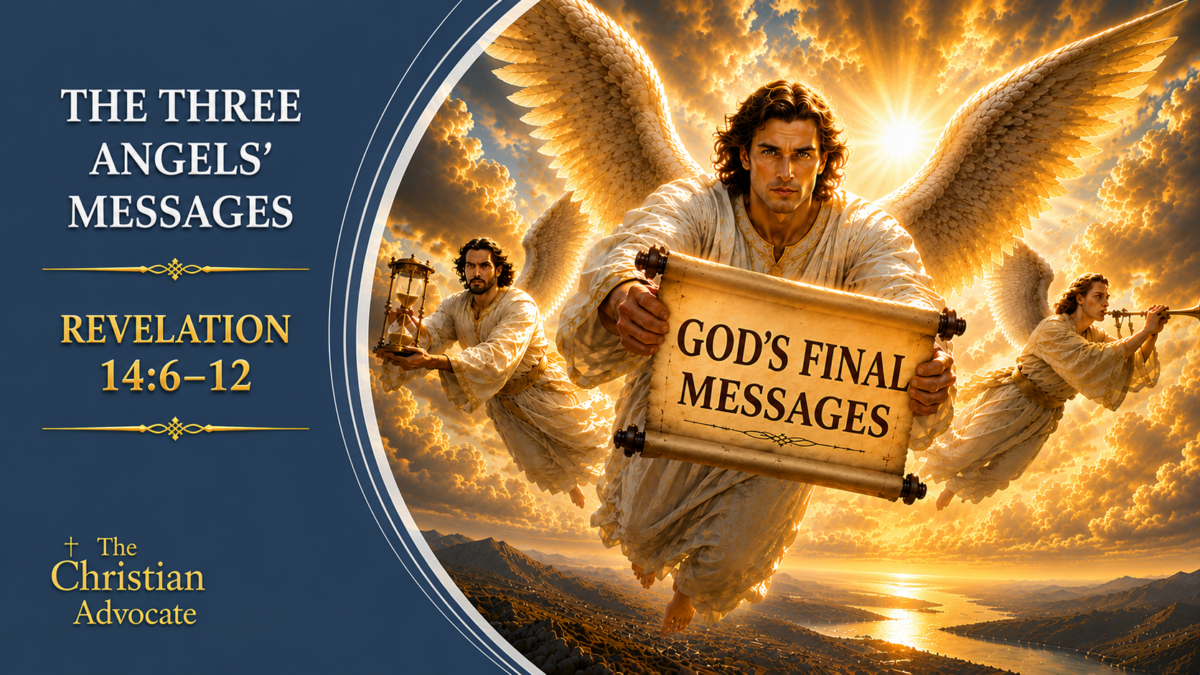
The Three Angels Message
The three angels’ message is related to the second coming of Jesus Christ. What is it, and who should receive it? In this article, we explain the Three Angels Message.
What is the Three Angels Message?

The Three Angels Message interprets the messages given by the three angels in Revelation 14:6–12. It is part of John’s vision of the end times while exiled on the island of Patmos.
In this passage, three angels contrast the destiny of Christians with that of unbelievers. This contrast represents a shift away from the anticipated triumph of God’s people (vss. 1-5). It contrasts with the pouring out of the seven bowl judgments on the earth prior to Jesus’s return. In essence, God will judge evil.
The doctrine holds that these messages prepare the world for God’s second coming.
The Three Angels Messages
To examine these messages, we first look at Rev 14:6-7.
6 And I saw another angel fly in the midst of heaven, having the everlasting gospel to preach unto them that dwell on the earth, and to every nation, and kindred, and tongue, and people,
7 Saying with a loud voice, Fear God, and give glory to him; for the hour of his judgment is come: and worship him that made heaven, and earth, and the sea, and the fountains of waters.
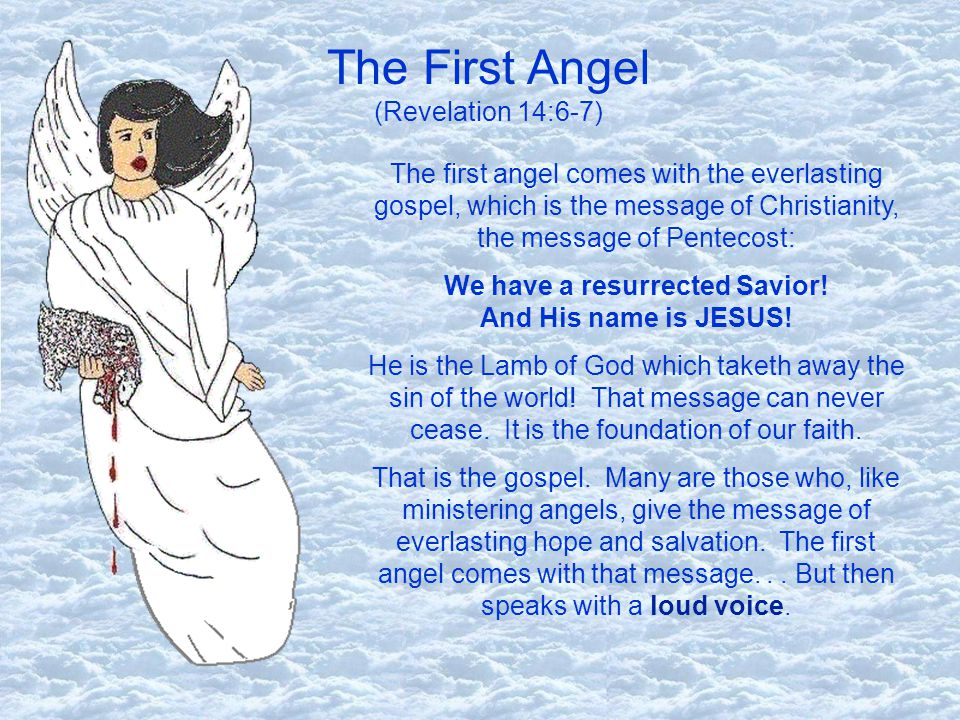
The first angel’s message prompted people to fear God and worship him because the hour of his judgment had come. The “everlasting gospel” was still the Good News. Even in these final moments of judgment, God gave the people the opportunity to repent. This announcement may be the final fulfillment of Jesus’ prophecy, “If the Lord had not cut short those days, no one would survive. But for the sake of the elect, whom he has chosen, he has shortened them.” (Mark 13:20 NIV ).
The phrase “fear God, and give glory to him” is the essence of the believers’ duty to God. The word “fear” refers to respect and reverence. The word “glory” means recognizing God’s power and giving him the honor He is due.
Some Bible students see this as an announcement of judgment rather than an appeal. People around the world had their chance to proclaim allegiance to God. Now God’s great judgment is about to begin. This final worldwide appeal urges all peoples to accept Jesus, the Son of the one true God. No one would have the excuse of never hearing God’s truth. This vision depicts a future scene. Nevertheless, it is unknown whether God will give the world one more chance at that point. What is known is that He offers that chance to the ones who read and study John’s vision now (Rev. 1:3) and receive it.
The message will be proclaimed to everyone; therefore, no one will have the excuse that they did not know the gospel message. As Paul wrote in Romans 1:20, “…they have no excuse for not knowing God.” NLT
This truth is a central theme of Revelation. Whenever there has been a time of judgment, there has been a preceding time of warning. Scripture states in Amos 3:7, “Surely the Lord GOD will do nothing, but he revealeth his secret unto his servants the prophets.” One of Jesus’ functions on earth was that of a prophet. He issued numerous warnings through His discourses and parables about His return and the need to be prepared for it.
People are being granted the opportunity to repent. However, those who refuse want nothing to do with God. Therefore, their punishment will be justified.
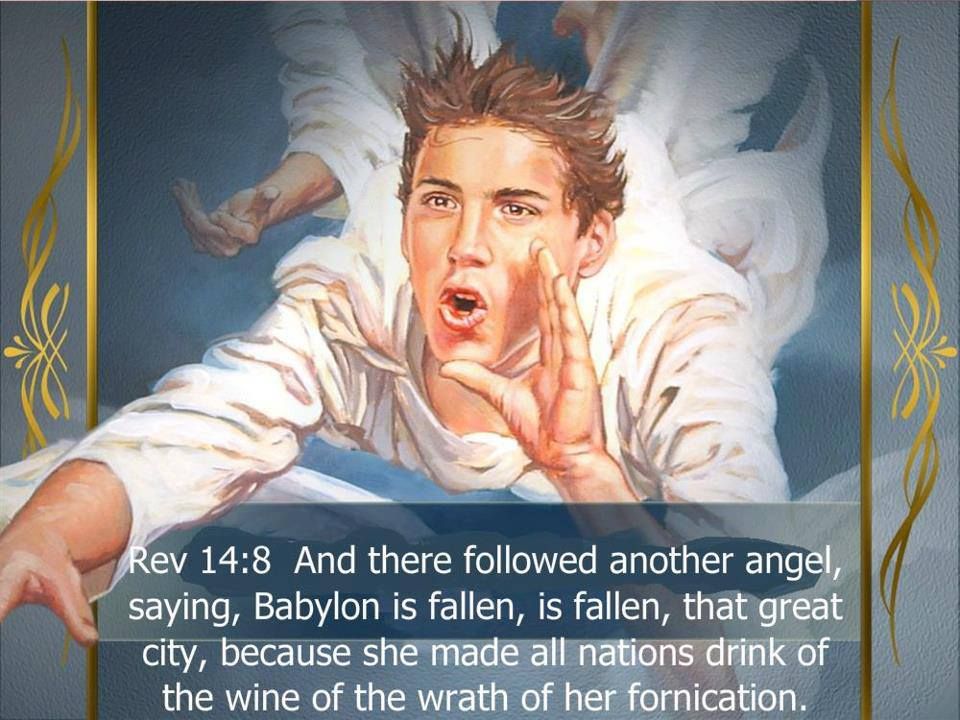
Revelation 14:8
8 A second angel followed and said, “Fallen! Fallen is Babylon the Great, which made all the nations drink the maddening wine of her adulteries.” NIV
The second angel’s message came from the angel who had followed the first through the skies, pronouncing that Babylon is fallen. This event was also prophesied in the Old Testament (Isa. 21:9, Jer. 51:8).
In the Old Testament, Babylon was synonymous with an evil city and an evil empire — a world center for idol worship. Outside that city, King Nebuchadnezzar had built a great statue for himself, and everyone needed to worship it (Dan 3:1-6; compare Rev 13:14-15).
Nebuchadnezzar had reached the height of power and pride but found himself judged by God (Dan 4:28-33). The Babylonians had gone through Jerusalem and taken many of Judah’s citizens into captivity (see 2 Kings 24 and 2 Chron. 36).
As Babylon had been Judah’s worst enemy, the Roman Empire was the main earthly enemy of the early Christians. But openly condemning Rome could certainly have placed John and the Christian communities in greater danger.
However, it is important to understand that John did not invent or alter the language of the prophecy. Christ instructed him to write what he saw (Rev. 1:10–11). When the second angel declares, “Babylon is fallen,” John records the message as he received it. The symbolism itself identifies Rome with the pattern established by ancient Babylon—an idolatrous power that opposed God and oppressed His people.
“Babylon” is the name of the civilization seduced by the beast (see also 17:1-9).
Presently this world system is filled with idolatry, corruption, and sexual sin (18:2-3, 7), a wellspring of ungodly religion, government, and economics.

Rev 14:9-11
9 And the third angel followed them, saying with a loud voice, If any man worship the beast and his image, and receive his mark in his forehead, or in his hand,
10 The same shall drink of the wine of the wrath of God, which is poured out without mixture into the cup of his indignation; and he shall be tormented with fire and brimstone in the presence of the holy angels, and in the presence of the Lamb:
11 And the smoke of their torment ascendeth up for ever and ever: and they have no rest day nor night, who worship the beast and his image, and whosoever receiveth the mark of his name.
The third angel’s message explained to the nonbelievers what would happen to them if they received the beast’s mark. Their eventual judgment would be much worse, and the consequences eternal. The beast’s mark is false worship, and churches that fail to abandon this worship become churches of Babylon. For more details on the beast mark, please read 666 Mark of the Beast on this website.
While those who belong to God will suffer and be killed, they will have a glorious eternity awaiting them (14:1-5). These are the saints that have endured and kept the Commandments of God. This is where the seed that Jesus planted on the cross comes to fruition.
Those who worship the beast and accept his mark, however, would choose to operate according to the Antichrist’s world economic and religious system and ultimately face God’s judgment. These individuals would have turned away from God to obtain what the world values, thereby violating Christian principles.
Therefore, they will have to drink “the wine of the wrath of God.” The Old Testament regularly depicts God’s anger as in a cup, ready to be poured out (e.g., Job 21:20; Ps. 75:8; Isa. 51:17; Jer. 25:15-38). This cup of wrath is undiluted, “without mixture.” This description refers to the usual Roman practice of diluting wine with water. God’s wrath will be in its most potent form. The full extent of his anger, not watered down by mercy and grace, would soon be poured out on those individuals who had steadfastly declined to repent of sin and receive His salvation.
Their anguish will be with fire and burning sulfur. This description is a depiction taken from the destruction of Sodom and Gomorrah, two sinful cities that God had destroyed with “fire and burning sulfur” that “rained down from heaven” (Gen 19:24). Fire and sulfur are used as instruments of torture in Revelation 19:20, 20:10, and 21:8. The actual picture may be symbolic. Still, there is no question about the horror and conclusiveness of this judgment, as “the smoke of their torment” rises forever and ever.
In contrast, the redeemed could “rest from all their toils and trials” (14:13 NLT), but the unbelievers will have no release, day or night, from their suffering. Having chosen the side of the beast, they will suffer for it. Jesus described eternal punishment as “fire that never shall be quenched” (Mark 9:44, cf. Rev. 20:10).
God has assured in other passages that He will penalize sin (e.g., Rom 2:6-11; 12:19). The wicked will be avenged for how they have discarded God and neglected their fellow human beings (Matt 13:41-42; 16:27). Jesus assured that Satan, his demons, and the wicked would be cast into hell at the final judgment (Matt 25:41).
While Scripture uses imagery of fiery sulfur, destruction, and darkness for hell (Matt 7:13; 18:8; Jude 13; Rev 14:10), it gives few details. Jesus used the Greek word Gehenna to depict hell. The word hell alludes to the valley of Ben Hinnom, where, at times, Old Testament Israelites would sacrifice their children to idols (2 Chron. 28:3), and later where they burned their garbage and refuse (Jer. 7:31). Jesus continually warned that hell would be a fate far worse than physical death. The Scriptures repeatedly describe hell as a place where one is utterly alone, rejected by God, and excluded from His presence (Matt 25:12, 41; Luke 13:24-28; 2 Thess. 1:8-9).
Conclusion
We are to spread the everlasting gospel, come out of the spiritual impurity of Babylon, and avoid the mark of the beast.
The three angels’ message is solemn. It encourages decisive action on our part and imposes severe consequences for inaction. However, there are also significant and glorious blessings for those who obey God’s Commandments. Rev 14:13 reads, “Then I heard a voice from heaven say, Write: Blessed are the dead who die in the Lord from now on.” “Yes,” says the Spirit, “they will rest from their labor, for their deeds will follow them.” NIV
Blessed are they that die “in the Lord,” meaning those who have accepted Jesus as Lord and Savior and keep the Commandments of God. In addition, “their deeds” include heeding the three angels’ messages and encouraging others to do the same.
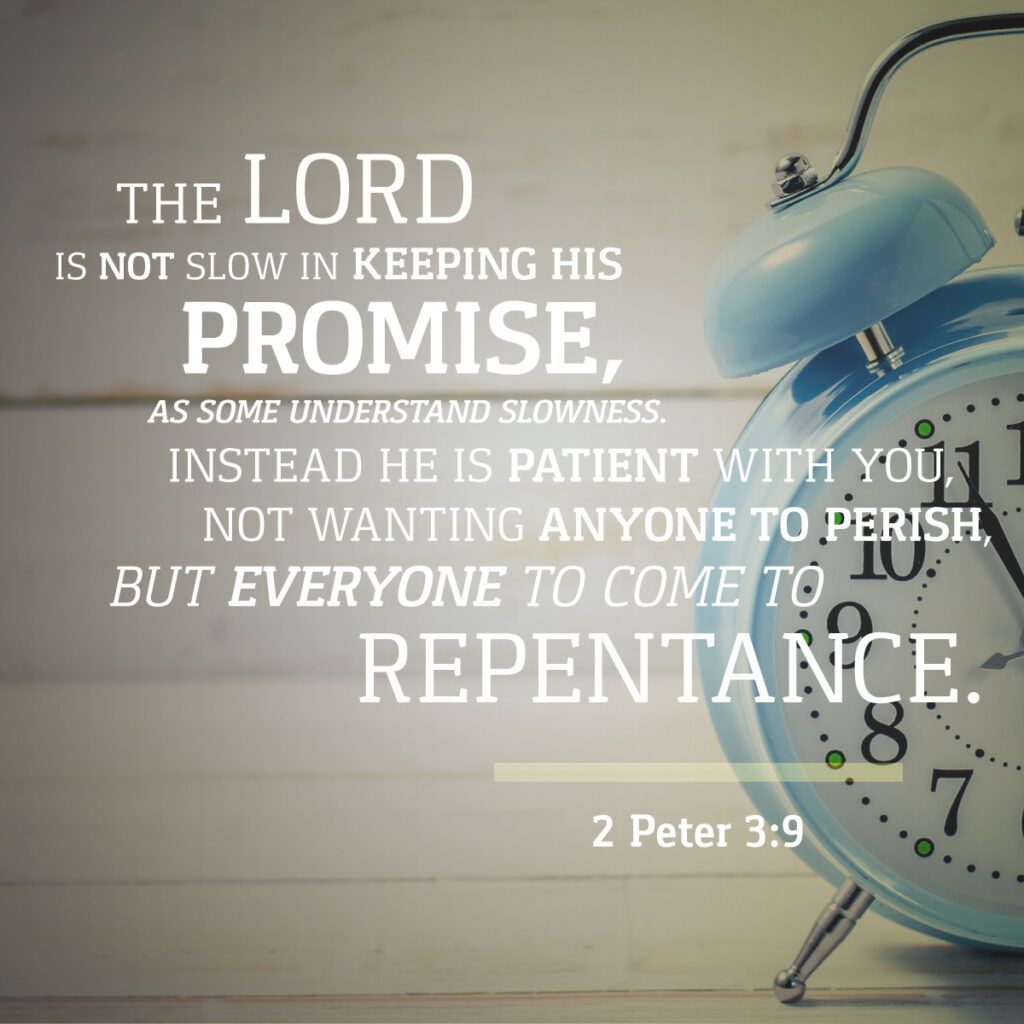
Upon reading this article, you have already witnessed God’s truth. You know that God’s final judgment will not be delayed eternally (2 Peter 3:9). If you have joyfully received the everlasting Good News, confessed your sins, and trusted in Christ to save you, then you have nothing to fear from God’s judgment. The Judge of the whole earth, Jesus Christ, is your Savior! Rom 8:1 reads, “There is therefore now no condemnation to them which are in Christ Jesus, who walk not after the flesh, but after the Spirit.”
The whole human race is on death row, on its way to hell, justly condemned for repeatedly breaking God’s holy law. Were it not for Jesus, there would be no hope at all. But praise God! For He has declared those who have accepted His Son not guilty and has offered us freedom from sin and the power to do his will.
Amen
Questions, comments, and concerns are welcomed below.
Blessings!
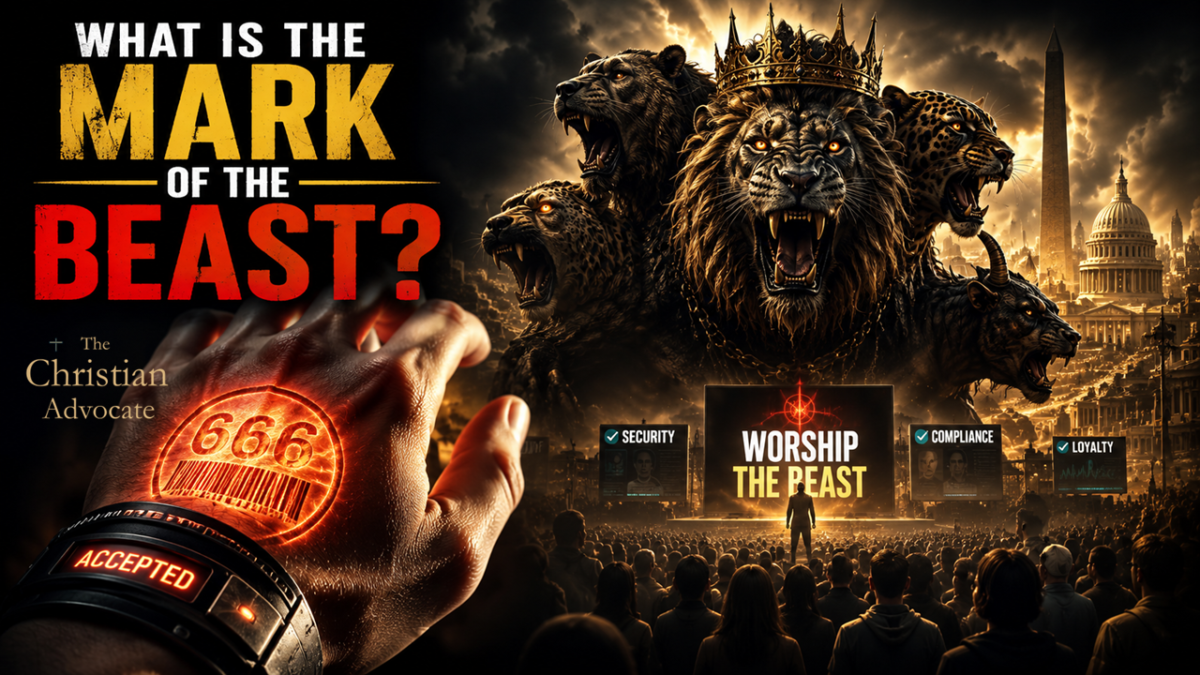
 tribulation, Christians will face dreadful times. They will have to reject Christ and accept the mark of the beast or else face death. But if they persevere for Christ, if they are sincere in believing that heaven is real and that Christ loves them, only then will they escape the judgment of God. However, only those who persist and truly set their lives apart unto God, only those, will avoid the coming judgment.