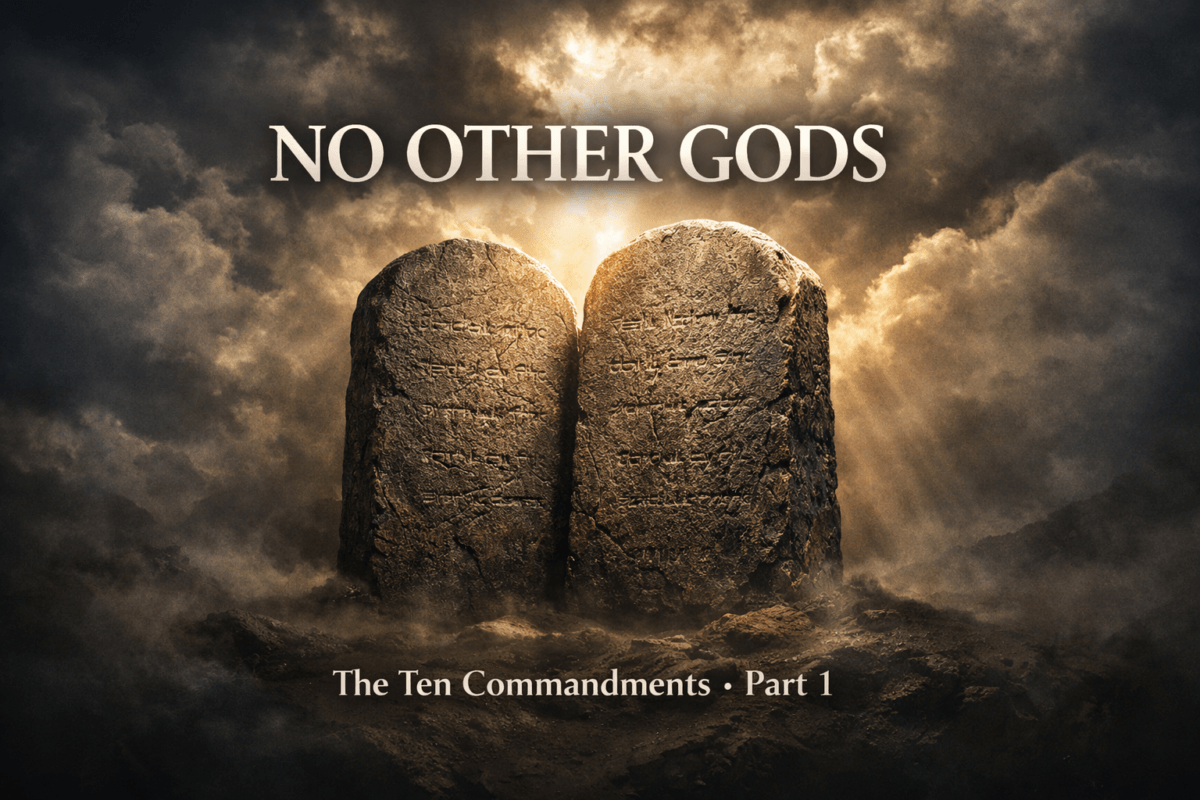
The Ten Commandments (Part 1): No Other Gods

Introduction

In the previous presentation titled “Law or Grace: Are Christians Still Under the Law Today,” I laid the foundation of this series on the Law. In it, I made clear, through the Scriptures, that we are under both the Law and grace. Now that it is clear that the Law applies to us, the balance of this series will be an exposition of each of the Ten Commandments, which are the base of the Law, and how they apply to our lives today as Christians. This article, The Ten Commandments (Part 1): No Other Gods, is the first of ten articles addressing each of these Laws.

What are the Ten Commandments?

With the foundation of the Law in place, the next question becomes simple and necessary. What are the Ten Commandments? The Ten Commandments are ten Laws handed to Moses from God on Mt. Sinai, also known as Mt. Horeb. God presented them on tablets of stone.  As mentioned earlier, these Laws are the basis of the Mosaic Law. All of the Commandments contained in the Old Testament Law (613) derive from these Ten Commandments.

Moses holding the Ten Commandments tablets on Mount Sinai.

The Ten Commandments Listed

They are as follows:

1.                    You shall have no other gods before me

2.                    You shall not make for yourself a carved image

3.                    You shall not take the name of the Lord your God in vain

4.                    Remember the Sabbath day, to keep it holy.

5.                    Honor your father and your mother

6.                    You shall not murder

7.                    You shall not commit adultery

8.                    You shall not steal

9.                    You shall not bear false witness against your neighbor

10.              You shall not covet

The Structure and Purpose of the Law

When we look at these ten laws together, it becomes clear why they stand at the heart of all moral law. Because if the world obeyed these Laws, what a different world would we live in!

The initial four commandments focus on how we connect with God, while the remaining six address how we interact with other people—a complete package. We can’t go wrong if we follow God’s Laws!

Therefore, these commandments are not random or disconnected; they are carefully ordered to address every relationship in life.

The First Commandment

In this article, we will begin by discussing the first Commandment. To understand the weight of the first commandment, we must hear it directly from God Himself.

The First Commandment in Scripture

So, let’s look at this Commandment in Scripture, Exodus 20:1-3 NKJV:

1. And God spoke all these words, saying:

2.“I am the Lord your God, who brought you out of the land of Egypt, out of the house of bondage.

3.“You shall have no other gods before Me.

Before we look at the command itself, notice how God introduces it by looking closely at verse 2, which quotes God as saying, I am the Lord your God, who brought you out of the land of Egypt, out of the house of bondage.”

One thing is clear: our God is not shy! Here He is making his position crystal clear. It is He who freed the Israelites from bondage. It is He that bought the Israelites out of Egypt, it is He that provided for them in the wilderness into the Promised Land, and as a result He is to receive the honor and the glory—nobody else!

Therefore, in verse 3, He said, “You shall have no other gods before Me.”

What the First Commandment Declares About God

This first commandment addresses what is forbidden and how it can be violated. It focuses on the nature of God, declaring that only He is the Supreme Being and the ultimate authority in the universe. No other being or god shares His role as Creator, ruler, or sovereign over all existence. God alone is the living and true Lord and Creator.

This commandment is not vague or symbolic; it establishes clear and uncompromising boundaries regarding who God is.

Three Uncompromising Truths of the First Commandment

This commandment establishes three clear and uncompromising truths.

Firstly, individuals should refrain from regarding themselves as deities. It is important to recognize that neither humans nor any other entity or force within the universe constitutes the ultimate origin of existence.

Secondly, people should not consider animals, other creatures, or material objects to be God. Individuals are also advised not to look to the sky, the earth, or the sea and claim that anything found there is divine.

Thirdly, Man is not to believe in many gods (polytheism). There is only one living and true God, only one true Architect, only one Lord and Majesty of the universe (monotheism). Therefore, man is to have no other gods of any kind. All other so-called gods are nothing more than things created by the imaginations and thoughts of individuals.

Modern Forms of Idolatry

Moreover, if we allow something else to take priority in our hearts and minds—if it demands the love and devotion meant only for the true God—it essentially becomes a different god to us. Anything that our heart holds onto above all else transforms into our god.

When the true God is displaced from the heart, something else inevitably takes His place.

Common Modern Examples of False Gods

Consequently, let’s consider some common modern examples:

• The proud person worships themselves.

• The ambitious seek approval as their highest aim.

• The covetous make wealth their priority.

• The greedy hold possessions above all else.

• The immoral elevate desire for sex.

• The glutton values food most.

• The doting lover puts another person before everything else.

Anything we value, love, fear, or serve more than God can become our “god.” Essentially, whatever our hearts cling to fills that role—even ourselves. In fact, many people are primarily devoted to pleasing themselves, prioritizing their own values, feelings, comfort, desires, and pleasures. They act according to their own wishes and follow their personal path, effectively putting themselves in the place of God. Others might turn different things into their gods, from heavenly bodies to recreation.

A god can be anything or any person. However, our first allegiance, first loyalty, first devotion is to be to the Lord God. The Lord God is to be first in an individual’s life; He is to be enthroned in the heart of mankind. An individual is to know and acknowledge that there is one God and one God alone.

Bottom line: The first commandment of the Lord is to be obeyed.

False Worldviews That Reject God

Now let’s look at this in today’s world. Again, verse 3 quotes God as saying, “You shall have no other gods before Me. On the contrary, we have all kinds of doctrines of the world advancing principles contrary to God.

This commandment is not confined to ancient Israel; it directly confronts the belief systems shaping our world today.

For example:

We are not to deny God, declaring there is no God (atheism).

⇒           We are not to question God, saying God may exist but He also may not exist (agnosticism).

⇒           We are not to declare that man himself is the supreme being, the ultimate authority of his world (humanism).

⇒           We are not to look to science and technology as the ultimate power in life (secularism)

Here are a few of the doctrines in the world today that refute God.

The Consequences of Obeying and Disobeying

Scripture does not leave this commandment in the realm of theory—it reveals real consequences tied to how we respond to it.

Now, let’s look at the Biblical consequences of obeying and disobeying this first Commandment.

The Consequences of Disobeying

God is grieved when we don’t follow Him and sin.

We often think first about how sin affects us, but Scripture shows that rejecting God first affects God Himself.

Consequences Upon God

Foremost, we must realize that there are consequences upon God himself when we disobey. Especially this Commandment. There is a reason why it is the first Commandment.

The first consequence is: the individual who chooses not to follow God pierces the very heart of God, causing pain and hurt for Him.

Let’s look at some examples, 1 Samuel 8:7-8: NKJV

7.  And the Lord said to Samuel, “Heed the voice of the people in all that they say to you; for they have not rejected you, but they have rejected Me, that I should not reign over them.

According to all the works which they have done since the day that I brought them up out of Egypt, even to this day—with which they have forsaken Me and served other gods—so they are doing to you also.

The pain in God’s heart can be seen here. This is when Israel demanded to be ruled by a king rather than by God. They desired man over God? What a foolish choice!

Let’s look at another example, Psalm 81:11 NKJV

11.“But My people would not heed My voice, And Israel would have none of Me.

Again, you can see God’s pain and disappointment.

Moving to the next example of how rejecting God pierces His heart. Despite the rejection of His people (including us today), He patiently waits.

2 Peter 3:9 NKJV

9. The Lord is not slack concerning His promise, as some count slackness, but is longsuffering toward us, not willing that any should perish but that all should come to repentance.

We’ve seen how not accepting God affects Him, but in this verse we see that He is still patiently waiting, hoping that all will come to repentance.

The next consequence is—the individual who does not follow God causes the name of God to be blasphemed.

Before we go further, in the Bible, blasphemy refers to speaking or writing with disrespect, mockery, or insolence to God, His name, His works, or the Holy Spirit. This serious sin involves slandering God’s character or sacred things. In the Old Testament, blasphemy was punishable by death; in the New Testament, it also includes denying Christ or wrongly claiming the Holy Spirit’s work is of Satan.

Let’s look at Romans 2:23-24 NKJV

23. You who make your boast in the law, do you dishonor God through breaking the law?

24. For “the name of God is blasphemed among the Gentiles because of you,” as it is written.

This is a strong admonition of hypocrisy. Professing Law keepers were, in actuality, breaking the Law. This caused God’s name to be blasphemed.

The next consequence that is upon God is – the person who does not follow God lives a life that is detestable to God.

Titus 1:16 NKJV

16. They profess to know God, but in works they deny Him, being abominable, disobedient, and disqualified for every good work.

Here we have more hypocrisy. Though they profess God, they live a life that, as the Scripture reads, is “disqualified for every good work.” A life that is despicable to God, as well as abominable, morally disgusting, and utterly loathsome to God, provoking His intense displeasure and judgment. Think He’s happy about this?

So, we see that when we choose not to follow God, He suffers.

These are the consequences for God.

Rejecting God not only wounds His heart—it also devastates the life of the individual who turns away.

Consequences Upon the Individual

Next, we look at the consequences on oneself, an individual’s day-to-day life.

First, the individual who does not follow God follows after dumb, lifeless idols, man-made gods that can never help them.

Jeremiah 16:20 NKJV

20. Will a man make gods for himself, Which are not gods?

Idolatry was the major reason for Israel’s judgment. In this verse, Jeremiah addresses idolatry as being utterly dumb and useless — lifeless objects incapable of saving, speaking, or acting..

Now think about it. How can we make an object ourselves and worship it, and expect to be blessed by it? It makes no sense! It’s dumb!

1 Corinthians 12:2 NKJV

2. You know that you were Gentiles, carried away to these dumb idols, however you were led.

Here, Paul reminded the Corinthians Christians that in the past they followed “dumb idols.”

The next consequence is – The person who does not follow God lives a life of hopelessness.

Ephesians 2:11-12 NKJV

11.  Therefore remember that you, once Gentiles in the flesh—who are called Uncircumcision by what is called the Circumcision made in the flesh by hands—

12. that at that time you were without Christ, being aliens from the commonwealth of Israel and strangers from the covenants of promise, having no hope and without God in the world.

Here again, Paul is addressing the previous state without God. This time to the Ephesians, that they were aliens and strangers from the covenant and had no hope without God.

Lastly, the person who does not follow God lives a life that is enslaved to sin.

Galatians 4:8-9 NKJV

8. But then, indeed, when you did not know God, you served those which by nature are not gods.

9. But now after you have known God, or rather are known by God, how is it that you turn again to the weak and beggarly elements, to which you desire again to be in bondage?

Here, Paul rebukes the Galatians for leaving the false gods and knowing the true God, only to return to the bondage of following the false gods again. When we don’t follow God—don’t obey God—or keep His Commandments, we are in bondage to sin.

If rejection of God remains unrepentant, Scripture shows that it ultimately leads to judgment.

The Consequence of Judgment

Next, we look at the consequence of Judgment.

The person who does not follow God will not inherit the kingdom of God.

1 Corinthians 6:9-10 NKJV

Do you not know that the unrighteous will not inherit the kingdom of God? Do not be deceived. Neither fornicators, nor idolaters, nor adulterers, nor homosexuals, nor sodomites,

10. nor thieves, nor covetous, nor drunkards, nor revilers, nor extortioners will inherit the kingdom of God.

Now this passage covers a gamut of unrighteous behaviors; all of which are against God’s Laws. The point is, you cannot be a follower of God and engage in sinful behaviors—live lives of iniquity. Those who do are under the influence of Satan. Sin is ubiquitous in the world, and as a result, the world will be judged. As Jesus said in John 16:11 regarding the functions of the Holy Spirit, He says, “of judgment, because the ruler of this world is judged.” This ruler is none other than Satan.

Next, the individual who does not follow God displeases God and arouses His anger and wrath.

In order to please God, the Father, and receive eternal life, we must believe in His Son. Let’s look at John 3:36 NKJV

36. He who believes in the Son has everlasting life; and he who does not believe the Son shall not see life, but the wrath of God abides on him.”

Let’s look at what Jesus said in John 14:6, NKJV

6. ““I am the way…, the truth…, and the life… No one comes to the Father except through Me.”

Now, it doesn’t get any clearer than this—but let’s go further:

John 8:24 NKJV

24. Therefore I said to you that you will die in your sins; for if you do not believe that I am He, you will die in your sins.”

Jesus was addressing the Pharisees firmly because they didn’t believe He was who He said He was (He had previously said He was the light of the world). So because of their unbelief, they were sinners, and He declared that they would die in their sins.

Today, individuals will die in their sins if they reject Jesus, because they are rejecting the only way to be rescued from sin. Regrettably, many are so preoccupied with the values of this world that they are blind to the priceless gift that only Christ offers.

Next, 2 Thessalonians 2:12 [NKJV]

Paul was recounting the events preceding the second coming of the Lord. And he said in verse 12:

12. that they all may be condemned who did not believe the truth but had pleasure in unrighteousness.

Those who don’t believe the truth of God and Jesus and instead choose unrighteousness will be condemned and judged.

Next, the person who does not follow God shall face the fierce judgment of God and perish.

2 Peter 3:7 NKJV

7. But the heavens and the earth which are now preserved by the same word, are reserved for fire until the day of judgment and perdition of ungodly men.

The first seven verses of this chapter 3 address mockery in the last days, and speak to judgment on the ungodly that was implemented in the past by the Word of God. And in verse 7, the Scripture makes clear that the same Word is preserving the world for the day of judgment on the ungodly; those who do not follow God.

Let’s look at John 12:48 NKJV

48. But all who reject me and my message will be judged on the day of judgment by the truth I have spoken.

The initial mission of Jesus on earth was to guide individuals toward salvation and eternal life, rather than to pass judgment. However, upon his return, a principal objective will be to evaluate individuals based on their actions during their lives on earth. According to Christ’s teachings, those words that are not accepted and followed will serve as grounds for condemnation.

Bottom line – those who reject Jesus and live any way they please will face eternal punishment (cf. Revelation 20:11–15).

So, we have seen, in Scripture, the terrible consequences of not following the true God and following other gods.

The Consequences of Obeying

But God does not leave humanity under condemnation alone—He provides a way of redemption and blessing through Jesus Christ.

Next, we look at the blessed consequences—the benefits of keeping this Commandment of not following false gods.

Keeping this commandment brings blessings from the Lord, the only living and true God, to those who believe in and follow Him.

Now, originally this applied to the Jews, and everybody else was cursed by the Law, but with the advent of Jesus, His death and resurrection opened the way for all. Let’s look at this in Galatians 3:13-14, 28-29: NKJV

13. Christ has redeemed us from the curse of the law, having become a curse for us (for it is written, “Cursed is everyone who hangs on a tree”),

14. that the blessing of Abraham might come upon the Gentiles in Christ Jesus, that we might receive the promise of the Spirit through faith.

With the Advent of Christ, this curse was lifted and opened to all who accept Christ Jesus, the covenant God made with Abraham.

Let’s look at the result.

28. There is neither Jew nor Greek, there is neither slave nor free, there is neither male nor female; for you are all one in Christ Jesus.

29. And if you are Christ’s, then you are Abraham’s seed, and heirs according to the promise.

PRASE God!

So, for us today, following God through His Son Jesus Christ opens the door to the wonderful benefits of His grace.

Let’s look at some Scripture illuminating these benefits.

To begin, an individual who sincerely holds faith in God will attain salvation, eternal life, and not face condemnation through God’s Son, the Lord Jesus Christ.

Let’s look at the promise by Jesus in John 3:16-18 NKJV

16. For God so loved the world that He gave His only begotten Son, that whoever believes in Him should not perish but have everlasting life.

17. For God did not send His Son into the world to condemn the world, but that the world through Him might be saved.

18. “He who believes in Him is not condemned;

Here we have the promise by the Lord Himself. He came to save the world that the world through Him might be saved; saved from eternal death to eternal life.

Let’s look at some benefits while we are here on earth today.

An individual who maintains faith in God is likely to experience a sense of peace, serenity, and confidence throughout life, as they place their trust in God and remain mindful of Him.

Let’s look at Isaiah 26:3 KJV

3. Thou wilt keep him in perfect peace, Whose mind is stayed on thee: Because he trusteth in thee.

This verse is part of Israel’s kingdom song, singing to the Lord, and stating that those who keep their mind on Him, and trust Him, will be in perfect peace.

New Testament—Romans 5:1-4 NKJV

1.Therefore, having been justified by faith, we have peace with God through our Lord Jesus Christ,

2. through whom also we have access by faith into this grace in which we stand, and rejoice in hope of the glory of God.

 And not only that, but we also glory in tribulations, knowing that tribulation produces perseverance;

4. and perseverance, character; and character, hope.

This just get’s better and better. Even during our time in tribulations, we have peace because we recognize that they work for good. [Romans 8:28]

Continuing on trials and tribulations, let’s look at Psalm 34 19: NKJV

19. Many are the afflictions of the righteous, But the Lord delivers him out of them all.  

If we follow and trust God, He will be our source, and He will deliver us from our afflictions and trials.

This brings us to another advantage: those who have faith in God receive ongoing strength from Him each day, even sharing in God’s own enduring power.

Isaiah 26:4 NKJV

4. Trust in the Lord forever, For in Yah, the Lord (Yahweh), is everlasting strength.

As we trust in the Lord, the true God, we have the assurance of His everlasting strength.

Finally, individuals who maintain faith in God, trust that they will be guided, supported and directed by God’s divine care.

Psalm 37:5 NKJV

5. Commit your way to the Lord, Trust also in Him, And He shall bring it to pass.

Proverbs 3:5-6 NKJV

5. Trust in the Lord with all your heart, And lean not on your own understanding;

6. In all your ways acknowledge Him, And He shall direct your paths.

So, the first Commandment is “thou shalt have no other gods before me. If we follow Him—obey His Commandments, we will be blessed!

The Heart of the First Commandment

At its core, the first commandment is not merely about restriction—it is about love.

As Jesus answered the lawyer regarding the greatest commandment in Mark 12:37,  ‘You shall love the Lord your God with all your heart, with all your soul, and with all your mind.’ 38 This is the first and great commandment.

The first commandment is foundational because all other commandments flow from it.

Loving God is the greatest thing we can do!

Amen!

Questions, comments, and concerns may be left below.

Next, we’ll look at the second Commandment:

You shall not make for yourself a carved image

Blessings!

👉 Watch the Full Video Presentation

👉 Watch the 60-Second Version



Battling Spiritual Warfare

This is the final article ending the series on Spiritual Warfare.  The previous (6) articles focused on the fact that when we receive Christ as our Lord and Savior, war is declared on the soul through the mind.  They defined spiritual warfare and covered the manifestations that result.  Now this article explains how we fight and win this war.  This article is about Battling Spiritual Warfare.

The Christian Life is a Battlefield

Continue reading “Battling Spiritual Warfare”

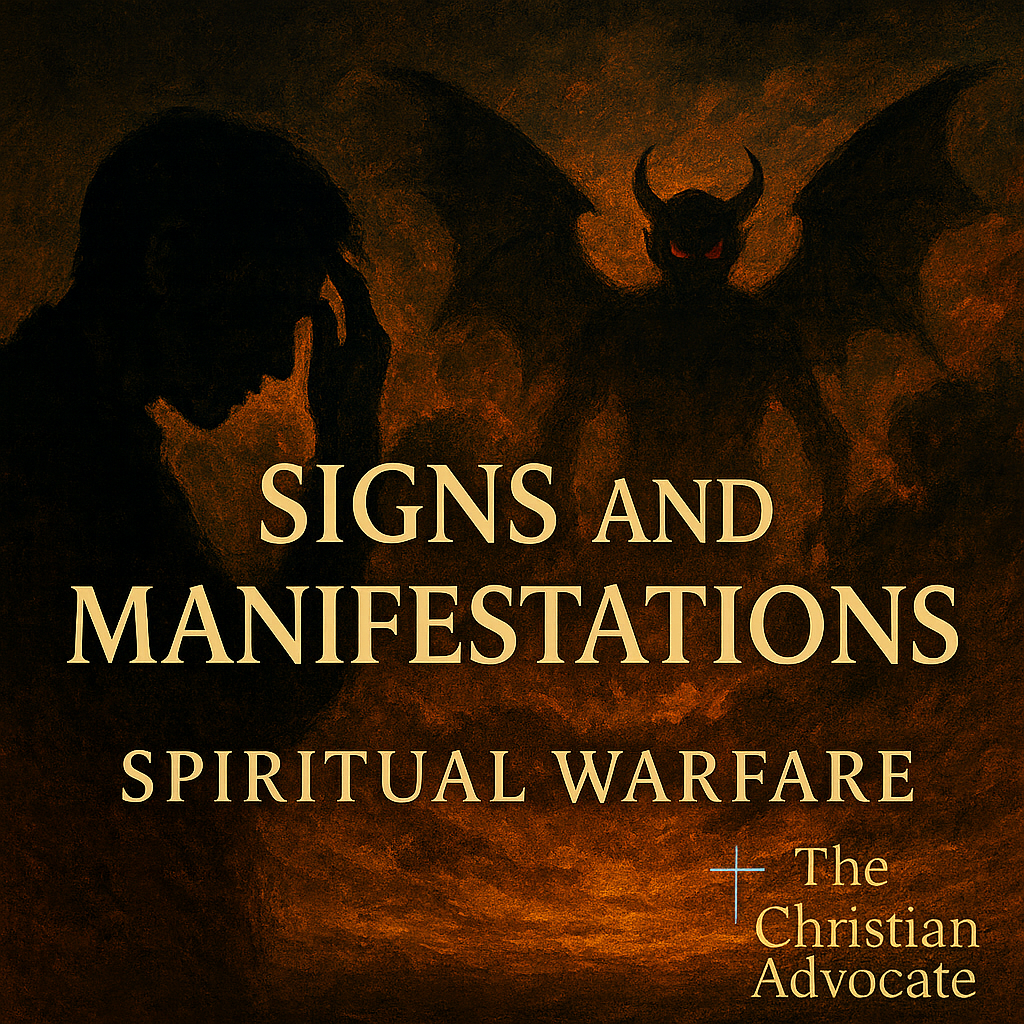
Spiritual Warfare: Signs And Manifestations Of Spiritual Attacks

Spiritual Warfare: Signs and Manifestations of Spiritual Attacks

Spiritual warfare is not a theory; it is a daily reality for every believer. In the article “Spiritual Warfare Pt.: Signs and Manifestations of Spiritual Attacks,” I examine how the invisible war in the spiritual realm manifests in real life—what it looks like, how it behaves, and how it affects both individual believers and the church at large.

This article follows the same teaching.

Spiritual Warfare: Signs and Manifestations of Spiritual Attacks

In this article, we will examine how the invisible war in the spiritual realm manifests in real life—what it looks like, how it behaves, and its impact on both individual believers and the church as a whole.

A manifestation is a sign or event that shows something exists or is happening. In the previous parts (1, 2, and 3), it has been made clear that Christians are engaged in a spiritual war, where it began, and who is at the helm of this opposing force—none other than Satan. Now we turn to the results of this ongoing war.

The key thing to remember throughout this teaching is this:

What happens in the natural world happens first in the spiritual.

If you have not read parts 1, 2, or 3, I encourage you to review them. This article builds on that foundation.

The Prince of the Power of the Air

Before we look at the manifestations, we need to remind ourselves who the enemy is.

Satan is a formidable foe. Before his fall, he was the most powerful angel in heaven, as described in Part 1. When he was cast out of heaven, he did not lose his power—he took it with him, along with a third of the angels (Rev. 12:4).

Paul describes him in Ephesians 2:2, speaking of the condition of Christians in Ephesus before they accepted Christ and walked in His Spirit:

“…in which you once walked according to the course of this world, according to the prince of the power of the air, the spirit who now works in the sons of disobedience.” (Ephesians 2:2, NKJV)

“Silhouette of a demonic winged figure rising above a dark city skyline under a stormy, fiery sky — symbolizing Satan as ‘the prince of the power of the air’ from Ephesians 2:2.”
The Prince of the Power of the Air

Notice this title: “the prince of the power of the air.”

·       He is called a prince – a title of authority, an exalted position.

·       But a prince is still subject to the King, so he does not have all authority.

·       However, he has more than enough to cause devastation, because he influences “the power of the air.”

Where is the air? Everywhere. There is no place on earth where there is no air. Air sustains life. So, if Satan is the prince of this power, he is exercising influence all over the world. Jesus Himself acknowledges this in John 16:11, referring to Satan as “the ruler of this world.”

What does this mean for us?

It means that Satan’s influence is all over this world. That is why the Scripture says in James 4:4:

“…Friendship with the world is enmity with God.”

His influence reaches into everything. He even tried to use that influence on Jesus Himself. Look at Matthew 4:8–9:

8. “Again, the devil took Him up on an exceedingly high mountain, and showed Him all the kingdoms of the world and their glory.

9. And he said to Him, ‘All these things I will give You if You will fall down and worship me.’” (Matthew 4:8–9, NKJV)

This reveals Satan’s ultimate goal: he wants worship. He wants all worship. And he uses his influence to get it.

He did not get it from Jesus (thank God), but he is getting it from others—including professing Christians. Hence, the spiritual warfare and the ongoing battle for souls.

One of Satan’s most effective tools is deception. When Jesus spoke His prophecy to the disciples regarding the end times, the very first thing He said was:

“Take heed that no one deceives you.” [Matthew 24:4]

But are we listening?

Satan’s Influence on This World

Understand this: Satan’s influence is in everything:

·       The government and politicians

·       The entertainment industry—Hollywood

·       The music industry

·       The sports industry

·       Wall Street

·       Big Pharma

·       And yes—even the schools

Take the music industry for example. Music originated in heaven, but you would never know it listening to much of the music today. That is a manifestation of spiritual warfare.

Satan has many of these industries pretty much sewn up.

But his main target is Christians.

Fence-Sitting Christians: A Frightening Manifestation

Satan’s attack on Christians is so strong that he has many believers sitting on the fence.

For those who may not be familiar with that expression, picture someone sitting on a fence along a path between two forces. They are not on one side or the other—stagnant, suspended between two choices.

This is a figurative illustration of a Christian who is professing Christ, but at the same time is friends with the world—living and thinking like a worldly person. It is a position of compromise and a manifestation of spiritual warfare.

“Silhouette of a young woman sitting on a fence at sunset, torn between the world and Christ, facing a distant cross — a visual illustration of spiritual warfare, compromise, and the dangers of being a worldly Christian.”
The Path of Compromise!

There are professing Christians who walk—live—in that position:

·       Sitting on the fence between two worlds

·       The world pulling from one side.

·       Christ calling from the other.

They face both directions but follow neither, even though they profess Christ. They are not walking with the world…they are not walking with God…they are:

·       Spiritually stuck

·       Spiritually stalled

·       Spiritually powerless

·       Ineffective

No good to God and no good to themselves.

This is exactly what Paul warned about in 2 Timothy 3:5. The context in verses 1–9 is the coming apostasy in the last days—which is now. Verse 5 says:

“…having a form of godliness but denying its power. And from such people turn away!” (2 Timothy 3:5, NKJV)

These, my friends, are fence sitters. They may look toward Christ and even have an outward appearance of religious godliness, but they lack a true, transformative inner faith. They inadvertently deny God’s power.

They are paralyzed on the fence.

This is a manifestation of spiritual warfare.

Satan has injected so much false doctrine into the church, and there is so much of the world in the church these days, that the fence can hardly hold all the compromised Christians.

False Doctrine #1: “Once Saved, Always Saved”

One of the popular false doctrines is: once saved, always saved—that when an individual accepts Christ, they can never be lost, even if they later backslide into sin.

Is that true or false?

In Part 3, The Mind Is the Battlefield, I explained how we are led either by the flesh or by the Spirit of God. The choice is always ours—even after we are saved—because Satan’s tactics are always on the offensive.

If we can choose not to follow the Spirit, can we not backslide into sin?

Let us look at some Scripture.

In Ephesians 4:23–24, Paul exhorts Christians to “put on the new man”:

23. and be renewed in the spirit of your mind,

24. and that you put on the new man which was created according to God, in true righteousness and holiness.”

Then in verse thirty, he adds:

“And do not grieve the Holy Spirit of God, by whom you were sealed for the day of redemption.” (Ephesians 4:30)

The Greek word translated “grieve” is lupeō—to distress, to make sad. When we grieve the Holy Spirit, we grieve God. Christians are to live in such a way that we do not grieve God by our conduct—our attitudes, and actions.

Wrong attitudes and actions hamper the Spirit’s work, making Him less effective in our lives.

Some will say, “But it says we’re sealed until the day of redemption.” Seal here refers to a mark or stamp, as with official documents in biblical times. It does not mean a container sealed shut that can never be opened.

And notice it says, “sealed for the day of redemption,” not “sealed until the day of redemption.”

We carry this seal of God if we do not grieve Him. The fact that we can have this seal for the day of redemption should motivate us to maintain righteousness.

Paul gives another warning in 1 Thessalonians 5:19:

19. “Do not quench the Spirit.”

Here, Paul goes further—not just “do not grieve” the Spirit, but “do not quench Him. The Greek word translated “quench” is sbennumi—to extinguish, to put out, like water putting out a fire.

We can literally put out the Spirit’s influence on our lives by our conduct.

Quenching the Spirit involves any action that hinders the work of the Lord in our lives or in the lives of others. Many Christians are guilty of quenching the Spirit when they throw cold water on His leading.

So, what happens when we quench the Spirit? Look at Romans 8:9:

9. “But you are not in the flesh but in the Spirit, if indeed the Spirit of God dwells in you. Now if anyone does not have the Spirit of Christ, he is not His.” (Romans 8:9, NKJV)

Romans 8 is one of my favorite chapters. Here, Paul is informing the Christians in Rome how the Spirit delivers from the power of the flesh. He tells them straight-up: anyone who does not have the Spirit of Christ does not belong to Christ.

Now let us connect the dots:

·       Scripture tells us we can quench—put out—the Holy Spirit.

·       Scripture also tells us that if we do not have the Spirit, we do not belong to Christ.

So, at that point, are we still saved?

I don’t think so!

There is no exception in Scripture that says, “Those who have once accepted Christ are exempt from this.” In fact, Paul is writing to Christians in Ephesus, Corinth, Rome, and Thessalonica.

In Ephesians 1:1–2 he opens:

1. “Paul, an apostle of Jesus Christ by the will of God,

2. To the saints who are in Ephesus, and faithful in Christ Jesus: Grace to you and peace from God our Father and the Lord Jesus Christ.”

He is speaking to saints—believers. The epistles are written to Christians, admonishing them not to grieve or quench the Spirit and warning that if they do, they do not belong to Christ.

Bottom line:

We are saved as long as we do not quench the Spirit.

Therefore, this business of “once saved, always saved” is, in a word…

HOGWASH!

It is a manifestation of spiritual warfare—teaching that we can sin and still be saved. That is just dreaming.

If all we had to do was accept Christ once and be perpetually saved no matter what, Satan would be out of business. But he is not. He continues to harass Christians in the hope that they will capitulate—as many do.

Excuses for Sin: Another Manifestation

The sad fact is that we make so many excuses for sin that are contrary to the Word of God.

Take fornication, for example. Some will say, “God knows I have needs. He understands.”

Well, of course, God knows you have needs—He created you. But what does His Word say?

“For this is the will of God, even your sanctification, that ye should abstain from fornication:” (1 Thessalonians 4:3, KJV)

This is just one of many Scriptures that address fornication. None of them say, “according to your needs.”

The New Living Translation puts it plainly:

“God’s will is for you to be holy, so stay away from all sexual sin.” (1 Thessalonians 4:3, NLT)

That is as clear as the rising sun. Fornication is the umbrella covering all sexual sin. When individuals go against this Word, it is another manifestation of spiritual warfare.

“All sexual sin” includes homosexuality. Some professing Christians will say, “They’re still human; they were born that way,” or “God loves them too.” Homosexuals may say, “I was born this way.”

Well, you were born that way? Welcome to the club. We were all born this way—born in sin.

David said in Psalm 51:5:

“Surely I was sinful at birth, sinful from the time my mother conceived me.”

Romans 3:23 says:

“…for all have sinned and fall short of the glory of God,”

All of us have some form of sin in us. All of us are experiencing some manifestation of sin because of spiritual warfare:

·       Some of us struggle with lying.

·       Some with stealing

·       Some with covetousness

·       Some with anger that turns into sin.

·       Some with murder in the heart

The list goes on.

The point is: we are all victims of spiritual warfare. We all need a Savior.

And God has made a way for all of us to be saved through His Son, Jesus Christ. John 3:16–17 says:

16. “For God so loved the world that He gave His only begotten Son, that whoever believes in Him should not perish but have everlasting life.

17. For God did not send His Son into the world to condemn the world, but that the world through Him might be saved.”  

“The world” means everybody. We all need to be saved.

Sin is sin. Being “born this way”—whatever that way is—is no excuse. It is not a “get out of jail free” card.

False Doctrine #2: The Myth of the “Carnal Christian”

Another false doctrine circulating in Christian circles is the idea of a “carnal Christian”—that someone can be a Christian yet live carnally, led by the flesh.

To be carnal is to be:

·       Worldly

·       Fleshly

·       Led by the flesh

Is there such a thing as a carnal Christian? Let us see what Scripture says in Romans 8:1–8:

1.“There is therefore now no condemnation to those who are in Christ Jesus, who do not walk according to the flesh, but according to the Spirit.

2. For the law of the Spirit of life in Christ Jesus has made me free from the law of sin and death.

3. For what the law could not do in that it was weak through the flesh, God did by sending His own Son in the likeness of sinful flesh, on account of sin: He condemned sin in the flesh,

4. that the righteous requirement of the law might be fulfilled in us who do not walk according to the flesh but according to the Spirit.”

5. “For those who live according to the flesh set their minds on the things of the flesh, but those who live according to the Spirit, the things of the Spirit.

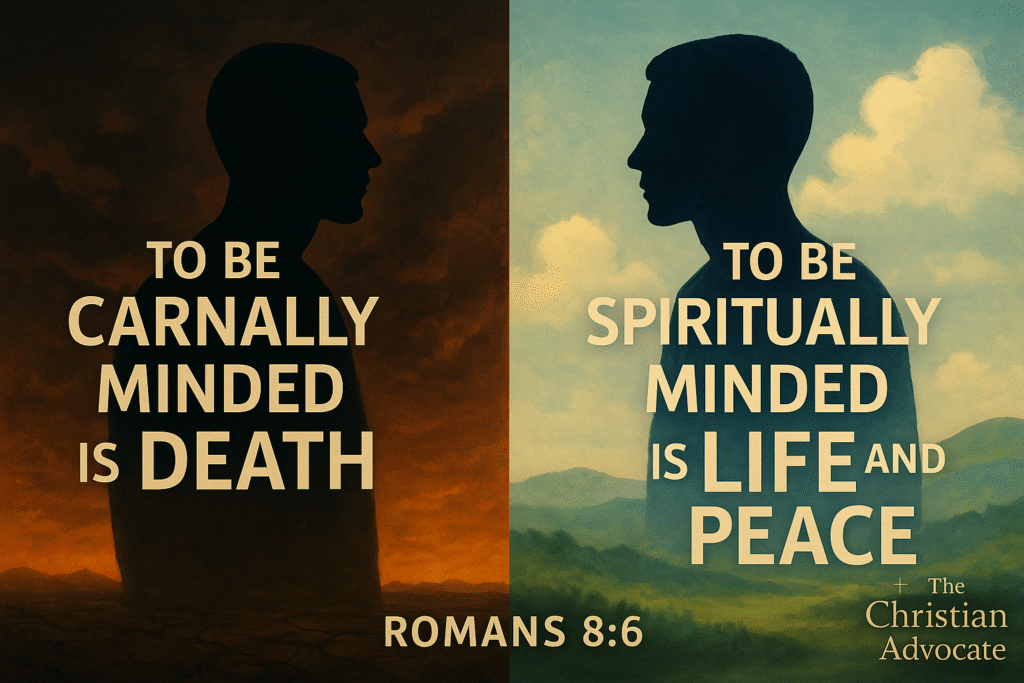
6. For to be carnally minded is death, but to be spiritually minded is life and peace.

7. Because the carnal mind is enmity against God; for it is not subject to the law of God, nor indeed can be.

8. So then, those who are in the flesh cannot please God.”  

Scripture says:

·       “To be carnally minded is death.”

·       “The carnal mind is enmity against God.” (Enmity = hostility, antagonism, hatred.)

·       “Those who are in the flesh cannot please God.”

Silhouettes of two men facing opposite directions, one in a fiery barren landscape and the other in a peaceful green valley, illustrating “To be carnally minded is death, but to be spiritually minded is life and peace” from Romans 8:6.
To be carnally minded is death, but to be spiritually minded is life and peace (Romans 8:6).

Now, how can an individual have a carnal mind—a mind at enmity with God—and yet be a Christian?

It is impossible. It will never work.

It is like throwing a sugar cube into a cesspit.

This business of being a “carnal Christian” is—what is my word? —HOGWASH!

It is an oxymoron. According to Scripture, there is no such thing. We are either Christian or carnal. Period!

This, too, is a manifestation of spiritual warfare, because this kind of thinking is what keeps us on the fence:

·       We want to live the way we want to live.

·       We still want to be saved.

·       We want to have our cake and eat it too.

Now, yes, when we first accept Christ, we are still immature and carnal in many ways. But we are required to grow. For more on that, see the full article on this Website titled “How to Grow in Christ.”

Lukewarm Christianity: The Laodicean Condition

What does God—what does Christ—say about this fence-sitting condition?

Jesus calls this state “lukewarm.” Individuals in this state are neither hot nor cold for God.

In Revelation 3:15–16, addressing the church of Laodicea, Jesus says:

15. I know your works, that you are neither cold nor hot. I could wish you were cold or hot.

16. So then, because you are lukewarm, and neither cold nor hot, I will vomit you out of My mouth.

There is no room here for a so-called “carnal, fence-sitting Christian.” Christ has nothing for a lukewarm Christian. He says, “I will vomit you out of My mouth.”

Why do we vomit? Because the body rejects what is:

·       Distasteful

·       Harmful

·       Of no value

Lukewarm is ineffective. Lukewarm water is not hot enough to kill germs, and not cold enough to refresh. What good is it?

Personally, I like my coffee or tea either hot or ice cold. A lukewarm cup of tea is tasteless, of no value, forcing me to make several trips to the microwave to heat it up.

Some professing Christians need to make some trips to the “microwave” to heat up their spirits for the Lord.

Why does Jesus have such disdain for lukewarm, fence-sitting Christians? Consider this:

A lukewarm Christian is only half-committed:

·       Half-committed to Christ

·       Half-committed to proclaiming Jesus as the Son of God

·       Half-committed to studying the Word

·       Half-committed to evangelism and missions.

·       Half-committed to holy and pure living.

·       Half-committed to self-denial and sacrificial living.

Half-committed all the way down the line—lukewarm and of no value to God and His kingdom.

The present church is in the Laodicean age, full of lukewarm Christians.

Jesus sums it up in Matthew 6:24:

24. “No one can serve two masters; for either he will hate the one and love the other, or else he will be loyal to the one and despise the other.” (Matthew 6:24)

He also says in Luke 11:23:

23. He who is not with Me is against Me, and he who does not gather with Me scatters. (Luke 11:23)

There are only two masters:

·       The Godhead—God and Jesus

·       And Satan

We can only serve one.

If we walk through life with one eye on Christendom and one eye on the world, we are only fooling ourselves.

Manifestations in Church Leadership

Up to now, we have focused on individual manifestations, but there are also collective manifestations—especially in the church.

Satan’s attacks on the church have risen exponentially. He has been causing havoc with the church for centuries, but in the last twenty years, this assault has really stepped up.

Satan knows his time is short. He knows that to wipe out a body, you strike the head. So, he targets the church’s leadership, and the damage permeates the entire body.

I have a friend who is a Christian counselor, and some of the things shared with me have made me want to do a backward flip:

·       Pastors (plural) involved in adulterous affairs.

·       Pastors hooked on drugs

·       Pastors addicted to pornography

·       Pastors beating and mistreating their wives.

These are well-known leaders. No names are given—of course, that would be unethical. But the point is to shed light on manifestations of spiritual warfare—even on the heads of the church.

This is no game. It is a fierce, unseen spiritual war manifesting itself in the natural.

To women chasing after pastors, wanting to be “first ladies”:

Be careful what you ask for. Satan is chasing pastors like a fox chasing chickens. If the pastor is strong and will not relent, guess what? The next in line is the family.

In my growing up, some of the most rebellious children I saw were those of pastors and ministers.

Forget about status—you could end up sleeping with the enemy.

Pastors who allow themselves to become victims of this warfare had better repent before they become casualties instead of victims.

Jeremiah 23:1–2 says:

1. Woe be unto the pastors that destroy and scatter the sheep of my pasture! saith the Lord.

2. Therefore thus saith the Lord God of Israel against the pastors that feed my people;

Ye have scattered my flock, and driven them away, and have not visited them:

behold, I will visit upon you the evil of your doings, saith the Lord.”  

This prophecy was initially directed at Israel—at leaders tasked with guiding the people in accordance with God’s will. But instead, they contributed to the nation’s troubles, leading God to pronounce severe judgment on them.

Prophecies like this often express principles of God that have multiple applications, leading to more than one fulfillment. Here, the principle is: we are answerable to God for the people we guide and influence under His authority. Leaders bear responsibility for those entrusted to their care.

When pastors fall, they scatter the sheep—the congregation. People leave, they gossip, confusion erupts, and the church becomes crippled. As God says, they “destroy and scatter the sheep of My pasture.”

Yet another manifestation of spiritual warfare.

Some may say, “Well, pastors are only human.” That is true. But look at the instruction in 1 Timothy 4:12. Paul is charging Timothy, a young pastor:

12. Let no one despise your youth, but be an example to the believers in word, in conduct, in love, in spirit, in faith, in purity.”

Pastors are expected to serve as role models. Though they are human, they are called to exemplify a visible commitment to living in Christ.

If a pastor becomes so “human” that he can no longer be that example, he needs to step down, so the church can remain effective. Otherwise, he will be held accountable not only for himself but for the whole congregation—double jeopardy.

Cultural Movements as Manifestations of Spiritual Warfare

We have only touched on a few manifestations of spiritual warfare. They are far too numerous to cover in one teaching.

But know this: all the destruction and chaos in the country and the world are manifestations.

Consider the Postmodern era, which ushered in:

·       The sexual revolution

·       The Women’s Liberation movement

·       The pro-choice movement

·       The gay rights movement

All of these are manifestations of spiritual warfare, shaping culture to move further and further away from God’s design, against the will of God.

Conclusion

Get Off the Fence and Walk With Christ

We must get off the fence and walk the path with Christ.

If we stay on that fence, we are not only stagnant—we are lost.

We must make a choice. Since we are born with a sinful nature and, as Scripture says, “walked according to the course of this world,” it is vital to understand this:

Not to choose Christ is to make a choice against Him.

But if we choose Christ, then we must walk with Himin Spirit and in truth.

The effects of spiritual warfare are all around us and are always knocking at our door. So, we must follow the Scripture, which reads:

“Be sober, be vigilant; because your adversary the devil, as a roaring lion, walketh about, seeking whom he may devour:” (1 Peter 5:8, KJV)

Be on guard—and fight when necessary.

Closing Call to Action

If you see these signs and manifestations of spiritual attacks in your own life, do not ignore them and do not stay on the fence.

Take time to:

·       Examine your walk with Christ honestly.

·       Repent where the Holy Spirit brings conviction.

·       Ask the Lord to renew your mind, your zeal, and your love for Him.

·       Pray for your pastors, leaders, and fellow believers who are also under assault 1 Tim. 2:1-2).

This article is part of a larger journey. In the earlier teachings on spiritual warfare, we looked at what the battle is and where it is fought. In the next part of this series, we will not only talk about the attack—we will talk about the fight.

Watch for the next installment on Overcoming Spiritual Warfare, and in the meantime, stay sober, stay vigilant, and keep walking with Christ—off the fence and firmly on His side.

Questions, comments, and concerns may be left below.

Blessings!

📺 Watch the Companion Teaching Videos (Full & Shorts)

For those who enjoy receiving the message in video format, the teaching is also available below.


Here is a brief Short highlighting one of the key points from this message.


error

Enjoying this blog? Please spread the word :)