This is the sixth article in a series of articles about spiritual warfare. In the last  article, Spiritual Warfare: Conditions of the Mind 3, I covered the conditions: the judgmental, critical and suspicious mind, and the passive mind. In this article: Spiritual Warfare: Conditions of the Mind 4, I will be covering the final condition.
I’ve covered of late, the conditions of the mind. The conditions of the mind that manifest themselves as a result of Satan’s spiritual attacks when we don’t fight successfully or we don’t fight at all. Therefore, these conditions have all been negative. Anything that comes from Satan is negative. His purpose and plan is to destroy the bretheren in any way that he can. But all is not lost! [Praise God!]
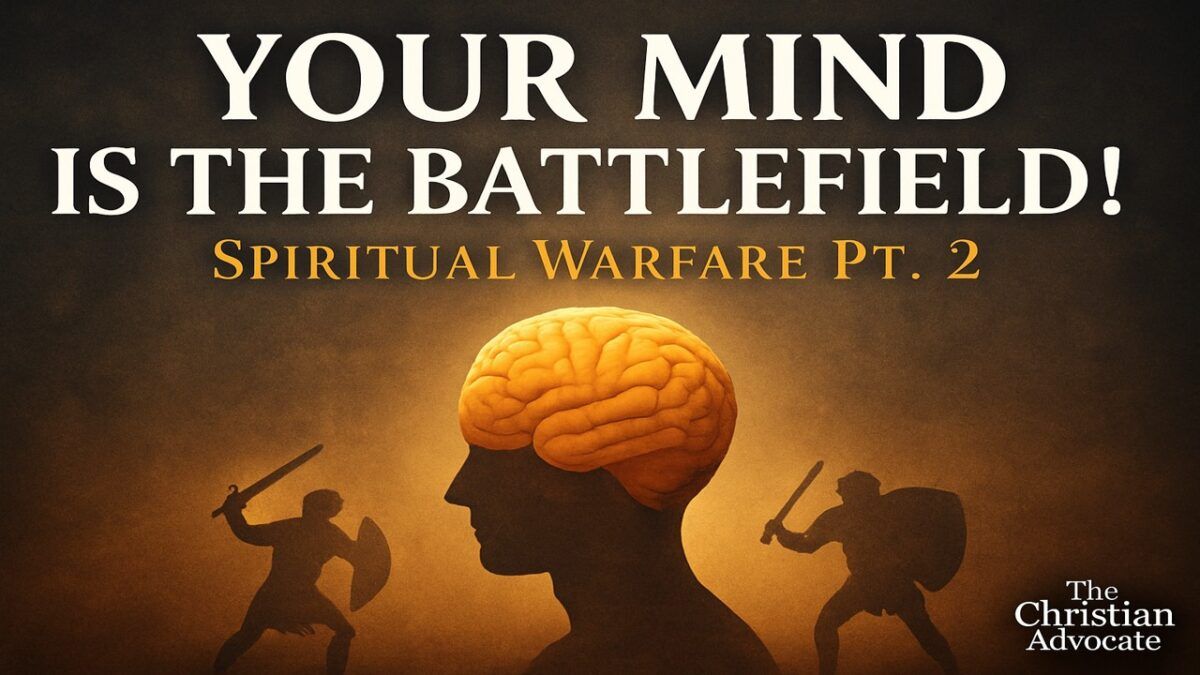
The last area of this segment is positive. It is a condition of the mind that results in our being sober and vigilant warriors against our enemy—Satan in the battle for our minds. It is a condition of the mind that results from the renewing our minds, as the scripture commands us to. This condition of the mind is: the Mind of Christ!
So what exactly is the mind of Christ? The mind of Christ is: the views, feelings, and disposition of Christ. This is the direct result of what happens when we are influenced by his Spirit. This is the Holy Spirit He promised us

in John 15:26 which reads: “When the Counselor comes, whom I will send to you from the Father, the Spirit of truth who goes out from the Father, he will testify about me.” niv
When we receive this Spirit and open our minds to it we develop the mind of Christ.
Now this is a condition of the mind that is available to everyone who accepts Christ as Lord and Saviour. Now notice I said: is available to. There are many who have accepted Jesus, but don’t have his mind because they simply have not allowed themselves to be influenced by his Spirit. They are still walking in their flesh. Let’s look at a passage of scripture that explains this in detail. Romans 8:1-11
1 There is therefore now no condemnation to them which are in Christ Jesus, who walk not after the flesh, but after the Spirit.
Moving to verse 3
3 For what the law could not do, in that it was weak through the flesh, God sending his own Son in the likeness of sinful flesh, and for sin, condemned sin in the flesh:
4 That the righteousness of the law might be fulfilled in us, who [walk not after the flesh, but after the Spirit.]
5 For they that are after the flesh do mind the things of the flesh; but they that are after the Spirit the things of the Spirit.
Now this goes back to what I mentioned earlier. Those who have accepted Christ as Lord and savior but haven’t renewed their minds, and think fleshly. But those who are influenced by the spirit of Christ mind the things of Christ—have the mind of Christ. Now the rest of this passage tells the results of these two conditions of the mind.
6 For to be carnally [or fleshly] minded is death; but to be spiritually minded [to have the mind of Christ] is life and peace.
7 Because the carnal mind is enmity against God: for it is not subject to the law of God, neither indeed can be.
Verse 7 says: the carnal or natural mind never did obey God’s law and it never will. Let’s see why. Let’s temporally move to 1 Corinthians 2:14
14 But the natural man receiveth not the things of the Spirit of God: for they are foolishness unto him: neither can he know them, because they are spiritually discerned.
The point here: the things of the spirit simply bounce off of a natural mind. [Like a bullet proof vest] This happens because the natural mind is

spiritually discerned or spiritually separated. So even if we have accepted Christ, if we are walking around, continuing in our natural selves—in our naturalness, we cannot receive the things of the spirit. We’re no better off than the natural man, if we’re going to maintain a natural mind. Satan knows this, so this is why our mind is the battlefield. This is what spiritual warfare is all about. Once Satan is controlling our minds—pulling the strings of our thoughts, we are in serious trouble as we see in Romans 8. Let’s go back there to verse 8
8 So then they that are in the flesh [cannot please God.]
We simply cannot please God if we’re in the flesh. It says: they. So there are no exceptions. Now the balance of this passage states the results of being in the spirit, or having the mind of Christ.
9 But ye are not in the flesh, but in the Spirit, if so be that the Spirit of God dwell in you. Now if any man have not the Spirit of Christ, he is none of his.
Now notice it says: “any man.” So this includes those that profess Christ but don’t have His Spirit.
10 And if Christ be in you, the body is dead because of sin; but the Spirit is life because of righteousness.
11 But if the Spirit of him that raised up Jesus from the dead dwell in you, he that raised up Christ from the dead shall also quicken your mortal bodies by his Spirit that dwelleth in you. [cf. 2 Cor. 4:14]
So whatever state of mind we may be in; whatever negative condition of the mind we may have, if we allow the spirit of God that raised Christ from the dead to dwell in us, we will have the mind of Christ, and our mortal bodies  will be quickened, or given new life. This is what being born again is truly about. But it is a constant battle and we Christians must constantly be on the defensive to keep our mind of Christ. [1 pet 5:8]
Now what is behind God giving us the mind of Christ? Well Just as God is a God of judgment, He is also a God of love; and with His love comes mercy and grace, that results in restoration. This is why He sent His son:
to redeem us, and restore us. So we’re going to take a look into the mind of God, and see what His restoration is all about. We’re going into the Old Testament first, and then confirmation in the New Testament.
Ezekiel 36: this chapter contains prophesy that concerned the restoration of Israel. But it contains principals that apply to Christians—today.
Let’s look at verses 21-27
21 But I had pity for mine holy name, which the house of Israel had profaned among the heathen, whither they went.
22 Therefore say unto the house of Israel, Thus saith the Lord GOD; I do not this for your sakes, O house of Israel, but for mine holy name’s sake, which ye have profaned among the heathen, whither ye went.
23 And I will sanctify my great name, which was profaned among the heathen, which ye have profaned in the midst of them; and the heathen shall know that I am the LORD, saith the Lord GOD, when I shall be sanctified in you before their eyes.
God sent the word to Israel straight up: that He wasn’t restoring them because they deserved it, but to protect His Holy name.
God is concerned about His name, so He must keep His promises. He is not a man that he should lie. [Num 23:19] He made a covenant with Abraham that through him, “all families of the earth be blessed.” [Gen 12:3] That was why God moved Israel out of Egyptian bondage in the first place. Let’s look at Deuteronomy 7:7-8. This is Moses to Israelites

7 The LORD did not set his love upon you, nor choose you, because ye were more in number than any people; for ye were the fewest of all people:
8 But because the LORD loved you, and because he would keep the oath which he had sworn unto your fathers, hath the LORD brought you out with a mighty hand, and redeemed you out of the house of bondmen, from the hand of Pharaoh king of Egypt.
Therefore it’s all about God and none of us. Now for us today, the same applies. Now although we are God’s creation, many of us before we came to Christ, profaned, or dishonored God’s name by the things that we said and did. So the fact is: God didn’t send His son to redeem us because we deserved it, but because He loved us, and His mercy and grace, and His covenantal promises.
Now back to Ezekiel 36:
24 For I will take you from among the heathen, and gather you out of all countries, and will bring you into your own land.
25 Then will I sprinkle clean water upon you, and ye shall be clean: from all your filthiness, and from all your idols, will I cleanse you.
Before Christ, God’s people, Israel had become entrenched in ungodliness. But God wasn’t only concerned about His people, but the whole world. To allow His people to remain in sin, and be permanently destroyed by their enemies, would lead the other nations to conclude, that their pagan gods were more powerful than Israel’s God. [Isa. 48:11] So to again protect his holy name, God would return a remnant of his people to their land. Now this is what we today call sanctification, separated unto God. When we accept Christ we become part of God’s remnant, separated from ungodliness and paganism. Let’s look further:
26 A new heart also will I give you, and a new spirit will I put within you: and I will take away the stony heart out of your flesh, and I will give you an heart of flesh.
27 And I will put my spirit within you, and cause you to walk in my statutes, and ye shall keep my judgments, and do them.
Now this is God’s principal of restoration.
Now let’s look at New Testament confirmation of this: 1 Corinthians 2:10-16. Now this has to do with spiritual wisdom.
10 But God hath revealed them unto us by his Spirit: for the Spirit searcheth all things, yea, the deep things of God.
11 For what man knoweth the things of a man, save the spirit of man which is in him? even so the things of God knoweth no man, but the Spirit of God.
Now watch verse 12
12 Now we have received, not the spirit of the world, but the spirit which is of God; that we might know the things that are freely given to us of God.
Moving to verse 16
16 For who hath known the mind of the Lord, that he may instruct him? But we have the mind of Christ.
So by receiving the spirit of God, we receive the things of God through Christ, giving us the mind of Christ. This is the result of God’s principal of restoration.
If we accept God’s spirit, we will have to Mind of Christ. After all the scriptures tell us in Romans 8:29: “For whom he did foreknow, he also did predestinate to be conformed to the image of his Son, that he might be the firstborn among many brethren.” It is God’s desire for us to be changed to the image of His son Christ. The only way for us to accomplish this is to have the mind of Christ. Therefore, we must learn to discern life and death within ourselves. Jesus has made arrangements for us to be filled with life, by putting His own mind in us. We can choose to flow in the mind of Christ which is life, or a mind in the flesh, which is death.
So now that we’ve look into the mind of God regarding restoration, how do we benefit from it? By moving in the mind of Christ.
So once we have the mind of Christ, how do we move and flow in this positive condition of the mind? What is the life application for us today?
The first and foremost thing we must do is think positive. Let’s look at what God says in His word about this: Philippians 4:8
8 Finally, brethren, whatsoever things are true, whatsoever things are 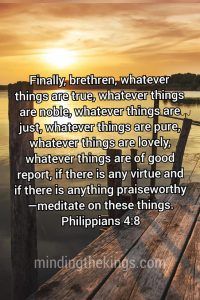 honest, whatsoever things are just, whatsoever things are pure, whatsoever things are lovely, whatsoever things are of good report; if there be any virtue, and if there be any praise, think on these things.
I addressed this in an earlier article regarding the conditions of the mind; the importance of positive thinking. But enough can never be said about the power of being positive. God through His prophet Amos said: “Can two walk
together, except they agreed?” [Amos 3:3] God is positive, and if we want to flow with Him, we must get on the same wave length, by thinking and being positive also. So we must have a positive outlook and attitude. Maintain positive thoughts and expectations. Engage in positive conversations.
Jesus endured many difficulties including personal attacks—being lied about, deserted by His disciples when He needed them the most, being lonely, misunderstood and a host of other discouraging things. Yet, in the midst of all these negatives, He remained positive. He continued to display a positive outlook and attitude.
The mind of Christ in us is positive; therefore, anytime we get negative, we are not operating with the mind of Christ. Psalm 3:3 tells us that God is our glory, and the lifter of our heads. He wants to lift everything: our hopes, our attitudes, our moods, our heads, hands and heart. Our whole life! He is our divine lifter!
God want to lift us up, and the devil wants to press us down. Satan uses the negative events and situations in our lives, to depress us. The dictionary definition of the word depress is: to lower in spirits: sadden. Something that is depressed is: something that is sunk below the surrounding region

—hollow.
Now we regularly have the opportunity to think negative thoughts. Satan sees to that. One of the easiest things for us to do is think negative—to have negative thoughts. But we must realize that they will only press us down further. Being negative won’t solve our problems; it will only add to them.
The second way to move in the mind of Christ is: to be God minded. Now let’s first look at this in scripture: Isaiah 26:3
3 Thou wilt keep him in perfect peace, whose mind is stayed on thee: because he trusteth in thee.
Now what this verse is saying is: no matter what is going on with us, or around us, if we keep our mind on God and Christ, we will be in perfect peace. This—
is moving in the mind of Christ. Jesus had a continual fellowship with His heavenly father. It is impossible for us to have full fellowship with anyone, without having our mind on that individual. So if we want to have fellowship with Christ, if we want to move in the mind of Christ, then we must be God or Christ minded. Another thing that this scripture points out is: if we can shift our mind off of our situations, and onto the Lord, that means we trust Him. Nothing pleases God more than for His children to trust Him.
Another way to be God minded is to meditate on God and His works. Now  we find this in the psalms. Let’s look at Psalms 63:5-6. This passage is about meditating on God.
5 My soul shall be satisfied as with marrow and fatness; and my mouth shall praise thee with joyful lips:
6 When I remember thee upon my bed, and meditate on thee in the night watches.
Let’s now look at Psalms 77: the focus here is on God’s works. Verse 12
12 I will meditate also of all thy work, and talk of thy doings.
Let’s now move to Psalms 143:5
5 I remember the days of old; I meditate on all thy works; I muse on the work of thy hands.
Let’s look at one more: Psalms 104:33-34
33 I will sing unto the LORD as long as I live: I will sing praise to my God while I have my being.
34 My meditation of him shall be sweet: I will be glad in the LORD.
So we see that the psalmist David wrote frequently about meditating on God, His goodness, and His works. It is tremendously uplifting to think on the goodness of God, and all the marvelous works of His hands.
Meditating on God, and His ways and works, will have to become a regular part of our thought life if we want to experience victory.
The third way to move in the mind of Christ is: to know
that God loves us. Now let’s look at this in scripture: 1 John 4:16
16 And we have known and believed the love that God hath to us. God is love; and he that dwelleth in love dwelleth in God, and God in him.
Now the scripture says: “we have known.” This is to understand, recognize, and be conscious of by observance and by experience. It goes on to say: “and believed.” This is to adhere to, and put faith in, as well as rely on, the love that God has for us.
Now the same thing that hold true of God’s presence, is true of His love. If  we never meditate on His love, we will never experience it. Now this is very easy to say and acknowledge. But the fact is, very few of us really know how much God loves us. Because if we did we would act a lot differently than we do. We must be conscious of God’s love which means not just lip service, but it should be something that we are actively aware of.
All of us know John 3:16 and that’s fine. But it goes beyond that—it’s a little deeper. God did and does love the world, but He also loves us as individuals. Many of us—too many of us have an unconscious and vague understanding of the fact that God loves us. But the love of God is meant to be a powerful force in our lives; one that will take us through even the most difficult trials into victory.
One of the advantages of accepting God’s perfect love is the lack of fear. Let’s look a verse 17 of 1 john chapter 4
17 Herein is our love made perfect, that we may have boldness in the day of judgment: because as he is, so are we in this world.
The word perfect in this scripture is translated from the Greek word that means to complete. That is to say: accomplish or consummate; to mature. Once we know and acknowledge—have faith in God’s love, our love is made perfect. This gives us boldness and confidence, as we anticipate Christ’s judgment of the world. [1 John 4:4] There is no fear in a Christian who is walking in God’s love. Let’s move on to verse 18:
18 There is no fear in love; but perfect love casteth out fear: because fear hath torment. He that feareth is not made perfect in love.
So there is no fear in love. We can’t love God and accept His love, and be fearful—be tormented by fear. After all, Scripture clearly tells us in 2 Tim 1:7: “For God hath not given us the spirit of fear; but of power, and of love, and of a sound mind.” This is what God has given us. Therefore, fear comes straight from Satan. After all, fear is: False Evidence Appearing Real.
I’m going to close this segment of accepting God’s love as part as having the mind of Christ with a passage of scripture. Romans 8:
Now this is a passage amongst others that we should review when trials come upon us. Verses 35-39
35 Who shall separate us from the love of Christ? shall tribulation, or distress, or persecution, or famine, or nakedness, or peril, or sword?
Moving to verse 37:
37 Nay, in all these things we are more than conquerors through him that loved us.
38 For I am persuaded, that neither death, nor life, nor angels, nor principalities, nor powers, nor things present, nor things to come,
39 Nor height, nor depth, nor any other creature, shall be able to separate us from the love of God, which is in Christ Jesus our Lord.
God and Christ come in a package-a most dynamic package. You can’t have one without the other. So in order for us to have the mind of Christ, we must accept the love of God.
Moving into our third way to move in the mind of Christ is: to have an exhortative mind. To exhort is to encourage. The person with the mind of Christ thinks positive, uplifting, edifying thoughts about others
as well as about himself, and his own circumstances.
The ministry of exhortation is greatly needed in the world today, especially after 911 and even more with the new Corona Virus. Everybody needs to be encouraged. The scriptures tell us in Heb 3:13: “But exhort one another daily, while it is called To day; lest any of you be hardened through the deceitfulness of sin.” You see, this is why having the mind of Christ is needed to defeat Satan. Because he moves in the deceitfulness of sin and anybody can get caught up. So we must send thoughts of love toward other people, and speak words of encouragement to them.
Now everybody doesn’t have the ministry gift of exhortation, but anybody can learn to be encouraging. The simple rule is: if it’s not good, don’t think or say it. In other words: if you don’t have anything good to say to somebody, don’t say anything at all. Thoughts and words are containers, or weapons, for carrying creative or destructive power. The scriptures say that: “life and death are in the power of the tongue.” [prov. 18:21] So words can be used against Satan and his works, or they can actually help him in his plan of destruction. I’m going to close this point with a scripture. Ephesians 4:29
29 Let no corrupt communication proceed out of your mouth, but that which is good to the use of edifying, that it may minister grace unto the hearers.
So we are to speak communication that exhorts, or builds one another up in the body.
A fifth method for moving in the mind of Christ is: to develop a thankful  mind. A person flowing in the mind of Christ will find his thoughts filled with praise and thanksgiving.
Many doors are opened to the enemy through complaining. Some people are physically ill and, live weak, powerless lives because of complaining. Complaining is a disease that attacks the thoughts and conversations of people. Again: “life and death are in the power of the tongue!”
We cannot live a powerful life without thanksgiving. Complaining in thought or word is a death principle, but being thankful and saying so is a life
principle. The Scriptures instructs us over and over in the principle of thanksgiving. Let’s look at a few. Psalms 100:4
4 Enter into his gates with thanksgiving, and into his courts with praise: be thankful unto him, and bless his name.
When we enter into the presence of the Lord, we are to enter with thanksgiving and praise—not complaining and grumbling. Let’s now look at Hebrews 13:15
15 By him therefore let us offer the sacrifice of praise to God continually, that is, the fruit of our lips giving thanks to his name.
Again we are to continually, from the fruit of our lips, give thanks unto God. Let’s look at one more Ephesians 5:20
20 Giving thanks always for all things unto God and the Father in the name of our Lord Jesus Christ;
Now the scripture says: “giving thanks always for all things unto God.” We are Christians: the Christians of God are to be a grateful people. We are to be filled with gratitude not only toward God, but also toward people. When someone does something nice for us, let them know that you appreciate it. We must show appreciation in our families, among the various members. Now I know this isn’t easy, but so often we take the things that God has blessed us with for granted. As bad as things may seem to us, they can always get worse. A sure way to lose something is to not appreciate it—taking it for granted.
Now again the scripture says: “giving thanks always for all things unto God.” So we should meditate daily on what we have to be thankful for, and recite them to the Lord in prayer. When God knows that we appreciate Him, he’ll do even more.
The final area that I’m going to cover for moving in the mind of Christ is: be word minded.
God’s Word is His thoughts written down on paper for our study and reflection. His Word is how he thinks about every situation and subject.
Let’s look at John 5:38
38 And ye have not his word abiding in you: for whom he hath sent, him ye believe not.
Now let’s look at this same scripture from the Amplified Translation. It reads:
And you have not His word (His thought) living in your hearts, because you do not believe and adhere to and trust in and rely Him whom He has sent. [That is why you do not keep His message living in you, because you do not believe in the messenger whom He has sent]
Now in this scripture, Jesus was reprimanding some unbelievers. In this amplified translation, it’s clear that God’s Word is a written expression of His thoughts; and that people who want to believe and experience all the good results of believing, must allow His word to be a living message in their hearts. This is accomplished by meditating on the Word of God. This is how His thoughts become our thoughts—the only way to develop the mind of Christ in us. Remember the Bible says in John 1:14: that Jesus was the Word made flesh. This would not have been possible had His mind not been filled with the Word of God continually.
Meditating on the Word of God is one of the most important life principals that we can learn. I can’t emphasize enough how important this principal is. It is a life principle because meditating on the Word of God will minister life to us, and ultimately to those around us. Let’s look at this in scripture.
Joshua 1:8
8 This book of the law shall not depart out of thy mouth; but thou shalt meditate therein day and night, that thou mayest observe to do according to all that is written therein: for then thou shalt make thy way prosperous, and then thou shalt have good success.
In this verse, the Lord is telling us plainly that we will never put the word into practice physically, if we don’t first practice it mentally. It says:” but thou shalt meditate therein day and night, that thou mayest observe to do according to all that is written therein.” Meditate first, and then do. When we meditate on God’s word, we receive the mind of Christ, allowing us to live victorious and productive lives.
In conclusion, in order for us to be sober and vigilant Christians, we must have the mind of Christ. We must: think positive, be God minded, truly recognize God’s love, be thankful, and, be Word minded.
The only way to accomplish this is to change our minds. The Scripture
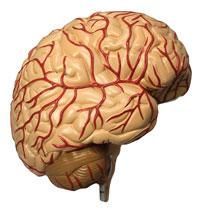
informs us in Rom 12:2: “And be not conformed to this world: but be ye transformed by the renewing of your mind, that ye may prove what is that good, and acceptable, and perfect, will of God.” kjv
So the moral of the story is: we must renew our minds, fight the good fight; and move in the mind of Christ and God!
Questions, comments, and concerns are welcomed below
Blessings!!





 a problem as long as these limitations are applied only to one’s own life. But when the person seeks to bind others to these restrictions, conflict is likely to follow. I’m going to temporarily move to Galatians 5:13


 know the Word, then we can recognize when the devil is lying to us. Be assured that he lies to us in order to steal what Jesus purchased for us on the cross.
 look better than the great king Solomon in all of his splendor, surely we will be provided for as well. Now the job of Satan and His demons, is to continuously pump into our minds the question: what are you going to do? What’s going to happen to me or any other difficult question pertaining to our present circumstances. And we spend and waste precious time trying to answer them; in a word—worry. Satan is constantly waging war on the battlefield—our minds, with the hopes of engaging us in a long drawn out, and costly combat. It’s costly because it takes our minds off of God, and onto our circumstances. Now the rest of the passage contains Jesus’ solution. Verse 31 reads:
 unto God.” God knows what we need before we ask. If we will simply make our requests known to Him, He will bring them to pass in His own good timing. Worry will not help our cause at all, but it will in fact hinder our progress. Looking at verse 34
 person who worries still thinks that in some way, he can solve his own problem. Worry is the mind racing around trying to find a solution to its situation. The proud man is full of himself, while the humble man is full of God. The proud man worries; the humble man waits.



 They are very closely related. James 1:5-8 covers both conditions. When we have a mind full of doubt—a wondering mind, we are confused about everything. From what we believe to what we’re going to wear. We want to live single but be married. We want to be saved, but we want to live like the world. We want to be secure, but the fact is, we’re very insecure. Do we see a pattern here? It’s a double mind. A wondering, confused mind is, in a word, a mess. Unstable in all it does.
 principles of tithing. It can never understand that a blessed 90%

 the pulling down of strong holds;)


 once under the control and power of Satan (who, by the way, is a spirit); who become born again spiritually, reconciled to God, who is also a spirit, [John 4: 24] through Christ. So people whose spirits were under Satan’s control, were and still are today, being literally snatched—spiritually from him by God. Do you think that Satan is going to sit back and let this happen without a fight? Absolutely not!. What does this mean? W A R! Spiritual War! The moment we accept Christ as Lord and Savior and are born again, war is declared against us with a target on our backs.



 deception. His main tool is deception. If he can deceive a believer, they become one of his most effective tools. Remember what Paul said in Gal 5:9:
 brings into question every tradition and standard that we have come to know in the US; including the church and the Scriptures. It has basically led the way for people to feel that they can do whatever they want if it is right in their own minds. This movement has reached a crescendo under the 45th President of the United States. Today more than ever, people are asking: whatever happened to justice?
 godlessness and wickedness of men who suppress the truth by their wickedness, 19 since what may be known about God is plain to them, because God has made it plain to them. 20 For since the creation of the world God’s invisible qualities — his eternal power and divine nature — have been clearly seen, being understood from what has been made, so that men are without excuse.
 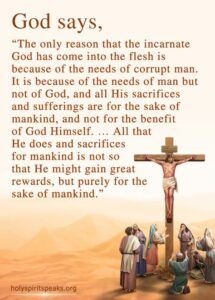 God who sent His Son, Jesus, to redeem us. However, when worship and honor is taken off God, He has no choice but to give man over to his sinful lusts as part of judgment. If you pay any attention at all to the actions in the US, you can see them in this passage of Scripture.
 light, but all is darkness; for brightness, but we walk in deep shadows. 10 Like the blind we grope along the wall, feeling our way like men without eyes. At midday we stumble as if it were twilight;