Introduction
In the previous presentation titled “Law or Grace: Are Christians Still Under the Law Today,” I laid the foundation of this series on the Law. In it, I made clear, through the Scriptures, that we are under both the Law and grace. Now that it is clear that the Law applies to us, the balance of this series will be an exposition of each of the Ten Commandments, which are the base of the Law, and how they apply to our lives today as Christians. This article, The Ten Commandments (Part 1): No Other Gods, is the first of ten articles addressing each of these Laws.
Part 1: No Other Gods
– Part 2: No Idols
– Part 3: The Meaning of God’s Name in Vain
– Part 4: The Truth About the Sabbath (Saturday or Sunday?)
What are the Ten Commandments?
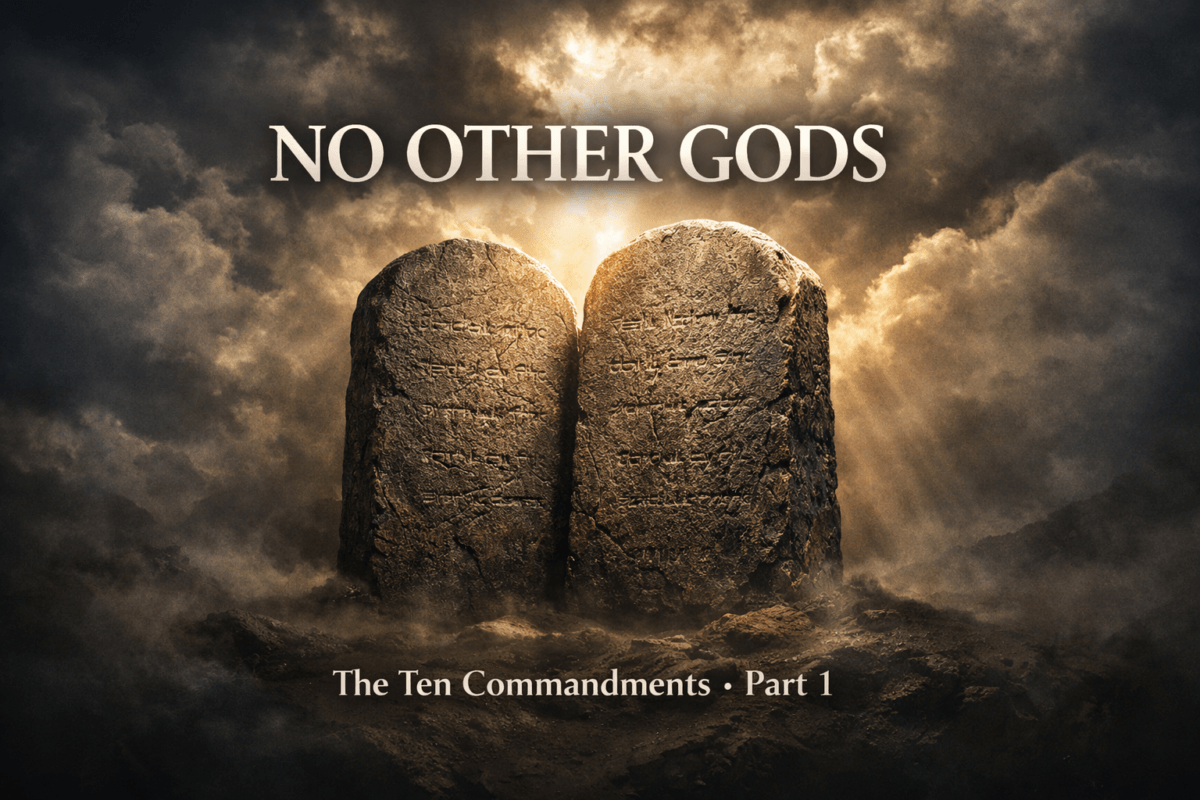
With the foundation of the Law in place, the next question becomes simple and necessary. What are the Ten Commandments? The Ten Commandments are ten Laws handed to Moses from God on Mt. Sinai, also known as Mt. Horeb. God presented them on tablets of stone. As mentioned earlier, these Laws are the basis of the Mosaic Law. All of the Commandments contained in the Old Testament Law (613) derive from these Ten Commandments.

The Ten Commandments Listed
They are as follows:
1. You shall have no other gods before me
2. You shall not make for yourself a carved image
3. You shall not take the name of the Lord your God in vain
4. Remember the Sabbath day, to keep it holy.
5. Honor your father and your mother
6. You shall not murder
7. You shall not commit adultery
8. You shall not steal
9. You shall not bear false witness against your neighbor
10. You shall not covet
The Structure and Purpose of the Law
When we look at these ten laws together, it becomes clear why they stand at the heart of all moral law. Because if the world obeyed these Laws, what a different world would we live in!
The initial four commandments focus on how we connect with God, while the remaining six address how we interact with other people—a complete package. We can’t go wrong if we follow God’s Laws!
Therefore, these commandments are not random or disconnected; they are carefully ordered to address every relationship in life.
The First Commandment
In this article, we will begin by discussing the first Commandment. To understand the weight of the first commandment, we must hear it directly from God Himself.
The First Commandment in Scripture
So, let’s look at this Commandment in Scripture, Exodus 20:1-3 NKJV:
1. And God spoke all these words, saying:
2.“I am the Lord your God, who brought you out of the land of Egypt, out of the house of bondage.
3.“You shall have no other gods before Me.
Before we look at the command itself, notice how God introduces it by looking closely at verse 2, which quotes God as saying, “I am the Lord your God, who brought you out of the land of Egypt, out of the house of bondage.”
One thing is clear: our God is not shy! Here He is making his position crystal clear. It is He who freed the Israelites from bondage. It is He that bought the Israelites out of Egypt, it is He that provided for them in the wilderness into the Promised Land, and as a result He is to receive the honor and the glory—nobody else!
Therefore, in verse 3, He said, “You shall have no other gods before Me.”
What the First Commandment Declares About God
This first commandment addresses what is forbidden and how it can be violated. It focuses on the nature of God, declaring that only He is the Supreme Being and the ultimate authority in the universe. No other being or god shares His role as Creator, ruler, or sovereign over all existence. God alone is the living and true Lord and Creator.
This commandment is not vague or symbolic; it establishes clear and uncompromising boundaries regarding who God is.
Three Uncompromising Truths of the First Commandment
This commandment establishes three clear and uncompromising truths.
Firstly, individuals should refrain from regarding themselves as deities. It is important to recognize that neither humans nor any other entity or force within the universe constitutes the ultimate origin of existence.
Secondly, people should not consider animals, other creatures, or material objects to be God. Individuals are also advised not to look to the sky, the earth, or the sea and claim that anything found there is divine.
Thirdly, Man is not to believe in many gods (polytheism). There is only one living and true God, only one true Architect, only one Lord and Majesty of the universe (monotheism). Therefore, man is to have no other gods of any kind. All other so-called gods are nothing more than things created by the imaginations and thoughts of individuals.
Modern Forms of Idolatry
Moreover, if we allow something else to take priority in our hearts and minds—if it demands the love and devotion meant only for the true God—it essentially becomes a different god to us. Anything that our heart holds onto above all else transforms into our god.
When the true God is displaced from the heart, something else inevitably takes His place.
Common Modern Examples of False Gods
Consequently, let’s consider some common modern examples:
• The proud person worships themselves.
• The ambitious seek approval as their highest aim.
• The covetous make wealth their priority.
• The greedy hold possessions above all else.
• The immoral elevate desire for sex.
• The glutton values food most.
• The doting lover puts another person before everything else.
Anything we value, love, fear, or serve more than God can become our “god.” Essentially, whatever our hearts cling to fills that role—even ourselves. In fact, many people are primarily devoted to pleasing themselves, prioritizing their own values, feelings, comfort, desires, and pleasures. They act according to their own wishes and follow their personal path, effectively putting themselves in the place of God. Others might turn different things into their gods, from heavenly bodies to recreation.
A god can be anything or any person. However, our first allegiance, first loyalty, first devotion is to be to the Lord God. The Lord God is to be first in an individual’s life; He is to be enthroned in the heart of mankind. An individual is to know and acknowledge that there is one God and one God alone.
Bottom line: The first commandment of the Lord is to be obeyed.
False Worldviews That Reject God
Now let’s look at this in today’s world. Again, verse 3 quotes God as saying, “You shall have no other gods before Me. On the contrary, we have all kinds of doctrines of the world advancing principles contrary to God.
This commandment is not confined to ancient Israel; it directly confronts the belief systems shaping our world today.
For example:
We are not to deny God, declaring there is no God (atheism).
⇒ We are not to question God, saying God may exist but He also may not exist (agnosticism).
⇒ We are not to declare that man himself is the supreme being, the ultimate authority of his world (humanism).
⇒ We are not to look to science and technology as the ultimate power in life (secularism)
Here are a few of the doctrines in the world today that refute God.
The Consequences of Obeying and Disobeying
Scripture does not leave this commandment in the realm of theory—it reveals real consequences tied to how we respond to it.
Now, let’s look at the Biblical consequences of obeying and disobeying this first Commandment.
The Consequences of Disobeying

We often think first about how sin affects us, but Scripture shows that rejecting God first affects God Himself.
Consequences Upon God
Foremost, we must realize that there are consequences upon God himself when we disobey. Especially this Commandment. There is a reason why it is the first Commandment.
The first consequence is: the individual who chooses not to follow God pierces the very heart of God, causing pain and hurt for Him.
Let’s look at some examples, 1 Samuel 8:7-8: NKJV
7. And the Lord said to Samuel, “Heed the voice of the people in all that they say to you; for they have not rejected you, but they have rejected Me, that I should not reign over them.
8 According to all the works which they have done since the day that I brought them up out of Egypt, even to this day—with which they have forsaken Me and served other gods—so they are doing to you also.
The pain in God’s heart can be seen here. This is when Israel demanded to be ruled by a king rather than by God. They desired man over God? What a foolish choice!
Let’s look at another example, Psalm 81:11 NKJV
11.“But My people would not heed My voice, And Israel would have none of Me.
Again, you can see God’s pain and disappointment.
Moving to the next example of how rejecting God pierces His heart. Despite the rejection of His people (including us today), He patiently waits.
2 Peter 3:9 NKJV
9. The Lord is not slack concerning His promise, as some count slackness, but is longsuffering toward us, not willing that any should perish but that all should come to repentance.
We’ve seen how not accepting God affects Him, but in this verse we see that He is still patiently waiting, hoping that all will come to repentance.
The next consequence is—the individual who does not follow God causes the name of God to be blasphemed.
Before we go further, in the Bible, blasphemy refers to speaking or writing with disrespect, mockery, or insolence to God, His name, His works, or the Holy Spirit. This serious sin involves slandering God’s character or sacred things. In the Old Testament, blasphemy was punishable by death; in the New Testament, it also includes denying Christ or wrongly claiming the Holy Spirit’s work is of Satan.
Let’s look at Romans 2:23-24 NKJV
23. You who make your boast in the law, do you dishonor God through breaking the law?
24. For “the name of God is blasphemed among the Gentiles because of you,” as it is written.
This is a strong admonition of hypocrisy. Professing Law keepers were, in actuality, breaking the Law. This caused God’s name to be blasphemed.
The next consequence that is upon God is – the person who does not follow God lives a life that is detestable to God.
Titus 1:16 NKJV
16. They profess to know God, but in works they deny Him, being abominable, disobedient, and disqualified for every good work.
Here we have more hypocrisy. Though they profess God, they live a life that, as the Scripture reads, is “disqualified for every good work.” A life that is despicable to God, as well as abominable, morally disgusting, and utterly loathsome to God, provoking His intense displeasure and judgment. Think He’s happy about this?
So, we see that when we choose not to follow God, He suffers.
These are the consequences for God.
Rejecting God not only wounds His heart—it also devastates the life of the individual who turns away.
Consequences Upon the Individual
Next, we look at the consequences on oneself, an individual’s day-to-day life.
First, the individual who does not follow God follows after dumb, lifeless idols, man-made gods that can never help them.
Jeremiah 16:20 NKJV
20. Will a man make gods for himself, Which are not gods?
Idolatry was the major reason for Israel’s judgment. In this verse, Jeremiah addresses idolatry as being utterly dumb and useless — lifeless objects incapable of saving, speaking, or acting..
Now think about it. How can we make an object ourselves and worship it, and expect to be blessed by it? It makes no sense! It’s dumb!
1 Corinthians 12:2 NKJV
2. You know that you were Gentiles, carried away to these dumb idols, however you were led.
Here, Paul reminded the Corinthians Christians that in the past they followed “dumb idols.”
The next consequence is – The person who does not follow God lives a life of hopelessness.
Ephesians 2:11-12 NKJV
11. Therefore remember that you, once Gentiles in the flesh—who are called Uncircumcision by what is called the Circumcision made in the flesh by hands—
12. that at that time you were without Christ, being aliens from the commonwealth of Israel and strangers from the covenants of promise, having no hope and without God in the world.
Here again, Paul is addressing the previous state without God. This time to the Ephesians, that they were aliens and strangers from the covenant and had no hope without God.
Lastly, the person who does not follow God lives a life that is enslaved to sin.
Galatians 4:8-9 NKJV
8. But then, indeed, when you did not know God, you served those which by nature are not gods.
9. But now after you have known God, or rather are known by God, how is it that you turn again to the weak and beggarly elements, to which you desire again to be in bondage?
Here, Paul rebukes the Galatians for leaving the false gods and knowing the true God, only to return to the bondage of following the false gods again. When we don’t follow God—don’t obey God—or keep His Commandments, we are in bondage to sin.
If rejection of God remains unrepentant, Scripture shows that it ultimately leads to judgment.
The Consequence of Judgment
Next, we look at the consequence of Judgment.
The person who does not follow God will not inherit the kingdom of God.
1 Corinthians 6:9-10 NKJV
9 Do you not know that the unrighteous will not inherit the kingdom of God? Do not be deceived. Neither fornicators, nor idolaters, nor adulterers, nor homosexuals, nor sodomites,
10. nor thieves, nor covetous, nor drunkards, nor revilers, nor extortioners will inherit the kingdom of God.
Now this passage covers a gamut of unrighteous behaviors; all of which are against God’s Laws. The point is, you cannot be a follower of God and engage in sinful behaviors—live lives of iniquity. Those who do are under the influence of Satan. Sin is ubiquitous in the world, and as a result, the world will be judged. As Jesus said in John 16:11 regarding the functions of the Holy Spirit, He says, “of judgment, because the ruler of this world is judged.” This ruler is none other than Satan.
Next, the individual who does not follow God displeases God and arouses His anger and wrath.
In order to please God, the Father, and receive eternal life, we must believe in His Son. Let’s look at John 3:36 NKJV
36. He who believes in the Son has everlasting life; and he who does not believe the Son shall not see life, but the wrath of God abides on him.”
Let’s look at what Jesus said in John 14:6, NKJV
6. ““I am the way…, the truth…, and the life… No one comes to the Father except through Me.”
Now, it doesn’t get any clearer than this—but let’s go further:
John 8:24 NKJV
24. Therefore I said to you that you will die in your sins; for if you do not believe that I am He, you will die in your sins.”
Jesus was addressing the Pharisees firmly because they didn’t believe He was who He said He was (He had previously said He was the light of the world). So because of their unbelief, they were sinners, and He declared that they would die in their sins.
Today, individuals will die in their sins if they reject Jesus, because they are rejecting the only way to be rescued from sin. Regrettably, many are so preoccupied with the values of this world that they are blind to the priceless gift that only Christ offers.
Next, 2 Thessalonians 2:12 [NKJV]
Paul was recounting the events preceding the second coming of the Lord. And he said in verse 12:
12. that they all may be condemned who did not believe the truth but had pleasure in unrighteousness.
Those who don’t believe the truth of God and Jesus and instead choose unrighteousness will be condemned and judged.
Next, the person who does not follow God shall face the fierce judgment of God and perish.
2 Peter 3:7 NKJV
7. But the heavens and the earth which are now preserved by the same word, are reserved for fire until the day of judgment and perdition of ungodly men.
The first seven verses of this chapter 3 address mockery in the last days, and speak to judgment on the ungodly that was implemented in the past by the Word of God. And in verse 7, the Scripture makes clear that the same Word is preserving the world for the day of judgment on the ungodly; those who do not follow God.
Let’s look at John 12:48 NKJV
48. But all who reject me and my message will be judged on the day of judgment by the truth I have spoken.
The initial mission of Jesus on earth was to guide individuals toward salvation and eternal life, rather than to pass judgment. However, upon his return, a principal objective will be to evaluate individuals based on their actions during their lives on earth. According to Christ’s teachings, those words that are not accepted and followed will serve as grounds for condemnation.
Bottom line – those who reject Jesus and live any way they please will face eternal punishment (cf. Revelation 20:11–15).
So, we have seen, in Scripture, the terrible consequences of not following the true God and following other gods.
The Consequences of Obeying
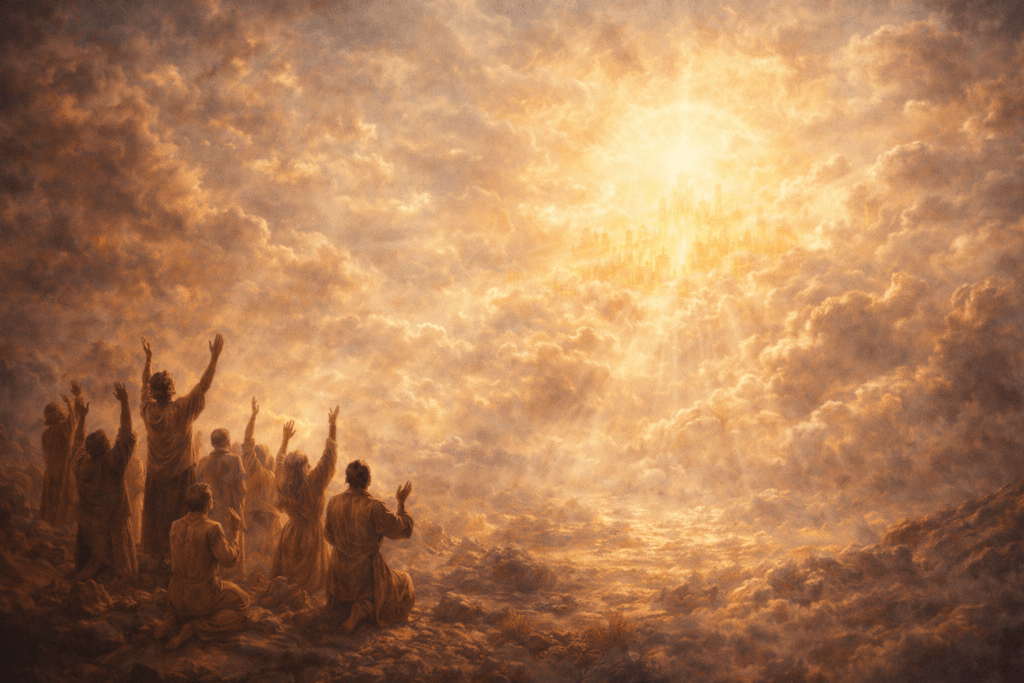
But God does not leave humanity under condemnation alone—He provides a way of redemption and blessing through Jesus Christ.
Next, we look at the blessed consequences—the benefits of keeping this Commandment of not following false gods.
Keeping this commandment brings blessings from the Lord, the only living and true God, to those who believe in and follow Him.
Now, originally this applied to the Jews, and everybody else was cursed by the Law, but with the advent of Jesus, His death and resurrection opened the way for all. Let’s look at this in Galatians 3:13-14, 28-29: NKJV
13. Christ has redeemed us from the curse of the law, having become a curse for us (for it is written, “Cursed is everyone who hangs on a tree”),
14. that the blessing of Abraham might come upon the Gentiles in Christ Jesus, that we might receive the promise of the Spirit through faith.
With the Advent of Christ, this curse was lifted and opened to all who accept Christ Jesus, the covenant God made with Abraham.
Let’s look at the result.
28. There is neither Jew nor Greek, there is neither slave nor free, there is neither male nor female; for you are all one in Christ Jesus.
29. And if you are Christ’s, then you are Abraham’s seed, and heirs according to the promise.
PRASE God!
So, for us today, following God through His Son Jesus Christ opens the door to the wonderful benefits of His grace.
Let’s look at some Scripture illuminating these benefits.
To begin, an individual who sincerely holds faith in God will attain salvation, eternal life, and not face condemnation through God’s Son, the Lord Jesus Christ.
Let’s look at the promise by Jesus in John 3:16-18 NKJV
16. For God so loved the world that He gave His only begotten Son, that whoever believes in Him should not perish but have everlasting life.
17. For God did not send His Son into the world to condemn the world, but that the world through Him might be saved.
18. “He who believes in Him is not condemned;
Here we have the promise by the Lord Himself. He came to save the world that the world through Him might be saved; saved from eternal death to eternal life.
Let’s look at some benefits while we are here on earth today.
An individual who maintains faith in God is likely to experience a sense of peace, serenity, and confidence throughout life, as they place their trust in God and remain mindful of Him.
Let’s look at Isaiah 26:3 KJV
3. Thou wilt keep him in perfect peace, Whose mind is stayed on thee: Because he trusteth in thee.
This verse is part of Israel’s kingdom song, singing to the Lord, and stating that those who keep their mind on Him, and trust Him, will be in perfect peace.
New Testament—Romans 5:1-4 NKJV
1.Therefore, having been justified by faith, we have peace with God through our Lord Jesus Christ,
2. through whom also we have access by faith into this grace in which we stand, and rejoice in hope of the glory of God.
3 And not only that, but we also glory in tribulations, knowing that tribulation produces perseverance;
4. and perseverance, character; and character, hope.
This just get’s better and better. Even during our time in tribulations, we have peace because we recognize that they work for good. [Romans 8:28]
Continuing on trials and tribulations, let’s look at Psalm 34 19: NKJV
19. Many are the afflictions of the righteous, But the Lord delivers him out of them all.
If we follow and trust God, He will be our source, and He will deliver us from our afflictions and trials.
This brings us to another advantage: those who have faith in God receive ongoing strength from Him each day, even sharing in God’s own enduring power.
Isaiah 26:4 NKJV
4. Trust in the Lord forever, For in Yah, the Lord (Yahweh), is everlasting strength.
As we trust in the Lord, the true God, we have the assurance of His everlasting strength.
Finally, individuals who maintain faith in God, trust that they will be guided, supported and directed by God’s divine care.
Psalm 37:5 NKJV
5. Commit your way to the Lord, Trust also in Him, And He shall bring it to pass.
Proverbs 3:5-6 NKJV
5. Trust in the Lord with all your heart, And lean not on your own understanding;
6. In all your ways acknowledge Him, And He shall direct your paths.
So, the first Commandment is “thou shalt have no other gods before me. If we follow Him—obey His Commandments, we will be blessed!
The Heart of the First Commandment
At its core, the first commandment is not merely about restriction—it is about love.
As Jesus answered the lawyer regarding the greatest commandment in Mark 12:37, ‘You shall love the Lord your God with all your heart, with all your soul, and with all your mind.’ 38 This is the first and great commandment.
The first commandment is foundational because all other commandments flow from it.
Loving God is the greatest thing we can do!
Amen!
Questions, comments, and concerns may be left below.
Next, we’ll look at the second Commandment:
You shall not make for yourself a carved image
Blessings!
👉 Watch the Full Video Presentation
👉 Watch the 60-Second Version
The Ten Commandments Series
Part 1: No Other Gods
– Part 2: No Idols
– Part 3: The Meaning of God’s Name in Vain
– Part 4: The Truth About the Sabbath (Saturday or Sunday?)