Law or Grace? Are Christians Still Under the Law? Are Christians under the Law, or are we under Grace? This question has generated debate and confusion within the church for generations. Some conclude that the Law no longer matters at all. Others attempt to return believers to the Law as a means of righteousness. Scripture, however, presents a balanced and unified answer when we allow it to speak for itself.
This article follows the biblical flow of the accompanying video teaching and explains how God’s Law and God’s Grace work together in the life of a believer—without legalism and without license.
What is the Law?
When Scripture speaks of “the Law,” it primarily refers to the Law given by God to Israel through Moses, often called the Mosaic Law or the Torah. This Law is recorded in the first five books of the Bible (Genesis, Exodus, Leviticus, Numbers, Deuteronomy), and includes moral commandments, ceremonial instructions, and civil regulations.
The Law was not merely a list of rules. It revealed God’s holiness, defined righteousness, and showed humanity what obedience to God looks like. It governed Israel’s worship, community life, and moral conduct, and it distinguished God’s people from the surrounding nations.
Most importantly, the Law revealed God’s standard—perfect righteousness.
What is Grace?
Now that we have defined the Law, what is grace?
In the Scriptures, the word “grace” comes from the Greek term charis in the New Testament and the Old Testament Hebrew ḥēn. It refers to God’s unearned favor, love, and kindness freely given to people who do not deserve it. Grace enables forgiveness, salvation, and blessings through Jesus Christ—not because of human efforts or merit. This concept highlights God’s generous and benevolent power offered to sinners, making transformation and a relationship with Him possible, as illustrated in Ephesians 2:8-9 NKJV.
8. For by grace you have been saved through faith, and that not of yourselves; it is the gift of God,
9 not of works, lest anyone should boast.

Grace is the very core of the Gospel, showing God’s great love by offering freely what individuals cannot achieve on their own, which enables reconciliation and the promise of eternal life.
So, we have the definitions of Law and Grace. So, the question: Are we under the Law, or are we under Grace? With the arrival, death, and resurrection of Jesus, are we no longer subject to the Law? Was the Law done away with in the New Testament?
The Purpose of the Law?
So let’s take a good look at this. What was the purpose of the law? The purpose of the Law was to set a standard of conduct. This involves worship to God as well as everyday life. It separated Israel from the other nations as God’s special nation.
So, is the Law for Israel only? Is the Law only part of the Old Testament? Hardly! Let’s take the Ten Commandments, the very base and foundation of the Law. There is not one Scripture in the New Testament that refutes any of the Ten Commandments—not one.
In fact, the opposite applies. Let’s look at some Scripture.
1 Timothy 1:8-10 NKJV
8. But we know that the law is good if one uses it lawfully,
The New Testament Scripture says: “the law is good.” What makes the Law good? God’s Law gives direction for living a holy life. But it is to be used “lawfully” for its intended purpose, not to hold those who are righteous in bondage, but for those who have not recognized and repented of their sins.
Let’s continue:
9. knowing this: that the law is not made for a righteous person, but for the lawless and insubordinate, for the ungodly and for sinners, for the unholy and profane, for murderers of fathers and murderers of mothers, for manslayers,
10. for fornicators, for sodomites, for kidnappers, for liars, for perjurers, and if there is any other thing that is contrary to sound doctrine,
It is clear that the law is for the unrighteous—which we all were at one time.
Next, Romans 5:12-13 NKJV [cf. Rom 4:15]
12. Therefore, just as through one man sin entered the world, and death through sin, and thus death spread to all men, because all sinned—
13. (For until the law sin was in the world, but sin is not imputed when there is no law.
Romans 4:15:
15. because the law brings about wrath; for where there is no law there is no transgression.
The purpose of the Law is to make us aware of sin. Without the Law, there’s no transgression—no sin. For us today, the purpose of the Law is to make us aware of sin, and lead us to Christ. It reveals God’s holiness and our sin.
Galatians 3:22-24 NKJV
22. But the Scripture has confined all under sin, that the promise by faith in Jesus Christ might be given to those who believe.
23. But before faith came, we were kept under guard by the law, kept for the faith which would afterward be revealed.
24. Therefore the law was our tutor to bring us to Christ, that we might be justified by faith.
The law is described as our tutor, teaching us the need for salvation because of our sins, thereby leading us to Christ.
To summarize, the purpose of the Law is to make us aware of sin and lead us to Christ.
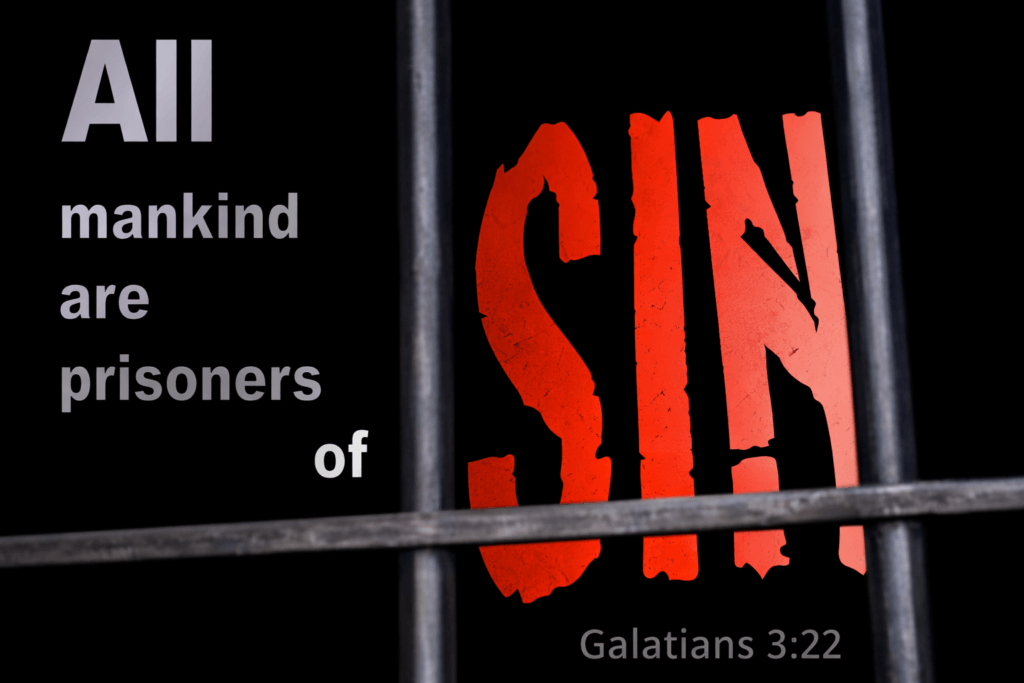
What is sin?
The New Testament provides a clear definition:
1 John 3:4 KJV
4. Whosoever committeth sin transgresseth also the law: for sin is the transgression of the law.
To transgress is to disobey. Now, note that we are looking at New Testament Scriptures, and the Scripture says, “Whoever commits sin transgresses the Law.” Now, what law is the Scripture referring to? The only Law in the Scriptures is God’s law.
Bottom line: to break God’s Law is sin! Period—Full stop!
Why We Need Grace
Grace has already been defined as unearned favor, love, and kindness freely given to those who do not deserve it.
But what is the purpose of grace? Why do we need it? All we have to do is obey the Law, right? Well, let’s see what Scripture says about this.
Romans 3:19-20 NKJV
19. Now we know that whatever the law says, it says to those who are under the law, that every mouth may be stopped, and all the world may become guilty before God.
20. Therefore by the deeds of the law no flesh will be justified in His sight, for by the law is the knowledge of sin.
The Law convicts the whole world of being guilty of sin because no one can keep the Law perfectly. Therefore, as the Scripture reads, “no flesh”—no one will be justified by the Law.
The fact of the matter is, the Law condemns and convicts; it does not give the power to obey; only the Holy Spirit gives us that power.
Therefore, we are all condemned by the Law, and we need a savior—we need grace—we don’t deserve it because we’ve broken the Law—we’ve sinned. But as the Scripture says in Romans 6:23, “For the wages of sin is death; BUT the gift of God is eternal life through Jesus Christ our Lord. It is by faith in Jesus Christ, given to us by the grace of God, that we are saved.
In a sense, Jesus is our get out of jail free card! Amen! He paid a debt that we could never pay.
So what is the purpose of grace? To save us from our sins!
Did Jesus Abolish the Law?
Back to the law. There are those who say, and it has also been written, that we are no longer under the law of Moses, but the law of Christ.
Now this is where confusion often enters—when people hear the phrase “the Law of Christ.” That phrase is interesting because Jesus said that He came to fulfill the Law of Moses. Let’s look at what He said in Matthew 5:17-19 NKJV
17. “Do not think that I came to destroy the Law or the Prophets. I did not come to destroy but to fulfill.
18. For assuredly, I say to you, till heaven and earth pass away, one jot or one tittle will by no means pass from the law till all is fulfilled.
19. Whoever therefore breaks one of the least of these commandments, and teaches men so, shall be called least in the kingdom of heaven; but whoever does and teaches them, he shall be called great in the kingdom of heaven.
It appears that Jesus was serious about the Law of Moses. Jesus said, DON’T EVEN THINK ABOUT IT – don’t even think about destroying the Law! He also made the point clear that anyone breaking one of even the least of the Commandments would be called least in the Kingdom of Heaven.
Jesus fulfilled the Law of Moses by fully obeying its commands, living without sin, and offering the ultimate sacrifice (shedding His blood), therefore completing its requirements and revealing its spiritual purpose centered on love for God and neighbor. Rather than abolishing the law, he brought it to fulfillment, setting believers free from condemnation of the Law and continual sacrifices.
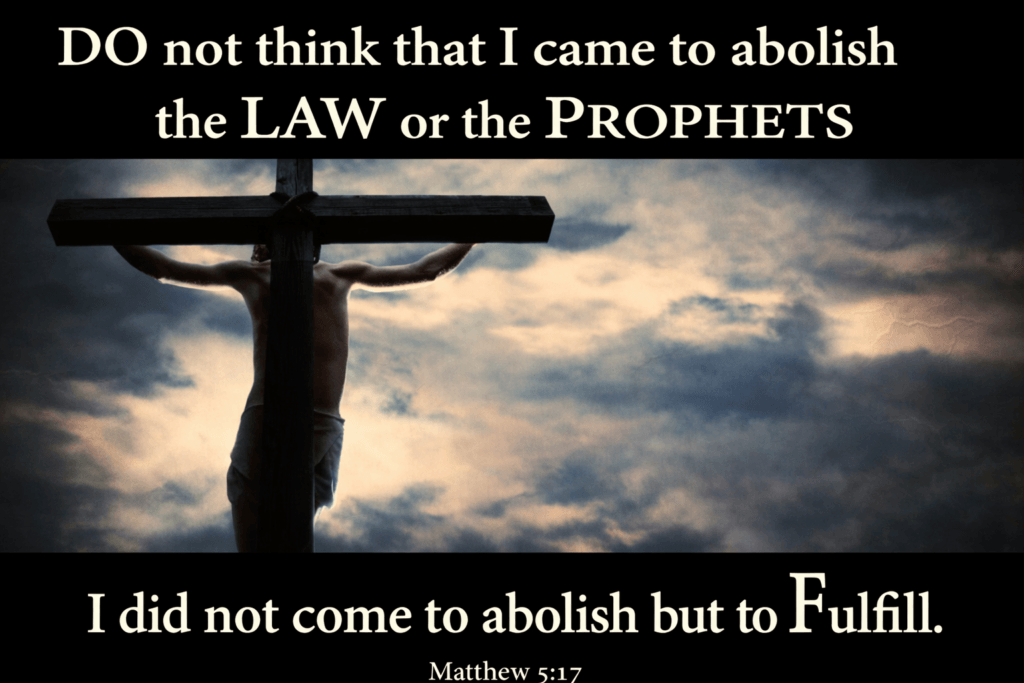
Bottom line, Jesus completed the Law of Moses—He did not replace it.
Reference to The Law of Christ may be based on the Scripture in Galatians 6:2, which reads:
2. Bear one another’s burdens, and so fulfill the law of Christ.
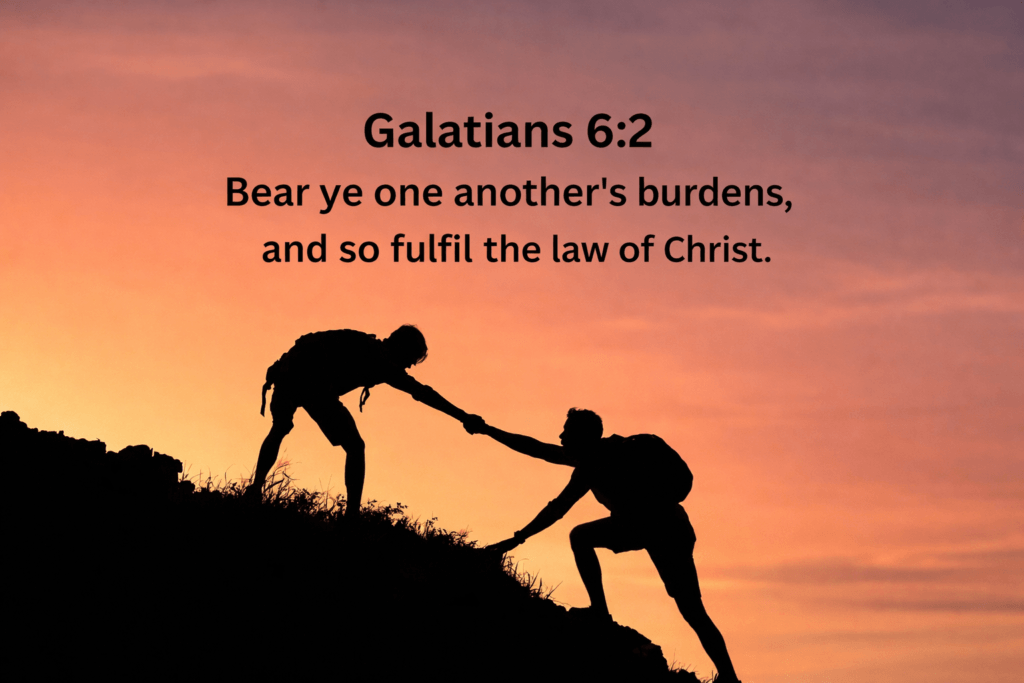
Bearing one another’s burdens is a manifestation of love. But is that a new law? Absolutely not! Let’s look at some Scripture. Matthew 22:34-40
34. But when the Pharisees heard that He had silenced the Sadducees, they gathered together.
35. Then one of them, a lawyer, asked Him a question, testing Him, and saying, 36. “Teacher, which is the great commandment in the law?”
37. Jesus said to him, “ ‘You shall love the Lord your God with all your heart, with all your soul, and with all your mind.’
38. This is the first and great commandment.
39. And the second is like it: ‘You shall love your neighbor as yourself.’
40. On these two commandments hang all the Law and the Prophets.”
Jesus Christ, our Lord and Savior, said the greatest Commandment was love; love for God, and love for our neighbor. Jesus didn’t mention a new law or a law of Christ. He directed the lawyer to the Commandments—the Law.
Let’s look further at what Jesus said in John 13:34
34. “A new commandment I give to you, that you love one another; as I have loved you, that you also love one another.
35. By this all will know that you are My disciples, if you have love for one another.”
While loving others was already taught in the Old Testament (Leviticus 19:18), Jesus introduced a new standard: we are now to love others as he loved us— with sacrificial love. A new standard, not a new law.
Let’s look at another New Testament Scripture, Romans 13:8-10
8. Owe no one anything except to love one another, for he who loves another has FULFILLED THE LAW.
9. For the commandments, “You shall not commit adultery,” “You shall not murder,” “You shall not steal,” “You shall not bear false witness,” “You shall not covet,” and if there is any other commandment, are all summed up in this saying, namely, “You shall love your neighbor as yourself.”
10. Love does no harm to a neighbor; therefore love is THE FULFILLMENT OF THE LAW.
Now look at this! The Commandments in the New Testament! The point is made very clear that love fulfills the Law. Love, the very act that Jesus promoted—fulfills the Law!
Bottom line, you can’t separate the Old Testament from the New Testament. A dog has a better chance of chasing and catching its own tail than of us separating the Testaments.
It’s not possible! In fact, the New Testament confirms the Old Testament!
The law teaches us the need for salvation; God’s grace gives us that salvation. The Old Testament still applies today. In it, God reveals his nature, his will for humanity, his moral laws, and his guidelines for living. But we cannot be saved by keeping that law only; we must trust in Jesus.
We just need to choose Him by faith.
Another passage used to dismiss the Law is Colossians 2:13-15.
13. And you, being dead in your trespasses and the uncircumcision of your flesh, He has made alive together with Him, having forgiven you all trespasses,
14. having wiped out the handwriting of requirements that was against us, which was contrary to us. And He has taken it out of the way, having nailed it to the cross.
15. Having disarmed principalities and powers, He made a public spectacle of them, triumphing over them in it.
This passage explains the nature of Christ’s forgiveness. By forgiving our sins (vs.13), Christ removed our record of wrongdoing. This document served as a written account of our violations of the law. Humanity could not repay the debt of sin, so God erased it.
Christ eliminated the record of our wrongdoings by taking it to the cross, where He in essence (figuratively illustrated), nailed it and wiped out our debts with His blood. Because of His sacrifice, nothing can stand in our way or keep us from freedom. No human rules or religious rituals—whether from Judaism or false teachings—can replace or add to what Christ has accomplished for us. The death of Jesus fully settled believers’ obligations to God.
However, Christ’s death did not cancel the Law. As I mentioned earlier, it fulfilled the Law. Nailing it to the cross meant that the death of Jesus on the cross cancelled our debt of sin.
Now, let’s dig a little deeper into this fulfillment in New Testament Scripture found in Hebrews 9:22. It reads:
22. And according to the law almost all things are purified with blood, and without shedding of blood there is no remission.
Now, the Scripture says, “according to the Law.” Now, what law is it referring to?
It goes right back to the Old Testament in Leviticus 17:11which reads:
11. For the life of the flesh is in the blood, and I have given it to you upon the altar to make atonement for your souls; for it is the blood that makes atonement for the soul.
It is the shed blood of Jesus on Calvary that made atonement for our souls.
Again, Jesus Christ fulfilled the Law. He did not condemn the Law.
The key point is that we are not free from the Law; we must still obey it. But we are free from the curse of the law. We are born cursed under the law, which is why we, as Jesus stated, “must be born again.”
Now let’s look at a passage of Scripture that addresses this clearly. Galatians 3:10-14.
10. For as many as are of the works of the law are under the curse; for it is written, “Cursed is everyone who does not continue in all things which are written in the book of the law, to do them.”
11. But that no one is justified by the law in the sight of God is evident, for “the just shall live by faith.”
12. Yet the law is not of faith, but “the man who does them shall live by them.”
13. Christ has redeemed us from the CURSE of the law, having become a curse for us (for it is written, “Cursed is everyone who hangs on a tree”),
14. that the blessing of Abraham might come upon the Gentiles in Christ Jesus, that we might receive the promise of the Spirit through faith.
This passage confirms it! We are free from the CURSE of the Law, we are NOT free from the LAW. The curse is—When we break the Law, we’re doomed. That’s where Christ comes in.
The bottom line: we need the Law, we still need to know right from wrong, we need to know when we have sinned so we can repent. Remember what we saw back in Romans 19:20, “Therefore by the deeds of the law no flesh will be justified in His sight, for by the law is the knowledge of sin.”
We need the Law, and we need to obey the Law.
Legalism vs. Obedience
Now, some say that obeying the Law is legalism. Well, actually it is, without Christ.
Let’s understand what legalism is; legalism is seeking salvation by strictly obeying the Law—being saved on our own—no Christ. But when we accept Christ by faith and are born again, we don’t obey the Law to be saved; we obey the Law because we are saved.
Listen, Jesus said, “If you love me, keep my Commandments.” We follow the Law of God out of our love for Him. Remember the greatest Commandment. “Love the Lord thy God…” We love God by keeping His Commandments.
We are to keep the Commandments of God—we are to obey the law.
Listen, this business of being free from the Law is simply NONSENSE!
This is yet another manifestation of Spiritual Warfare on mankind. It is an insidious assault by Satan to discount God’s Law, putting in the minds of unwitting professing Christians that they can sin and still be saved because they are free from the Law.
GRACE IS NOT PERMISSION TO SIN
Listen, grace does indeed give us freedom, but this freedom does NOT give us permission to sin! We are now warned about this in the Scriptures. First, Romans 5:20–6:2 NKJV
20. Moreover the law entered that the offense might abound. But where sin abounded, grace abounded much more,
21. so that as sin reigned in death, even so grace might reign through righteousness to eternal life through Jesus Christ our Lord.
6:1. What shall we say then? Shall we continue in sin that grace may abound?
2. Certainly not! How shall we who died to sin live any longer in it?
This is not rocket science; it is common sense. If we are free from sin, how can we live in sin? It doesn’t make sense, and the Scripture proves it.
Now, here’s a Scripture that wraps this up totally, 1 Peter 2:16: NIV
16. Live as free people, but do not use your freedom as a cover-up for evil; live as God’s slaves.
It doesn’t get any clearer than this!
Here we have a paradox. One of several in Christianity: Christians are both free and called to serve. Our freedom should be used to glorify God, not as an excuse for wrongdoing. Christian liberty does not allow us Christians to act as we please or conceal sin; instead, service to Christ defines our boundaries.
Think of the grace Jesus extended to the woman caught in the act of adultery; he extended grace, but in John 8:10-11, He said to her, “Woman, where are those accusers of yours? Has no one condemned you?” 11 She said, “No one, Lord.”And Jesus said to her, “Neither do I condemn you; GO AND SIN NO MORE.”
While we do have grace, we are not to continue in sin.
Bottom line: My friends, we are called to be free, but we are not to use our freedom to indulge our sinful nature.
We are to live in repentance because we will sin and need to repent. Not live a life of sin, or a life of iniquity as we did before. But sin in a Christians life should be an accident. We can commit sins without knowing it. But when we are convicted by the Spirit, we must repent—turn away from them with the intention to not repeat them again.
Once saved, always saved— That statement, as it is commonly taught, is a Misnomer—a statement of inaccuracy. The accurate statement is, once saved, always saved as long as we live a godly life—a life of repentance.
This is why we should pray each morning for the guidance of the Holy Spirit and pray each night for forgiveness of whatever sin we’ve committed during the day.
You see, society, both Christian and non-Christian, has a dangerous mindset. We want the results, but we don’t want to do the work. We want eternal life, but we want to live on our own terms. That’s not happening! If you want the results, you must do the work. We must live a life of repentance.
Conclusion
So, as I close, back to the original question, let’s bring all of this together. Are we under the Law, or under grace?
The unequivocal, unambiguous, unmistakable answer is – BOTH!
We are under the Law, and we are under grace. You can’t have one without the other. We simply cannot take the law out of the equation.
Now, let’s think about this. If there’s no Law, there’s no need for grace, and if there is no grace, we’re simply lost. To say I’m not under the Law but under grace raises the question, grace from what? The answer— grace from the Law. But only by faith in Jesus – That’s the only way.
I’m going to share one more Scripture, John 1:17 NKJV
17. For the law was given by Moses, but grace and truth came by Jesus Christ.
Here we have Law and grace are both expressions of God’s nature. Moses focused on law and justice, while Jesus Christ emphasized mercy, love, faithfulness, and forgiveness. Moses delivered the law; Christ fulfilled it.
My friends, the Law still applies today. It is still wrong to have idols, to lie, steal, disregard the Sabbath, commit adultery, bear false witness, and covet.
Let me take this further. The Laws in our nation today are based on the Ten Commandments. If you carefully examine any law on the books, you will see that it’s based on at least one of the Ten Commandments.
So, the bottom line: we can’t deny the Law, and we can’t deny the grace that comes through Jesus Christ, our Lord and Savior. So let us grasp both and walk in the freedom that is bestowed upon us. Because it is Christ who fulfilled the Law and Christ who gives us grace.”—Amen!
INTRODUCING THE TEN COMMANDMENTS SERIES
With this foundation in place, the next natural question is how the Ten Commandments apply to believers today. The upcoming video and article series will examine each commandment, not as a means of salvation, but as a revelation of God’s character and His will for those who live under grace.
Any questions, comments, or concerns may be left below.
👉 Videos
▶️ Watch the Short (60 seconds):
https://youtube.com/shorts/II8rMjDnETM