Blog

Biblical Deception 

Deception is all around us. Conspiracy theories have increasingly been on the rise. In this climate of deception, how do we know what to believe? The Bible addresses deception, and this article investigates Biblical Deception.

The Imminent Deception 

Deception is the mixing of truth with error, unlike a lie, which is absent of all truth—all error.

Biblical Deception
The mixing of truth with error.

Matthew 24:3-5

3. Now as He sat on the Mount of Olives, the disciples came to Him privately, saying, “Tell us, when will these things be? And what will be the sign of Your coming, and of the end of the age?”

4. And Jesus answered and said to them: “Take heed that no one deceives you.

5. For many will come in My name, saying, ‘I am the Christ,’ and will deceive many. NKJV

In this passage we have a warning from Jesus, we have the nucleus of the dilemma. “Many” will fail to “take heed” (discern, examine, perceive) Biblical truths. As a result, they will stumble into deception. Truth protects, and error harms; therefore, the more of God’s Word we know, the more error we can discern.

Gen. 3:1-4

Now the serpent was more cunning than any beast of the field which the Lord God had made. And he said to the woman, “Has God indeed said, ‘You shall not eat of every tree of the garden’?”

2. And the woman said to the serpent, “We may eat the fruit of the trees of the garden;

3. but of the fruit of the tree which is in the midst of the garden, God has said, ‘You shall not eat it, nor shall you touch it, lest you die.'”

4. Then the serpent said to the woman, “You will not surely die. NKJV

The serpent deceived Eve. She admitted that she was deceived in verse 13, which reads:

“‘And the Lord God said to the woman, “What is this you have done?” The woman said, “The serpent deceived me, and I ate.” NKJV

There was some truth (Gen. 3:7, 22). After Adam and Eve ate the fruit, their eyes were opened.

In the text, Satan predicted that something would happen and then tells a lie by stating, “you will surely not die.”

When their eyes were opened, they did not experience a wondrous enlightenment as Satan had implied. Instead, they experienced shame, fear, and guilt (vss. 7, 8, 10). Neither were they elevated to the same status as God.

The Seeds of Deception

Eve was deceived by the serpent. As a result, she and Adam rebelled against God’s Command by eating the forbidden fruit.

King Saul was deceived” by his fear and jealousy, which led him to rebel against God’s instructions and acted in disobedience.

Judas Iscariot was deceived by his greed and betrayal, ultimately leading him to rebel against Jesus and betray Him.

The Israelites in the wilderness were deceived by their doubts and fears despite God’s miracles and deliverance and rebelled against Him multiple times.

There is a trend throughout the Scriptures. Deception, whether through fear, jealousy, greed, or doubt, appears to be a common thread in these instances of rebellion. This highlights the fact that deception often ignites the flames of rebellion. Deception serves as the initial step that leads to rebellion. Deception leads to rebellion.

The Imminent Apostasy

Matthew 24:11-13

11. Then many false prophets will rise up and deceive many.

12. And because lawlessness will abound, the love of many will grow cold.

13. But he who endures to the end shall be saved. NKJV

Acts 20:29-31

29. For I know this, that after my departure savage wolves will come in among you, not sparing the flock.

Biblical Deception

30. Also from among yourselves men will rise up, speaking perverse things, to draw away the disciples after themselves.

31. Therefore watch, and remember that for three years I did not cease to warn everyone night and day with tears. NKJV

1 Tim. 4:1

4 Now the Spirit expressly says that in latter times some will depart from the faith, giving heed to deceiving spirits and doctrines of demons, NKJV

2 Peter 2:1-3

1. But there were also false prophets among the people, even as there will be false teachers among you, who will secretly bring in destructive heresies, even denying the Lord who bought them, and bring on themselves swift destruction.

2. And many will follow their destructive ways, because of whom the way of truth will be blasphemed.

3. By covetousness they will exploit you with deceptive words; for a long time their judgment has not been idle, and their destruction does not slumber. NKJV

Jude 3-4

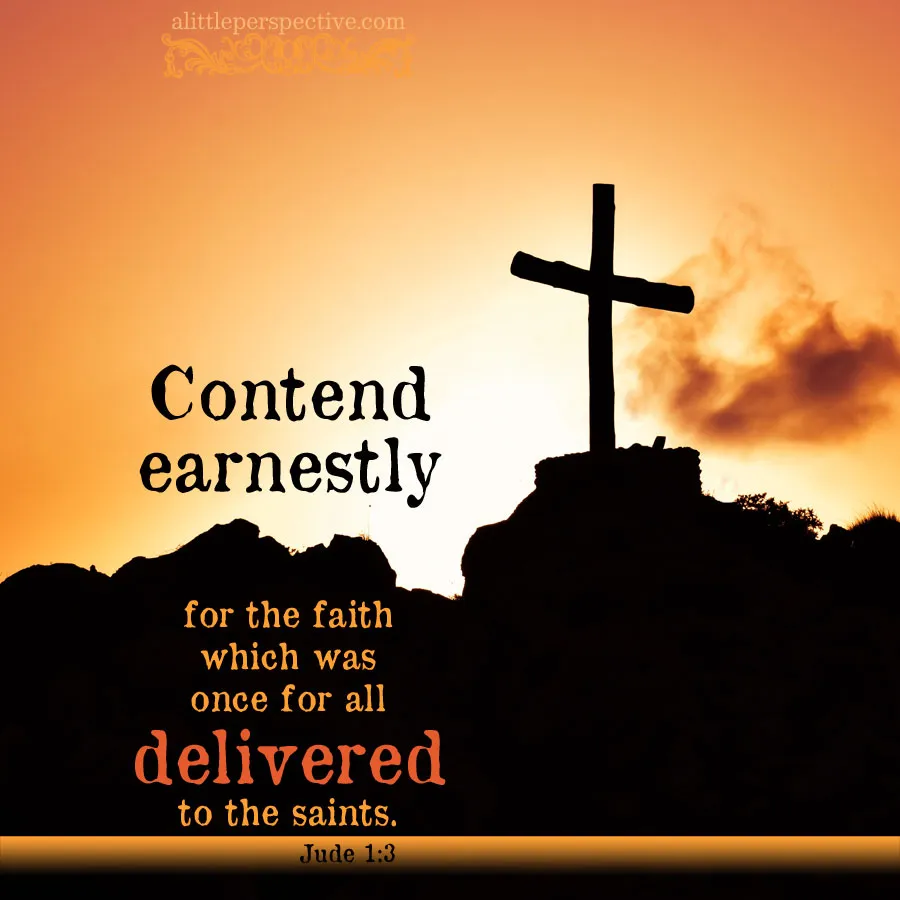
3. Beloved, while I was very diligent to write to you concerning our common salvation, I found it necessary to write to you exhorting you to contend earnestly for the faith which was once for all delivered to the saints.

4. For certain men have crept in unnoticed, who long ago were marked out for this condemnation, ungodly men, who turn the grace of our God into lewdness and deny the only Lord God and our Lord Jesus Christ. NKJV

These passages collectively depict the imminent threat of apostasy. They are a series of warnings of the impending apostasy. Again, deception proceeds apostasy. The book of Jude serves as a solemn warning against the dangers of apostasy in the church. Just as it was prevalent in his time, it is prevalent in ours.

We must be vigilant in our faith and firmly rooted in the truth to avoid deception and apostasy. We must as the Scripture reads, “contend earnestly for the faith.”

We must be aware of the falsehoods among us (Matthew 7:15-19). Men are deceptive with their words. We must note what they teach: God’s Word or man’s doctrines. We must test the spirits. [1 John 4:1-3] Otherwise, we cannot earnestly contend for the faith if we do not bring our teachers into subjection.

Jude’s audience was unaware and not on guard of the deception that had crept into the church. Today, we are very unaware. We must confirm the Word for ourselves to discern truth from error. We must be on guard so that we will not be deceived. When we are deceived, we will rebel—knowingly and unknowingly. We are prone to deception and prone to rebellion.

Contending for the Faith

Why must we contend for the faith?

o   The false teachers are ungodly people. They pervert the divine ideal of holiness. I Thessalonians 5:23, 1 Peter 2:9, Lev. 20:26, 1st Peter 1:14-16, Rev. 21:27

o   They teach that grace allows us to live ungodly—immoral lives. They pervert the doctrine of grace.

Titus 2:11-14—The grace of God teaches us that we are to live godly, sober, and righteous lives because Christ arrived to redeem us from every lawless deed and free us from the power of sin. He came to set the captives free.

o   They deny Jesus Christ—His authority and power.

§  Matthew 28:18, Eph. 1:21-23—Christ has all authority, all power; to deny this is to deny Christ. With all power and authority, Christ came to free us from the shackles of sin. Through His Word, He intended to reveal Himself while equipping us for salvation.

o   They deny the all-sufficiency of all Scripture

§  2 Timothy 3:16-17—To deny all the sufficiency of Scripture is to deny Christ. To say that the Old Testament doesn’t matter is to assume that the New Testament alone will qualify us for every good work. ALL Scripture has been given by God.

We cannot cherry-pick what Scripture should be or should not be applicable. All—all Scripture should be counted as applicable.

2 Peter 1:3—God has given us all things of life, all things pertaining to godliness. His Word is to be heeded from the beginning of Genesis to the end of Revelation. Nothing is to be neglected.

John 1:1-4, 14, Rev. 19:12-13—To deny the all-sufficiency of Scripture is to deny Christ.

How do we contend for the faith?

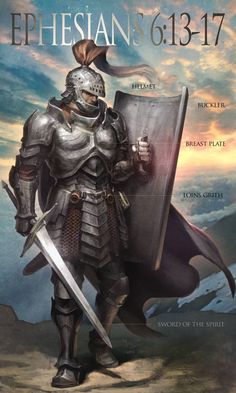
We must use the weapons that are at our disposal. Eph. 6:10-18 reads:

10. Finally, my brethren, be strong in the Lord and in the power of His might.

11. Put on the whole armor of God, that you may be able to stand against the wiles of the devil.

12. For we do not wrestle against flesh and blood, but against principalities, against powers, against the rulers of the darkness of this age, against spiritual hosts of wickedness in the heavenly places.

13. Therefore take up the whole armor of God, that you may be able to withstand in the evil day, and having done all, to stand.

14. Stand therefore, having girded your waist with truth, having put on the breastplate of righteousness,

15. and having shod your feet with the preparation of the gospel of peace;

16. above all, taking the shield of faith with which you will be able to quench all the fiery darts of the wicked one.

17. And take the helmet of salvation, and the sword of the Spirit, which is the Word of God;

18. praying always with all prayer and supplication in the Spirit, being watchful to this end with all perseverance and supplication for all the saints — NKJV

All About Spiritual Warfare

This is what we ought to do. Our ability to stand is contingent upon our being willing to put on “the whole armor of God. “ Because we can’t stand against “the wiles of the devil” on our own.

We must be girded with truth, being honest and truthful in all aspects of life.

The breastplate of righteousness—Put on Christ’s righteousness in faith, live a moral and upright life, and do what is right and just according to God’s will.

The feet shod with the gospel of peace—Be ready to share the everlasting gospel proclamation with others.

The shield of faith—Trust in God, His protection, and His provision.

The helmet of salvation—Stand in the assurance of salvation found in Christ.

The Sword of the Spirit- The Word of God—Use the power of God’s Word to guide our thoughts and actions. 

The great deception, the mother of all deceptions, is coming. The beast of Revelation 13, when he performs deceitful miracles and wonders, is coming. This will lead to the conclusion of Spiritual Warfare and the Great Controversy.

Therefore, every weapon matters—the whole armor. With all prayer, be vigilant and seek God’s guidance and strength. We must use our weapons at our disposal. Put on Christ; stand for Christ!

Questions, comments, and concerns may be left below.

Blessings!

Pride And The Bible

June 1st commenced Gay Pride Month, which is often shortened to Pride Month for the LGBT community. However, is this really something to celebrate? What does the Bible say about pride? This article will explore pride and the Bible, and more specifically, Gay Pride.

Pride and the Bible

The title of this article alone spells trouble. It spells trouble because it contains a foul word—pride. Pride may not be a dirty four-letter word as we commonly know, but it is still a foul word, especially in the eyes of God.

So, for starters, what is pride? Very simply, exaggerated self-esteem and conceit; excessive appreciation of one’s worth or virtue.

Pride is idolatry. When our minds are filled with pride, we focus on ourselves, leaving no room for God. Anything that takes our focus off God is idolatry. A heart that has pride is at enmity with God.

Now, over time, society has put a positive spin on pride, leading us to use pride in a positive context. For example, I’m so proud of my son or daughter graduating from college, I’m proud to be a homeowner, I take pride in my work, or I’m so proud of myself for the weight I’ve lost, I take pride in how I look.

Oh yes, we throw the word pride around as though it’s an asset. But this is just another insidious way for the enemy—Satan, to oppose God. He will do anything and use anybody wittingly or unwittingly to go against God. Which is why the Scripture describe him in Eph 2:2 as the prince of the power of the air, the spirit that now worketh in the children of disobedience:

Therefore, it behooves us to find another word to express our positive frames of mind. The dictionary is full of them, and isn’t interesting that we often choose pride to express our satisfaction and gratification.

While culture may change things, God does not change. As he said through His prophet, Malachi in Malachi 3:6, “For I am the LORD, I change not…”

So, for the record, this article is not about the cultural adaptation of pride, but how God sees pride and makes it clear in His Word.

In the King James translation, pride appears 49 times, all negative. There is nothing good about pride. Prov 13:10 NKJV says, “By pride comes nothing but strife, But with the well-advised is wisdom.” In Mark 7:21, Jesus said that pride is one of the evil things that come from the hearts of men and defile them.

The fact of the matter is, no matter how we sugar coat it, pride leads to arrogance.

Pride is idolatry. When our minds are filled with pride, we focus on ourselves, and whatever we have pride in, and nothing else can get in, leaving no room for God. Anything that takes our focus off God is idolatry. A heart that has pride is at enmity with God.

Pride and the Bible

Sometimes, God provides a loophole, allowing us to do what we want and remain in His will. For example, David desired to build God a house, but God said no because he had too much blood on his hands. But God said his son Solomon could build the house. So David was still able to build the house vicariously through his son (1 Chronicles 22:6-8).

One of the ways pride manifests itself is through boasting. The Scriptures speak against boasting. 1 Cor. 1:26-29 NIV reads:

Brothers, think of what you were when you were called. Not many of you were wise by human standards; not many were influential; not many were of noble birth.

27. But God chose the foolish things of the world to shame the wise; God chose the weak things of the world to shame the strong.

28. He chose the lowly things of this world and the despised things — and the things that are not — to nullify the things that are,

29. so that no one may boast before him. NIV

It is important to note that God called ordinary people to carry out His work in the Old Testament. Such individuals as Moses (Exod. 3), Deborah (Judg. 4-5), Gideon (Judg. 6-8), and many other people of humble origin confirm that success came through His power, not theirs. The foolish and weak can never say that God chose them because of their talent or intelligence. Instead, God chooses those counted as nothing by the world and turns them into great people for Him. People’s abilities, social standing, or knowledge have nothing to do with God’s choice. Skill and wisdom do not get a person into God’s kingdom — faith in Christ does — so no one can boast that their achievements helped them secure eternal life.

Pride and the Bible

Nevertheless, God makes a way for us to boast. In Jer. 9:23-24 NIV, God speaks through His prophet, saying:

23. This is what the Lord says: “Let not the wise man boast of his wisdom or the strong man boast of his strength or the rich man boast of his riches,

24. but let him who boasts boast about this: that he understands and knows me, that I am the Lord, who exercises kindness, justice and righteousness on earth, for in these I delight,”  declares the Lord. NIV

Pride and the Bible

Many must realize that although God is loving and merciful. He is also holy and just.
In this passage, God pointed out to Jeremiah that there are three widely accepted human sources of boastfulness — intelligence, strength, and wealth. Each turns out to be unworthy of our ultimate trust. So, if we must boast, it is God, and God alone, that is worth boasting about and that we know and understand Him. All other boasting is futile.

Gay Pride

So, June is Gay Pride Month, and there will be a lot of celebration and boasting.

Prov 14:34 says: “Righteousness exalteth a nation: but sin is a reproach to any people.” It is righteousness, godliness—that makes a nation great. But sin is a disgrace to any people. Nationwide sin denigrates a nation.

Pride and the Bible

But our nation is exalting sin. Now, for sure, sin is sin, but Gay pride—exalts, promotes, and praises homosexuality—a particularly egregious sin. God’s Word in the Old and New Testaments shams homosexuality. Leviticus 18:22 declares it as an abomination. It carries a particular stench in the nostrils of God.

Romans 1:22 addresses it as “vile affections,” and 1 Tim. 1:10 describes it as “those that defile themselves with mankind.”

Look at what the Scripture says in 1 Cor. 6:9-10 NKJV

9. Do you not know that the unrighteous will not inherit the kingdom of God? Do not be deceived. Neither fornicators, nor idolaters, nor adulterers, nor homosexuals, nor sodomites,

10. nor thieves, nor covetous, nor drunkards, nor revilers, nor extortioners will inherit the kingdom of God. NKJV

God does not sugarcoat immorality, paper over lies, or fail to punish unrepented sins.

There is no place in God’s kingdom for homosexuals—period—full stop!

And yet, our nation is dedicating a whole month to gay pride. This month, gay pride will be on display in living color, celebrating homosexuality. Gay…pride, that’s a double indictment—homosexuality and pride all wrapped up into one. That’s double jeopardy. Gay pride is a consequential dynamic.

Gay Pride is not new! As the wise and discerning King Solomon said in Ecclesiastes 1:9 in part, “…and there is no new thing under the sun.”

The Consequences of Gay Pride

The account of Sodom and Gomorrah is well known, and look at what the Scripture confirms about that situation in Jude 7

7. Even as Sodom and Gomorrha, and the cities about them in like manner, giving themselves over to fornication, and going after strange flesh, are set forth for an example, suffering the vengeance of eternal fire.

This verse will be addressed further a little later.

But for now, this “strange flesh” mentioned refers to homosexuality; that was only half of Sodom and Gomorrha’s problem. The other half is addressed in Ezekiel 16:49-50

49. Behold, this was the iniquity of thy sister Sodom, pride, fulness of bread, and abundance of idleness was in her and in her daughters, neither did she strengthen the hand of the poor and needy.

50. And they were haughty, and committed abomination before me: therefore I took them away as I saw good.

pride and the Bible

This passage brings out the other half of the cause of Sodom’s demise—pride. Notice that pride—listed at the forefront—took Sodom down. This passage reads like the ingredients of a food label; the ingredients are listed in the order of their dominance of the product’s makeup. The first ingredient is the most prevalent.

Likewise, in this Scriptural list, pride is first and foremost. Pride and going after strange flesh became the two main forces that destroyed Sodom.

Here, in these two passages regarding the case of Sodom, we have gay pride, and we see the result. God, as the Scripture reads, “took them away.”

Pride alone is a consequential dynamic. We don’t have to be homosexual to be affected by pride, and it takes nations down. Notice that the Scripture mentions daughters. These were the cities dependent on Sodom and Samaria, respectively.

There is a dear price for a nation to pay that commits abominations before God.

This gay pride is a continuation of the saga of Satan’s assault on the family. He knows that the family is the foundational unit of society, and if he can tear that down, so goes the nation. This assault began with the women’s Liberation and sexual revolution movements and onto the gay rights movements. They are the offspring of the postmodern movement, which has injected a spirit of subjection into society. As a result, everything has been bought into subjection—including truth. It has brought every established tradition and metanarrative into subjection. It has cast doubt on everything believed as solid foundational truth and every institutional belief, including the church. All of these movements equal one word—rebellion.

This nation is shaking its fists in rebellion against God. Satan is undoubtedly strutting his stuff. Just as the Lord uses earthen vessels to spread the gospel, Satan is using earthen vessels to carry out his rebellion, and he is playing them like a fiddle—especially in Hollywood.

A famous Television celebrity said, “I believe that if Jesus were here, He would attend the gay pride parade.” Considering all things, that is probably accurate. Jesus could attend a gay parade, considering what He said when He was questioned about eating and drinking with tax collectors and sinners. He said, “It is not the healthy who need a doctor, but the sick. I have not come to call the righteous, but sinners to repentance.” [Luke 5:31-32] Therefore, while He may attend a gay parade if He were here, it wouldn’t be for the reason that that individual alluded to. He would not have celebrated homosexuality but condemned it with a statement beginning with it is written,as He often did so many times.

Another very famous celebrity said, “The god that I serve doesn’t care whether you’re tall, or short, whether you’re born black, or Asian, or gay.”

Amen to that. It must be a blessing for an individual to have their very own god to serve! 

Statements are made by individuals that say: God is a God of love, and they believe that as long as two people of the same sex truly loved each other, it was okay with God for them to get married.

These are lies from the very pit of hell—both of them. God loves the sinner, which is true, but he hates sin. God loves the homosexuals, but He hates homosexuality. Therefore, we should encourage removing it, the repentance of it instead of celebrating it.

It raises the question, what Bible are these individuals reading? Prov 14:12 says, “There is a way which seemeth right unto a man, but the end thereof are the ways of death.” Homosexuality may seem right to some, but it is still a sin, regardless of how society perceives it, and in the end it will be death. Unrepented sin demands God’s wrath!

We are back to the days when “there was no king in Israel: every man did that which was right in his own eyes.” (Judges 21:25). When morality is all but thrown to the ground and stomped.

Now, society is one ball of confusion. Households are turned upside down, women have challenged men’s roles, men want to be women, women want to be men—men have husbands, and women have wives. Boys want to be girls, and girls want to be boys, and some don’t know what they are or what they want to be.

The Federal Government has added fuel to the fire. Not to make this political, but I would be amiss not to mention this. Fifteen states are suing the government. In 1972, a civil rights law called Title IX was passed. Its original purpose was to protect females from discrimination based on sex in federally funded educational programs and provide them equal opportunities.

However, on April 19th of this year, a change was published by the Department of Education, redefining the meaning of sex to include gender identity. This change gives males identifying as female the right to use female restrooms and locker rooms and join female-only organizations. Under the revised rule, “harassment” can include using biologically… accurate… pronouns.

Schools and colleges that fail to comply stand to lose federal dollars.

This ruling falls under the category of foolishness!

We are living out the Scripture in Rom. 1:22, which says, “Professing themselves to be wise, they became fools.”

Nowhere is there a more sinister attempt to change thinking than in the matter of the way God created us—male and female.

This article is not politically correct. This political correctness, known as PC, is another tool of Satan and is an existential detriment to society. We must be greatly concerned about what we say, write, or think. We have to be concerned about using the wrong word, a word that may be considered offensive, insensitive, racist, sexist, or homophobic.

It is an insidious, sinister deception aimed to bring about social transformation through dialectical means. It’s an attack on free speech. There are increasing attacks against those who hold views that are not in line with the progressive liberal dogma of today. These views offend the progressives, and they want to stamp out any such speech or information. They seek to tear down and destroy it.

Ironically, freedoms of speech and religion are rapidly being suppressed by intolerance and intimidation by the very ones who protest the most about intolerance.

The PC movement is a tool that involves denigrating authority, destroying the family unit, and controlling speech, behavior, and, ultimately, thought. It is totalitarian in nature and is highly prevalent on college campuses, creating an overly sensitive generation that is offended by practically everything. Yet we wonder why depression and mental illness are so prevalent these days in our young adults. The colossal amount of negative energy is overwhelming the youthful minds of our population.   However, the overall intent is ultimately for the nation as a whole and all of Western civilization.

Political correctness is part of a larger agenda at work today. There is nothing innocuous about it. The forces behind political correctness seek a godless world whose goal is to remove the moral underpinnings of an orderly world based on the Scriptures.

 Satan wants to have his way. One of his most effective deceptions is to lead us to believe that human reasoning without the Holy Spirit and the Word of God is sufficient. He desires to turn upside down all biblical and traditional values and bring about an amoral, anything-goes world. A relentless attack on normality and morality.

I mentioned earlier that we will see gay pride in living color. The parades with the floats and costumes, the parties and speeches of how far the movement has reached. Indeed, there will be plenty of color! Perhaps too much color as the symbol for the LGBT+ community is the rainbow, which is the symbol of God’s covenant to the world after the flood. It was chosen by the LGBT+ community to display diversity and was considered ideal because it is found in nature.

Pride and the Bible

Pride and the Bible
A gay pride rainbow flag flies along with the U.S. flag in front of the Asbury United Methodist Church in Prairie Village, Kan.

What apostasy—what fragrant rebellion against God!

Now, how long is God going to allow this to go on? Certainly not forever.

It was mentioned earlier that there would be more on Jude 7. For fuller context, we start at verse 5.

5. I will therefore put you in remembrance, though ye once knew this, how that the Lord, having saved the people out of the land of Egypt, afterward destroyed them that believed not.

6. And the angels which kept not their first estate, but left their own habitation, he hath reserved in everlasting chains under darkness unto the judgment of the great day.

7. Even as Sodom and Gomorrha, and the cities about them in like manner, giving themselves over to fornication, and going after strange flesh, are set forth for an example, suffering the vengeance of eternal fire.

In this passage, Jude states three examples of rebellion: (1st) the nation of Israel—who, although they were delivered from Egypt by God, refused to trust Him and enter the Promised Land (Num. 14:26-39); (2nd) the angels—although they were once pure, holy, and living in God’s presence, some gave in to pride and joined Satan to rebel against Him (2 Peter 2:4); (3rd) the cities of Sodom and Gomorrah—the people were so full of sin that God wiped them off the face of the earth (Gen. 19:1-29).

Now, the question. If God’s chosen people, the apostate angels, and prior sinful cities were punished, how much more will the rebellious nations of today be severely punished? Israel has been severely punished more so because it knew better; it witnessed God’s presence and power and was the force God used to wipe out ungodly nations. God desired Israel and Juda to be a righteous example to a pagan world. Yet, they turned away from Him and persisted in doing evil until they reached the point of no return. Therefore, God allowed them to be taken captive (Jer. 25:10-11).

 Read God’s condemnation adjudication upon Israel in Isa 3:9-10 NIV, “The look on their faces testifies against them; they parade their sin like Sodom; they do not hide it. Woe to them! They have brought disaster upon themselves.”

We are no better…we are parading gay pride. Today’s our nation has all the examples in the Word of God, and we witness God’s creation and goodness daily. Yet, we are promoting pride and sin.

These are serious times. It behooves all of us to observe the signs of the last days because we are a nation primed for a fall.

Now, to be clear, this article is not against homosexuals but against homosexuality—the promotion and embracing of it. God is a God of love, and He loves us all, including homosexuals. As the Scripture says, “God so loved the world.”

But we must understand—He also hates sin. The Scriptures makes this clear. 1 John 3:8 reads, “He that committeth sin is of the devil; for the devil sinneth from the beginning. For this purpose the Son of God was manifested, that he might destroy the works of the devil.” Sinners are in line with Satan, and we know how God feels about him. He loves us and provided His Son as a sacrifice to save us from “the works of the devil”

Scripture also says, All have sinned and fall short of the glory of God.” Therefore, I say this to all of us, including homosexuals. Whatever sin is in our lives, we’d better move away from it because He won’t allow sin to go unpunished forever.

The clock is ticking, and we must be mindful of the Scripture in 2 Peter 3:9,

“The Lord is not slack concerning His promise, as some count slackness, but is longsuffering toward us, not willing that any should perish but that all should come to repentance.” NKJV

We have seen what has happened to nations that celebrated gay pride in the past.

When a nation allows this level of cultural rot to exist and celebrates it, how long can it stand?

Our nation needs to follow Jeremiah’s cry of despair where it is written in Lamentations 3:40,

“Let us search out and examine our ways, And turn back to the Lord;” NKJV

Gay pride is a serious offense, and if this nation doesn’t repent and change, it’s going down just as the other gay pride nations have gone. Prov 16:18 says, “Pride goeth before destruction, and a haughty spirit before a fall.” So we’d better be prepared because it could happen during our lifetime. It was approximately 359 years from the time Israel was led into idolatry to the time of their captivity. God is patient, but He is faithful to His Word. This nation is 247 years old and counting—the clock is ticking.

Let us not celebrate pride and sin of any kind but let us spread and live The Three Angels Messages.

Understand that God will not hold back the four winds of strife forever (Rev. 7:1).

We must remember the Words of our Lord and Savior in Luke 21:36:

Watch ye therefore, and pray always, that ye may be accounted worthy to escape all these things that shall come to pass, and to stand before the Son of man.

Amen

 Questions, comments, and concerns may be left below.

Blessings!

WATCH THE FULL VIDEO!

The Church And Social Issues

The Christian church is based on the moral code given by God in His Word, the Bible. The Scriptures are clear on the morality that must be adhered to. However, some issues are known to some as gray areas where the Scriptures aren’t so direct, yet some denominations take a position. Since these are social and lifestyle issues, not moral ones, this article explores the church and social issues to determine if they are Biblical.

The Issues

The issues that will be addressed are the positions on the vegetarian diet, the wearing of jewelry, and the consumption of alcohol, as well as whether there is a Biblical basis for these positions.

Vegetarian Diet

Many base their dietary practices on their interpretation of the Bible. The belief is that God originally intended for humans to eat a plant-based diet, citing Genesis 1:29, which states, “Then God said, “Behold, I have given you every plant yielding seed that is on the surface of all the earth, and every tree which has fruit yielding seed; it shall be food for you.” NASB. This Scripture is perceived as confirmation that God intended for humans to live in harmony with nature and care for their bodies.

Health Benefits

Additionally, it is understood that a plant-based diet offers significant health benefits. Research has shown that vegetarians and vegans have a lower risk of chronic diseases such as heart disease, diabetes, and some forms of cancer. Therefore, a plant-based diet is followed that is low in fat, high in fiber, and rich in whole grains, fruits, and vegetables. This diet provides a variety of vitamins, minerals, and antioxidants that can help to support overall health and wellness.

Furthermore, many animals are scavengers and carry various diseases and illnesses that can be transmitted to humans.  Therefore, not eating meat decreases those risks.

Environmental Impact

Some also choose a plant-based diet because of the environmental impact of meat production. The meat industry significantly contributes to greenhouse gas emissions, water pollution, and deforestation. Some deem caring for the environment essential to their faith, and reducing meat consumption can help protect the planet for future generations.

Personal Choice

Lastly, it is key to note that some choose not to eat meat simply because it is a personal choice. They believe that each individual is responsible for their own health and should make choices that support their well-being as our bodies are the temple of the Holy Spirit, whom we have from God. While many choose to follow a plant-based diet, others may include meat in their diet in moderation. It is important to note that many non-Christians follow a vegetarian or vegan diet.

​In summary, some Christians choose not to eat meat based on their interpretation of the Bible, the health benefits of a plant-based diet, the environmental impact of meat production, and personal choice.

Now, addressing the biblical basis regarding diet, we’ve seen the biblical basis used to support a vegetarian diet. Still, there is also Scripture that supports a meat-based diet.

Genesis 9:1-4 regarding Noah after the flood reads:

1. So God blessed Noah and his sons, and said to them: “Be fruitful and multiply, and fill the earth.

2. And the fear of you and the dread of you shall be on every beast of the earth, on every bird of the air, on all that move on the earth, and on all the fish of the sea. They are given into your hand.

3. Every moving thing that lives shall be food for you. I have given you all things, even as the green herbs.

4. But you shall not eat flesh with its life, that is, its blood.

The Church and Social Issues - Genesis 9:3

The food allowance for Noah and his family was no longer limited to vegetables. Still, it broadened to animal meat, also known as flesh foods.

Additionally, fast forward to 1 Kings 17:6 regarding Elijah by the Brook, which reads:

6. And the ravens brought him bread and flesh in the morning, and bread and flesh in the evening; and he drank of the brook.

According to the New Exhaustive Strong’s Numbers and Concordance with Expanded Greek-Hebrew Dictionary

The Hebrew word translated as Flesh OT:1320— basar (baw-sawr’); from OT:1319; flesh (from its freshness); by extension, body, person; also (by euphem.) the pudenda of a man: https://www.blueletterbible.org/lexicon/h1320/vul/wlc/29-1/

The first definition applies in this context—”flesh by its freshnesss” fresh animal meat. This provision, including flesh, was divinely provided by God.

Jesus consumed meat; He requested it. Luke 24:41-42 reads:

41. And while they yet believed not for joy, and wondered, he said unto them, Have ye here any meat?

42. And they gave him a piece of a broiled fish, and of an honeycomb.

43. And he took it, and did eat before them.

Therefore, the question is, what is the scripture reference with the directive that we should not consume meat or go back to the original diet exclusively?

What is the Biblical basis?

To summarize, before moving on, the question regarding the vegetarian diet was: is it Biblical? There doesn’t appear to be a Scripture indicating that we must follow a vegetarian diet. Scripture does say that “all food is clean.”

Therefore, it appears that while there are advantages and disadvantages to all diets, the one we choose is a personal choice, not a Biblical one.

It is important to note that to say that this or the other issues mentioned are not biblical is not to say that they are wrong or should not adhered to. It simply means that the Bible does not address these positions.

Jewelry

Some denominations deem that the Bible instructs avoiding all jewelry and adornment. Five biblical texts are presented as a study to uphold and support this position. They are: Genesis 35:2-4; Exodus 33:3-6; Isaiah 3:13-26; 1 Timothy 2:8- 10; and 1 Peter 3:3-5.

Jewelry is a lifestyle issue, not a moral one, and it should not cause us to stray from our fundamental mission of uplifting Christ. So, the question becomes: should we not wear Jewelry at all? Is that Biblical?

So, let’s look at these passages.

Genesis 35:1-4

1. And God said unto Jacob, Arise, go up to Bethel, and dwell there: and make there an altar unto God, that appeared unto thee when thou fleddest from the face of Esau thy brother.

2. Then Jacob said unto his household, and to all that were with him, Put away the strange gods that are among you, and be clean, and change your garments:

3. And let us arise, and go up to Bethel; and I will make there an altar unto God, who answered me in the day of my distress, and was with me in the way which I went.

4. And they gave unto Jacob all the strange gods which were in their hand, and all their earrings which were in their ears; and Jacob hid them under the oak which was by Shechem.

Now, the focus is on verse 4, which mentions the removal of “earrings which were in their ears.”

What do we know about those earrings? What was displayed on those earrings? Could they have had the image of an idol? There was apparently some connection between the earrings and the, as the Scripture reads, “the strange gods which were in their hand.”

To share a little background on earrings.

Earrings can hold cultural symbolism in various contexts. Across different cultures and throughout history, earrings have represented different meanings and social significance. In many societies, earrings have been worn as adornments, expressing personal style, status, or affiliation with a particular group or community. They can serve as symbols of beauty, femininity, and self-expression.

The Church and Social Issues - Earrings

In some cultures, earrings have carried religious or spiritual connotations. For example, in Hinduism, earrings are often associated with the goddess, symbolizing prosperity and wealth. In certain Native American tribes, earrings have been used as ceremonial objects, representing spiritual connection and cultural identity.

Earrings can also carry symbolic meanings within specific relationships or contexts. For instance, in some cultures, earrings are given as gifts during weddings or other significant life events, symbolizing love, commitment, and the bond between individuals. In certain traditions, earrings may be worn to indicate marital status or as protective objects.

Furthermore, earrings can hold personal symbolism and serve as reminders of significant moments, people, or values in an individual’s life. They can be cherished heirlooms passed down through generations or be chosen intentionally to reflect personal beliefs or aspirations.

Therefore, given these facts, addressing the various symbolisms and expressions earrings can express, and considering the context of this passage being that of expelling idols, it seems reasonable to conclude that the earrings mentioned in this passage contained some expression regarding an idol or ideal of idolatry. This conclusion seems to be most reasonable as to why earrings were explicitly cited.

So the question becomes, should the wearing of earrings be excluded In totality?

It is obvious that earrings and Jewelry, in general, are like any other material item. They can be used for good (positive) or bad—negative.

Exodus 33:4-6

4. And when the people heard these evil tidings, they mourned: and no man did put on him his ornaments.

5. For the LORD had said unto Moses, Say unto the children of Israel, Ye are a stiffnecked people: I will come up into the midst of thee in a moment, and consume thee: therefore now put off thy ornaments from thee, that I may know what to do unto thee.

6. And the children of Israel stripped themselves of their ornaments by the mount Horeb.

The focus of this passage is on the wearing of ornaments.

According to the New Exhaustive Strong’s Numbers and Concordance with Expanded Greek-Hebrew Dictionary. [ornaments]—is translated from the Hebrew word OT:5716—`adiy (ad-ee’); from OT:5710 in the sense of trappings; finery; generally an outfit; specifically, a headstall:

Therefore, ornaments in this context aren’t exclusively jewelry but apparel. More specifically, a headstall. It is essential to mention that these ornaments (jewelry) were secured from the Egyptians when Israel plundered them before they left Egypt. Although the people had left Egypt, Egypt was still in the people, and they represented Egypt with these ornaments. Therefore, God required them to remove these Egyptian ornaments so that he could deal with them Free of Egypt, where they were in bondage.

So, does this mean that all ornaments come from Egypt? Should we not wear any ornamentation at all? Should we not wear any apparel or clothing? Isn’t there such a thing as spiritual ornamentation? According to Scripture, there is spiritual ornamentation.

Let’s look at Leviticus 8:7-9 This concerns the consecration of Aaron and his sons.

7. And he put upon him the coat, and girded him with the girdle, and clothed him with the robe, and put the ephod upon him, and he girded him with the curious girdle of the ephod, and bound it unto him therewith.

8. And he put the breastplate upon him: also he put in the breastplate the Urim and the Thummim.

9. And he put the mitre upon his head; also upon the mitre, even upon his forefront, did he put the golden plate, the holy crown; as the LORD commanded Moses.

The Church and Social Issues

There seems to be plenty of ornamentation going on here for a holy spiritual purpose. These were the ornaments Aaron and his sons wore for their consecration as priests. These are the same garments described in Exodus 28:4-5 where God commanded Moses to produce them.

So we see that there are two types of uses for ornamentation—one for good, one not so much.

Isaiah 3:16-26 (3:14-26).

14. The LORD will enter into judgment with the ancients of his people, and the princes thereof: for ye have eaten up the vineyard; the spoil of the poor is in your houses.

15. What mean ye that ye beat my people to pieces, and grind the faces of the poor? saith the LORD GOD of hosts.

16. Moreover the LORD saith, Because the daughters of Zion are haughty, and walk with stretched forth necks and wanton eyes, walking and mincing as they go, and making a tinkling with their feet:

17. Therefore the LORD will smite with a scab the crown of the head of the daughters of Zion, and the LORD will discover their secret parts.

18. In that day the Lord will take away the bravery of their tinkling ornaments about their feet, and their cauls, and their round tires like the moon,

19. The chains, and the bracelets, and the mufflers,

20. The bonnets, and the ornaments of the legs, and the headbands, and the tablets, and the earrings,

21. The rings, and nose jewels,

22. The changeable suits of apparel, and the mantles, and the wimples, and the crisping pins,

23. The glasses, and the fine linen, and the hoods, and the vails.

24. And it shall come to pass, that instead of sweet smell there shall be stink; and instead of a girdle a rent; and instead of well set hair baldness; and instead of a stomacher a girding of sackcloth; and burning instead of beauty.

25. Thy men shall fall by the sword, and thy mighty in the war.

26. And her gates shall lament and mourn; and she being desolate shall sit upon the ground.

This passage contains judgment. Apparently, the women of Judah had placed their emphasis on clothing and jewelry rather than on God. They dressed to be noticed, to gain approval, and to be fashionable. Yet they ignored the real purpose of their lives. Instead of being concerned about the oppression around them as addressed in verses 14 and 15, they were self-serving and self-centered.

This passage brings out the point that individuals who abuse their possessions will end up with nothing. It appears that these verses aren’t an indictment against clothing and jewelry but a judgment on those who use them lavishly, focusing on their appearance while remaining blind to the needs of others.

So, in this context, should we not wear jewelry at all? Does this passage forbid the wearing of jewelry? One sure takeaway is that when God blesses us with money or position, we shouldn’t flaunt it. Rather, we should use what we have to help others, not impress them. Moderation is in order.

1 Timothy 2:8-10 (9-10)

8. I will therefore that men pray every where, lifting up holy hands, without wrath and doubting.

9. In like manner also, that women adorn themselves in modest apparel, with shamefacedness and sobriety; not with broided hair, or gold, or pearls, or costly array;

10. But (which becometh women professing godliness) with good works.

The context of this passage pertains to worship. Just as the men were to exhibit sincere worship externally by raising up holy hands, so were the women to exhibit sincere worship externally by dressing modestly. A modest outward appearance in clothing and jewelry reflects a holy attitude in contrast to the showy attitude of the world. They were not to draw attention to themselves—their appearance—consequently detracting from the worship.

Does this mean abstinence from all wearing of jewelry? Since it certainly does not mean abstinence from wearing clothes, it should not mean abstinence from all jewelry, or does it?

Just as there is modest clothing, there is modest jewelry. What kind of jewelry were the women wearing at that time? It was apparently gaudy and showy.

Is it a violation if an individual wears a chain around their neck with a modest size (small) cross because of what the cross means to them? If so, what violation?

A timepiece or watch is considered a man’s jewelry piece; should men not wear watches—at all?

The issue of jewelry is a lifestyle issue, not a moral issue. Modesty does not mean abstinence.

The general rule for both women and men emphasizes that both our behavior and dress must express our submission to and respect for Jesus Christ.

1 Peter 3:3-5 (1-5)

1. Likewise, ye wives, be in subjection to your own husbands; that, if any obey not the word, they also may without the word be won by the conversation of the wives;

2. While they behold your chaste conversation coupled with fear.

3. Whose adorning let it not be that outward adorning of plaiting the hair, and of wearing of gold, or of putting on of apparel;

4. But let it be the hidden man of the heart, in that which is not corruptible, even the ornament of a meek and quiet spirit, which is in the sight of God of great price.

5. For after this manner in the old time the holy women also, who trusted in God, adorned themselves, being in subjection unto their own husbands:

The Greek word translated as “conversation” means behavior.

Again, the point is to focus mainly on the inward self, the inward part of ourselves, not the outward. Does it mean that we shouldn’t wear gold or jewelry or apparel? Balance is the key to life, including our outward appearance and apparel.

Jewels existed long before—Ezekiel 28:13:  Thou hast been in Eden the garden of God; every precious stone was thy covering, the sardius, topaz, and the diamond, the beryl, the onyx, and the jasper, the sapphire, the emerald, and the carbuncle, and gold: the workmanship of thy tabrets and of thy pipes was prepared in thee in the day that thou wast created.

Consumption of Alcohol

The Christian faith discourages the use of drugs, tobacco, or alcohol. For some, red meat, pork, refined foods, and Caffeine are also avoided. Many believe substance use can harm individuals and families and hinder spiritual growth. Nevertheless, a survey has surmised that Christians do consume alcohol.  More specifically, they consume wine 1 to 3 times monthly, and some consume it daily.

The Bible clearly states that our bodies are temples of the living God via the agent of the Holy Spirit. Based on the Scripture that reads in 1 Corinthians 6:19, NIV, “Do you not know that your body is a temple of the Holy Spirit, who is in you, whom you have received of God? . . . . Therefore honor God with your body.” God considers how we treat our bodies, including what we eat or drink. 1 Corinthians 10:31 “So whether you eat or drink or whatever you do, do it all for the glory of God.” Some Scriptures that address alcohol consumption are Proverbs 20:1; 21:17; 23:29-35; 31:4-5.

Prov 20:1

1. Wine is a mocker, strong drink is raging: and whosoever is deceived thereby is not wise.

Prov 21:17

17. He that loveth pleasure shall be a poor man: he that loveth wine and oil shall not be rich.

Prov 23:29-35

29. Who hath woe? who hath sorrow? who hath contentions? who hath babbling? who hath wounds without cause? who hath redness of eyes?

30. They that tarry long at the wine; they that go to seek mixed wine.

31. Look not thou upon the wine when it is red, when it giveth his colour in the cup, when it moveth itself aright.

32. At the last it biteth like a serpent, and stingeth like an adder.

33. Thine eyes shall behold strange women, and thine heart shall utter perverse things.

34. Yea, thou shalt be as he that lieth down in the midst of the sea, or as he that lieth upon the top of a mast.

35. They have stricken me, shalt thou say, and I was not sick; they have beaten me, and I felt it not: when shall I awake? I will seek it yet again.

Proverbs 31:4-7

4. It is not for kings, O Lemuel, it is not for kings to drink wine; nor for princes strong drink:

5. Lest they drink, and forget the law, and pervert the judgment of any of the afflicted.

6. Give strong drink unto him that is ready to perish, and wine unto those that be of heavy hearts.

7. Let him drink, and forget his poverty, and remember his misery no more.

These are warnings against the consumption of alcohol.

Also, Ephesians 5:18: reads:

 And be not drunk with wine, wherein is excess; but be filled with the Spirit;

The Church and Social Issues - Ephesians 5:18

Paul is addressing drunkenness in this Scripture. Does this mean not to drink at all?

Conclusion

To be clear, is the emphasis on the church’s positions on diet, jewelry, and alcohol Biblical? It appears that they are not. However, that does not mean that they should not be ensued. This is not an indictment against the plant-based diet, the non-wearing of jewelry, or the non-consumption of alcohol. Anyone who wants to consume a plant-based diet is fine; any individual who doesn’t want to wear jewelry or doesn’t want to consume alcohol is fine.

The purpose is to explore whether these positions are Biblically based or personal choice.

The stance on these issues appears to be a matter of personal choice.

As Rom 14:5 says in part, …” Let every man be fully persuaded in his own mind.

Therefore, it behooves us to seek to live a life of moderation in whatever stance we choose to take on these issues and allow ourselves to be led by the Holy Spirit when considering these positions. May we follow these convictions.

Amen

Please leave any questions, comments, or concerns below.

Blessings!

Our Citizenship: Heaven 

As Christians, we are “strangers and pilgrims” in this world because our true home is with God. Heaven is where God resides, and so will we eventually. The world is not the Christian’s true home; our true home is with Christ. We are here briefly, awaiting the return of Christ when He will take us to our true home in heaven. This article will highlight our authentic citizenship, our citizenship: heaven.

The Problem 

We are living in a very chaotic world. There are wars with Ukraine and Russia, with Israel and Palestine, and Various terrorist groups attacking cargo ships in the Middle East. The whole Middle East is full of tension. Europe is concerned about war being at its threshold thanks to President Putin, gangs are overtaking Hatti, and Russia experienced a terror attack recently.

The moral Fiber of our nations is deteriorating at a rapid rate. The threat of civil war is everywhere. So, when are things going to turn around? When is it going to get better? Probably the most sensible question to ask is if it will get better. Chances are, it won’t. According to biblical prophecy, things will only get worse.

The Solution

 So what are we to do? Is this all we have to look forward to? Things will get worse, but they will also get better. Why? Because we have a promise that they will. But before we go into this promise, let’s look at our present state and obligations according to Scripture.

1 Peter 2:11 reads:

11. Dearly beloved, I beseech you as strangers and pilgrims, abstain from fleshly lusts, which war against the soul;

We are passing through this world on the way to our home in heaven’s glory; therefore, we must remain as untouched as conceivable by this world’s ubiquitous sin. Peter explained that the best way to do that is to abstain from sinful desires.

Our Citizenship Heaven

Here’s the issue: because we will not escape our sinful surroundings until Christ returns, and because we still have a sinful nature that wants us to act on its desires, we will not be able to remain completely free of sin and its effects. But we can “abstain”; that is, we can put away our sinful desires by controlling them right from the start. The verb tense means to “continually keep away from.” It takes alertness and self-control to continually abstain from sinful desires.    1 Peter 5:8 reads, “Be sober, be vigilant; because your adversary the devil, as a roaring lion, walketh about, seeking whom he may devour:” [More on the lion]

Why must we abstain? Why does it matter that we keep away from sinful desires? Because, as the Scripture expresses, those desires “war against our souls.” Once we become Christians, a battle has begun, for Satan is the enemy of Christ and His followers. The verb tense means “continually waging war.” Therefore, Christians must “continually abstain” because the evil desires are continually… waging war.

This battle will continue for the duration of our lives on this earth. The word “soul” represents an individual’s inner, spiritual quality. Our desires initiate deep within us (James 1:14); often, our sinful desires never actually become sinful actions.

Some Christians may take honor in their righteous lives yet have hearts filled with all kinds of evil thoughts and desires. Peter acknowledged that while Christians appreciate that Christ must change their lives and actions, they must also transform their inner lives.

While sinful desires may appear much less evil than sinful actions, Scripture clarifies that they can also hurt us as they war against our souls.

My friends, as you know, the Christian life is not easy. Living in this constant battle makes us weary. So what do we do? How do we survive? How do we maintain a positive attitude in light of the circumstances?

We must keep looking ahead.

We must recognize that we have more to look forward to than the world does—we have the promises of God.

The promise to focus on is God’s promise to King David. This promise is at the core of God’s plan for man.

Let’s look at this promise in 2 Samuel 7:1-17 

Our Citizenship: Heaven

Now it came to pass when the king was dwelling in his house, and the Lord had given him rest from all his enemies all around,

2. that the king said to Nathan the prophet, “See now, I dwell in a house of cedar, but the ark of God dwells inside tent curtains.”

3. Then Nathan said to the king, “Go, do all that is in your heart, for the Lord is with you.”

4. But it happened that night that the word of the Lord came to Nathan, saying,

5. “Go and tell My servant David, ‘Thus says the Lord: “Would you build a house for Me to dwell in?

6. For I have not dwelt in a house since the time that I brought the children of Israel up from Egypt, even to this day, but have moved about in a tent and in a tabernacle.

7. Wherever I have moved about with all the children of Israel, have I ever spoken a word to anyone from the tribes of Israel, whom I commanded to shepherd My people Israel, saying, ‘Why have you not built Me a house of cedar?'”‘

8. Now therefore, thus shall you say to My servant David, ‘Thus says the Lord of hosts: “I took you from the sheepfold, from following the sheep, to be ruler over My people, over Israel.

9. And I have been with you wherever you have gone, and have cut off all your enemies from before you, and have made you a great name, like the name of the great men who are on the earth.

10. Moreover I will appoint a place for My people Israel, and will plant them, that they may dwell in a place of their own and move no more; nor shall the sons of wickedness oppress them anymore, as previously,

11. since the time that I commanded judges to be over My people Israel, and have caused you to rest from all your enemies. Also the Lord tells you that He will make you a house.

Pay close attention to the balance of the passage.

12. “When your days are fulfilled and you rest with your fathers, I will set up your seed after you, who will come from your body, and I will establish his kingdom.

13. He shall build a house for My name, and I will establish the throne of his kingdom FOR-EVER.

14. I will be his Father, and he shall be My son. If he commits iniquity, I will chasten him with the rod of men and with the blows of the sons of men.

15. But My mercy shall not depart from him, as I took it from Saul, whom I removed from before you.

16. And your house and your kingdom shall be established FOR-EVER before you. Your throne shall be established forever.”‘”

17. According to all these words and according to all this vision, so Nathan spoke to David.

We see in verse 2 that David desired to build a house for the Lord. But it is written in 1st Chronicles 28:3 that God did not want His temple built by a warrior. However, this does not mean that God rejected David. But to the contrary, God was preparing to do something even grander in David’s life than granting him the status of building the Temple.

David was so blessed! This Passage contains an astounding promise from God to David known as the Davidic Covenant. Not only did he bless David by taking him from herding sheep to ruling His people and overcoming his enemies, but he also promised him a kingdom. A Kingdom that will last—forever.

Here, we see that when we make a request to the Lord, and He says no, fret not because He has something more extraordinary in store. Accepting God’s no requires just as much faith as carrying out his yes.

David’s earthly dynasty ended four centuries later. Yet, Jesus Christ, a direct descendant of David, ultimately fulfilled this promise. Matthew 1:1 reads: The book of the generation of Jesus Christ, the son of David, the son of Abraham.”

Matthew was writing to the Jews, and he began by revealing that Jesus was a successor of Abraham, the father of all Jews, and a direct descendant of David, fulfilling Old Testament prophecies about the Messiah’s line.

Let’s look at one of these Old Testament prophecies found in the prophetic Psalms 89. This Psalm repeats God’s covenant promise to David: It reads in verses 1-4: 

I will sing of the mercies of the LORD for ever: with my mouth will I make known thy faithfulness to all generations.

2. For I have said, Mercy shall be built up for ever: thy faithfulness shalt thou establish in the very heavens.

3. I have made a covenant with my chosen, I have sworn unto David my servant,

4. Thy seed will I establish for ever, and build up thy throne to all generations. Selah.

Our Citizenship: Heaven

What we are observing is God’s building program. God is building his Kingdom here on earth, starting with David’s throne. Those who join this Kingdom today in Spirit and truth will be on the ground floor of the most significant building platform ever imagined!

The throne was passed from David to his son, Solomon, to Jesus Christ. To repeat 2nd Samuel 17 & verse 13, it says, “He shall build a house for My name, and I will establish the throne of his kingdom forever.”

Many believed that when Israel was defeated and carried away by her enemies, that was the end of God’s promise. But the same Psalm 89:29-37 repeats God’s covenant to David; it says: 

29. His seed also will I make to endure for ever, and his throne as the days of heaven.

30. If his children forsake my law, and walk not in my judgments;

31. If they break my statutes, and keep not my commandments;

32. Then will I visit their transgression with the rod, and their iniquity with stripes.

33. Nevertheless my lovingkindness will I not utterly take from him, nor suffer my faithfulness to fail.

34. My covenant will I not break, nor alter the thing that is gone out of my lips.

35. Once have I sworn by my holiness that I will not lie unto David.

36. His seed shall endure forever, and his throne as the sun before me.

37. It shall be established for ever as the moon, and as a faithful witness in heaven. Selah.

God keeps His promises no matter what—He kept His promise right through to Jesus Christ—even when He was transgressed.

Let’s look at the announcement of Jesus Christ to Mary in Luke 1:30-33: 

30. And the angel said unto her, Fear not, Mary: for thou hast found favour with God.

31. And, behold, thou shalt conceive in thy womb, and bring forth a son, and shalt call his name JESUS.

32. He shall be great, and shall be called the Son of the Highest: and the Lord God shall give unto him the throne of his father David:

33. And he shall reign over the house of Jacob for ever; and of his Kingdom there shall be no end.

Our Citizenship: Heaven

Our True Home

Remember the promise of 2 Samuel 7:16. This promise was fulfilled with the arrival of Jesus, a direct descendant of David. When it mentions “His father David,” it refers to David, his ancestor. Jesus was born in the line of David and thus to be a king to reign over the house of Jacob, which refers to God’s people. This house was initially understood to be the twelve tribes, but later, it was revealed to be much more. His Kingdom will be eternal, a kingdom with no end.

Now, this is our home; this is where our citizenship lies and this Kingdom is what we must strive for—our heavenly Kingdom.

We must keep looking ahead!

The road to heaven is always under construction, full of potholes and detours. But we must endure. Remember what Jesus said in Matthew 24:12-13 regarding the last days:

12. And because iniquity shall abound, the love of many shall wax cold.

13. But he that shall endure unto the end, the same shall be saved.

Sin will be even more ubiquitous, raging everywhere, and the love of many will grow cold.

False teaching and loose morals bring a specifically destructive spiritual ailment — the loss of true love for God and others. Love grows cold when sin directs our attention to ourselves and our desires.

This is why Peter says: “abstain from fleshly lusts.”

So let us remember that whatever we go through on this earth will be worth the reward we will receive in the end. 2 Corinthians 4:17 says, “For our light affliction, which is but for a moment, worketh for us a far more exceeding and eternal weight of glory;”

The troubles in this world are an extremely light load compared to the “eternal weight of glory.” No finite number of years can even compare to the length of infinite time.

In the meantime, here we are as “strangers and pilgrims. Time passes quickly, and we are running a race that the witnesses before us ran. The writer of Hebrews wrote in Hebrews 12:1-2

Wherefore seeing we also are compassed about with so great a cloud of witnesses, let us lay aside every weight, and the sin which doth so easily beset us, and let us run with patience the race that is set before us,

2. Looking unto Jesus the author and finisher of our faith; who for the joy that was set before him endured the cross, despising the shame, and is set down at the right hand of the throne of God.

What really matters — what is eternal and permanent — cannot be seen, touched, or measured. Only with the eyes of faith can we look . . . at what cannot be seen. Only with eyes of faith can we begin to understand, with God’s help, the eternal significance of our actions.

A Christian’s hope is not in this world. A Christian’s hope is not in the power and wealth that can be accumulated on earth. Instead, a Christian’s hope is in Christ.

Jesus said in Matthew 6:19-20

19. Lay not up for yourselves treasures upon earth, where moth and rust doth corrupt, and where thieves break through and steal:

20. But lay up for yourselves treasures in heaven, where neither moth nor rust doth corrupt, and where thieves do not break through nor steal:

Christ will reign for eternity—now in his spiritual Kingdom and later on earth, in the new Jerusalem (Rev 21).

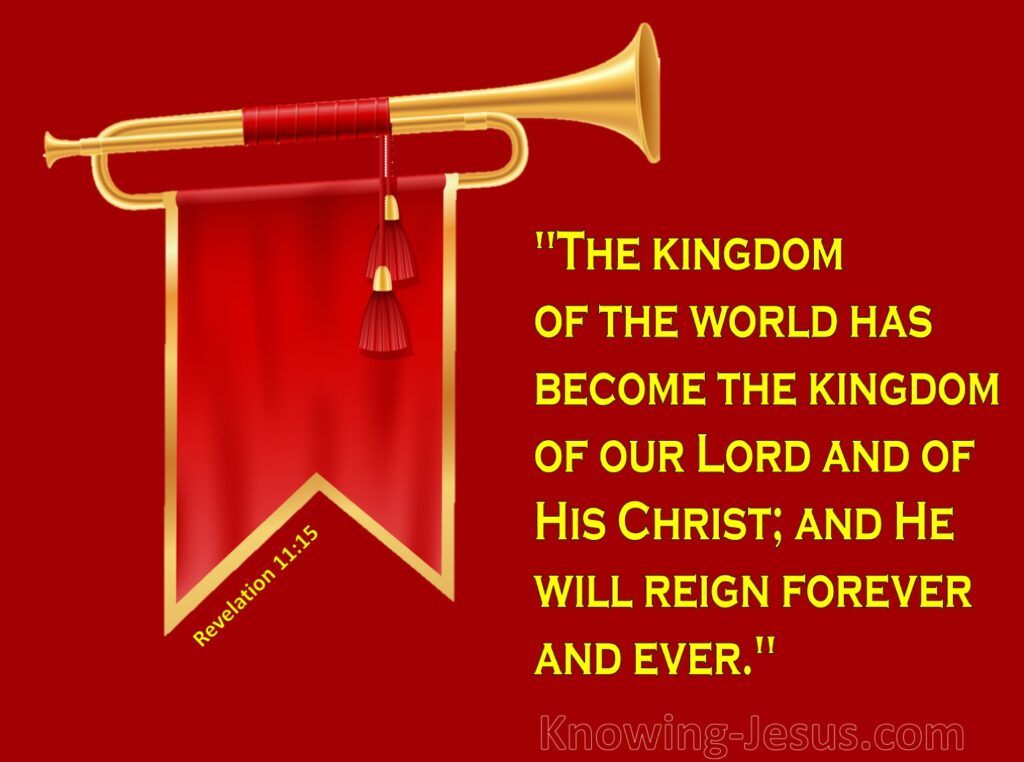
Let’s look at what it says in Rev. 11:15:

 And the seventh angel sounded; and there were great voices in heaven, saying, The kingdoms of this world are become the kingdoms of our Lord, and of his Christ; and he shall reign FOR EVER AND EVER.

Our Citizenship: Heaven

This verse reflects the sounding of the seventh trumpet announcing the arrival of Jesus, the King. At this point, there is no turning back. The impending judgments will be complete in their destruction. God will unleash His full wrath on the evil world that refuses to turn to Him (Revelation 9:20-21). Then His Kingdom will be established, and He will rule For Ever!

[Zechariah 14:8-9]

 Paul described the change that will occur with those who love the Lord. He said in 1 Cor. 15:51-52

51. Behold, I shew you a mystery; We shall not all sleep, but we shall all be changed,

52. In a moment, in the twinkling of an eye, at the last trump: for the trumpet shall sound, and the dead shall be raised incorruptible, and we shall be changed. 

Let us not be sorrowful for the loss of our loved ones, especially those who loved the Lord. Paul wrote to the Thessalonians in 1 Thessalonians 4:13-14

13. But I do not want you to be ignorant, brethren, concerning those who have fallen asleep, lest you sorrow as others who have no hope.

14. For if we believe that Jesus died and rose again, even so God will bring with Him those who sleep in Jesus. NKJV

So, my brothers and sisters, we must look ahead and keep our eyes on the prize. We must not allow the weight of the world and our fleshly desires and concerns to weigh us down to dysfunction. I pray that we do not allow our fleshly desires to cause us—to miss out—on our destination, our heavenly home. We must continue to run the race set before us—carrying on the will of God.

So we must remember what the Scripture says in Galatians 6:9

 And let us not be weary in WELL doing: for in due season we shall reap, if we faint not.

Keep…looking… Ahead!

Amen

You are welcome to leave questions, comments, and concerns below.

 Blessings!

Is Israel Cursed?

Since Israel was declared a state in 1948, it has known nothing but violence and suffering. This nation has made numerous failed attempts at peace that only led to bloodshed. Why is this? Is Israel cursed? What would it take for this nation to achieve peace finally?

A Faith Failure

A Faith Failure

Faith is the driving engine of Christianity. Faith is what Christianity is all about. Faith is so important that the Scriptures tell us in Hebrews 11:6 without faith it is impossible to please God. Therefore, a faith failure is a severe offense. It’s a sin.

So, what is a faith failure? A faith failure is when we fail to believe something we haven’t experienced or seen will occur even when God has promised it. As the Scriptures state in Hebrews 11:1 in part, “…the evidence of things not seen.” We haven’t seen God, but we are expected to have faith in Him and His promises.

Now, let’s look at this: some of the greatest miracles in the Scriptures resulted from faith. Likewise, some of the greatest disasters have occurred due to the lack of faith. Regarding the former, a woman was healed because of her faith: if she just touched the hem of the garment of Jesus, she would be healed, and when she did, Jesus turned to her and said, “Daughter, be of good comfort; thy faith hath made thee whole.” AND THE WOMAN WAS MADE WHOLE FROM THAT HOUR (Matt 9:22-23)!

But addressing the latter, the Israelites were camped in the Desert of Paran, just south of the Promised Land, and on the brink of entering, rebelled and refused to enter in because of their lack of faith in God’s promise. As a result, they had to wander in the desert for forty years. That whole generation died in the desert, except for Kaleb & Joshua, who maintained their faith.

A faith failure is a severe offense. It’s a sin—period—full stop! The larger the promise, the greater the consequence if there is a failure to seek that promise—in faith. Faith failures affect more than the offender. They can affect loved ones, co-workers, and friends. When a nation commits a faith failure, it affects millions of people. Prov 14:34 says, “Righteousness exalteth a nation: but sin is a reproach to any people.” It is godliness that makes a nation great, but sin is a degradation to any people.

The examples mentioned were in the past; they’re history. However, this article looks at one occurring today.

Israel’s Dilemma

In 1948, when Israel was declared a state or nation, it was attacked immediately by the Arabs. After winning this war, the Jews recognized it as a miracle. Simply because Israel didn’t have an organized army at that time, and the fighting was done mainly by civilians with guns. A prophecy foretold that they would have a nation, which was miraculously fulfilled. It was the first time Israel was an independent nation in two-thousand years.

Other miracles would follow as problems continued between the Arabs and the Jews. In 1967, as tensions grew, it became apparent that the Arabs would soon attack the Jews as Egyptian troops poured into the Sinai.

However, the Jews decided to strike first. They decided to fly into Egypt and, in just three hours, demolished 300 grounded Egyptian combat jet fighters. They never left the ground.

Consequently, in just six days, the Jews captured East Jerusalem, the Suez Canal, all of the Sinai, the West Bank, and the Golan Heights. This victory again was acknowledged as a miracle by God. The Jews had unabated faith.

Afterward, Israel prospered and became complacent with a false sense of security. In the latter part of 1973, the Jewish Israel’s military ignored intelligence reports that the Arabs were again planning to attack [Is this familiar?]. This attack ensued on October 6, on the somber Jewish holiday of Yom Kippur.

Israel won the war in three weeks, with considerable aid from the U.S. Again, Israel had been miraculously saved by God.

However, after this miraculous event, a dramatic event occurred. In 1977, after Menachem Begin was elected prime minister, Jimmy Carter, the U.S. President, convinced him to return the Sinai to Egypt.

Israel gave up the land that God had given them back to the Arabs. This action was the beginning of the Israeli-Arab peace process and the end of MIRACULOUS SUPPORT FROM GOD.

This action was a slap in God’s face. When the Jews returned the Sinai to Egypt, it most likely included Mount Sinai. The very location where God gave the Ten Commandments to Moses and where God gave birth to the nation of Israel.

The biblical name for the Jews is Judah. However, the modern descendants of the ancient Israelites include many nations, primarily the U.S. (biblical Manasseh) and Britain (biblical Ephraim). To be clear, biblical Judah is only a small part of Israel today. America and the British populaces are also Israel. The prophecies concerning end-time Israel are primarily focused on these three nations. But this morning’s focus is on Israel. (For more information, please see the article “The Rise and Fall of America” on this website.

Britain and the United States were influential in coercing Judah (Israel) to give the Sinai back to Egypt. This action was conducted despite their ancestry, as a part of ancient Israel when God’s law was given on Mount Sinai. The land was theirs also.

A prophecy says that these three nations, Israel, the U.S., and Britain—will be conquered together just before Christ returns. Hosea 5:5 states:

5. The pride of Israel testifies to his face; Therefore, Israel and Ephraim stumble in their iniquity; Judah also stumbles with them. NKJV

Therefore, the Jewish nation had to be established by God for this prophecy to be fulfilled. This caused a miracle by God to be accomplished.

The root of the problem, the reason these nations are in such turmoil today, stems from giving the Sinai back to Egypt. Why would you give back to the enemy what God has given you? This action has caused an injury or wound to be placed upon Israel. Their relationship with God was wounded.

Because of weakness and a lack of faith in God—a faith failure, the Jews created this wound! Because of the land they gave to the Palestinians, their territorial and strategic position was abated. This result only encouraged the Arabs in their relentless hatred for the Jews. Despite the Jews giving the land of Sinai back to Egypt, Egypt has become one of Israel’s most antagonistic neighbors. If peace was indeed the goal, it was an exercise in futility. The Jewish nation was established and maintained by godly miracles. But it still declined to trust God!

In 1993, there was a handshake between the late Israeli Prime Minister Yitzhak Rabin and the late Palestinian leader Yasser Arafat on the lawn of the White House. At that time, Israel surrendered this God-given land in the hope that the Arabs could be negotiated into giving up their desire to annihilate Israel.

Is Israel Cursed?

Additionally, The Jews have given back many other biblical sites to the Arabs. America and Britain have strongly admonished them to do so. They have given Bethlehem, Jericho, Gaza, and other West Bank areas back to the Palestinians. Even though those areas were won in a war in which the Arabs were trying to obliterate them. This land-for-peace process is unprecedented in history. This process was done at the urging of Britain and the U.S.

Ironically, these developments are titled the peace process when no considerable drop in aggression has occurred. So, where is the Peace? While the Palestinians have continually stated that they desire a peaceful collaboration with Israel publicly, at the same time, they are vowing to their citizens Israel’s destruction—a gross paradox. Hence their chant, “From the river to the sea.” The goal is to Annihilate the Israelites from the Jordan River to the Mediterranean Sea. The destruction of Israel remains on the Arabs ‘to-do’ list.”

After yielding their God-given land to their enemy in search of peace, Israel finds itself perpetually fighting the same enemy. They were deceived by a peace pact—a piece of paper. They trusted in man instead of God.

The Scriptures clearly warn us against the trusting of man instead of God. Psalm 118:8-10 reads:

8. It is better to trust in the Lord Than to put confidence in man.

9. It is better to trust in the Lord Than to put confidence in princes.

10. All nations surrounded me, But in the name of the Lord I will destroy them.

Is Israel Cursed?

This should have been Israel’s action plan: to trust the Lord. But instead, they trusted—in a peace pact.

So today, we witness, once again, Israel at war with the Arabs. Again, as Israel ignored intelligence indicating an attack that has led to the loss of life and hostages taken, they find themselves negotiating a cease-fire for the hostage’s return and a solution for peace.

Perhaps, and hopefully, the hostages will be returned to their loved ones. But peace in the Middle East will never happen. Peace for Israel will never happen until it repents and puts its trust in God again. Make no mistake: we are witnessing the evidence of a faith failure.

If only Israel would learn from their history. In Hosea 5:13-15 God speaks through his prophet. It reads:

When Ephraim saw his sickness, and Judah saw his wound, then went Ephraim to the Assyrian, and sent to king Jareb: yet could he not heal you, nor cure you of your wound.

14. For I will be unto Ephraim as a lion, and as a young lion to the house of Judah: I, even I, will tear and go away; I will take away, and none shall rescue him.

15. I will go and return to my place, till they acknowledge their offence, and seek my face: in their affliction they will seek me early.

Obviously, Israel had a wound before. Judah and Israel were spiritually sick because they transgressed against God. This transgression was the wound. As a result, God sent enemies against them. When they realized how sick, distressed, and wounded they were, instead of turning to God in repentance, they turned to the King of Assyria for help. It was an exercise in futility because God was like a lion against them, and he would wait until they sought Him and repented of their sinful affliction. As it turned out, Assyria was the destruction of Israel and the weakening of Judah.

Apparently, the problem was that neither Israel nor Juda realized their situation wasn’t natural but spiritual, and neither was the solution. They needed to repair their relationship with God—not man.

This prophecy is headed for a second fulfillment. But that’s a discussion for another time. But it’s important to understand that Israel may still have not learned the lesson. We may see a repeat of this action. Because the United States and Britain are pressuring Israel for a two-state solution for peace, and they may listen to man again. But as mentioned earlier, peace will never happen until Israel repents and puts their trust in God again.

As the saying goes, history repeats itself, especially if lessons aren’t learned. Israel, in 1993, sought relief from its enemies by getting in bed with them. A place that makes one most vulnerable. They Had access to the Scriptures as we do, but this is what happens when the Word of God isn’t heeded.

Understand that our nation, the U.S., along with Britain, is Israel’s extension. We have our share of repenting to do. Our nation isn’t exactly in God’s favor either. After all, the U.S. and Britain have done and are still doing all they can to push this so-called peace process. But notice the chaos happening in these nations with more to come.

So, if you want to see the evidence of a faith failure, you need to go no further than your television, radio, or just pick up a newspaper.

However, Israel is God’s chosen nation and will prevail; the Lord says through His prophet Zechariah regarding Israel in Zechariah 14:11, “It will be inhabited; never again will it be destroyed. Jerusalem will be secure.” NIV Ultimately, Jerusalem will be occupied with God’s people and safe at last, never again to be cursed and destroyed. [cf. Jeremiah. 24:5]

But it must learn a hard lesson first. Israel has a history of making bad choices, from the time when it coveted a king to today, as they seek peace on their own.

According to the Palestinian Authority, at the time of this writing, over 15,000 people in Gaza have been killed. In Israel, 1500 were killed—raped and burned alive, with almost 200 hostages taken. This is in addition to the previous wars with the Arabs. All because of a faith failure.

So, Israel will have to repent and seek God. We know what 2 Chronicles 7:14 says, “If my people, which are called by my name, shall humble themselves, and pray, and seek my face, and turn from their wicked ways; then will I hear from heaven, and will forgive their sin, and will heal their land.”

So, in closing, what are we to get from this? What does this have to do with us? What lessons can we glean from this evidence?

For starters, we must take the Word of God very seriously. Remember what 1 Corinthians 10:11 says, “Now all these things happened unto them for ensamples: and they are written for our admonition, upon whom the ends of the world are come.” The point is that the things in Scripture were written down to warn us who live at the end of the age. So, let us not make the mistake Israel has made over the ages and is still making. Take heed of the Word of God.

Unfortunately, our nations won’t repent until they are in captivity. Still, God promises mercy and safety to any individual who truly repents.

Look at what Isaiah 9:16 reads: “For the leaders of this people cause them to err; and they that are led of them are destroyed.”

Notice it says, “they that are led of them.” We do not have to continue to follow our leaders when they go against God’s will. We can repent and be saved.

Prov 28:13 says, “He that covereth his sins shall not prosper: but whoso confesseth and forsaketh them shall have mercy.”

In other words, Individuals who conceal their sins won’t prosper, but if they confess and turn from them—repent, they will receive mercy. This thought carries on to the very end.

Rev 3:10, 19 NIV reads:

10. Since you have kept my command to endure patiently, I will also keep you from the hour of trial that is going to come upon the whole world to test those who live on the earth.

19. Those whom I love I rebuke and discipline. So be earnest, and repent.

Is Israel Cursed

Reliance on man will by no means give us security. Repenting our sins will give us security forever. Repenting and obeying God’s Commands will reserve us a place in the New Jerusalem. Therefore, if we need repentance, we’d better get to it.

We must also pray for our nation; for it to repent for its sins for choosing to follow the ways of man instead of seeking God an His will.

Lastly, when trouble arises, when enemies come against us, let us not seek man to solve them but seek our God the Father, and believe His promises. To not do so—is a faith failure.

There’s comfort in the Psalms regarding our enemies.

Psalm 143:7-8 reads:

7. Hear me speedily, O LORD: my spirit faileth: hide not thy face from me, lest I be like unto them that go down into the pit.

8. Cause me to hear thy lovingkindness in the morning; for in thee do I trust: cause me to know the way wherein I should walk; for I lift up my soul unto thee.

Psalm 25:2 reads:

O my God, I trust in You; Let me not be ashamed; Let not my enemies triumph over me. NKJV

These Scriptures encourage us and remind us to trust God to guide us and defeat our enemies, preventing us from committing—a faith failure.

Amen

Questions, comments, and concerns may be left below.

Biblical Stewardship

According to the Bible, all Christians are to practice Biblical Stewardship. But what is stewardship? What does the Bible teach about it? This article will address that question.

What is Stewardship?

Stewardship is a practice performed by a steward. A steward is an individual who takes care of the property or possessions of another. This practice is called stewardship.

What is Biblical Stewardship?

When thinking about being a steward or stewardship, we often think of physical things such as property, money, and things of that nature. But there is another aspect of stewardship we don’t hear much about: we are to be stewards of one another.

After God created Adam, He said, “It is not good that the man should be alone… [Genesis 2:18]

So, God gave him a gift. He created the woman and blessed them both to be fruitful and multiply. Therefore, we are God’s creation—God’s property; life is a gift, and we are to care for ourselves and one another. Each individual we encounter is a gift, and we should treat them as such—that is, as much as possible.

Please observe what the Word of God says in Philippians 2:2-5: NKJV.

2. fulfill my joy by being like-minded, having the same love, being of one accord, of one mind.

3. Let nothing be done through selfish ambition or conceit, but in lowliness of mind let each esteem others better than himself.

4. Let each of you look out not only for his own interests, but also for the interests of others.

5. Let this mind be in you which was also in Christ Jesus,

To repeat verse 3, “Let nothing be done through selfish ambition or conceit, but in lowliness of mind let each esteem others better than himself.”

Biblical Stewardship

In other words, don’t be selfish, and don’t try to impress others. Be humble, thinking of others as better than ourselves. This passage is about Biblical stewardship.

This is a command from the Scriptures—God’s Word. It covers a multitude of categories. But this article will only cover one.

One of the things that differentiates us from animals is the ability to communicate through speech. Speech is a beautiful gift. But like the other gifts God has bestowed upon us, the devil intervenes and turns it into something for ill—if we allow him to.

While this article is not about the tongue, it does address the topic of conversation. To a significant degree, our society and our culture have lost the art of conversation. Just as our culture has allowed our morality to go south, our fundamental upbringing and etiquette have gone with it.

To throw out a couple of questions for thought: when was the last time you were engaged in a conversation, and the person you were conversing with cut off your conversation and started talking before you finished your thought?

Here’s another one: when was the last time you were engaged in a conversation, and the person you were conversing with was speaking, and you cut them off before they finished their thought?

Now, all of us are guilty of this, which is wrong. Most were undoubtedly taught that when someone is speaking, you don’t interrupt but wait until the party has finished speaking. It was classified as rude. But it happens perpetually today amongst Christians as well as non-Christians.

There was a time when one interrupted another while speaking. The individual would say: excuse me, not to cut you off, or excuse me for cutting you off, or something to that effect. They acknowledged that they were doing something improper. But those days have gone with the Edsel, and we just butt in as a normal circumstance.

But it is time to understand when we engage in this behavior. When we cut off somebody’s speech, injecting our own, what we are demonstrating to that individual is what they are expressing doesn’t matter, that we don’t want to hear what that person is saying, and what we have to say is more important than what they are saying.

However, the Scripture says, “Do NOTHING out of selfish ambition or vain conceit, but in humility consider others better than yourselves.” Understand that when we think what we have to say is more important than someone else, that is conceit; it’s arrogant and full of self-importance.

The Scripture mentions “selfish ambition.” This is a modern translation (New King James) of the Greek word. In the King James translation, the word is translated as strife; in the NIV translation, in Galatians 5:20, it is translated as selfish ambition and as one of the manifestations of the sinful nature. When we are so ambitious to say what we have to say that we disregard what someone else is saying, we operate in the work of the flesh. It’s evil.

Instead, we must consider others “better” than ourselves. What someone else has to say can be better than what we have to say, and we might learn something in the meantime. Listening is how we learn; we aren’t learning while talking. Listening is just as much of a gift as talking. After all, it is one of the basic five senses.

Sometimes, these interjections will take the conversation in another direction. There are occasions when an individual has been interrupted during a conversation and never finished their point because they were interrupted and the conversation took a turn in another direction. These interruptions can turn one off from listening; instead of listening, they only wait for a chance to make their point. This is an unholy conversation.

Not to make excuses, however; some engage in this because, on many occasions, if they don’t interrupt, they will never get to speak.

However, there’s also the other side of the coin. Some ensure not to get interrupted by not giving anyone else a chance to speak. The bottom line is that we unequivocally talk too much. Everybody is so busy talking instead of listening. We undeniably go on and on and on.

If we aren’t careful, we’ll talk ourselves in the middle of the Lake of Fire.

Jesus said in Matt 12:36, “But I say unto you, That every idle word that men shall speak, they shall give account thereof in the day of judgment.”

Balance is the key to life, and we must listen as well as talk. We must be more willing to listen to what others have to say. Remember what verse 4 says, “Let each of you look out not only for his own interests, but also for the interests of others.” Listen to what others have to say.

Biblical Stewardship

I mentioned Galatians 5 earlier, and I want to point out that verse 22 also lists the fruit or manifestations of the Spirit, including “patience” and “self-control.” If we exercised these in our conversations, everybody would have a chance to speak and listen.

We must remember what a conversation is: a verbal exchange between two or more individuals on a particular subject—two or more individuals. A conversation is not a monologue where one person does all the talking and the other or others do all the listening.

Listen to what the Scripture says in James 1:19, “Wherefore, my beloved brethren, let every man be swift to hear, slow to speak, slow to wrath:” Here we have the wise counsel of James that advises us to reverse this process of talking too much and listening too little.

Rudeness in conversations can lead to wrath. One person cuts off another, then that person cuts off the first person, voices start to rise, and the next thing you know, an argument has ensued.

So, let us be mindful of our conversations and be considerate of the ones we are conversing with. We should put a mental stopwatch on our conversations and consider how much we talk and how much we listen.

When people talk with you, do they feel that their viewpoints and ideas have value? This goal can be accomplished only if they have been allowed to speak.

It is also important to examine at the end of a conversation: what did I gain from that conversation? Was it time well spent?

The Scripture says in 1 Cor 14:40, “Let all things be done decently and in order.” And this includes our conversations with one another.

Conclusion

God has given us each other. As good stewards, we must treat one another in all things, including our conversation, as the gift that God has given us, and as the Scripture says, “Let nothing be done through selfish ambition or conceit, but in lowliness of mind let each esteem others better than himself. Let each of you look out not only for his own interests, but also for the interests of others.”

Amen.

Questions, comments, and concerns may be left below.

Blessings!

Why Are Israel And Palestine Fighting?

Why are Israel and Palestine fighting? This is a question that has been asked many times, but it is more relevant today than ever. There are ideological, political, religious, and spiritual-biblical answers. This article’s focus is on the Biblical perspective.

The true answer goes all the way back to Biblical times. This article will take us back to the beginning of this conflict for a thorough understanding of this event that has affected today’s world.

How it all Began

It all began in Genesis, the book of beginnings. God called Abram out of his country to a land He would direct him to and make him a great nation (Genesis 12:1-3).

Why are Israel and Palestine Fighting?

Abram obeyed God, and God made a covenant with him, making him a great nation and the father of many nations. But Abram expressed dismay because he didn’t have an heir. He wondered how he could be a nation when the heir of his estate was his head servant (Genesis 15:2-3). But God expressed to Abram that his servant would not be his heir. Rather, his heir would come through him (Genesis 15:4).

After the institution of the covenant, God changed Abram’s name to Abraham, a father of many nations he would become(Genesis 17:5-6). God also changed Sarai’s name to Sarah, a mother of many nations who told him this son would be born through her. (Genesis 17:15-16). But in his heart, Abraham laughed at the idea that a child would be conceived between Himself and Sarah at their ages, his being a hundred years old and Sarah ninety (Genesis 17:17). Sarah also laughed at this thought (Genesis 18:9-14).

Abraham then inquired of God if his son Ishmael would be the heir. But God insisted that the son would come through Sarah, and his name would be Isaac, and it would be Isaac through whom the covenant would be established. However, He made provision for Ishmael that he would be blessed, fruitful, and multiply greatly (Genesis 17:18-21).

Before this, Sarah suggested to Abraham that he would take her maid, Hagar, as his wife (Genesis 16:1-3). Abraham submitted to her request, and Hagar conceived and produced a son, Ishmael (Genesis 16:15). As mentioned earlier, God made blessed provisions for Ishmael, and he became a great nation. Genesis 17:20 reads, “And as for Ishmael, I have heard you: I will surely bless him; I will make him fruitful and will greatly increase his numbers. He will be the father of twelve rulers, and I will make him into a great nation.” NIV

Subsequently, Abraham resided with his two wives and his two sons, both of whom were blessed. However, trouble arose in the house of Abraham.

Genesis 21:1-3, and 8-14 reads,

1. And the Lord visited Sarah as He had said, and the Lord did for Sarah as He had spoken.

2. For Sarah conceived and bore Abraham a son in his old age, at the set time of which God had spoken to him.

3. And Abraham called the name of his son who was born to him — whom Sarah bore to him — Isaac. NKJV

The Lord fulfilled His promise just as He stated, and the promised child was born.

Genesis 21:8-14 reads:

8. And the child grew, and was weaned: and Abraham made a great feast the same day that Isaac was weaned.

9. And Sarah saw the son of Hagar the Egyptian, which she had born unto Abraham, mocking.

10. Wherefore she said unto Abraham, Cast out this bondwoman and her son: for the son of this bondwoman shall not be heir with my son, even with Isaac.

11. And the thing was very grievous in Abraham’s sight because of his son.

12. And God said unto Abraham, Let it not be grievous in thy sight because of the lad, and because of thy bondwoman; in all that Sarah hath said unto thee, hearken unto her voice; for in Isaac shall thy seed be called.

13. And also of the son of the bondwoman will I make a nation, because he is thy seed.

14. And Abraham rose up early in the morning, and took bread, and a bottle of water, and gave it unto Hagar, putting it on her shoulder, and the child, and sent her away: and she departed, and wandered in the wilderness of Beer-sheba.

We see in verse 9 that Sarah observed Ishmael being the oldest in his late teens at this point, perhaps at play, bullying or mocking Isaac. In any event, Sarah saw Ishmael as a threat to Isaac’s inheritance. Because of what she observed, she forbade Ishmael to share Isaac’s inheritance and ordered Hagar and Ishmael out of the house.

This rivalry in Abraham’s household grieved him greatly, but God assured him in verse 13 that because Ishmael was his seed, he would bless him and make him “a nation.” God also reminded Abraham that Isaac was the more excellent blessed seed. The custom was for the firstborn to receive the highest privilege and blessing. But God’s will overruled that custom. Even though Ishmael was Abraham’s firstborn, Isaac was the blessed seed, the child of the covenant. It was through the line of Isaac that our Lord and Savior, Jesus Christ, came through: the blessed seed of the free woman, not the bondwoman (Galatians 4:21-31). Jesus freed us from the curse, the bondage of the law.

So we see two nations on the horizon at this point: both blessed, but one more incredibly blessed than the other. Did this set up a sibling rivalry?

Two Nations

As we know, Isaac became a great nation by marrying Rebekah and having twins Jacob and Esau. Even though Esau was the oldest twin and had the firstborn’s birthright, Jacob unethically obtained it from Esau (Genesis 25:29-34). He also deceitfully obtained Isaac’s blessing (Genesis 27:1-40).

As time passed, Jacob had a divine encounter at Peniel, and his name was changed to Israel.” The name means he will rule with God or prince with God (Genesis 32:22-29). This name was symbolic and was later applied to his posterity.

Jacob had twelve sons who formed twelve tribes. These twelve tribes became known as “Israelites,” “children of Israel,” and “house of Israel,” recognizing them clearly as the descendants of Israel through his sons and grandsons. The descendants of the tribe of Judah are also known as Jews.

Because of King Solomon’s sins, God rebuked him, and, upon his death, split the kingdom of Israel into two kingdoms: the Northern Kingdom, which consisted of ten tribes, and the Southern Kingdom, which consisted of the two tribes Benjamin and Judah. Those living in Judah were called Jews. After the Babylonian Captivity, all descendants of Abraham are referred to as Jews.

Ishmael grew up in the desert and became an archer, what became known as an Arab. (Genesis 21:20). Ishmael was the patriarch of the Ishmaelites. This nomadic nation dwelled in northern Arabia.

He married and became the father of twelve sons (Genesis 25:12-16). This ascension fulfilled the prophetic statement from God to Abraham regarding Ishmel: “Behold, I have blessed him, and will make him fruitful, and will multiply him exceedingly; twelve princes shall he beget, and I will make him a great nation (Genesis 17:20).

Of these twelve sons, or Princes, the Scripture says in Genesis 25:18, “His descendants settled in the area from Havilah to Shur, near the border of Egypt, as you go toward Asshur. And they lived in hostility toward all their brothers.”

These descendants were a hostile group. This hostility was handed down from their father, Ishmael. In Genesis 16:12, God also prophesied what Ishmael would become: “And he will be a wild man; his hand will be against every man, and every man’s hand against him; and he shall dwell in the presence of all his brethren.” This verse describes the rude, tempestuous, and aggressive character of the Arabs. However, despite the wild and lawless character of Ishmael’s successors, who would rouse a swarm of enemies against them, they would effectively endure all assaults and remain established in their land. After all, God promised their prosperity. However, this hostility remains unchanged to this day.

Arabs today avow ancestry from Ishmael. He has been quickly and easily suited to Islam as the father of the Arabs. Ishmael is renowned by Muslims as the predecessor of several prominent northern Arab tribes and the sire of Adnan, the ancestor of Muhammad.

The Conflict

There has been animosity between the children of Ishmael and the children of Isaac since the book of Genesis.

Initially, there were no Jewish people. Abram was a gentile living in what today is Iraq. It was an idolatrous nation. God called him out to go to a land where he would show him and give to him to become a great nation (Genesis 12:1-2).

This land turned out to be Canaan. When Abram and his family arrived in Canaan (Genesis 12:5), there was a severe famine in the land, and he continued to Egypt (Genesis 12:9-10). Of the relatives that were with Abram was his nephew Lot. When they left Egypt, they both had great substance and could not remain together, and it was determined that they should separate (Genesis 13:1-12). Abram remained in Canaan.

After the separation was completed, God made a promise to Abram. Genesis 13:14-17 reads:

14. And the Lord said to Abram, after Lot had separated from him: “Lift your eyes now and look from the place where you are — northward, southward, eastward, and westward;

15. for all the land which you see I give to you and your descendants forever.

16. And I will make your descendants as the dust of the earth; so that if a man could number the dust of the earth, then your descendants also could be numbered.

17. Arise, walk in the land through its length and its width, for I give it to you.” NKJV

God promised Abraham and his seed this land some four thousand years ago.

God sealed this promise with a covenant. Genesis 15:18 reads:

18. On the same day the Lord made a covenant with Abram, saying: “To your descendants I have given this land, from the river of Egypt to the great river, the River Euphrates NKJV

This Scripture contains the God-given deed title given to Abram and his descendants: from the Nile River to the River Euphrates. This title deed was to roughly some three hundred thousand square miles. The Israelites were the indigenous people of this land. They were not colonialists, as they originally occupied the land for thousands of years!

Why are Israel and Palestine Fighting?
The Original Promised Land

It is important to note that Israel never occupied all of this land. The covenant expressed “from the river of Egypt” (the Nile River). However, the highest point was the Jordan River. Below is the most territory gained under King David.

Why are Israel and Palestine Fighting?

However, as time went on, the nation of Israel fell out of favor with God because of their apostasy. As God charged King Solomon in 1 Kings 9:6-7:

6. But if you or your sons at all turn from following Me, and do not keep My commandments and My statutes which I have set before you, but go and serve other gods and worship them,

7. then I will cut off Israel from the land which I have given them; and this house which I have consecrated for My name I will cast out of My sight. Israel will be a proverb and a byword among all peoples. NKJV

By 586 BC, both kingdoms of Judah and Israel were carried away to exile by the Babylonian king Nebuchadnezzar (1 Chronicles 6:14).

Prior to this, in the seventh century, the Islamic conquest of the Middle East took place, and the Arab people settled in substantial numbers. Except for a somewhat short period of Crusader control, Palestine, as it became known, continued under Muslim dominance for slightly under 12 centuries, with its population vastly Arab.

Where did the name Palestine derive from? In 135AD, The Roman Emperor Hadrian, to quash a Jewish revolt against the Roman Empire, dispersed the Jews from Jerusalem and then he renamed the entire region from Judea to Palestina, which is the Latin term for the Philistines because the Philistines were the perpetual adversaries of the Jews. Hadrian as a way to dishonor the Jewish people after the revolt. [from 135 AD to 1947 the land was called Palestine] The Arabs living in the land were called Palestinians. It’s also important to note that the Jews that remained in the land were also called Palestinians. For any Jew that was born prior to 1948, their birth certificate stated Palestine as their nationality.

After the Israelites were scattered about in exile in 586 BC, nations moved in and occupied the land, i.e., Babylon, Persia, Greece, and Rome. The last empire to occupy the territory before the war was over was the Ottoman Empire, also known as the Turkish Empire. Its official religion was Islam, and it controlled much of Southeast Europe, West Asia, and North Africa between the 14th and early 20th centuries. The empire also controlled parts of southeastern Central Europe from the early 16th to the early 18th century.

In 1516 AD, the Ottoman Empire defeated the Mamluk armies (a military and political group that served Arab and Ottoman dynasties in the Muslim world.)

At the end of WW1, Britain defeated the Ottoman Empire along with the other powers defeated in the war (Germany, Austria-Hungary, and Bulgaria) and took over the territory. In recognition of the suffering of the Jews, in 1917, Britain issued the Balfour Declaration. It was a British Mandate that established a Jewish state or “national home.” Upon commencement of the mandate, the British began to advance the immigration of European Jews to Palestine. During the period between 1922 and 1935, the Jewish inhabitants rose from nine percent to nearly 27 percent of the total population.

This mandate was controversial for a number of reasons. One was, before its release, the British had promised the Arabs independence from the Ottoman Empire in the 1915 Hussein-McMahon correspondence, which was a series of letters that were communicated during World War I where the Government of the United Kingdom agreed to identify Arab independence after the war in exchange for the Sharif of Mecca initiating the Arab revolt against the Ottoman Empire.

As can be imagined, this caused a great deal of hostility and animosity between the Arabs and the Jews, resulting in numerous conflicts and revolts. The boosted Jewish immigration under the mandate generated tensions and violence concerning the Palestinian Arabs and the European Jews.

Without a doubt, the Balfour Declaration generated the conditions for the Jews to regain the land that God deemed to them, even though it was an even smaller fraction of what they were originally promised.

According to the map above, the small dark blue section indicates the sliver of land in conflict that designates modern Israel.

In 1947, the United Nations proposed a partition plan to apportion Palestine into two sections, which would consist of an independent Jewish state and an independent Arab state. Jerusalem, which was declared as a capital by the Jews and Palestinian Arabs, was to be an international territory with a separate status.

While most Jewish leaders received the proposal, many Palestinian Arabs, including those who had been vigorously fighting British and Jewish interests in the region since the 1920s, strongly opposed it.

The Arab leaders contended that they represented most of the population and should be given more territory. Consequently, they began to form volunteer armies throughout Palestine.

In May of 1948, less than a year after the Partition Plan for Palestine was announced, Britain withdrew from Palestine, and Israel declared itself an independent state, implying a willingness to implement the Partition Plan.

However, immediately adjacent Arab armies moved against the Jews to prevent the establishment of Israel as a state. This rapid engagement resulted in the 1948 Arab-Israeli War that involved Israel and five Arab nations: Transjordan (now Jordan), Iraq, Syria, Egypt, and Lebanon. By the end of the war in July 1949, Israel controlled more than two-thirds of the former British reign, while Jordan took control of the West Bank and Egypt took control of the Gaza Strip.

This conflict opened yet another new chapter in the conflict between Israeli Jews and Palestinian Arabs, which at this point became a regional contest involving nation-states and a quagmire of diplomatic, political, and economic interests. It gave birth to the PLO, which was initially committed to the destruction of the State of Israel as a means of attaining its goal of Palestinian statehood and reinstating the land previously ordered under the British Mandate, and which the PLO considered to be occupied illegitimately by the State of Israel.

The conflict has given birth to other organizations of a terrorist nature (e.g., Hamas, Hezbollah, Houthis, etc.) bent on destroying Israel as a nation and a people.

This, all of the above, is why Israel and Palestine are fighting today. Keep in mind that this is an abbreviated version of the modern events concerning this conflict. Numerous events, such as scrimmages and wars, have led to the current situation.

Will there ever be peace in the Middle East? Yes, when Jesus returns.

Conclusion

It is distinctly clear in Scripture that this conflict began some FOUR THOUSAND YEARS ago. It is also evident in Scripture that God intends for Israel to possess their land again. Jeremiah 30:1-5 reads:

1. The word that came to Jeremiah from the Lord, saying,

2. “Thus speaks the Lord God of Israel, saying: ‘Write in a book for yourself all the words that I have spoken to you.

3. For behold, the days are coming,’ says the Lord, ‘that I will bring back from captivity My people Israel and Judah,’ says the Lord. ‘And I will cause them to return to the land that I gave to their fathers, and they shall possess it.'”

4. Now these are the words that the Lord spoke concerning Israel and Judah.

5. “For thus says the Lord: ‘We have heard a voice of trembling, Of terror, and not of peace.

The entire prophecy is contained in Jeremiah 30:1-24. However, these first five introductory verses effectively reflect the will of God. He scattered and led it into captivity, and He will bring Israel back from that captivity, and “they shall possess it.”

Therefore, Israel continues the fight to possess their land. Nations such as the United States and Britain are supporting Israel in this fight. But the time is coming when Israel will be fighting this battle alone. Jeremiah 30:14 NLT reads: “All your lovers—your allies—have left you and do not care about you anymore. I have wounded you cruelly, as though I were your enemy. For your sins are many, and your guilt is great.”

This prophecy initially refers to when the nations of Assyria and Egypt once supported Israel against her enemies but turned against her. However, many prophecies have a double application, and we see this unfolding today. Israel’s allies are increasingly applying pressure to stop the war. Nevertheless, a full read of this prophecy, verses 1-24, reveals that Israel will prevail despite her being left all alone.

The Take Away

There are several takeaways from this episode of Biblical history.

1. There are severe consequences when our faith in God, and His Word in particular, fails. Sarah’s lack of faith in God’s Word led her to take action on her own by presenting her maid to Abraham to bring forth the promised child—the result—a generation that has caused and continues to cause distress to Israel for thousands of years that began in Abraham’s household; a sibling rivalry between two brothers.

We must take heed to the Word of God and obey it, or there will be dire consequences, present and future.

2. God is merciful and will not hold His anger forever, though our sins may be significant. In Jeremiah 3:12, God says through His prophet, “Go and proclaim these words toward the north, and say: ‘Return, backsliding Israel,’ says the Lord; ‘I will not cause My anger to fall on you. For I am merciful,’ says the Lord; ‘I will not remain angry forever. NKJV

God asked Israel to return to Him and repent, and His anger would be no more. Israel has more repentance to do, and God will be responsive.

We also saw God’s mercy with Abraham and his first son Ishmael. Even though he wasn’t the promised child and was conceived out of the will of God, He blessed him anyway because of Abraham.

3. It is vitally important to observe that despite opinions, conventional wisdom, and political views, this is a spiritual situation. This conflict is a spiritual one. Satan fuels the vitriol and animosity against Israel. Antisemitism is satanism—a spiritual war—spiritual warfare personified.

The conflict is based on the promise. Satan knows that Israel is God’s nation and the people of God and that all nations of the earth are blessed through Israel (Genesis 12:3). Jesus the Savior came through Israel. Satan despises the people of God and will do anything to destroy them.

The terror group Hamas has a charter that states its aim is to destroy the Israelites from the face of the earth. This sentiment is the aim of all the terror groups for Israel and its allies.

Opening Paragraph – The Hamas Covenant (1988) “Israel will exist and will continue to exist until Islam will obliterate it, just as it obliterated others before it.”

[Article 7 – The Hamas Covenant] “The Day of Judgement will not come about until Moslems fight the Jews (killing the Jews), when the Jew will hide behind stones and trees.”

However, like it or not, Israel is God’s chosen nation, and it will prevail. Zechariah 12:6 NIV reads, “On that day I will make the leaders of Judah like a firepot in a woodpile, like a flaming torch among sheaves. They will consume right and left all the surrounding peoples, but Jerusalem will remain intact in her place.”

The nations that go against Israel will pay the consequence for disregarding the Word of God that says, “And I will bless them that bless thee, and curse him that curseth thee: and in thee shall all families of the earth be blessed.” [Genesis 12:3]

God’s eye is on the land and the people of Israel and all of those who are His. [Galatians 3:6-9]

Questions, comments, and concerns may be left below.

Blessings!

What Does the Bible Say About Hell?

Is there a hell? Is there such a thing as everlasting punishment, or do we just cease to exist? What happens when we die? Are there any answers? What does the Bible say about hell? This article will explore these questions.

What is Hell?

Hell is defined as the place of punishment for the unrighteous. However, there are some who don’t believe that hell exists at all. Even the ones who believe there is a heaven. No one can deny that there is evil in the world. It is puzzling for one to believe there is a reward for righteousness and not a consequence for evil and unrighteousness. That is simply a denial of what the Bible teaches.

What Does the Bible Say About Hell?

While some do not believe that hell exists, Jesus indeed confirmed that it does. He referred to it eleven times. Let’s look at what Jesus is quoted as saying in Matthew 10:28:

28. And fear not them which kill the body, but are not able to kill the soul: but rather fear him which is able to destroy both soul and body in hell.

What Does the Bible say About Hell?

The context of this passage is Jesus’ warning to His disciples against the hypocrisy of the Pharisees. While they had knowledge of the Scriptures, they didn’t live as though they did. Jesus also warned that they might face persecution for their belief and faith in Him, which could include death. But He also told them not to fear individuals that could kill them or even death itself. While they may be able to kill the body, they cannot kill the soul.

He also told them who they must fear: the one who is able to kill the body and destroy the soul “in hell.” According to the New Exhaustive Strong’s Numbers and Concordance with Expanded Greek-Hebrew Dictionary, the Greek word translated as hell is geena (gheh’-en-nah), which was a valley of Jerusalem and was used figuratively as a name for the place, or the state of everlasting punishment.

For a bit of background on Gehenna, Gehenna is a derivative of the Hebrew Ge Hinnom or the “valley of Hinnom.” Hinnom was conceivably the name of an individual in ancient Israel. The valley of Hinnom is a steep, narrow gorge just beyond Jerusalem.

In the Old Testament, was the scene of the practice of child sacrifice under some of the godless kings of Israel (Jeremiah 7:31).

The point is, according to Scripture, specifically Jesus, hell does exist as a place of punishment.

Is Hell a Place of Eternal Punishment?

Having established that hell exists as a place of punishment for the unrighteous, for some, the question becomes whether hell is a place of eternal punishment by fire or if the punishment is simply eternal separation from God.

What does the bible say about Hell?

Again, Jesus sheds light on this matter in Matthew 25:41:

41. Then shall he say also unto them on the left hand, Depart from me, ye cursed, into everlasting fire, prepared for the devil and his angels:

The context of this Scripture (vss. 31-46) addresses judgment. Jesus separates the goats from the sheep. This is figurative or symbolic, with the goats representing the unrighteous and the sheep the righteous. He states that He will say to the goats, the unrighteous on His left, “Depart from me, ye cursed, into everlasting fire, prepared for the devil and his angels:”

What does the Bible say about Hell
Everlasting Fire!!

He closes the thought in verse 46, saying, “And these shall go away into everlasting punishment: but the righteous into life eternal.

According to the New Exhaustive Strong’s Numbers and Concordance with Expanded Greek-Hebrew Dictionary, the Greek word translated as “everlasting” is NT:166 aionios (ahee-o’-nee-os); which means perpetual (also used of past time, or past and future as well). In addition to everlasting, it has also been translated into the English words eternal and forever in other Scripture.

Revelation 14:9-11

9. And the third angel followed them, saying with a loud voice, If any man worship the beast and his image, and receive his mark in his forehead, or in his hand,

10. The same shall drink of the wine of the wrath of God, which is poured out without mixture into the cup of his indignation; and he shall be tormented with fire and brimstone in the presence of the holy angels, and in the presence of the Lamb:

11. And the smoke of their torment ascendeth up for ever and ever: and they have no rest day nor night, who worship the beast and his image, and whosoever receiveth the mark of his name.

This passage contains the message from the third angel of The Three Angels Messages. The unrighteous that worship the beast and receive his mark will be “tormented” “forever and ever” with no rest “day or night.” [For more information on the Three Angels Message, please see the article, The Three Angels Message, on this website.

They will be joining the devil, as Matthew 25:41 states, “into everlasting fire, prepared for the devil and his angels:”

Upon examining these Scriptures, it is clear that hell is a place of everlasting punishment for Satan, the devil, his angels, and the unrighteous.

Some believe these Scriptures describe the effects of the demise of the unrighteous being eternal rather than the punishment itself. That can be a reasonable argument regarding the third angel’s message. However, the words of Jesus are acutely poignant, “And these shall go away into everlasting punishment: but the righteous into life eternal “ and Depart from me, ye cursed, into everlasting fire, prepared for the devil and his angels:”

In the former of these two statements, Jesus makes a stark comparison between the demise of the unrighteous, which is everlasting punishment, and the demise of the righteous, which is eternal or everlasting life. In the second statement, Jesus refers to the everlasting fire prepared for the devil.

Additionally, in Jesus’s parable of the rich man and Lazarus (Luke 16:19-31), we have another comparison in the demise of these two states. The unrighteous rich man died and ended up in hell in torment. Luke 16:23 reads, “In hell, where he was in torment, he looked up and saw Abraham far away, with Lazarus by his side.” NIV In this Scripture, according to New Exhaustive Strong’s Numbers and Concordance with Expanded Greek-Hebrew Dictionary, the Greek word translated as hell is haides (hah’-dace); from NT:86 which is the place (state) of departed souls: In other places in Scripture, it is translated as grave.

We also see in this passage that angels carried Lazarus, the beggar, into Abraham’s bosom. According to the Old Testament, Abraham’s bosom represents a place of blessed peace.

Although this is not the same hell as the Lake of Fire nor eternal life in Revelation, torment for the unrighteous and peace for the righteous begins in the grave—the first chapter in the demise of the Righteous and the Unrighteous.

The second chapter commences at the first and second resurrections. The first resurrection is for the righteous. Rev 20:4-5 reads:

  1. And I saw thrones, and they sat upon them, and judgment was given unto them: and I saw the souls of them that were beheaded for the witness of Jesus, and for the word of God, and which had not worshipped the beast, neither his image, neither had received his mark upon their foreheads, or in their hands; and they lived and reigned with Christ a thousand years.
  2. But the rest of the dead lived not again until the thousand years were finished. This is the first resurrection.

The first resurrection will involve the righteous, who will live with Christ during the millennium.

The rest of the dead, the unrighteous, will be involved in the second resurrection, known as the Great White Throne Judgement. Rev 20:11-15 reads:

  1. And I saw a great white throne, and him that sat on it, from whose face the earth and the heaven fled away; and there was found no place for them.
  2. And I saw the dead, small and great, stand before God; and the books were opened: and another book was opened, which is the book of life: and the dead were judged out of those things which were written in the books, according to their works.
  3. And the sea gave up the dead which were in it; and death and hell delivered up the dead which were in them: and they were judged every man according to their works.
  4. And death and hell were cast into the lake of fire. This is the second death.
  5. And whosoever was not found written in the book of life was cast into the lake of fire.

The Greek word translated as hell in verse 13 is the same: haides, the place (state) of departed souls. The remaining dead will be resurrected and judged according to their works or deeds; they are judged and thrown into the Lake of Fire.

What does the Bible say about Hell?

Let’s look at the devil’s demise in Revelation 20:10:

10. And the devil that deceived them was cast into the lake of fire and brimstone, where the beast and the false prophet are, and shall be tormented day and night for ever and ever.

What Does the Bible Say About Hell - Lake of Fire
THE LAKE OF FIRE

The Scripture says the devil will be “tormented day and night for ever and ever.” If the devil is going to be tormented forever and ever, and the unrighteous are going “into everlasting fire prepared for the devil and his angels,” it stands to reason that both will be tormented forever. It’s axiomatic.

Why resurrect the unrighteous from the dead and then send them away again? They can simply remain dead. Since they are dead, they are already gone forever. To not exist is not actually punishment; it is only equivalent to eternal sleep. Of course, it’s better to be with the Lord in heaven, but we must be realistic regarding the demise of the unrighteous.

In the White Throne Judgment(Revelation 20:11-15), the unrighteous will be resurrected, judged, and cast into the “lake of fire” with the devil to be tormented—forever.

Conclusion

Hell does exist and is the destination of the unrighteous, a place of everlasting punishment. It is for those who refuse to accept the truth, grace, and favor of our Lord and Savior, Jesus Christ.

Whether one believes hell is a place of eternal damnation according to the Scriptures or simply separation from God, the most crucial emphasis is to avoid it at all costs. The optimal objective is to remain in the will of God and to be with Him in heaven ultimately.

Amen

Questions and comments may be left below, including what you believe hell is and your concerns.

Blessings!

The 7th Spiritual Law of Success

There are seven spiritual laws of success. However, the 7th Spiritual Law of Success ties the other six laws together. This article will illuminate the 7th Spiritual Law of Success.

The Spiritual Laws of Success

Before addressing the 7th Spiritual Law of Success, quickly reviewing the first six might be handy. It is important to note that many have never engaged these six.

The 7th Spiritual Law of Success

1. Establish the correct goal – To establish the correct goal, one must first be able to define success. Once defined, make that the goal.

2. Preparation or education – One must acquire the know-how to achieve the goal. Once we have ascertained enough to choose a goal, the second step toward successfully achieving that goal is to discover the way—to secure the additional education, training, and experience to give us the know-how to achieve our goal.

3. Good Health – Obeying the laws of health is a sure way to obtain good health. Proper diet, adequate sleep, physical exercise, ample fresh air, cleanliness, suitable elimination, positive thinking, and righteous living all contribute to good health.

4. Drive – This law of success is highly dependent on the third: good health. Impassive efforts might carry an individual toward their goal. Still, it will certainly not get them far enough to achieve it. Drive is the engine that takes effort across the finish line. However, if their health is poor, it is challenging to employ the necessary drive. Without energy, drive, and persistent vigor, an individual should never anticipate becoming sincerely successful.

5. Resourcefulness – So far, we have quite a list of laws that, if followed, would guarantee one solid success. But not so fast! As crucial as these laws are, they are not enough to achieve the goal.

We perpetually confront unforeseen problems, perils, hindrances, or holdups as we live. While proceeding along on schedule, out of nowhere comes an unexpected

complication. Some abrupt occurrence arises, which seems to terminate the plan altogether or cause a substantial stall.

So, to meet these constantly arising problems, one must have resourcefulness!

Therefore, when obstacles and unforeseen circumstances arise to block one’s path, one must be resourceful enough to undertake the difficulty, thwart the hurdle, and remain on course.

6. Perseverance – Well, it is no wonder that perseverance would follow resourcefulness. Overcoming obstacles can become arduous, to say the least. In any event, one must have the resolve to carry on in spite of the obstacles. It takes a strong determination to accomplish a goal. The larger the goal, the larger the determination required to reach it. Perseverance is a necessary component of success. [For more information on these six laws, please click this link.]

7. Seek God – This law may be in last place, but it is not the least. In fact, it is the most vital of the laws. It is listed as last, given that it is the last that most will recognize and employ. However, it is first in terms of making real success possible.

Few will acknowledge that God is a chief factor in determining the success or failure of an individual’s life. Individuals will spend their lives paying no heed to divine direction until their backs are up against a wall and they have nowhere to turn.

Looking at this logically, if one were to acknowledge God initially, perhaps the wall would have never been an issue. God can part wisdom that would have prevented circumstances from reaching that point.

An individual may have acquired success using the first six laws, enjoyed a luxurious life, and suddenly fell on hard times, possibly losing all. Then suddenly, as a last resort, they recognize the God they’ve ignored all along. It is indeed better to recognize Him from the beginning instead of the end.

However, recognizing and trusting God is no longer the standard in our post-modern world of vanity, sophistication, and modern science. There is no place for God in our education systems.

Ironically, the crucial seventh law of success is staying in the guidance and continuous help of the Lord. Individuals who do not recognize and practice this law are doomed for failure when all is said and done.

Looking at the first law, choosing a goal is not choosing any goal but the right goal. This approach ensures that an individual makes a correct start initially. The proper goal sets the direction of one’s life’s journey. Success is the goal of that journey. Success is where you ultimately arrive—and true success comprises a happy and enjoyable voyage along the way.

Most goals are to reach material success, seek contentment in vanity, material acquisitions, status, etc., and seek people’s praises. The problem with those goals is true genuine happiness is not material, and money is not its supplier. In the end, it is vanity, as Solomon observed, is like striving after the wind! He said in Ecclesiastes 2:11, “Then I looked on all the works that my hands had done And on the labor in which I had toiled; And indeed all was vanity and grasping for the wind. There was no profit under the sun.” NKJV

The 7th Spiritual Law of Success

An individual’s bank account may be hefty, but their life is empty. Material accomplishments initially provide the thrill of satisfaction, but that thrill doesn’t last and only fuels the desire for more. It is like being high on a drug; once it has finished its course, then comes the crash, and the addict needs more. Solomon said in Ecclesiastes 5:10, “He that loveth silver shall not be satisfied with silver; nor he that loveth abundance with increase: this is also vanity.”

We, as humans, always desire to have more than we have. In Solomon’s observation, those who consume their time compulsively pursuing money never experience the happiness it assures. This way of life leads many to depression once they discover the truth concerning material wealth.

Additionally, it is crucial to understand that wealth entices thieves and slackers, causes sleepless nights and fear, and ultimately ends in loss because it must be left behind (Mark 10:23-25; Luke 12:16-21).

No matter how much one earns, one will never have enough if one tries to create happiness by amassing wealth. Money in and of itself is not wrong, but loving money leads to all sorts of sins. 1 Timothy 6:10 reads, “For the love of money is the root of all evil…” and 1 Timothy 6:9 NIV reads, “People who want to get rich fall into temptation and a trap and into many foolish and harmful desires that plunge men into ruin and destruction.”

Money only solves one aspect of life: finances. This fact leaves all the other aspects dangling in the wind: emotional, physical, mental, etc.

Whatever the financial situation, one must not depend on money to make them happy. In its place, they must seek the will of the Lord for their lives.

Solomon wrote in Ecclesiastes 3:10-11:

10. I have seen the God-given task with which the sons of men are to be occupied.

11. He has made everything beautiful in its time. Also He has put eternity in their hearts, except that no one can find out the work that God does from beginning to end. NKJV

Man is a physical being but also a spiritual being. God “has put eternity in their hearts.” This eternity in the heart of man is a spiritual void. God has instilled in man an edgy yearning and a spiritual thirst, giving him eternal value. His physical body is sustained with physical things, such as food and water, and he is pleased with physical things, such as material things that he can touch and feel. However, they don’t feed the spiritual side of their souls, leaving a void, a spiritual hunger. Significant problems can occur when one attempts to fill this spiritual void with material things. A spiritual craving is never satisfied by material food! It is literally “grasping for the wind.” Only the eternal God can truly fill this void.

The 7th Spiritual Law of Success - 3

The Significance of the 7th Law

The 7th law is the wrap-around. It ties all of the laws together in one divine package.

The 7th Law casts success from a totally different perspective. It will cause one to modify their ultimate major goal (the first law). It changes everything. There will still be minor goals to provide for material needs, such as one’s profession or occupation, to achieve the major goal.

The major goal becomes spiritual instead of material, causing one to live the way of the Ten Commandments and every Word of God, the Bible. Without divine guidance, the wrong goal is always set.

It will also be a different way to fulfill the second goal (preparation and education). One will seek to learn the true values of life, the present one and the one hereafter, causing the Bible to be the leading textbook that reveals the mind of God.

In fulfilling the third law (good health), it will include divine knowledge such as the laws of health.

The fourth law (drive) will be fueled by motivation from God’s Word. The Bible has many Scriptures addressing diligence, thirty-seven in the King James Version. For example, Hebrews 11:6 says, “But without faith it is impossible to please him: for he that cometh to God must believe that he is, and that he is a rewarder of them that diligently seek him.”

Take Exodus 15:26, which reads:

…” If thou wilt diligently hearken to the voice of the LORD thy God, and wilt do that which is right in his sight, and wilt give ear to his commandments, and keep all his statutes, I will put none of these diseases upon thee, which I have brought upon the Egyptians: for I am the LORD that healeth thee.”

By diligently obeying God and keeping His Commandments, one is assured of fulfilling the third law of good health.

Wisdom comes from God. James 1:5 says, “If any of you lacks wisdom, he should ask God, who gives generously to all without finding fault, and it will be given to him.” NIV

Regarding the fifth law (resourcefulness), one needs God’s wisdom to resolve the perpetual problems and meet the frequent obstacles that plague life’s path. Individuals with a quality relationship with God can seek His counsel and advice and receive divine guidance. This relationship involves being submissive, obedient, diligent, and faithful.

Lastly, looking at law six (perseverance), one is advised to heed the words of Jesus in Matthew 24:13, “But he that shall endure unto the end, the same shall be saved.” These words encourage us not to give up, to press on, and to reap the rewards.

Conclusion

These seven laws are the way not only to material success but to spiritual success as well. Overall, a life that is rewarding, rich, and interest-filled leads to abundant living and, in the end, to eternal life and glory in the Kingdom of God. True success cannot be achieved without obeying the 7th spiritual law of success.

It teaches us to choose the correct goal. It teaches one to study, to show oneself approved of by the Maker. It teaches and leads one to acquire knowledge with correct and true education in preparation for success. It teaches one to observe their health. It teaches persistence, drive, dedication, and tireless application. It teaches resourcefulness and offers one devout help in applying it—and it teaches enduring to the end!

The 7th spiritual law of success helps one to constantly look forward to the overall goal, an eternity in the Kingdom of God!

The Scripture that best makes this point is found in Ecclesiastes 12:13, “Now all has been heard; here is the conclusion of the matter: Fear God and keep his commandments, for this is the whole [duty] of man.” NIV

True success cannot be accomplished without the 7th spiritual law of success.

Amen

Questions, comments, and concerns may be left below.

Blessings!

How to Talk with God

Christianity is about having a relationship with God through Christ. How is your relationship with God? Do you talk with Him? This article sheds light on how to talk with God.

How to talk with God

The people of God have been given a special gift. That gift is prayer. Prayer is the means by which we communicate with God and how we talk with God. It is through prayer that we—make our requests known to God (Philippians 4:6), we bless the Lord (Ps. 103:1), Praise the Lord (Ps. 145:2), and give thanks to the Lord (Ps. 100:4).

Communication is vital for a meaningful relationship, and our relationship with God is no exception.

Prayer is also a weapon God has given us in the battle between good and evil.

The Power of Prayer

Jesus is our best example of the use of prayer. He believed in the power of prayer. Before Jesus began His ministry in choosing His disciples, He prayed. Before the day’s activities in the morning, He prayed. Before going to Jerusalem to be crucified, He prayed.

How to Talk with God

There is a passage of Scripture that illustrates the outline of Jesus’s prayer life. Mark 1:35

And in the morning, rising up a great while before day, he went out, and departed into a solitary place, and there prayed.

The three things to note in this text are:

1. Jesus prayed in the morning before daylight. This action was Jesus’ pattern. One thing that gives power and effectiveness to our prayers is to have a regular time to pray. It doesn’t have to be early before day, but a standard time set aside for prayer. Just as we have a regular time for other activities such as work, eating and sleeping, we must have a time for prayer. If our prayers are irregular in days and times, we won’t have a very significant prayer life resulting in an insignificant relationship with Christ.

Therefore, it is crucial that we establish a regular time for prayer. For most, it may be early in the morning, while for others, it may not be so much because we have various schedules. However, the point is a regular time for daily prayer. Prayer should be a lifestyle, not a life jacket.

2. The next thing to notice is that Jesus “departed into a solitary place, and there prayed.” Jesus had a solitary place to pray. It is vital to have a designated place to pray. A quiet place that will not be subject to distractions that hinder the communication between us and God.

3. Next, the Scripture says, “…and there prayed.” Jesus apparently prayed silently at this time. However, it is essential to note that there is something special about praying out loud.

In other passages, He prayed out loud. Matthew 26:39 reads;

39. And going forward a little he fell upon his face, praying and saying, My Father, if it be possible let this cup pass from me; but not as I will, but as thou [wilt].

The Scripture mentions “praying and saying.”

Matthew 26:42 reads:

42. Again going away a second time he prayed saying, My Father, if this cannot pass [from me] unless I drink it, thy will be done.

Again, the Scripture mentions, “…prayed saying”

Matthew 26:44 reads:

44. And leaving them, he went away again and prayed the third time, saying the same thing.

Jesus’ prayers in Gethsemane were vocal ones.

Hebrews 5:7 makes this point clear.

7. Who in the days of his flesh, when he had offered up prayers and supplications with strong crying and tears unto him that was able to save him from death, and was heard in that he feared;

How to Talk with God

Praying out loud shows a vital sincerity toward God. Jesus, as the Scripture reads, “…offered up prayers and supplications with strong crying and tearsto God. Jesus is our example of earnest surrender to God.

Although we can pray silently, if we want the most meaningful relationship with God, we need to have a time to pray, have a place to pray, and pray out loud to Him.

Praying silently allows our minds to wander. However, praying out loud and formulating words stimulates the brain so that when our mind wanders, we can recognize it faster and refocus.

Another way of communicating with God through prayer is to use the Scriptures in prayer. Prayer is our talking to God, and the Scriptures are God speaking to us. One way is to use the Psalms; read a Scripture or a passage of Scripture, agree with it, and make it a part of your prayer.

A final way of communicating with God through prayer is to use the acronym ACTS.How to Talk with God

A. adoration

C. confession

T. thanksgiving

S. supplication

With a piece of paper:

Think of all the reasons to adore Jesus (e.g., I adore you Lord as my savior)

Confess whatever you know in your heart needs confessing of

Offer up Thanksgiving for the blessing that God has bestowed on you.

Mention the supplications and the requests you desire to make with humility.

After these are written down, kneel in your place of prayer and pray them to the Lord.

As mentioned earlier, prayer is the weapon God has given us in the battle between good and evil.

In Ephesians 6, Paul encourages the engaging of the armor of God. He closes that exposition in verse 18 by writing, “…praying always with all prayer and supplication in the Spirit, being watchful to this end with all perseverance and supplication for all the saints.” NKJV

Although prayer is not included as a weapon in the previous verses, prayer is the wrap-around in moving forward with our armor. As we take the sword of the Spirit, God’s Word, we must also pray “always” while being “watchful” for Satan’s attacks. Satan attacks when we don’t expect it; therefore, we must be on the alert to pray when the need arises. No Christian is off the hook from being Satan’s target. Therefore, all Christians require our prayer support. No Christian can stand alone in this battle.

Prayer is a gift to us, not possessed by any other creature on earth. Genesis 1:26 reads, “And God said, Let us make man in our image, after our likeness:” God created man after His likeness in that we are, in addition to physical beings, we are spiritual ones. Unlike other created beings, we have the ability to communicate with God through our minds and mouths with prayer.

However, because of sin, the communication between God and man became greatly hindered. As time passed, communication was possible only through the intercession of a high priest. The barrier between man and God was broken with the birth, life, sacrificial death, and resurrection of Jesus Christ.

When we accept Jesus as our Lord and Savior, we can talk with God uninhibited (Hebrews 4:16). Through His Holy Spirit, God communicates with us through our minds as well as His Word. As the Scripture reads, “praying always with all prayer and supplication in the Spirit.” Ephesians 6:18

Praying in the Spirit means that the Spirit helps us when we pray (Romans 8:26); the Spirit prays on our behalf (Romans 8:27); the Spirit makes God accessible (Ephesians 2:18); the Spirit gives us confidence when we pray (Romans 8:15-16; Galatians 4:6). He inspires and guides us when we pray. He helps us communicate with God and brings God’s response to us.

Prayer is the gift that keeps on giving. May we use this gift wisely and effectively, never taking it for granted.

Elements for Effective Prayer
Pray diligently!

Questions, comments, and concerns may be left below.

Blessings!