All scripture is given by inspiration of God, and is profitable for doctrine, for reproof, for correction, for instruction in righteousness: 2 Tim 3:16 KJV
If someone were to ask you if you were a follower of Jesus and what made you one, what would you say? Generally, when that question is asked, there is a variety of answers. The most common one is I go to church. But there are
others: I am a good person, I give to charities, I’ve been baptized, I pray sometimes, I am a religious person, I participate in communion, etc..
While these are activities practiced by Christians, they alone do not necessarily indicate that an individual is a follower of Jesus. Not to mention; they do not answer the question. So, what is a follower of Jesus Christ?
What is a Follower of Jesus?
To be a follower of Jesus is to be a disciple of Jesus—a wholehearted supporter of Jesus. A disciple is a pupil, student, or learner and holds fast to the teachings of another. Not only does a disciple follow, but also is additionally active in spreading the doctrines of another. In the Bible, disciple is the word used most often to refer to a follower of Jesus and implies an inner circle relationship with Him.
It is a serious commitment to be a follower of Jesus.
The Characteristics of a True Follower of Jesus
A true follower of Jesus exhibits and maintains certain undeniable characteristics. Some are exterior and obvious, while others are internal.
First and foremost, we must “born again.” Jesus said in John 3:3,“I tell you the truth, no one can see the kingdom of God unless he is born again.” To be born again, we must confess and repent of our sins, surrender our lives to Jesus as our Lord and Savior, receive forgiveness by faith, and begin walking in the ways of Jesus. It is not just accepting Christ and living the same life, but a change to a new life born of the Spirit. For more on born again, see the article, “What Does it Mean to be a Born Again Christian” on this website.
Next, prayer—if we are following Jesus, we must be a person of prayer, following His example. Let’s look at Matt 14:23
23 After he had dismissed them, he went up on a mountainside by himself to pray. When evening came, he was there alone,
This is just one of many examples of Jesus’ motivation to pray.
Pray diligently!
Characteristically, Jesus often spent the night in prayer. While we are not required to spend whole nights in prayer, prayer is to be a major component in our lives. It is important to spend time alone with God. A day should never go by without prayer as opposed to an occasional cry for help when faced with difficulty. Every day must begin and end with prayer. Prayer is to be a lifestyle, not a life jacket!
Next, listen—God requires our submission and obedience. However, if we don’t listen to Him, we can’t hear Him. How then can we be obedient? This is why it is imperative for us to listen to God as we read His Word and pray.
Think of the examples in the Scriptures of the Lord expressing His will to individuals. Individuals such as Moses, Abraham, Noah, etc. heard God. Had these men not been in a genuine relationship with God and listening, they would have never known His will for their lives. We may not receive a commission as these did, but God has a purpose and plan for all of His genuine followers. In Ps. 138:8 the psalmist wrote, The Lord will fulfill [his purpose] for me; your love, O Lord, endures forever — do not abandon the works of your hands. NIV
Here the psalmist acknowledges with confidence that the Lord has a purpose for his life and He will fulfill it because of His faithful love. This applies to all of us.
We are commanded by God to listen to Jesus. This commandment was handed down at Jesus’ transfiguration. Let’s look at this in Matt 17:5:
5 While he was still speaking, a bright cloud enveloped them, and a voice from the cloud said, “This is my Son, whom I love; with him I am well pleased. Listen to him!”
It is essential that we submit to God and His son and listen to Him as we pray and read His Word.
Next, we must believe—Just as we initially trusted Jesus as our Savior, we must continue to trust and believe as we live by faith. Scripture says in Heb 10:38,“Now the just shall live by faith: but if any man draw back, my soul shall have no pleasure in him.”
This Scripture is part of a passage that encourages perseverance. We are to persevere by believing in faith in spite of our difficulties and rely on Him; this pleases God. Also in Heb 11:6, it states,“But without faith it is impossible to please him: for he that cometh to God must believe that he is, and that he is a rewarder of them that diligently seek him.”
We must remember that Jesus came so that we would believe in Him and be saved from our sins. As it states in John 3:16,“For God so loved the world, that he gave his only begotten Son, that whosoever believeth in him should not perish, but have everlasting life.
Next, obedience—Following and obedience go hand and hand. You can’t truly follow someone without being obedient. Here is what Jesus said about following Him in John 8:12
…”I am the Light of the world; he who follows Me will not walk in the darkness, but will have the Light of life.”In order to receive the blessings of God, we must be obedient to His Son. For Jesus also said in John 5:22-24:
22 For the Father judgeth no man, but hath committed all judgment unto the Son:
23 That all men should honour the Son, even as they honour the Father. He that honoureth not the Son honoureth not the Father which hath sent him.
If we love the Lord, we must obey Him!
24 Verily, verily, I say unto you, He that heareth my word, and believeth on him that sent me, hath everlasting life, and shall not come into condemnation; but is passed from death unto life.
We can’t expect to be blessed without honoring and obeying Christ. A true follower of Jesus knows this and undertakes it as an obligation.
Next, we have love—the love we are to have for Christ entails our whole being. We can’t follow Christ half-heartedly; with a heart that is half in the world and half with God.
When asked what the greatest commandment was, Jesus said in Mark 12:30:
30 And thou shalt love the Lord thy God with all thy heart, and with all thy soul, and with all thy mind, and with all thy strength: this is the first commandment.
This is a commandment that requires wholehearted love for God. Therefore, we must live a life that exhibits our love for the Lord. Consequently, we can’t allow the impure thoughts, images, and words of the world into our minds and claim to love Him simultaneously. This has become to be known as popular Christianity. For more on Popular Christianity, see the article, Popular Christianity: the danger, on this website.
Wholehearted love for Christ has an effect on what we think and watch, where we go, and what we do. We simply cannot allow impure thoughts, images, and words to dwell in our minds and profess to love Him at the same time. Wholehearted love for Christ affects what we think and all that we do. We are further encouraged in the Scriptures in 1 Cor. 10:31:
31 Whether therefore ye eat, or drink, or whatsoever ye do, do all to the glory of God.
Next, we have service—Jesus was a servant, and we as His followers should be the same. All of us can serve the Lord in some manner by serving others. Service occurs in many different forms: encouraging, caring, helping, giving, comforting, teaching, or sharing God’s Word. These are manifestations of the Gifts of the Spirit. [1 Cor. 12:1-11]
Following Jesus isn’t about accepting Him and folding our hands. There is much work to be done for the kingdom and the Lord equips us to do it!
Jesus said in John 12:26:
26 If any man serve me, let him follow me; and where I am, there shall also my servant be: if any man serve me, him will my Father honour.
In order to serve Christ, we must follow Him. In return, we are promised the presence and protection of the Father.
Next, we have suffering—As you can imagine, this one is not popular! However, Scripture instructs on this matter. Phil 1:29:
29 For unto you it is given in the behalf of Christ, not only to believe on him, but also to suffer for his sake;
When following Jesus, we can expect to go through some form of suffering. We suffer financial loss, rejection, and even lose relationships because we make individuals feel awkward and we simply don’t fit in with those who love the world. However, this must not halt us from following Jesus and sharing the gospel.
After all, Scripture states that we are “a peculiar people.” [1 Peter 2:9] We are not to be of the world.
Last but certainly not least, sharing—we are commanded by Jesus to share the truth with others. We find this command in Matthew 28:19:
19 Go therefore and make disciples of all the nations.
This is the commandment of Jesus known as the Great Commission. Therefore, if we are going to follow Him and be His disciples, we must share the truth of God’s Word with others, despite whether they like us or not.
In a world of animosity, bitterness, hatred, and death, Christ’s followers
The Great Commission
are endangering their lives to bring the gospel to individuals throughout the world. Each of us can unquestionably say something to spark the interest of at least one person we know who is not following Jesus.
These are the characteristics of a true follower of Jesus Christ. While it is not a cakewalk and can be difficult at times, it provides fulfillment knowing that we will be rewarded in due time. As the Scripture encourages us in Gal 6:9, “ And let us not be weary in well doing: for in due season we shall reap, if we faint not.”
We must keep our eyes on the prize!
Amen
Blessings!
Please leave all questions, comments, and concerns below. You will receive a response.
Christianity without Christ? Seems like an oxymoron right? Yet, there are many who are living out this very phrase. Professing Christianity but living far from Christ.
What is Christianity Without Christ?
Christianity without Christ is a term that is part of the offspring of the postmodern movement that has crept into the church. It illuminates a lifestyle that professes Christianity yet lives a lifestyle more toward worldly beliefs than the teachings of Christ and the Scriptures. It is a progressive form of Christianity that does more to dilute Christianity rather than define it, is Christian in name only, and is the epitome of compromise.
It is what Paul described in his prophetic statement regarding the last days
as “a form of godliness”[2 Tim 3:5] and this prophecy is coming to fruition. This Scripture is contained in a passage regarding the coming of apostasy and it has begun.
To be a Christian is to be a disciple of Christ—a follower of Christ. A disciple is a student, learner, or pupil and adheres to the teachings of another. Not only does a disciple follow but is also active in spreading the doctrines of another. In the Bible, it is the word used most often to refer to a follower of Jesus and implies an inner circle relationship with Christ.
So by mere definition, Christianity without Christ is a hoax. [Gee, I wonder where I got that word from?!]
What Does The Bible Say about it?
The answers to life are always contained within the Scriptures. The Bible quotes what Jesus said about Christianity in John 15:1-8:
1 “I am the true vine, and my Father is the gardener. 2 He cuts off every branch in me that bears no fruit, while every branch that does bear fruit he prunes so that it will be even more fruitful. 3 You are already clean because of the word I have spoken to you. 4 Remain in me, and I will remain in you. No branch can bear fruit by itself; it must remain in the vine. Neither can you bear fruit unless you remain in me.
5 “I am the vine; you are the branches. If a man remains in me and I in him, he will bear much fruit; apart from me you can do nothing. 6 If anyone does not remain in me, he is like a branch that is thrown away and withers; such branches are picked up, thrown into the fire and burned. 7 If you remain in me and my words remain in you, ask whatever you wish, and it will be given you. 8 This is to my Father’s glory, that you bear much fruit, showing yourselves to be my disciples. NIV
In this passage, Jesus used the agriculture of that time to illustrate to His disciples their position with God and what He expected of them. While our culture does not commonly engage in farming these days, the principle illustrated applies today as with all Scripture. After all, the growing and care of grapevines have not changed over time.
In verse 1, Jesus sets up the hierarchy. Nothing happens in terms of growth without a Gardner and God is the Gardner. God’s function in generating growth is clear throughout the Bible.
Jesus is next in line as the vine. The word “fruit” in the Scriptures represents results. The grapevine is a very fruitful plant; a single vine yields many grapes. Grapes symbolized Israel’s fruitfulness in the Old Testament in performing God’s work on earth. However, Israel failed miserably in this area, and with the arrival of Christ; the new chosen people of God’s were Christians that originated from Christ and was joined to him like branches are to a vine.
In verse 2, Christians, both sincere and insincere, are depicted here as the branches. The branches are all those who profess to be followers of Christ. The unification between the Vine and the branches is illustrated by the expression “in me.”
The fruitful branches are true Christians who by their living alliance with Christ produce much fruit. However, this union can always be broken. This evident when the Father the Gardner “cuts off every branch . . . that bears no fruit.” Those who become inactive — those who turn from following Christ after pledging — will be alienated from the Vine at the trunk and utterly discarded because they are worthless and frequently contaminate the rest of the vine. Therefore, fruitless followers are of no use to God’s kingdom and are good as dead.
Fruit does not apply only to winning souls, but includes, answered prayer, joy, and love are mentioned as fruit (vss.7, 11-12). Also, the fruit of the Spirit is described in Gal 5:22-24 and 2 Peter 1:5-8 and explained as qualities of Christian character.
On the contrary, “while every branch that does bear fruit he prunes so that it will be even more fruitful.” Here Jesus pointed out a difference between two kinds of pruning: (1) removing what doesn’t bear fruit, and (2) refining what does. Successful cultivators know that pruning, cutting back the branches, increases fruit-bearing. This can be painful for Christians, but the reward outweighs the pain (2 Cor. 4:17).
In verse 3, the cleansing mentioned is spiritual, removing away the pollution of sin. This verse points out that the disciples were already clean because they had accepted the Lord’s word. Therefore they were ready for fruit-bearing. Today, when we accept Christ as Lord and Savior, we become clean and ready for fruit-bearing. But…we must bear fruit.
In verse 4, “remain in me and I will remain in you.” This verse presents an important theme in this passage and this article: Christians are to abide or remain in Jesus, the Vine. The Greek word for “abide”is verbalized here as a command. It additionally has a continuing emphasis; in that, the command to “abide”isn’t fulfilled in a one-time act. What abiding means for the disciples and all Christians presently is to make a perpetual, minute-by-minute determination to follow Christ. And we must not be passive. Instead, we Christians must be active because we have a lot to do.
Jesus continues by saying, “No branch can bear fruit by itself; it must remain in the vine. Neither can you bear fruit unless you remain in me.”There’s that word “remain” again. As a branch cannot produce fruit on its own, neither can Christians bear fruit on their own. As Jesus had a living reliance on the Father, so believers in Jesus must maintain
a living reliance on Him.
So, Christianity without Christ? I-don’t-think-so!
Verses 5-7 are a summary with Jesus explaining the life application of what he said previously.
In verse 8, Jesus made the point clear that His disciples are required to “bear much fruit, showing yourselves to be my disciples.”In order to be a Bona fide disciple of Christ, we must bear fruit instead of removing ourselves from the vine.
This farming analogy shows how God is glorified when we come into a right relationship with Him and begin to “bear much fruit” in our lives.
Also, this passage of Scripture makes “Christianity without Christ” null and void.” There is no way we can be genuine, fruitful, God-fearing Christians without Christ.
So, this is what Scripture says about “Christianity without Christ.”
The Danger
This doctrine, Christianity without Christ, is simply an attack of Satan upon the world to move individuals away from God and Christ.
In 2015, there was a video on social media entitled, I’m a Christian, BUT … https://youtu.be/5bWHSpmXEJs?t=13 this video went viral and features young professing Christians who vocally claim that they are Christian BUT, right afterward they vocalize statements that are somewhat antagonistic to the traditional reactions that defend unambiguous Biblical doctrines. It is in essence a demonstration of being a Christian but not following Christ. In essence, what they are saying is, I‘m a Christian but I don’t follow Christ.
This is such a dangerous and toxic presentation. It presents a very threat to Christianity. It is as I mentioned earlier, “a form of godliness.”The balance of that same Scripture reads …”
but denying its power.”[2 Tim 3:5] By professing Christianity they are using godliness as a cloak of respectability while denying God’s power over their lives by the way they live. This is simply hypocrisy.
Jesus, while addressing the hypocrisy of the religious leaders, quoted the prophet Isaiah who previously addressed it of the Israelites. In Matt 15:8-9 Jesus said: “These people honor me with their lips, but their hearts are far from me. They worship me in vain; their teachings are but rules taught by men.”NIV
Jesus also said in Matt 7:21 “Not everyone who says to me, ‘Lord, Lord,’ will enter the kingdom of heaven, but only he who does the will of my Father who is in heaven.NIV
Let’s look at the title of this video; I’m a Christian but…. When professing Christianity there should be no “but.” That three-letter word carries a lot of weight. It used to introduce a phrase or clause contrasting with what has already been mentioned. It practically cancels the phrase before it. Because when but is interjected, it takes the focus off of what was mentioned prior and onto what is mentioned afterward.
For example, if someone says, I love you BUT, the focus shifts from the expression of love to what is coming next and will probably dominate the balance of the conversation.
Instead, when professing Christianity the phrase should be, I’m a Christian AND a follower of Christ, I love Jesus; I do my best to obey the Lord, etc. These are some of the things that should be included in the profession of Christianity.
What is obvious in the video is the absence of conflict, conviction, and struggle with sin. A condition that is ubiquitous in today’s society and is a threat to the church. The video is most probably a reaction against the way Christians often become defensive and even dogmatic when discussing topics like premarital sex, alcohol, homosexuality, or secular music, and perhaps we should be more compassionate, loving, and understanding, but at the same time, we simply cannot leave Jesus out while still professing to be Christian. If we do, then what will be remaining is what the scriptures describe as “a different gospel” (2 Corinthians 11:4). Paul warned the Corinthians about this: “different gospel.” With this different gospel, Christ is left out of the equation, except within the word “Christian” itself which, by the way, means “Christ-follower.”
This different gospel, this Christianity without Christ, has no power to actually change lives and hearts. Because it is simply too watered down with world views and what has become popular Christianity. Change and healing cannot occur when the prescription is the same as the ailment which in this case is sin.
Earlier I referred to Christianity without Christ as a hoax. So what is a hoax? A hoax is a deception, often preposterous, deliberately devised to masquerade as the truth.
It is a hoax to think that we can be Christians without obeying God and Christ; that we love God and His Son. Jesus said, “If ye love me, keep my commandments.”John 14:15.
It is a complete hoax to think that we can survive without truly following Christ and not suffer consequences.
If Christianity without Christ doesn’t usher in the great apostasy, nothing will. Therefore, we must be on guard.
Without Christ destruction will prevail
If we are the branches, the branches cannot bear the required fruit with the injection of the poisonous fertilizer containing the thinking and positions of the world (sin). Jesus said,“Such branchesare picked up, thrown into the fire and burned”(vs.5).
This is the danger of Christianity without Christ.
Amen.
Please feel free to leave any questions, comments, or concerns below. You will receive a response.
Please don’t be deceived by the title. This article doesn’t address how popular Christianity is, but how pop culture has affected Christianity. Some time ago, there was a book entitled: “Why Christianity Must Change or Die.” Can you imagine that? This article intends to take a look at the issue of popular Christianity and the consequences it bears.
What is Popular Christianity?
Simply put, it is Christianity that has been influenced more by popular interpretations, feelings, and opinions rather than the Holy Scriptures themselves.
It is one of the end products of the postmodernism movement and it has crept its way into the church. For more information on postmodernism, please read the article Postmodernism and the Church on this website.
The problem with many professing Christians today is they are yielding to the spirit of compromise.
The Consequences of Popular Christianity
The main consequence is the watering down of the true meaning of Christianity and the application of it in the lives of Christians. Many who profess themselves as Christians have little to no knowledge of what it truly means to be a Christian.
In earlier decades, there was an atmosphere of excitement in the Christian church. There was a rise in the charismatic and evangelical movements, which created an upsurge in Christian publishing and broadcasting, even new Biblical translations and study tools. Christians were excitedly hosting small Bible studies in their homes and there was enormous growth in Bible-based church congregations. Megachurches emerged with multiple services on Sunday mornings instead of one.
Individuals were moved by a sincere craving to exalt the Lord, experienced a sincere love for the Word of God and a desire to understand it, and a transformed interest in holiness, combating the steady moral decay that had gained such a foothold in prior years.
But later arrived a period of decline, a spiritual decline. The church has gradually turned away from the true revival and instead pursued the influence of popularizing Christianity with world philosophy.
Even when Jesus was here on earth, he experienced similar reaction. At one point, He had had many disciples. In John 6:2, it reads: 2 And a great multitude followed him, because they saw his miracles which he did on them that were diseased.
However, after Jesus shared profound truths on what following Him meant, they departed from Him. Verses 60 and 66 of the same chapter reads,
60 Many therefore of his disciples, when they had heard this, said, This is an hard saying; who can hear it? 66 From that time many of his disciples went back, and walked no more with him.
Today, too many professing Christians are also finding His teachings hard to hear and accept and are forming their own Christianity (Popular Christianity) and infiltrating the church with it.
The pop church is everywhere. It has wreaked havoc on local churches, turning them into little more than social clubs and community centers where the concentration is on an individual’s felt needs, not on the church’s function as the body of Christ in the world.
Popular Christianity is an insidious infection in the church today. Rather than attacking accepted beliefs head-on, it gives verbal acknowledgment to the truth while at the same time quietly undermining the foundations of doctrine. It is not a single movement or a visible organization but a spirit that can be found in various churches and Christian organizations.
To give an example of popular Christianity in action, let’s look at a very popular Christian female artist, Lauren Daigle. A little while ago she came under scrutiny for reluctantly sharing her views, stance, and beliefs on Christianity. During an appearance on a show, she was asked directly if she
Lauren Daigle
felt that homosexuality was a sin. Her response was “I can’t honestly answer that,” was her response. “In a sense, I have too many people that I love that are homosexual. I don’t know. I actually had a conversation with someone last night about it. I can’t say one way or the other. I’m not God.”
So how’s that for compromising Scripture? It is disappointing for any individual who professes Christianity to take such a bland view in response to a question in which the Bible’s position (on homosexuality) is Chrystal clear. [Lev. 18:22, 1 Cor.6:9-11, Rom. 1:26-27, 1 Tim. 1:10] Unfortunately, homosexuality isn’t the only subject where this type of bland reaction occurs, but on a broad spectrum of issues. Pop Christianity is becoming a worldwide phenomenon.
The example that I’ve put before is a clear example of the leaning away from the clear teachings of Scripture to popular, secular opinions and views. Just because someone we love is involved in any sin does not make it any less of a sin or cancel Scripture. That is a trap and a snare.
Lauren Daigle has since stated that she considers herself an artist, not a Christian artist.
This is especially troubling for someone who has a platform that influences as many young people as Lauren does. The Scripture states …”For unto whomsoever much is given, of him shall be much required”:
All we have comes from God and if He has blessed any of us Christians with a platform of influence (teachers, spiritual leaders, artists, etc.); He has given it to us so that we may fearlessly proclaim Him and His Word. Ultimately such a one is held to a higher standard and accountability. [James 3:1]
Jesus said in Luke 12:48 For unto whomsoever much is given, of him shall be much required:
Unfortunately, professing Christians are increasingly more concerned about being politically correct than defending and standing on God’s Word. This is slowly poising the church rendering it spiritually ineffective. There no wonder God has allowed a virus upon us that has even stopped the attending of church services. He is trying to get our attention. For more on this, please read the article, COVID19 and God: It is time to recognize God is speaking on this website.
This leaning toward worldly views and away from God represents a fear of man as opposed to a fear of God. This tendency manifests itself in several ways:
Fear of losing relationships – With the arrival of Christ did the arrival of division. This division is between those that will follow Him and those that won’t. Let’s look at what He said in Matt 10:34-37
34 Think not that I am come to send peace on earth: I came not to send peace, but a sword.
35 For I am come to set a man at variance against his father, and the daughter against her mother, and the daughter in law against her mother in law.
36 And a man’s foes shall be they of his own household.
37 He that loveth father or mother more than me is not worthy of me: and he that loveth son or daughter more than me is not worthy of me.
Jesus made the point here that if an individual wants to be a disciple, a follower of Him, that individual must be willing to put the relationship with Him above all other earthy relationships even if it is a member of your “own” household. Otherwise, there can be no relationship with Him. Remember, “I the Lord thy God am a jealous God,” [Ex. 20:5]
Fear of the world’s approval – Scripture in makes it clear that we are not to seek the approval of man over God. Gal 1:10:
For do I now persuade men, or God? or do I seek to please men? for if I yet pleased men, I should not be the servant of Christ.
Paul makes the point that we are not to be more concerned with getting approval of the world: people’s respect and adoration than approval with God. If we are, we cannot be a servant, a disciple of Christ. This addresses professing Christians who are afraid to take a firm stance on issues that are explicitly clear in Scripture (e.g. homosexuality, same-sex marriage, abortion, etc.). This is a fear of man’s way of thinking and disqualifies us as God’s servants.
These are manifestations of popular Christianity. It is a poison that has affected the church in a very significant way.
The 21st-century church has become so broad and inclusive that many sound Christians avoid speaking the truth for fear of being divisive.
What else could Satan do to attempt to destroy the church that would be more effective than undermining the very Word of God, shifting the focus off of Christ, and minimizing holy living? All these things have happened slowly, steadily within the church. Unfortunately, the majority of Christians
The Prince of the Power of the Air
seem to be unmindful to these issues, content with a Christianity that is in vogue and highly visible.
It is no wonder that Scripture refers to Satan as “…the prince of the power of the air …”
[Eph 2:2] His spirit and influence are spread throughout the air.
Before I close, let’s look at the other side of the coin to see what the fear of God looks like.
Fear of losing eternal rewards – Jesus made it clear that man is not the one we should fear. Matt 10:28 reads:
And fear not them which kill the body, but are not able to kill the soul: but rather fear him which is able to destroy both soul and body in hell.
This is clear as to who we should fear: not man who has no eternal power over our souls, but God who is in total control of our eternal destiny.
Fear of losing our influence – We must be concerned about losing the influence God has bestowed upon us. Matt 5:13 reads:
Ye are the salt of the earth: but if the salt have lost his savour, wherewith shall it be salted? it is thenceforth good for nothing, but to be cast out, and to be trodden under foot of men.
“The salt of the earth.”Salt represents among other things change; it changes the flavor of what it is applied upon. Jesus uses the metaphor to illustrate that we are to represent a change in our culture. Wherever we are placed, we are to induce a change in our surroundings, not be changed by our surroundings. Once the salt has lost its saltiness, it is simply no good and must be cast out. Once we allow ourselves to be compromised by trying to please man (the world). We are of no use to Him and His kingdom.
Fear of losing eternal life – Last but not least, there should be deep concern about gaining eternal life and know that if we choose to favor man (the world) over Christ because we are ashamed to openly acknowledge Him and His Word, we will pay through our eternal destiny. Jesus addresses this fate in Luke 9:26
26 For whosoever shall be ashamed of me and of my words, of him shall the Son of man be ashamed, when he shall come in his own glory, and in his Father’s, and of the holy angels.
Bottom line: It is better to fear God than man Prov. 29:25 reads:
25 The fear of man bringeth a snare: but whoso putteth his trust in the Lord shall be safe.
There is so much more to Christianity than professing it. It is not a social club but hard work in this secular world that we live in. It is a commitment and a responsibility that is not to be taken lightly. If we accept Christ, we become His disciple and we are to worship Him in Spirit and truth.
We must also keep in mind what Jesus taught in His Sermon on the Mount in Matt 6:24
No man can serve two masters: for either he will hate the one, and love the other; or else he will hold to the one, and despise the other. Ye cannot serve God and mammon.
Amen
Please feel free to leave any questions, comments, or concerns below.
Many of us have accepted Christ, but how many of us know Christ? True Christianity isn’t about religion but a relationship with Jesus Christ. The best way to have this relationship with Jesus is to grow in Him. Hopefully, if you don’t know already, when you have finished reading this article, you will know how to grow in Christ.
Why Should We Grow?
First, what is Christian Growth? Upon receiving Christ as Lord and Savior, we become born again with the indwelling of the Holy Spirit. This is a spiritual rebirth with the Spirit of God living in us. Just as a newborn baby in the natural is expected to grow, so it is with a spiritual rebirth. Therefore, spiritual growth is the growth of the life of God in us.
It isn’t solely about accepting Christ as Lord and Savior, but as I mentioned earlier, having a relationship with Him. The only way to maintain a relationship with Jesus is to know Him better by growing.
We are so encouraged about this in the Scriptures. 1 Peter 2:1-3 reads:
1 Wherefore laying aside all malice, and all guile, and hypocrisies, and envies, and all evil speakings,
2 As newborn babes, desire the sincere milk of the word, that ye may grow thereby:
3 If so be ye have tasted that the Lord is gracious.
When we repent of our sins and accept Jesus as Lord and Savior, we cast out all evil behavior (vs. 1).
In verse 2, new Christians are depicted as “newborn babes” who must crave pure spiritual milk of God’s Word in order to grow into the full experience of salvation.
In order for an individual to accept Christ initially, they must have experienced the graciousness of the Lord to begin with.
Verse 3 encourages a new converter to seek more of this graciousness through growth.
There are occasions in Scripture where there is some concern over the lack of spiritual growth.
Let’s look first at Heb 5:11-14
11 Of whom we have many things to say, and hard to be uttered, seeing ye are dull of hearing.
12 For when for the time ye ought to be teachers, ye have need that one teach you again which be the first principles of the oracles of God; and are become such as have need of milk, and not of strong meat.
13 For every one that useth milk is unskilful in the word of righteousness: for he is a babe.
14 But strong meat belongeth to them that are of full age, even those who by reason of use have their senses exercised to discern both good and evil.
Here in verse 11, the writer of Hebrews, whom I and many others believe to be Paul, chastises the Hebrew followers for their immaturity. He had much more to tell them but they wouldn’t be able to hear it because they were spiritually dull.
This plant cannot survive if it doesn’t grow – neither can a Christian!
He goes on in verse 12 to acknowledge that they had been saved for such a long period that they should have been teaching others. However, instead, they still needed teaching on the basic things about God’s Word requiring the milk of the Word instead of the strong, serious meat. They were like babies that needed milk and couldn’t eat solid food.
He pours it on stronger in verse 13 by stating that anyone who is on the milk of the Word is an infant and doesn’t know how to do what is right.
He wraps this thought up by stating that the solid food of the Word is for those who are mature through training and have the ability to recognize the difference between right and wrong.
So what we get from this passage is; we can be immature as Christians no matter how much time has passed since our conversion, not knowing the difference between right and wrong. Also, the Spirit desires to share with us the meat of the Word for us to grow.
Another example of spiritual immaturity is found in 1 Corinthians 3:1-3 where Paul chastises the Corinthians for their immaturity which caused divisions in the church. He mentioned that initially, he fed them the milk of the Word and not meat because they were carnal. But some time later they were still carnal and not ready for the meat of the Word. As a result, they were living like the people of the world—carnal.
People today are still professing Christ and living like the world (carnal). Why? Because they never grow, living on milk instead of meat. The result, a carnal individual living as an enemy of God (Romans 8:7). For more detail on carnality, please read the article series, What is Carnality on this website.
Why should we grow? Growth is paramount to a Christian. We are either moving forward or falling backward. Stagnation is fertile ground for Satan’s attacks (1 Pet. 5:8). Stagnation leads to damnation—no matter how long we profess Christ. Faith without works is dead. We must continually grow in Christ.
How do we grow in Christ?
There is a passage of Scripture that instructs us on a clear strategy for growth.
2 Peter 1:3-11
3 According as his divine power hath given unto us all things that pertain unto life and godliness, through the knowledge of him that hath called us to glory and virtue:
4 Whereby are given unto us exceeding great and precious promises: that by these ye might be partakers of the divine nature, having escaped the corruption that is in the world through lust.
Christian growth is a continuous process!
5 And beside this, giving all diligence, add to your faith virtue; and to virtue knowledge;
6 And to knowledge temperance; and to temperance patience; and to patience godliness;
7 And to godliness brotherly kindness; and to brotherly kindness charity.
8 For if these things be in you, and abound, they make you that ye shall neither be barren nor unfruitful in the knowledge of our Lord Jesus Christ.
9 But he that lacketh these things is blind, and cannot see afar off, and hath forgotten that he was purged from his old sins.
10 Wherefore the rather, brethren, give diligence to make your calling and election sure: for if ye do these things, ye shall never fall:
11 For so an entrance shall be ministered unto you abundantly into the everlasting kingdom of our Lord and Saviour Jesus Christ.
The encouragement to grow couldn’t be any clearer than it is in this passage.
In verse 3, we have the motivation for growth. God has supplied us with everything we need to live a godly life. We received this when we accepted His Son as Lord and Savior and the Holy Spirit indwelt us. When we fully recognize all that God has done, it should motivate us to know more, grow, and get closer to Him.
Verse 4 acknowledges the great promises allowing us to share His divine nature that enables us to escape the world’s corruption caused by carnal desires.
Looking at verse 5, because of what God has done, we must make every effort to respond to these promises. Faith is what puts us on the track. It is by faith that we answer God’s calling and believe in Christ as our savior. But to that faith, we must make every effort to supplement it with virtue or moral excellence. This is where growth begins.
One of the promises of God is the Holy Spirit who empowers us to overcome the world’s corruption.
To virtue or moral excellence, we must add knowledge. Think about our human relationships, the more we know about someone, the closer we get, the more solid the relationship. The more Christ-like we become, the more we know about God, the more solid the relationship.
The way we gain knowledge of God is through His Word. The Scriptures reveal the mind of God, how He thinks, and even some of His plans.
In verse 6, added to knowledge is temperance. Temperance is self-control which is one of the fruits of the Holy Spirit Gal. 5:23). Self-control is what keeps us from giving in to the temptation to sin.
To temperance, we add patience and to patience, we add godliness.
In verse 7 to godliness we add brotherly affection, and then, charity or love for everyone.
In verse 8 we see that the more we grow in the above, the more productive and useful we become in our knowledge of Jesus.
However, in verse 9 we see that if we don’t, we simply go backward, forgetting that we were even purged of our old sins.
In verse 10 we are advised that if we grow in this manner we make our calling and election sure. We must work diligently to be among those God has called and chosen. If we grow we will never fall away.
In verse 11 we have the reward. Our hard work will not be in vain but rewarded with a grand entrance to the kingdom of our Lord and Savior Jesus Christ!
This is how we grow, not by accepting Christ verbally with no resulting action. It is hard work sometimes and this is an ongoing process but with the Holy Spirit empowering us we will persevere.
Bottom line: Faith is fine; it is the engine that keeps us going. But it must supplemented and lead to growth. Otherwise, it isn’t genuine. Faith proves itself by works. Again— (James 2:26).
That is why Peter gives strong encouragement to make every effort to ADD to your faith. The more we do so, the more of heaven we can experience.
We must keep growing!
Amen
Please feel free to leave any comments, questions, or concerns below.
When you think of temptation, do you regard it as a good thing or a bad one? Probably a bad thing right? But that may not always be the case, as we will see in this article as we look at growing through temptation.
What is Temptation
Temptation is an enticement or invitation to sin against God, with the indirect promise of greater good to be derived from following the way of disobedience.
The very first temptation was in the Garden of Eden, when
Satan, through the serpent, tempted Eve to partake of the fruit of the tree of good and evil which God had specifically forbidden with the penalty of death. The indirect promise of greater good was that she would be like God knowing good and evil and that she would not die.
Satan lied in order to persuade Eve to sin and He has been doing it every sense.
Temptation: Good or Bad?
In this article, we’re going to take a good look at temptation. Usually, when we think about temptation it’s in the context of a negative nature, something bad, something to avoid, something with a dismal outcome. But t a closer look sheds light on the fact that temptation is not all bad.
As a matter of fact, temptation can have a positive effect. How? Well, each and every temptation is an occasion to do good; to do the right thing. Just because we are faced with temptation doesn’t mean we have to give into it. We always have a choice to give in to it or reject it. Just know that every time we overcome temptation, we become more like Jesus.
This is one of the ways we reach maturity. Every Christian has to walk a path of maturity and we must continue to grow spiritually. To be in stagnation is to be in danger, as our enemy (Satan) is sure to come calling. [1 peter 5:8] So we are either moving forward or we are falling backward.
There are several ways to grow spiritually, read the Word, listen to the Word (preaching and teaching), and doing the Word by applying it to our lives.
Also, on the path to spiritual maturity, even temptation becomes a step toward maturity rather than an obstruction when once we realize that it is just as much an occasion to do the righteous thing, as it is to do the unrighteous thing. Temptation simply presents the choice. Every time we choose to do right
instead of doing wrong we are growing
in the character of Christ.
According to Gal. 5:22-23, “When we allow the Holy Spirit to control our lives, He will produce this kind of fruit in us:
love, joy, peace, patience, kindness, goodness, faithfulness, gentleness, and self control NLT
God develops the fruit of the Spirit in our lives by allowing us to experience circumstances in which we are tempted to express the exact opposite quality.
For example, God teaches us to love by putting some unlovely people around us. It takes no character to love people who are lovely and loving to us. Jesus addresses this point head-on in the Sermon on the Mount in Matthew 5:43-47:
43 Ye have heard that it hath been said, Thou shalt love thy neighbour, and hate thine enemy.
44 But I say unto you, Love your enemies, bless them that curse you, do good to them that hate you, and pray for them which despitefully use you, and persecute you;
45 That ye may be the children of your Father which is in heaven: for he maketh his sun to rise on the evil and on the good, and sendeth rain on the just and on the unjust.
46 For if ye love them which love you, what reward have ye? do not even the publicans the same?
47 And if ye salute your brethren only, what do ye more than others? do not even the publicans so?
According to verse 46, Jesus stated that our reward comes by loving the ones that don’t love us. For a Christian, when faced with some unloving folks, is when the rubber hits the road because it is very tempting to not love them. It is one of the major avenues of temptation.
The thing to remember is God allows the opposite situation of each fruit to allow us a choice.
When we resist that temptation and trust God we grow. We can’t claim to be righteous if we have never been tempted to be unrighteous.
When we can love our enemies; that is a major step in reaching spiritual growth and maturity.
To possess the fruit of the Spirit is to be Christ-like.
How Temptation Works
In order to overcome and grow through temptation, it is important to know how it works.
There has been an ongoing debate to answer the question, does Satan know our thoughts. Well, he does know our thoughts as well as our desires, both the sinful and the righteous ones. Satan begins by injecting a thought in our
The Prince of the Power of the Air
minds to give in to an evil desire or to fulfill a righteous desire the wrong way or the wrong time. He covers the whole spectrum.
Temptation comes from within as an internal desire. This is the only way for us to be tempted. We can’t be tempted without an initial desire to begin with. Let’s look at what Jesus said in Mark 7:21-23
21 For from within, out of the heart of men, proceed evil thoughts, adulteries, fornications, murders,
23 All these evil things come from within, and defile the man.
It is very important to note that temptation always begins in the mind as a thought. Satan uses these thoughts as a trigger for temptation. This is why it is known that the mind is the battlefield. For more on that, please read the article, All about Spiritual Warfare: The Mind is the Battlefield on this website.
Have you ever had an ill-thought and wondered where in the world did that come from or something in your past that you thought was buried forever suddenly comes to the surface? Simply put, Satan is on the job! And He’s injecting those thoughts with the hope that you’ll take the bait.
Next, he attempts to place doubts in our minds about what God says about the thought or desire. For example in Gen 3:1 Satan said to Eve:
“…Did God really say, ‘You must not eat from any tree in the garden’? NIV
He uses this same method today on us. For example, could God mean this disallow for someone else or at some other time? Doesn’t God desire me to be happy and content? These are examples of the thought Satan can inject into our minds. This is why it is so important to control the thoughts that we allow to dwell in our minds. We are so warned in the Scriptures, Heb 3:12:
12 See to it, brothers, that none of you has a sinful, unbelieving heart that turns away from the living God. NIV
If we don’t heed this warning, we ultimately proceed with the thought we’ve been toying within our minds.
What starts as an idea gets manifested into behavior. We give in to whatever got our attention in the first place. We believe Satan’s lies and fall into the trap.
James warns us about this very crisis in James 1:14:
14 but each one is tempted when, by his own evil desire, he is dragged away and enticed. NIV
Eve’s mistake: she had a conversation with Satan. When we toy around with the wrong thoughts in our minds, we are inadvertently having a conversation with Satan. This is why we must cast “ down imaginations, and every high thing that exalteth itself against the knowledge of God, and bringing into captivity every thought to the obedience of Christ;” (2 cor. 10:5).
Evil and ill thoughts will come (that’s Satan’s job) but we must allow them to pass through, not reside. We can’t stop birds from flying over our heads, but we can certainly prevent them from making a nest.
Conquering Temptation
As I mentioned in the onset, a temptation is an opportunity to grow by using the occasion to do good by overcoming the temptation. So how do we conquer temptation?
Be Ready – Whether we like it or not, the temptation is going to come. This is part of the warfare Satan uses against us. If you’re a Christian expect a war! The closer we get to God the more Satan will tempt us because we are an enemy to his camp. So, they are coming and will continue to come. Scripture reads, “…But when you are tempted…”[1 Cor. 10:13 NIV] not if.
On the other hand, if you’re professing Christianity and not experiencing any temptation to do wrong, check your walk; you may be unwittingly walking in the wrong direction! Satan doesn’t need to tempt his own.
Therefore, there is no sin in being tempted. It is only a sin if we submit to it. It’s almost like owning a losing stock in that you don’t lose any money until you sell.
Also, we must understand that we individually are not the only ones being tempted. 1 Cor. 10:13 states, “No temptation has seized you except what is common to man.” NIV
Be honest – We must be honest, recognizing, and knowing our vulnerability. Certain situations are riper for temptation than others. We all have weaknesses in different areas and we must identify them, as Satan unquestionably knows them! He knows precisely what causes us to stumble, and he is relentlessly working to get us into those situations. This is why we are warned, “Be sober, be vigilant; because your adversary the devil, as a roaring lion, walketh about, seeking whom he may devour”He is relentless and sleeping at the wheel is dangerous.
Therefore, we must self-examine and ask ourselves, when are we most tempted, where are we most tempted (home, bar, work, church, etc.), by whom (alone, co-workers, relatives, neighbors), and how do we feel when we are tempted (tired, hungry, angry, lonely)? It behooves us to identify these conditions so that we may avoid them when at all possible.
Prevention is better than cure and it’s best to prevent temptation when we can. For example, perhaps if Eve had stayed away from the tree she may have not been so easily tempted. We must stay away from situations that we know can cause us to fail. Temptations will still come but this will narrow the chances of being tempted.
Ask for God’s help – Last but certainly not least, seek God’s intervention. The Scripture reads in James 4:7-8, “Submit yourselves therefore to God. Resist the devil, and he will flee from you. Draw nigh to God, and he will draw nigh to you…”
We simply cannot resist Satan’s schemes on our own. Satan is might, but God is all-mighty!
The remainder of 1 Cor. 10:13 reads, …And God is faithful; he will not let you be tempted beyond what you can bear. But when you are tempted, he will also provide a way out so that you can stand up under it.”NIV
We request God’s help through prayer. Prayer is one of the weapons of our warfare that must be used. God says in Ps 50:15, “Then call on me when you are in trouble, and I will rescue you, and you will give me glory.”
Pride can take us down (Prov. 16:18). So we must put pride aside and cry out for help when we need it.
Conclusion
Temptations will come and they will either help us or hurt us. For sure it is one or the other. In terms of Christian growth, we are either moving forward (growing) or we are falling backward.
The Inspired Word of God
But it is so important to grow. Here’s why; the Scripture in James 1:12 reads:
12 God blesses those who patiently endure testing and temptation. Afterward they will receive the crown of life that God has promised to those who love him. NLT
It doesn’t get any clearer than this. We must keep our eyes on the prize. So let’s keep growing!
AMEN.
Please feel free to leave any questions, comments, or concerns below. You will receive a response.
This is the final segment of the series, What is Carnality and continues the thought of overcoming carnality.
The most valuable tool in overcoming carnality is an effective prayer life.
Pray diligently!
Scripture urges us to “pray without ceasing.”[1 Thessalonians 5:17]
If we are to have an effective prayer life, we must develop a good personal relationship with the Father. We must know that He loves us, that He is full of mercy, and that He will help us—in a word: faith.
We are born in the flesh, which is why we must be born again. Therefore, we must get to know Jesus. He is our friend. After all, He died for us. Scripture confirms this in Romans 8:1:
1 There is therefore now no condemnation to them which are in Christ Jesus, who walk not after the flesh, but after the Spirit.
True believers, Christians, are “in Christ Jesus” because they have died to self with Christ and have been raised to new life with Him (born again) enabling them to not walk after the flesh.
Additionally, we have to get to know the Holy Spirit. He is with us all the time to help us. So we must let Him help us by walking in the Spirit. Verse 4 reads:
4 That the righteousness of the law might be fulfilled in us, who walk not after the flesh, but after the Spirit.
Let’s look at verse 9:
9 But ye are not in the flesh, but in the Spirit, if so be that the Spirit of God dwell in you. Now if any man have not the Spirit of Christ, he is none of his.
Paul is addressing Christians and points out that we are not in the flesh, if the spirit of God dwells within us. This is making the point that while we
The Spirit of God must dwell in us to overcome carnality!
can profess Christ we may not necessarily have His spirit. If the spirit of God (Christ) does not dwell in us, we are, as the Scripture reads,” none of His.” If we profess Christ, but remain carnal, we aren’t God’s (His).
Verses 10 and 11 Read:
10 And if Christ be in you, the body is dead because of sin; but the Spirit is life because of righteousness.
11 But if the Spirit of him that raised up Jesus from the dead dwell in you, he that raised up Christ from the dead shall also quicken your mortal bodies by his Spirit that dwelleth in you.
It is God’s spirit that rises (gives life to) our mortal bodies that was dead in sin to overpower it.
Verses 12 and 13 reads:
12 Therefore, brethren, we are debtors, not to the flesh, to live after the flesh.
As a result we have an obligation, but not to the sinful nature, or to live according to it.
13 For if ye live after the flesh, ye shall die: but if ye through the Spirit do mortify the deeds of the body, ye shall live.
Notice the word brethren in verse 12; Paul is addressing Christian believers—those who have accepted Christ.
In verse 13 he distinctly tells Christians that if they live after the flesh they will die. But he adds that, if they through the Holy Spirit of God turn from the flesh, put to death the deeds of the body, they will live. So the fact is even believers-Christians have a choice: life or death.
We as Christians have a choice. We can remain carnal and die or we can walk in the Spirit, grow, and live.
14 For as many as are led by the Spirit of God, they are the sons of God.
Simply put, those who are led by the Spirit of God are sons of God.
Let’s look at Gal. 2:20
20 I am crucified with Christ: nevertheless I live; yet not I, but Christ liveth in me: and the life which I now live in the flesh I live by the faith of the Son of God, who loved me, and gave himself for me.
God provided Christ as our savior and when we accept Him as our savior, we are to walk in His spirit, allowing it to manifest fruit in us.
Such repentance opens the door to God’s forgiveness and the presence and power of His Spirit. How has repentance changed your life?
The result of repentance and baptism is that “ye shall receive the gift of the Holy Ghost”(Acts 2:38). Of course, God’s Spirit, the Holy Ghost, does not make every baptized person a prophet like the apostles. But if one’s baptism is accompanied by real repentance, the Holy Spirit comes to live within that person (1 Corinthians 3:16). With the Spirit’s assistance a Christian can conquer every temptation (1 Corinthians 10:13; James 4:7).And if he or she carelessly fails to follow the Spirit’s leading slips again into sin, fresh forgiveness is available (1 John 1:9) with repentance.
Thought to Remember: With the Holy Spirit helping me, I can do right today.
Let’s look at Romans 13:13-14
13 Let us walk honestly, as in the day; not in rioting and drunkenness, not in chambering and wantonness, not in strife and envying.
14 But put ye on the Lord Jesus Christ, and make not provision for the flesh, to fulfil the lusts thereof.
God demands our action, as well as our believing and thinking. Faith expresses itself in obedience. We are to live a new life in the Holy Spirit (Rom 6:4). So while we are not required to engage in ritual activity under the law, we are required to engage in activity of the heart, the mind, and the will.
Hebrews 13:15-16
15 By him therefore let us offer the sacrifice of praise to God continually, that is, the fruit of our lips giving thanks to his name.
16 But to do good and to communicate forget not: for with such sacrifices God is well pleased.
So we not only required to give sacrifices of praise God, but to do good works. The scriptures also instruct us to offer our bodies as living sacrifices,“holy, acceptable unto God.” [Rom. 12:1] So again, while we are not required to engage in ritual activity under the law, we are required to engage in activity of the heart, the mind, and the will.
Phil 2:13
13 For it is God which worketh in you both to will and to do of his good pleasure.
Salvation is the God given prescription if we will accept it and take therapy from the Holy Spirit, (sanctify) ourselves continuously [1 Thess. 5:19-23].
Let’s look at one last passage—Gal 5:22-26
22 But the fruit of the Spirit is love, joy, peace, patience, kindness, goodness, faithfulness, 23 gentleness and self-control. Against such things there is no law. 24 Those who belong to Christ Jesus have crucified the sinful nature with its passions and desires. 25 Since we live by the Spirit, let us keep in step with the Spirit. NIV
Being a Christian is not an easy task as it is in fact a battle—a battle against
War is declared but all is not lost!
the flesh. It’s not enough to profess Christ with our mouths and remain carnal. But we must accept Christ and His gift of the Holy Spirit in our hearts and allow ourselves to walk (live) accordingly and produce the fruit required.
This is how we overcome carnality.
Remember, “…faith without works is dead.”[James 2:20]
Amen
If you haven’t read the previous articles of this series, for part 1 click here.
Please leave any question, comment or concern below. You will receive a response.
This is the fourth article in the series, What is Carnality. The last article, part 3, looked specifically at overcoming carnality. It covered Romans chapter eight which sheds light on life in the Spirit of Christ.
In that chapter we saw that there is no condemnation to those who walk not after the flesh, but after the spirit. (Rom 8:1). It concluded that it is the Holy Spirit of Christ that enables us to overcome carnality; that we as Christians should sift everything through the Holy Spirit—spiritualize everything as it has been addressed, in order to be guided in the right direction which enabling us to overcome carnality. In this article we are going to continue covering the Holy Spirit and carnality extensively, and at the same time, we’re going to look at a question that comes up from time to time which is, does Satan know our thoughts?
Overcoming Carnality
Regarding the issue of overcoming carnality, Satan is our opposition—our enemy. When dealing with an enemy, it is important to know as much about that enemy as possible. What makes him tick? What he likes, what he doesn’t like; what are his weaknesses—his limitations, and strengths, how does he operate? What is his ultimate goal?
Does he fight fare or dirty? Is he a bold and upfront in your face kind of fighter, or one that’s cunning and slick; the kind that you’d better watch your back with? These are some of the things we must know about an enemy.
So let’s start with a little background on our enemy. Jesus our Lord and savior as a man was meek and humble, full of love and compassion. But he didn’t have a problem calling things or people exactly as they were. Let’s look at what He said about Satan in John 8. Now some of you may be familiar with this chapter, but here Jesus is contending with the Scribes and the Pharisees who claimed that their salvation rested in the fact that Abraham was their father. But Jesus told them who their real father was. Looking at verse 44 he said:
44 Ye are of your father the devil, and the lusts of your father ye will do. He was a murderer from the beginning, and abode not in the truth, because there is no truth in him. When he speaketh a lie, he speaketh of his own: for he is a liar, and the father of it.
So he is behind the murder of human life and behind the loss of man experiencing real life here on earth. The devil destroys life and all abundant living when he can; all love, joy, peace, patience, gentleness, goodness, faith, meekness, discipline. All of the fruit of the spirit he destroys—when he can.
Satan does not abide in the truth, but rejects the truth. Satan lies and deceives. It is his nature to lie. This is the meaning of the phrase, “he speaketh of his own”; that is, he is at ease and comfortable in lying. He lies out of his own being. He is simply one big lie.
As a result of man’s fallen nature, he has taken on the nature of Satan. As Jesus said in the scripture, “and the lusts of your father ye will do.”
Man lies and deceives. It is his nature to lie and to protect and look after himself. This may hurt the pride of man, but the fact is it is his nature: to look after himself even if he has to lie (cheat, steal, maneuver, etc.) to get what he wants or feel that he needs. Additionally, to protect himself by misleading, deceiving, and twisting the truth.
The bottom line is; the devil is a liar and a deceiver. He lies to you and me. He tells us things about ourselves and others, and about circumstances that just aren’t true.
So let’s now look at how he operates: Let’s look at 2 Cor. 4:3-4
3 But if our gospel be hid, it is hid to them that are lost:
4 In whom the god of this world hath blinded the minds of them which believe not, lest the light of the glorious gospel of Christ, who is the image of God, should shine unto them
The scripture mentions: the “god of this age.”This is a title for Satan, the
The Prince of the Power of the Air
great deceiver. He operates through deception. His first approach is convincing people that he doesn’t exist in the first place.
To repeat what it says in verse 4 it reads, “Hath blinded the minds of them which believe not”Satan blinds the minds of unbelievers lest they should believe the gospel. This is Satan’s purpose: to keep people from believing the gospel and from becoming followers and worshipers of the Lord Jesus. Of all who discern no beauty in the gospel, and who reject it.
It is implied in this passage:
(1st) that the minds of unbelievers are blinded; that they perceive no beauty in the gospel. This is often affirmed of those who reject the gospel, and who live in sin.
(2nd) this is done by the agency of Satan and his dominion is secured by keeping the world in darkness. The affirmation is direct and positive, that it is by his agency that it is done. Jesus addressed this fact also. Let’s go back to John 8: in verse 44 he told them who their real father was, in 45 He told them the result:
45 and because I tell you the truth, ye believe me not.
So Satan had them so blinded: that they couldn’t believe the truth. Now this was some two thousand years ago, he did it thousands of years earlier in the Garden of Eden, [2 Cor. 11:2] and he’s doing the same thing today. How does he blind a person’s mind?
(a) For starters, by a direct influence on the minds of people by appealing to the flesh. This is accomplished by enticing with the lust of the eyes and the lust of the flesh and the pride of life. [1 John 2:15-16] If Satan can get an individual to focus his life upon himself and the world, that person will become enslaved to his flesh and the things of the world. This is apparent in the behavior of the ungodly; remember the point brought out in part 3—…”whosoever therefore will be a friend of the world is the enemy of God.” [James 4:4]
He is so cunning that he doesn’t tell us the entire lie at one time. He begins by bombarding our minds with a cleverly devised pattern of little nagging thoughts, suspicions, doubts, fears, wonderings, reasonings and theories. He moves slowly and cautiously (after all, well-laid plans take time).
Remember, he has a strategy for his warfare. He has studied us for a long time. His goal in injecting these thoughts is to build up strongholds in our minds
He knows what we like and what we don’t like. He knows our insecurities, our weaknesses and our fears. He knows what bothers us most. He brings up our past indiscretions. He is willing to invest any amount of time it takes to defeat us. One of Satan’s strong points is patience.
(b) He also blinds by the false philosophy which has prevailed—a large part of which obviously has been designed for the purpose of deceiving the world, and destroying the peace and happiness of people. So this is how Satan works with non-Christians, unbelievers. He simply keeps them blinded from the truth—from the gospel.
Let’s look at another example of how he operates, this time with Christians:
2 Cor. 11:13-15
13 For such are false apostles, deceitful workers, transforming themselves into the apostles of Christ.
14 And no marvel; for Satan himself is transformed into an angel of light.
15 Therefore it is no great thing if his ministers also be transformed as the ministers of righteousness; whose end shall be according to their works.
Now in verse 13 Paul is addressing false teachers. In verses 14 & 15 we see that Paul wasn’t amazed that false teachers were disguising themselves as preachers of God, for Satan himself had deceived God’s people in similar ways. He is the master of deception.
Paul had already warned the Corinthians to not give Satan any chance to tempt them or disrupt their congregation [2:11, 11:3; 1 Cor. 7:5 c.f. Gal 1:9] Here, Paul compared the false teachers’ deception with Satan’s actions.
To make the next point concerning Christians, let’s look at Ephesians 6:12
12 For we wrestle not against flesh and blood, but against principalities, against powers, against the rulers of the darkness of this world, against spiritual wickedness in high places.
Now it is clear from this scripture that we are engaged in a war. So the first thing to realize, which is very important, is that we are engaged in a spiritual warfare. Not an earthly war. A careful study of this verse informs us that our warfare is not with other human beings, but with the devil and his demons—principalities and wickedness in high places. So it’s not about verbalization. We do not have to verbalize anything or any thought in order for it to be known in the spirit world. We can have a spiritual battle and never utter a word. Why? Simply because the battle field is the mind. The mind is where all of our battles take place. Our spiritual enemy, Satan, attempts to defeat us with strategy and deceit, through well laid plans and deliberate deception. He could never do this without knowing our thoughts.
In fact, he plants the evil thoughts in our minds. Evil thoughts do not come from God—they come from Satan and are against the will of God. So if he puts the thoughts there, he knows what they are. For more on Spiritual Warfare, read the article, All about Spiritual Warfare on this website.
Let’s look at another passage of scripture that sheds light on this very fact. 2 Corinthians 10: In this chapter, Paul begins to vindicate or justify his authority as an apostle to a pocket of resistance that continued to voice opposition against him. He began by speaking of his spiritual authority. Verses 2-5 read:
2 But I beseech you, that I may not be bold when I am present with that confidence, wherewith I think to be bold against some, which think of us as if we walked according to the flesh.3 For though we walk in the flesh, we do not war after the flesh:
4 (For the weapons of our warfare are not carnal, but mighty through God to the pulling down of strong holds )
5 Casting down imaginations, and every high thing that exalteth itself against the knowledge of God, and bringing into captivity every thought to the obedience of Christ;
Now for starters, what we see here is that the minister—the Christian wars and fights, but not in a fleshly way. This is a great passage of Scripture in that it deals with the Christian’s spiritual warfare, a passage that every Christian should memorize and chew upon often. It is the prescription that often stirs a Christian to discipline and gain control over his mind and thoughts. Notice three significant points.
First: the Christian is in a spiritual warfare. As we have seen so far, Scripture is perfectly clear about this. I can’t express this enough.
Spiritual forces lie behind man’s evil and lustful behavior, unbelief, and arguments against God. These spiritual forces attack and prey upon the imaginations and thoughts of men. They inject selfish and devilish ideas against God and against other men. And the energy of these ideas manifest in the evil acts of men.
Two things regarding Spiritual Warfare apply here. (1st) Selfish, evil, and lustful thoughts are mental and immaterial. Ideas and thoughts are not physical and material substances. They are invisible and mental substances. So it’s not about verbalization. Verbalization is the effect, not the cause. (2nd) Selfish, evil, and lustful ideas are by nature not of God. God is not evil, selfish, or lustful; therefore, such evil thoughts and reasonings are often injected into the mind of men by spiritual forces that stand opposed
to God. So Paul’s point is this: he and other Christians “walk in the flesh”; that is, they live in a body just like all other people. But they do not war in the flesh. They do not fight the struggles of life using only their own strength. Why? Because for the Christian there is a spiritual warfare going on for the minds and lives of people. Christians know that the evil forces of the spiritual world lie behind… ·sin and evil ·disorder and devastation· corruption and deterioration ·death and hell. Christians know that they cannot “war after the flesh”; that no man or any combination of men can conquer the spiritual forces that tear and eat away at man until they destroy him. No matter how strong, educated, or scientific man may become, he cannot deliver himself from the spiritual forces that cause sin and death.
Second (significant point): the Christian’s weapons are not physical, but spiritual. Physical or carnal weapons would be human weapons of the mind and body such as for example: ·human discipline and control ·strength and ability ·knowledge and intelligence ·science and technology ·ideas and thoughts ·beliefs and doctrines ·resolutions and rules ·health and self-esteem ·education and social development ·wealth and welfare ·eloquence and personality ·appearance and attractiveness ·as well as laws and principles. These are human, carnal, weapons. They cannot stand against the attacks of spiritual forces.
Naturally, every human power and weapon available should be developed and used to the fullest extent possible. The human body is to be the temple of the Lord where He dwells. But the Christian knows that there is nothing in the world that can conquer the spiritual forces that lie behind the evil and death of this world. Therefore, he fights the spiritual battles of this life with spiritual weapons, weapons that are of God and are made mighty and powerful by God.
Notice that the Christian uses spiritual weapons to “pull down strongholds.”
The evils of this world are deeply entrenched and fortified.
This is clearly seen in the daily newscasts and behavior of people day by day. Evil and its inevitable consequence of destruction and death can never be permanently overcome by carnal weapons. Only the spiritual weapons of God can permanently conquer evil. We’re going to cover these spiritual weapons in the future.
Third: the Christian’s method of conquering the forces of evil is clearly described. Let’s take a look.
a. The Christian “casts down” imaginations, thoughts and imaginations that are uncontrolled, wild, evil, lustful, immoral, unjust, wrong, untrue, devilish, and set against God. These thoughts come straight from Satan. Does he know that they are there? Absolutely! Why? Simply because he puts them there and he knows exactly when to put them there.
Our part in this warfare is to resist them, to cast them down. Now in the
scriptures, there is a clear example of what happens when we fail to cast down these evil thoughts.
For starters, we become God’s enemies because these thoughts lead us away from God and His will. Let’s look at this in Rom 1: in the latter part of this chapter, Paul describes God’s wrath on unrighteousness and ungodliness. Looking at verses 20-21:
20 For the invisible things of him from the creation of the world are clearly seen, being understood by the things that are made, even his eternal power and Godhead; so that they are without excuse:
So the visible creation speaks clearly of its creator, so there’s simply no excuse for not acknowledging God. Let’s read on:
21 Because that, when they knew God, they glorified him not as God, neither were thankful; but became vain in their [imaginations], (their thinking) and their foolish heart was darkened. [cf. Eph 4:17-19]
When we fail to acknowledge God we allow evil thoughts to take over, hardening our hearts against God. Let’s look at the results in verses 28-32
28 And even as they did not like to retain God in their knowledge, God gave them over to a [reprobate mind], to do those things which are not convenient; [not becoming]
Now the scripture says, “God gave them over to a reprobate mind.”So what is a reprobate mind? It is a base mind, a condemned mind, a mind destitute of judgment. God gave them up to a mind disapproved, rejected, and Paul expresses that the state of their minds was such that God could not approve it.
This was a consequence of their headstrong passions, their determination to forget God, thus He left them to a state of mind which was evil, and which he could not approve. And who was the source of this reprobate mind? Satan and his demons. Think not that he didn’t know what they were thinking. The further results:
29 Being filled with all unrighteousness, fornication, wickedness, covetousness, maliciousness; full of envy, murder, debate, deceit, malignity [bad character-mischievousness]; whisperers,
30 Backbiters, haters of God, despiteful, proud, boasters, inventors of evil things, disobedient to parents,
31 Without understanding, covenant breakers, without natural affection, implacable, [cannot be appeased] unmerciful:
32 Who knowing the judgment of God, that they which commit such things are worthy of death, not only do the same, but have pleasure in them that do them.
This is the result of capitulating to the thoughts that Satan implants in us. Does he not know our thoughts? How could he possibly not?
The Christian wars, fights, and struggles to as the scripture reads, “cast down”evil imaginations. He fights to bring his imaginations under control. This is indeed a battle!
b. The Christian casts down “every high thing that exalts itself against the knowledge of God,”false ideas about God, false doctrine, false teaching, false reasonings, the human pride and arrogance, self-sufficiency and self-righteousness that set themselves up against God.
c. The Christian seeks to captivate every thought to the obedience of Christ. This is a phenomenal statement—every thought controlled and subjected to Christ! This is the spiritual objective of the true Christian. God created man
We must take control of our thoughts.
for fellowship and communion, and the Christian knows it; therefore, the Christian wars—struggles and fights—to captivate every thought and focus it upon God and His righteousness. He seeks to walk in an unbroken fellowship and communion with God.
So the question now is why does the scripture exhort us to bring every thought into captivity and submit it to Christ? Simply because Satan is no match to Christ. Christ overpowered Satan at the cross, and when we connect with Christ through the Holy Spirit, we connect with the almighty heavenly father, stopping Satan in his tracks.
Now for scriptural confirmation, let’s look at what it says in Colossians 1. The last half of this chapter addresses our being reconciled in Christ. Verses 21-22 read:
21 And you, that were sometime [alienated and enemies in your mind by wicked works], yet now hath he reconciled
22 In the body of his flesh through death, to present you holy and unblameable and unreproveable in his sight:
So in spite of our being alienated in our minds by the wicked works of Satan, the works of Christ allows us to overpower them. We must bring every thought into captivity and submit it to Christ. If we don’t submit it to Christ, Satan, knowing the thought, will grab it and use it against us. We only have a choice of two masters: God or Satan. And if we don’t subject our thoughts to Christ, we’ll subject them to Satan whether we like it or not.
Scripture instructs and warns us over and over against the thoughts that Satan implants in us. Remember what Scripture says in Romans 8:5. “For they that are after the flesh do mind [work to keep their minds upon] the things of the flesh; but they that are after the Spirit the things of the Spirit.”
Also, Romans 12:2:“And be not conformed to this world: but be ye transformed by the renewing of your [mind], that ye may prove what is that good, and acceptable, and perfect, will of God”.
1 Cor. 2:16 “For who hath known the mind of the Lord, that he may instruct him? But we have the mind of Christ.”
Ephes. 4:23-24 “And be renewed in the spirit of your mind; and that ye put on the new man, which after God is created in righteousness and true holiness”.
Isaiah 26:3 describing the righteous: “Thou wilt keep him in perfect peace, whose mind is stayed on thee: because he trusteth in thee”.
And lastly Phil. 4:8 reads: “Finally, brethren, whatsoever things are true, whatsoever things are honest, whatsoever things are just, whatsoever things are pure, whatsoever things are lovely, whatsoever things are of good report; if there be any virtue, and if there be any praise, think on these things” We are warned and encouraged to think good thoughts, to renew our minds, to keep our minds on God and seek holiness. This is how we overcome carnality.
If Satan doesn’t know our thoughts, there would be no need for these warnings—there would be no Spiritual Warfare. Fact is evil thoughts come from him so he knows exactly what’s going on in our minds. He skillfully implants these thoughts and then he uses them against us if we allow them to remain and manifest themselves into strongholds. Satan will take our thoughts and will shake us until he devours us. As Jesus told Peter: “Simon, Simon, behold, Satan hath desired to have you, that he may sift you as wheat:[Luke 22:31]
Satan desires all of us, he hates us. As the people of God, we are his enemies. And I beg every one of you: not if
but when an evil thought comes into your minds, rebuke it—cast it down in the name of Jesus, and move on in the will of God. Don’t allow evil thought to hang around in your heads. Because if you think evil, negative thoughts, you’ll become evil. The bible clearly tells us: “For as he thinketh in his heart, so is he:”[Prov. 23:7]
Now there are some who feel that to acknowledge that Satan knows our thoughts, is giving him power that he doesn’t have—that it makes him omniscient—equal with God. But the fact is Satan’s knowledge of our thoughts is a far cry from him being omniscient.
Let’s look at a passage of scripture in Isaiah 55: This chapter contains prophesy where God expresses his free offer of mercy to all. In verses 7-9 the Lord says:
7 Let the wicked forsake his way, and the unrighteous man his [thoughts]: and let him return unto the LORD, and he will have mercy upon him; and to our God, for he will abundantly pardon.
8 For my thoughts are not your thoughts, neither are your ways my ways, saith the LORD.
9 For as the heavens are higher than the earth, so are my ways higher than your ways, and my thoughts than your thoughts.
So as the heavens are higher than the earth, God’s thoughts and ways are higher than ours. So Satan’s knowledge of our puny little thoughts is a far cry from omniscience. If we were to say: that Satan knew God’s thoughts, that would make him omniscient—that would put him equal with God.
So what is the remedy for this issue concerning our mind and our thoughts? Again, one last time, we must go to the scriptures.
1 Peter 1 13
13 Wherefore gird up the loins of your mind, be sober, and hope to the end for the grace that is to be brought unto you at the revelation of Jesus Christ.
“Gird up the loins,”
means, get ready for action. People in biblical times would gather up their long robes and tie them around their waists so that they could move or run quickly and freely. Peter was not asking his readers to free their legs for a footrace, but to free their minds for proper thinking.
Likewise, we need to do whatever it takes to focus our thoughts on those things that allow us to serve God successfully, all the while eliminating any thoughts that would trip us up. [Heb. 12:1]
Peter also wrote, “be sober.”Peter’s concern here was primarily the using of mentally or spiritually sound judgment.
Next he wrote, “hope to the end.”We need to exhibit confidence that God will accomplish all that He promised He would do. [v. 3, Rom. 8:24, 25] In a word: faith! [gird-sober-faith]
Satan is a powerful enemy and it behooves us to never under estimate him. But even with him knowing our thoughts, he is no match to the Holy Spirit of God. So the wisest thing for us to do is apply the scriptures and bring every thought captive to the obedience of Christ, walk in His spirit, giving God all the Glory. As Daniel did, we must purpose in our hearts, not to be defiled.
This article is part three of the series, What is Carnality.
Part one, covered the root of carnality which is the flesh. Flesh is identified as the lower—base part of man that contains the sinful nature. It looked at Romans chapter 7, where Paul identified the problem of indwelling sin; that there is a problem between the law, sin, and the flesh. Also, that while the law identified sin, it was powerless because of his flesh. In verse 18 he Wrote, “for I know that in me (that is in my flesh,) dwelleth no good thing; for to will is present with me; but how to perform that which is good I find not. So what he said is, while he had the will to do good, he couldn’t perform it because of his flesh. So part one concluded by acknowledging just how powerful the flesh really is. How the flesh makes wrong seem right, and right seem wrong. It also looked at the effects of being carnal—led by the flesh—how the flesh manifests itself according to Gal. 5:19-21, and it explored each individual manifestation and what it’s effects are.
In part two, we examined Romans chapter 8, where we looked at carnality in relation to the kingdom and the fact that, according to scripture, one who is carnal—led by their flesh, shall not inherit the kingdom of God. [Rom 8:6-8; Gal 5:21; Eph 5:5] We also shed light on the fact that there is no such thing as a carnal Christian. We’re either Christian or carnal. Let’s take a fast look at Romans 8:6-8
6 For to be carnally minded is death; but to be spiritually minded is life and peace.
7 Because the carnal mind is enmity against God: for it is not subject to the law of God, neither indeed can be.
8 So then they that are in the flesh cannot please God.
The carnal mind is enmity against God. The carnal mind hates God; the carnal mind cannot please God. Therefore, there are no carnal Christians, we can’t be Christians and have enmity against God.
Overcoming Carnality
Since we have defined carnality and made known its effects, this article begins by looking at overcoming carnality. In part two, we looked at Romans 8 regarding the flesh. In this article, part 3, we’re going to look at Romans 8 again, but this time regarding the Spirit. Let’s look at verse 1
1 There is therefore now no condemnation to them which are in Christ Jesus, who walk not after the flesh, but after the Spirit.
The scripture says that there is no condemnation to them which are in Christ Jesus. Let’s look at the word condemnation. The root word is condemn. To condemn is to pass adverse judgment on: to declare to be guilty of wrong doing and inflict a penalty. So for those of us who are in Christ Jesus, there is no condemnation. Let’s look at further confirmation based on what Jesus said, John 3:17-18
17 For God sent not his Son into the world to condemn the world; but that the world through him might be saved.
18 He that believeth on him is not condemned: but he that believeth not is condemned already, because he hath not believed in the name of the only begotten Son of God.
To not be in Christ is therefore condemnation. To be in Christ is no condemnation. But going back to Romans 8:1, Paul further clarifies what it means to be in Christ, he wrote, “who walk not after the flesh, but after the spirit. This spirit that Paul is referring to here is the Spirit of Christ—the Holy Spirit. [Rom 8:9; Gal 4:6; Phil 1:19; 1 Pet. 1:11] This is the spirit that we are to walk in. Looking at verse 4 which reads:
4 That the righteousness of the law might be fulfilled in us, … (Let’s pause here)
Now in part 1, we looked at scripture in chapter 7 where Paul declared the law Holy. Let’s look at chapter 7, verses 11 & 12:
11 For sin, taking occasion by the commandment, deceived me, and by it slew me.
12 Wherefore the law is holy, and the commandment holy, and just, and good.
Now if you’ll remember the point here is that the law makes us aware of sin. This is its God given purpose which is good. The law points to life: the path to righteousness. But since sin reigns in our natures, the law means death and judgment. So basically what Paul is saying here is that: sin took advantage of the law and deceived him or fooled him; it took the good law and used it to make him guilty
of sin—death. But still in verse 12 he wrote, the law itself is holy and right and good.
So we can’t keep the law ourselves—in our flesh, which is why Paul wrote in verse 24:
24 O wretched man that I am! who shall deliver me from the body of this death?
In other words, Oh, what a miserable person I am! Who will free me from this life that is dominated by sin?
Going back to chapter 8, the answer is the Spirit—the spirit of Christ.
Looking at verse 4 again: “that the righteousness of the law might be fulfilled in us, and Paul clarifies this again by stating: “who walk not after the flesh, but after the Spirit.” We in our selves cannot fulfill the law—the righteousness of the law; we cannot live righteous lives—in the flesh, but only in the spirit. Let’s look at verse 6 again:
6 For to be carnally minded is death; but to be spiritually minded is life and peace.
The cost of carnality is death
Carnality leads to death. We looked at this in part one according to Gal. 5:21 which surmise that those who live carnal lives will not inherit the kingdom. But Paul also gives the opposite scenario, to be spiritually minded, or to be led by the Spirit is life and peace.
Now just as we focused heavily on the manifestations of the flesh in part one, we’re going to focus just as heavy on the manifestations of the spirit. So let’s turn now to Galatians 5:22-23
22 But the fruit of the Spirit is love, joy, peace, longsuffering, gentleness, goodness, faith,
23 Meekness, temperance: against such there is no law.
This passage addresses the fruit of the spirit. Fruit means the result, the end product, outcome or effect, produced by the spirit in a Christian’s life. Now here Paul compiled a list of the manifestations of the spirit, just as he listed the manifestations of the flesh earlier in the chapter (vss. 19-21). But Notice that the word “fruit” is singular, not plural. Unlike the gifts of the Spirit where generally a Christian possesses one or a few, the Holy Spirit has only one fruit. Here it is broken down into a list of traits in order to help us understand His nature. But the Spirit has only one nature, one fruit–love.
Therefore, when He lives within a person all these traits are present. The genuine Christian believer does not experience and bear just some of them: but the Spirit of God produces them all in the life of the believer.
Now having said that, an important factor to realize is that just as it takes time for fruit to grow and mature on a tree, so it is with the Spirit in that, it does not cultivate these virtues in the believer’s life overnight. This is a growth process. This is why it is very important for a Christian believer to grow. A Christian that doesn’t grow becomes a victim of carnality which is a downward spiral. A future article will address Christian growth.
Now for a conclusive summary, there are some who feel as it has been expressed, that we shouldn’t spiritualize everything. But the fact of the matter is, without the spirit we are lost. This is the very reason why Christ sent us the Holy Spirit. Let’s look at what it says In Romans 15:13
13 Now the God of hope fill you with all joy and peace in believing, that ye may abound in hope, through the power of the Holy Ghost.
As we believe by faith and begin to exercise faith—by living righteous
lives, we receive the power of the Holy Spirit. Faith and righteousness is the fertile ground that allows the spirit to abound in us. Now the key word here is obedience. Let’s look at John 14: in this chapter we have Jesus’ initial promise of the Holy Spirit. Verses 15-21:
15 If ye love me, keep my commandments. If you love me, you will obey what I command
16 And I will pray the Father, and he shall give you another Comforter, that he may abide with you for ever;
17 Even the Spirit of truth; whom the world cannot receive, because it seeth him not, neither knoweth him: but ye know him; for he dwelleth with you, and shall be in you.
18 I will not leave you comfortless: I will come to you.
19 Yet a little while, and the world seeth me no more; but ye see me: because I live, ye shall live also.
20 At that day ye shall know that I am in my Father, and ye in me, and I in you.
21 He that hath my commandments, and keepeth them, he it is that loveth me: and he that loveth me shall be loved of my Father, and I will love him, and will manifest myself to him.
Now again this is Christ’s promise of the Holy Spirit. But notice the order of this passage. He starts His promise by requesting what? Obedience!
He goes on to say: “(AND) I will pray the Father, and he shall give you another Comforter, that he may abide with you for ever;”Let’s look at the last verse—verse 21: “He that hath my commandments, and keepeth them, he it is that loveth me: (you see love for Christ and obeying His commands are inseparable —we can’t do one without the other—we can’t say that we love Christ and disobey Him. 1st John 2:4 reads: “He that saith, I know him, and keepeth not his commandments, is a liar, and the truth is not in him.” back to our text in John) and he that loveth me shall be loved of my Father, and I will love him, and will manifest myself to him.”
The Holy Spirit is the very special manifestation of Christ within the Christian believer. But notice that this promised is bracketed by the first and last verses, based on obedience. God’s promise of the Holy Spirit is based on obedience to His commands—living righteous lives. This manifestation in a Christian’s life is paramount—for His survival as a child of God.
It is by the power of the Holy Spirit that God accomplishes his care for his people–giving us endurance, encouragement, unity, hope, joy, and peace. Hope comes as a by-product of the Holy Spirit’s work. It does not come from our own senses or experiences. This explains why immature Christians easily fall into temptation: they let their natural feelings make the decision, instead of being led by the Holy Spirit. The Holy Spirit is God’s gift—God’s tool—for overcoming carnality. Therefore, we must lean on the Holy Spirit. So the fact of the matter is we should spiritualize everything.
Now we all know right from wrong, but that’s only half the problem. The other half is doing right. The scripture instructs us to not just read the word, but “do what it says.”[James 1:22 NIV] and we can only do this with the help of the spirit.
Paul,—God’s greatest servant in the New Testament, by his own admission in the scriptures (that we saw in Rom 7) part one, knew what was right, but couldn’t perform it on his own. [Rom 7:18] But in our current text we see that it’s not so much of a problem if we would just walk in the spirit. He addressed this again in Gal 5:16 where he wrote: “this I say then, walk in the spirit, and ye shall not fulfill the lust of the flesh.” It is only through the power of the Holy Spirit that we can overcome carnality. Therefore, we must sift everything through the Holy Spirit. Every thing that we say and do should be done through the guidance of the Holy Spirit. As 1 Cor 10:31 instructs us: “Whether therefore ye eat, or drink, or whatsoever ye do, do all to the glory of God.” Now this is instruction from God, and it is the Holy Spirit that helps us to carry out this instruction.
The Holy Spirit will never guide us wrong. We are created with freewill so He can’t stop us from doing what we want to do, but He will always guide us and prompt us in the right direction—to make the right decision—to do the right thing and not the wrong. As Jesus said regarding the Holy Spirit: “…he shall teach you all things” [John 15:26]
The biggest problem is doubt and unbelief—even for us Christians. We make ourselves unhappy by believing the Devil’s lies; and we become negative because we have no peace, and no joy, and end up living in unbelief. Instead of living faith to faith as the scripture says, many of us are on a see-saw. We live a life of going from faith, to doubt, to disbelief. Then back to faith, only to later go back to doubt and unbelief. We tend to be a little capricious with our faith, and we end up being miserable roller-coaster Christians, allowing our faith to take swells and dips. Many of us are double minded in our faith. One day, we’re a child of God and a disciple of Christ, and the next day, we’re in the flesh, acting like the world. The scripture says, “from faith to faith.”Also, “that ye may abound in hope, through the power of the Holy Ghost.”[Rom. 1:17; 15:13] But if we have doubt and unbelief, we will quench the Holy Ghost, and will not receive from God. Again to repeat what the bible tell us in Hebrews 11:6: “but without faith it is impossible to please Him.” If God is not pleased, we certainly cannot receive from Him.
Now we’ve look at this in scripture from the front side—faith and hope, let’s now look at it with scripture from the back side—with wavering faith—doubt. Let’s look at one last passage: James 1:
6 But let him ask in faith, nothing wavering. For he that wavereth is like a wave of the sea driven with the wind and tossed.
7 For let not that man think that he shall receive any thing of the Lord.
We simply can’t receive from God when we approach him with doubt and unbelief. Verse 8 goes on to say:
8 A double minded man is unstable in all his ways.
Now remember what Elijah asked Israel in 1 Kings 18:21: “How long halt ye between two opinions? if the LORD be God, follow him: but if Baal, then follow him.
Listen, we Christians need to make up our minds that we will not live in a state of double mindedness. We will not live in disbelief and doubt; we will not walk in disobedience. God has a plan for each and every one of us, and we can’t let the Devil steal it away from us with his lies. We must rebuke him! The bible says that we are to cast down every high thing that exalts itself against the knowledge of God. [2 Cor. 10:5] AMEN?
So in closing we must develop a good personal relationship with the Father.
We are victors through the power of the Holy Spirit of Christ!
Know that he loves us, that He is full of mercy, which He will help us—we must have in a word: faith. We must get to know Jesus; that He is our friend. After all, He died for us. We must get to know the Holy Spirit; that He is with us all the time to help us. So we must let Him—help us—overcome carnality.
AMEN
Part four will continue with overcoming carnality with a focus on the sponsor of carnality. For part 4 click here
Please feel free to leave any question, comment, or concern below. You will receive an answer.
This is a continuation with part two of the series: What is Carnality? In part 1, I covered the root of carnality which is to be sensual, worldly, non-spiritual; relating to or given to the crude desires and appetites of the FLESH or body. Flesh was identified as the lower—base part of man that contains the sinful nature. The focus was on Romans chapter 7 where Paul identified the problem of indwelling sin; that there is a problem between the law, sin and the flesh. Also, while the law identified sin, it was powerless because of his flesh. In verse 18 he Wrote “for I know that in me (that is in my flesh,) dwelleth no good thing; for to will is present with me; but how to perform that which is good I find not.So what he said I, while he has the will to do good, he couldn’t perform it because of his flesh. So I concluded by acknowledging just how powerful the flesh really is. How the flesh makes wrong seem right, and right seem wrong. I also pointed out the effects of being carnal—led by the flesh—how the flesh manifests itself according to Gal. 5:19-21, and I covered each individual manifestation and what it’s effects are.
So let’s take a fast look at these again and I’ll move into the current segment.
Galatians 5:19-21
19 Now the works of the flesh are manifest, which are these; Adultery, fornication, uncleanness, lasciviousness,
21 Envyings, murders, drunkenness, revellings, and such like: of the which I tell you before, as I have also told you in time past, that they which do such things shall not inherit the kingdom of God.
The Danger of Carnality
Now this is where the first article ended—the manifestation of the flesh—in the natural. But in this article, we’re going to look at the manifestations of the flesh in the natural and the spiritual—the eternal consequences of being led in the flesh. Paul mentions this in verse 21, he wrote, taking it from “of the which I tell you before—as I have also told you in time past, that they which do such things shall not inherit the kingdom of God. Paul wraps this thought up by telling the Galatians what he had told them before; that they which do such things shall not inherit the Kingdom of God. This does not refer an isolated lapse, that involves our confession and repentance (1 John 1:9), but it does refer to willful, continuous sin. We’re talking about a lifestyle here. Now everybody slips sometimes, but sin should be an accident, an occasion in the life of a believer, not a way of life. The NIV phases it: that those who live like this—shall not inherit the Kingdom of God.” Simply because, evil practices are sure evidences of a hardened, unbelieving heart. So the first danger of carnality is the manifestations of the flesh. Also, if the condition isn’t turned around, if an individual doesn’t repent, the second danger is having no part in the kingdom of God—the spiritual consequence.
There are many who feel that after we accept salvation through Christ, we receive the reward—the kingdom, regardless of how we live; that when we are carnal we still receive the reward. This has fueled the acceptance to categorize individuals who have accepted Christ, but remain sinful as “Carnal Christians” (we’re going to look at this). This title has derived mostly from a passage of scripture In 1st
Corinthians, where the apostle Paul addressed those who had accepted Christ, but remained carnal. But we are going to continue in the book of Romans tonight.
In the book of Romans, the first point to observe is that Paul is addressing (brethren) Christians [E.g. 7:1; 7:4] He is not addressing non-believers.
Let’s take a look at Romans 8: now remember in chapter 7 Paul addresses the weakness to control the flesh; that no matter how good our intentions may be, we are powerless to obey the law—to do right. In chapter 8, Paul gives the solution. Verses 1-13 reads:
1 There is therefore now no condemnation to them which are in Christ Jesus, who walk not after the flesh, but after the Spirit.
2 For the law of the Spirit of life in Christ Jesus hath made me free from the law of sin and death.
3 For what the law could not do, in that it was weak through the flesh, God sending his own Son in the likeness of sinful flesh, and for sin, condemned sin in the flesh:
Paul again addresses the weakness of the flesh making the law non effect. In recognizing the weakness of the flesh, he acknowledged the fact that God, in sending His own son in the form of a man—“in the likeness of sinful flesh,”
condemned sin in the flesh. What the law couldn’t accomplish because of the weakness of the flesh, Jesus did. In other words, God destroyed sin’s control over us by giving his Son as a sacrifice for our sins. Why did He do this? The answer is in verse 4, it reads:
4 That the righteousness of the law might be fulfilled in us, who walk not after the flesh, but after the Spirit.
God did this so that the requirement of the law would be fully fulfilled for us who no longer follow our sinful nature but in its place follow the Spirit. Remember what Jesus said in Matt 5:17, “Think not that I am come to destroy the law, or the prophets: I am not come to destroy, but to fulfil.”
The scriptures tell us in Romans 6:23: “For the wages of sin is death; but the gift of God is eternal life through Jesus Christ our Lord.” God has made a way for us to overcome sin and death and live forever! But there’s a condition—an obligation—after we receive Christ. Verse 1 says There is therefore now no condemnation to them which are in Christ Jesus, who walk not after the flesh, [but after the Spirit]. Verse 4 says: That the righteousness of the law might be fulfilled in us, who (again) walk [not after the flesh], but [after the Spirit]. Simply put, we cannot receive the blessings of God walking after the flesh. We must walk in the Spirit of Christ as opposed to the flesh. In other words, we are to be led by the Spirit instead of the flesh. Paul goes on to explain why. Verse 5 reads:
5 For they that are after the flesh do mind the things of the flesh; but they that are after the Spirit the things of the Spirit.
Now I’m not going to cover too much about the spirit in this article, because I’m going to cover that fully in the next one.
In this article I’m going to cover with the flesh—carnality. To repeat what Paul wrote, “for they that are after the flesh do mind the things of the flesh.” This is why we as Christians are not to walk after the flesh; be controlled by the flesh. Because, if we walk according to the flesh we’re going to do what the flesh dictates. We open ourselves up to all of the manifestations of the flesh that we just saw listed in Gal. 5:19-21: adultery, fornication, murder, envy, so on and so on. We become in a word: carnal. This is a very dangerous position to be in because these actions become strongholds. This is when we simply lose control of our lives. We no longer know right from wrong—until it’s too late. This is what happens if we’re not vigilant and continue in prayer. But again, I’m going to cover the remedies for overcoming carnality in the next article (maybe the next two articles) because this is important. If we can’t control our flesh, we’re in serious trouble. Let’s look at another passage Galatians 6:7-8
7 Be not deceived; God is not mocked: for whatsoever a man soweth, that shall he also reap.
8 For he that soweth to his flesh shall of the flesh reap corruption; but he that soweth to the Spirit shall of the Spirit reap life everlasting.
Now this applies to the natural. If we sow to the flesh—use our lives and sow our resources in wasteful indulgence to do no more than please our flesh, we will earn a harvest of destruction.
Remember what Paul said in Romans 7 verse 18, “in my flesh dwelleth no good thing.” So it is paramount for us to overcome the flesh.
We have three enemies as Christians: Satan, the world, and the flesh; and all three will dictate to us: have whatever you want, any way you want it. Because any way you want it, that’s the way you need it. The flesh wants what it wants, however it wants it, whenever it wants it, and will convince us that we need it. But we must not allow it to control us. Because again: in my flesh dwelleth no good thing.
This brings to mind what God told Cain way back in Gen 4:7, …“sin is crouching at your door; it desires to have you, but you must master it.” NIV
So while we live and walk in the flesh as humans, we are not to be in (or controlled by) the flesh. Now back to Romans 8, Paul gives further explanation in verse 6.
6 For to be carnally minded is death; but to be spiritually minded is life and peace.
This is self-explanatory To be minded (dominated) by the flesh, the sinful nature, is “death.”
Now that doesn’t mean that when we sin, we’re going to drop dead like Ananias and Sapphira did. [Acts 5:1-10] This death is spiritual—eternal. Carnality in a Christian’s life, is spiritual cancer. Cancer in the physical is a disease whereby a human’s beings physical body destroys itself. Carnality is when a human being spiritually destroys itself.
Notice other similarities in the words cancer and carnal. They both begin with the letter “C,” they both have six letters; they both spread and cause havoc, destruction, and death. They both need to be cured in the very early stages to limit damage. The only difference is, one is more terminal than the other. It’s not always possible to turn cancer around, leading to physical death. But if one is carnal, he can always be cured through the prescription of confession and repentance. But to remain carnal is spiritual death; it is spiritually terminal. Paul goes on to explain why.
7 Because the carnal mind is enmity against God: for it is not subject to the law of God, neither indeed can be.
Now let’s look at this word enmity. Enmity is opposition—hostility. But even worse, enmity is deep-seated animosity or hatred. Paul here confirms that the human mind in its natural
state has a natural “enmity against God.”
Let’s look at another Scripture that deals with this enmity, James 4:4
Ye adulterers and adulteresses, know ye not that the friendship of the world is enmity with God? whosoever therefore will be a friend of the world is the enemy of God.
The world is carnal; worldly and carnal are synonyms. Therefore if an individual is carnal they are worldly and a friend of the world. As the Scripture reads, a friend of the world is the enemy of God. [So what is a carnal Christian? More to follow]
In part 1 we looked at what Paul wrote in Ephesian 2:3 where he wrote in part:, that we were ”… by nature the children of wrath…” We are by nature at enmity with God because of indwelling sin—inherited from Adam. We are born with a carnal mind—born with hostility against God—born in opposition against God—born with deep-seated animosity and hatred against God. This is how we entered into this world. As I mentioned in part 1, you never have to teach a child to do wrong, but you have them to teach them real hard to do right. Again, “in my flesh dwelleth no good thing.” Which is why Jesus said: “Except a man be bornagain, he cannot see the kingdom of God.”[John 3:3] So again I say, we cannot see the kingdom of God— if we are led by the flesh. For more on born again, see the article, What does it Mean to Be a Born Again Christian on this website.
Moving on, the scripture says the carnal mind is an adversary of God. It cannot submit to God’s law. Therefore, it cannot discern right from wrong. The carnal mind operates in complete opposition to God seeking only worldly (materially and physical) interests. It wants its own will, not the will of God. It wants to be its own master, not to bow to God’s rule. It’s nature is such that it cannot be subject to God’s law. It is not only the aspiration that is missing, but the capability as well.
The flesh is dead toward God, operating spiritually by manifesting itself in doubts, fears and anxieties (strongholds). The carnal mind is unregenerate, meaning not spiritually reborn or converted, as well as obstinate. In the next verse, Paul gives the result.
8 So then they that are in the flesh cannot please God.
It is impossible for a carnal [sarkikos] minded person to please God. We can’t walk in opposition to God and please Him. It is simply impossible. He sent His son so that we could be free from sin—that we could be reconciled with Him. If we could walk in sin and please God, then there would be no need for Christ and His death was in vain. But we know fully well that we need Christ. We need the sacrifice of Christ in order to appease God’s anger against sinful man. Therefore Christ’s propitiatory death was absolutely necessary. God provided Christ as our savior; and when we accept Him as our savior, we are to walk in His spirit, allowing it to manifest fruit in us.
This is what a Christian is. But if we remain carnal—in the flesh, we are in opposition with God. That’s why verse 8 says: “they that are in the flesh cannot please God.” So the words Carnal and Christian do not belong in the same category. Simply put, there’s no such thing as a carnal Christian. Carnal and worldly are synonyms, carnal and Christian are not. Either we’re a Christian (sanctified, regenerated, justified) or we’re carnal.
Galatians 5:17:
17 For the flesh lusteth against the Spirit, and the Spirit against the flesh: and these are contrary the one to the other: so that ye cannot do the things that ye would. [This is all about Spiritual warfare]
The flesh and the Spirit of Christ (carnality and righteousness) are contrary to one another. They war against each other constantly. So if carnality is in opposition to the spirit of Christ, how can one be a carnal Christian? It won’t work! [James 1:8] The flesh—stifles—quenches—stamps out —the Spirit. [1 Thess 5:19; Eph. 4:30] Jesus said: “no man can serve two masters: for either he will hate the one, and love the other…Ye cannot serve God and mammon.”
For one to label themselves as a carnal Christian is to say: “I’m living on the fence-walking in compromise; double minded. But the bible clearly tells us: “a double minded man is unstable in all he does”and that includes his walk with God. [James 1:8] There clearly is no middle ground; no “hybrids” will be found before God’s judgment throne! Now it’s okay to confess this condition. After all, confession is good for the soul, but not to continuein the sin. So back to Romans 8, Paul goes on to say:
12 Therefore, brethren, we are debtors, not to the flesh, to live after the flesh.
We are debtors means: we have an obligation. But not to the flesh. After we receive Christ, our obligation is to the spirit. Paul goes on to say:
13 For if ye live after the flesh, ye shall die: but if ye through the Spirit do mortify the deeds of the body, ye shall live.
CHOOSE LIFE!!
Notice the word brethren in verse 12; Paul again is addressing Christian believers—those who have accepted Christ. He distinctly tells Christians that if they live after the flesh they will die. Now if you’ll remember, God told Adam the same thing regarding the forbidden fruit. He said: “…for in the day that thou eastest therof thou shalt surely die.” God has not changed since the Garden of Eden and the same holds true today. Flesh produces ill fruit—forbidden fruit, and if we partake in it verse 13 says:“ye shall die.” But Paul adds also in verse 13, that if we through the Holy Spirit of God turn from the flesh, put to death “the deeds of the body,” we will live. So the fact is even believers; Christians, have a choice: life or death. We as Christians have a perpetual choice. So we Christians must remember what Paul said in Galatians 5:21: “as I have also told you in time past, that they which do such things shall notinherit the kingdom of God.” This is the ultimate danger of carnality—which comes from the leading of the flesh. Again: “in my flesh dwelleth no good thing.” Simply put: we cannot enter the kingdom of God in the flesh.
Now understand we are all carnal when we first except Christ. However, we are not to remain in that state. We are to allow the Spirit to lead us and grow into maturity. Christian maturity is paramount!
We are either moving forward or we falling backwards!
In the next article, part 3, we’ll look at overcoming carnality. For part 3 click here.
Blessings
Comments, questions, and concerns are fully welcomed below. You will receive a response.
Carnal, the root word for carnality, is a word that covers a plethora of common behaviors. How do these behaviors fit into the life of a Christian? Let’s find out as we take a close look at; what is carnality?
What is Carnality
One of the ways that Satan’s assaults manifest themselves on a Christian is through carnality. Carnality is a condition which is the result of being carnal. So what does it mean to be carnal?
To be carnal is to be sensual, worldly, non-spiritual; relating to or given to the crude desires and appetites of the FLESH or body. The apostle Paul distinguishes spiritual individuals— those who are under the influence of the Holy Spirit—with those who are carnal-those under the influence of the flesh (1 Cor. 3:1-4; Rom 8:5-7). The word carnal is usually found in the New Testament to describe those who are worldly—led by their flesh. So now the question becomes, what is flesh?
The scriptures refer to the flesh numerous times. In fact in the King James Version, the word flesh appears 420 times in four different applications. So to lay a foundation for this article and this series, let’s look at these four applications.
The first application is the physical bodies of humans or animals. When God removed a rib from Adam with which he created Eve, he closed up the opening with flesh. Let’s look at this in Genesis 2:21
21 And the LORD God caused a deep sleep to fall upon Adam and he slept: and he took one of his ribs, and closed up the flesh instead thereof;
The apostle Paul spoke of the flesh of men, beasts, fish, and birds. Let’s look at this in 1 Corinthians 15:39
39 All flesh is not the same flesh: but there is one kind of flesh of men, another flesh of beasts, another of fishes, and another of birds.
For the second application, the word flesh is also used in a figurative sense. The imagery of flesh expresses several different ideas in the Scriptures. It doesn’t only include the “fleshy” parts of the body the word could additionally denote the entire body. We can find an example of this in Colossians 1: We’re going to look at a description of how Christ’s death provided reconciliation with God through the death of His body. Verses 21 reads:
21 And you, that were sometime alienated and enemies in your mind by wicked works, yet now hath he reconciled
Now here in the next verse, we see the use of flesh to describe the whole body—it reads:
22 [In the body of his flesh] through death, to present you holy and unblameable and unreproveable in his sight:
Now from this idea, the concept of a fleshly or human bond between people come into play. For example: a man and his wife “shall become one flesh” Let’s go back to Gen 2:24
24 Therefore shall a man leave his father and his mother, and shall cleave unto his wife: and they shall be one flesh.
Also, a man can tell his family “I am your own flesh and bone.” Let’s look at this in Judges 9:2
2 Speak, I pray you, in the ears of all the men of Shechem, Whether is better for you, either that all the sons of Jerubbaal [jer uh BAY uhl], which are threescore and ten persons, reign over you, or that one reign over you? remember also that I am your bone and your flesh.
Now here we have Abimelech’s bid for king of Israel, and he closes it by reminding them that he was a relative that he was of their bone and flesh.
Christ Himself was described as being “in the flesh.” Let’s look at this in 1 John 4:2
2 Hereby know ye the Spirit of God: Every spirit that confesseth that Jesus Christ is [come in the flesh] is of God:
Moving on to the third application “Flesh” is even used occasionally to describe all of mankind. Let’s go back to Gen 6:3
3 And the LORD said, My spirit shall not always strive with man, for that he also is flesh: yet his days shall be an hundred and twenty years.
For the fourth application, last but certainly not least, in an even stronger sense, flesh is the earthly part of man, representing lusts and desires. This application is the focus for this series on carnality. In this context, flesh represents man’s sinful nature: the human, sinful, depraved, and corrupt nature of man. Let’s look at this in Eph 2:3
3 Among whom also we all had our conversation in times past in the lusts of our flesh, fulfilling the desires of the flesh and of the mind; and were by nature the children of wrath, even as others.
We all are born with the nature, the inclination, of fulfilling the desires of our flesh “by nature the children of wrath.” More on this to follow.
The scriptures also inform us that the flesh in this context is contrary to the Spirit. Let’s look at Gal 5:17
17 For the flesh lusteth against the Spirit, and the Spirit against the flesh: and these are contrary the one to the other: so that ye cannot do the things that ye would.
Gal chapter 5 continues on in verses19-23 contrasting works of the flesh with the fruit of the Spirit – the Holy Spirit.
So we know that carnality is the result of being led by the flesh in the context of the lower—base part of man—the sinful nature.
The Dangers of Carnality
Now the title of this series is, The Dangers of Carnality.So the question becomes, what are the dangers of carnality? The main danger of carnality (the leading by the flesh) is the manifestation of habits and behavior that led us into sin. This is the main danger of carnality. To put it more simply: Flesh makes us sin. Flesh causes us to do things that we know—that we as Christians—shouldn’t do. Nobody explains this better than the apostle Paul.
Let’s look at Romans 7: In this chapter, Paul addresses the law and sin. Specifically in verses 13-25, he addresses the fact that the law cannot save us from sin and the fact that there is a struggle between two natures. Looking at verse 12 it reads:
12 Wherefore the law is holy and the commandment holy, and just, and good.
Now we must constantly remember that there is nothing wrong with the law of itself. [e.g. The Ten Commandments—the base of the law] The law was given by God
and was therefore perfect as an expression of His will for His people. The weakness of the law lies in the “raw materials” it has to work with, the sinful nature. It was originally given to people who were already sinners. God’s people needed the law to give them the knowledge of sin, but beyond that we needed a Savior to deliver us from the penalty and power of sin. As I often say, the law condemns and convicts, it does not give the power to obey. This was the purpose of Christ’s life and sacrificial death. So the law itself is good. Paul goes on in verse 13:
13 Was then that which is good made death unto me? God forbid. But sin, that it might appear sin, working death in me by that which is good; that sin by the commandment might become exceeding sinful.
Here again “what is good” is in reference to the law. Paul brings up the question and asks; did the law become death to me? In other words, is the law the cause, dooming Paul (and all the rest of us) to death? The answer, of course, is certainly not! The fact is; Sin is the cause. The law didn’t originate sin, but it showed sin for what it was. “By the law is
the knowledge of sin” [Rom. 3:20b] But that is not all! Our focus lies in a question which is how does man’s sinful nature responds; when God’s holy law forbids it to do something? The answer is well-known. What may have been a sleeping desire instantly becomes a burning passion! [e.g. the forbidden fruit] —Satan used the law for his own evil purposes. So as Paul wrote in this verse, “sin through the commandment becomes exceedingly sinful.”
The fact is this: The law by itself can neither improve the old nature on the one hand nor cause it to sin on the other. It can reveal sin, just as a speedometer reveals the speed of a vehicle. But a speedometer is limited in that it cannot control the speed only an accelerator can control the speed. So it is with the law—it cannot control sin—only the Holy Spirit can control sin. Therefore, the law cannot save us. Let’s look at Romans 3:20
20 Therefore by the deeds of the law there shall no flesh be justified in his sight: for by the law is the knowledge of sin.
But what actually happens and is also the focus of this article is this. Man’s fallen human nature—the flesh, instinctively wants to do whatever is forbidden. So sin uses the law to awaken otherwise-dormant lusts in the sinner’s life. The more effort man puts in, the worse the situation gets, until finally he is brought to have no hope. So sin uses the law to cause any hope of improvement to die in him. And he observes the extreme sinfulness of his old nature as he never saw it before. Paul goes on to say (back to chap 7)
14 For we know that the law is spiritual: but I am carnal, sold under sin.
Here Paul addresses the conflict between the two natures and the impossibility of finding deliverance from the power of indwelling sin through his ownstrength. Paul acknowledges that the law is spiritual—that is, holy in itself and given for man’s spiritual benefit. But he realized that he was carnal
because he was not experiencing victory over the power of indwelling sin in his life (I’ll address indwelling sin shortly). He was as the scripture reads, sold under sin. He felt as though he was sold as a slave with sin as his master. When in fact all of us were born, we were sold into slavery with sin as our master. Let’s look at Romans 5:12.
12 Wherefore, as by one man [Adam] sin entered into the world, and death by sin; and so death passed upon all men, for that all have sinned:
What this means is that because of Adam, we are stuck with inherent—indwelling sin. We inherited sin from Adam; it’s in us, our DNA. This is why you never have to train children to be bad…they are born bad, disobedient. They have to be trained to be good.
We are all born with sin as our master. Which is why Jesus said: “unless a man be born again, he cannot see the kingdom of God.” [John 3:3] We cannot see God’s kingdom with a sinful nature. We must be born again—we must live lives as born again Christians, “servants of righteousness,” (Rom 6:18) if we want to see the kingdom of God. Paul goes on to elaborate in Romans 7.
15 For that which I do I allow not: [or understand not] for what I would, that do I not; but what I hate, that do I.
16 If then I do that which I would not, I consent unto the law that it is good.
Here Paul describes the struggle that goes on in a believer who does not know the truth of his identification with Christ in His death and resurrection. It is the conflict between the two natures, in the person who climbs Mount Sinai on his own in search of holiness.
In describing the struggle between the two natures, Paul says, “what I am doing, I do not understand.”He is somewhat of a split personality, a Dr. Jekyll and Mr. Hyde. He finds himself indulging in things that he doesn’t want to do, and practicing things that he hates.
In verse 16 He concludes that in committing acts which his better judgment condemns, he was taking sides with the law against himself, because the law condemns these acts as well. So he gives inward consent that the law is good. In other words his conscience tells him that what he is doing is wrong and his conscience is in agreement with the law, making the law good. In verse 17 we have another conclusion.
17 Now then it is no more I that do it, but sin that dwelleth in me.
Paul reached the forgone conclusion that the culprit is not the new man in Christ, but the sinful, corrupt nature (the old man) that dwells in him.
Now I want to pause and sidetrack for a moment: we must very be careful here. We must not excuse our sinning by passing it off to indwelling sin. We are accountable for our actions, and we must not use this Scripture to pass the buck All Paul is doing here is tracking down the source of his sinful behavior, not excusing it.
Now back to our passage, verse 18 reads:
18 For I know that in me (that is, in my flesh,) dwelleth no good thing: for to will is present with me; but how to perform that which is good I find not.
There can be no growth in holiness until we learn the same lesson that Paul learned here—that in me (that is, in my flesh) nothing good dwells. The flesh
here means the evil, corrupt nature which is inherited from Adam and which is still in every Christian. We may be Christians, but we still have the corrupt nature within us. It is the foundation of every evil action that a person performs. There is nothing in it that is good. We as Christians must be aware of this so that we can be on guard.
When we are aware of this, it releases us from ever looking for any good in the old nature. It delivers us from being disappointed when we don’t find any good in our flesh, and it delivers us from relying on ourselves. There is no victory in self-reliance. We’ll cover this later in the series.
To confirm the hopelessness of the flesh, Paul laments over the fact that although he has the desire to do what is right, he doesn’t have the resources in himself to translate his desire into action. The trouble, of course, is that he is casting his anchor inside the boat to stabilize it, instead of outside in the water. Looking to verse 19:
19 For the good that I would I do not: but the evil which I would not, that I do.
In this scripture the conflict between the two natures rages on. He finds himself failing to do the good
he wants to do, and instead doing the evil that he despises. This is the power of the flesh. Now the whole point in going through this passage is to show the awesome power of the flesh.
Other scriptures address this weakness of the flesh as well. For example in Psalm 56:4 the Psalmist wrote, “In God I have put my trust; I will not fear. What can flesh do to me?” The flesh being weak was also referred by Jesus in Gethsemane on the eve of His crucifixion. In Mark 14:38 he said: Watch ye and pray, lest ye enter into temptation. The spirit truly is ready, but the flesh is weak.
As I addressed earlier, It leads us to do what we know is wrong. It stamps out what is right and replaces it with what is wrong. We are warned about this in the Old Testament [Isaiah 5:20]
Let’s move over to chapter 1. In the last half of this chapter, Paul addresses God’s wrath on unrighteousness. He wrote in verses 24-25
24 Wherefore God also gave them up to uncleanness through the lusts of their own hearts, to dishonour their own bodies between themselves:
25 Who [changed the truth of God into a lie], and worshipped and served the creature more than the Creator, who is blessed for ever. Amen.
The scripture says, “changed the truth of God into a lie.” This is the power of the flesh. When we are carnal and led by the flesh, we are bent on doing wrong. This is the danger that lies in carnality.
Now I mentioned earlier that the main danger of carnality (this leading by the flesh) is the manifestation of habits and behavior that led us into sin.
The Manifestations of Carnality
So now the question becomes, what are these manifestations? The answer of course is in the scriptures.
Let’s look at Galatians 5: In this chapter, Paul again addresses the conflict between the two natures. But in verses 19-21 he spells out the manifestations of the flesh. Starting with verse 19, Paul now gives the Galatian believers a sample listing of the works of the flesh, even though such works should be as the scripture says, “manifest.” This means that the source of these vices was “obvious” or “readily apparent.” They illustrate the kind of things the flesh will do when it is uncontrolled. Looking at verse 19 it reads:
19 Now the works of the flesh are manifest, which are these; Adultery, fornication, uncleanness, lasciviousness,
21 Envyings, murders, drunkenness, revellings, and such like: of the which I tell you before, as I have also told you in time past, that they which do such things shall not inherit the kingdom of God.
Adultery heads the list.
This is a sexual union outside of the bond of marriage by either husband or wife. It can also occur by looking on a woman or a man to lust after them. Looking at and lusting after an individual whether in person, magazines, books, on beaches or anywhere else is adultery. Envisioning and desiring within the heart is exactly the same as committing the act. Jesus said in Matt. 5:28: “But I say unto you, that whosoever looketh on a woman to lust after her hath committed adultery with her already in- his- heart.” As I always say, it’s all about the heart.
Fornication is second. This usually refers to sexual activity by unmarried persons. This is basically a singles issue. We have Single Christians sneaking in and out of motels, even with married folks, just like the people of the world. It is a manifestation of the flesh and it is wrong. It may also refer generally to all forms of sexual immorality, because the word fornication is from the underlying Greek word where our word “pornography comes. The same principles that apply to adultery, apply to fornication. Imagining and lusting after a person in the heart, is the same as committing the act itself.
Uncleanness/impurity describes the kind of moral impurity that makes a person unfit to enter the presence of God. It is moral impurity; doing things that dirty, pollute, and soil life. For example foul language simply pollutes the atmosphere. [e.g. Isaiah’s commission—chap “6:5” His lips had to be purified]
Lasciviousness/debauchery It is total disregard for decency—in public or in private. It means unrestrained
evil thoughts and behavior. It is giving in to brutish and lustful desires; also a readiness for any pleasure. The world says: if it feels good—do it: do it till your satisfied! Such sins can easily result when fleshly appetites are not restrained.
Verse 20, continues with more works of the flesh.
Idolatry can be worshiping an idol or simply the putting some part of our lives ahead of God. It can be a house, car, boy or girlfriend, husband or wife, a career, or anything else that’s coveted—strongly desired above God. Covetousness is called idolatry in the scriptures. Let’s look at Colossians 3:5
5 Mortify therefore your members which are upon the earth; fornication, uncleanness, inordinate affection, evil concupiscence [desires], and covetousness, which is idolatry:
Witchcraft refers to the use of magic potions, spells, and chants in an attempt to tap into supernatural powers. It is sorcery; the use of evil spirits to gain control over the lives of others or over one’s own life. In the world of today, it would include all forms of seeking the control of one’s fate including astrology, palm reading, séances, wejee boards, fortune telling, and other forms of witchcraft. Those who practice such sorcery or “magic arts” are subject to eternal destruction. Let’s look at this in Revelation 21:8
8 But the fearful, and unbelieving, and the abominable, and murderers, and whoremongers, and sorcerers, and idolaters, and all liars, shall have their part in the lake which burneth with fire and brimstone: which is the second death.
In light of this, the modern revival of pagan practices such as Wicca (witchcraft) is sobering to say the least.
The last seven vices in this verse could be called “social offenses.” Some of them aren’t evil themselves, but can be used in an evil way.
Hatred is enmity, hostility, animosity. It is the hatred that lingers and is held for a long, long time—a grudge, a hatred that is deep within.
Variance means a fracturing of unity within a family or group. It includes discord, contention, fighting, struggling, quarreling, dissension, and wrangling.
Emulations are feelings of jealousy: wanting and desiring to have what someone else has. It can be material things, honor, recognition, or position. Not all jealousy is evil—the Bible describes God Himself as jealous In Exodus 20:5. Paul also alludes to what he calls “godly jealousy.” [2 Corinthians 11:2]
Wrath is the explosion of temper or “fits of rage” NIV. This includes, bursts of anger; indignation; a violent, explosive temper; quick-tempered explosive reactions that arise from stirred and boiling emotions; a release of some building resentment. Again, anger is not evil in and of itself. Just as there is godly jealousy, there is such a thing as righteous anger, [Mark 3:5; Romans 2:8, 9] but such anger is kept under control. What Paul condemns is out-of-control anger. In Ephesians 4:26: “be ye angry, and sin not.”
Strife/selfish ambition, is similar to variance: what leads people to try to pull others down so they can try to climb above them; that a person fights against another person in order to achieve something: position, promotion, property, honor, recognition. He deceives—doing whatever has to be done to get what he is after.
Seditions/dissensions, sometimes translated “divisions,” [Romans 16:17] are literally “acts of standing apart in rebellion.”
Heresies are acts of choosing up sides over pet doctrines. It is rejecting the basic values of God, Christ, the Scriptures, and the church, trusting and embracing some teaching other than the truth.
Moving to verse 21, while jealousy may not always be bad, envy is. This word goes beyond jealousy. Envy not only covets what the other person has, it would rejoice to see the other person lose it. It is the spirit… that not only desires the things that another person has, but begrudges the fact that the person has them. Additionally, not wants only the things to be taken away from the person, but wants him or her to suffer through the loss of them.
Murders
are the unlawful taking of human life.
Drunkenness is the intoxicated state that comes from indulgence in drugs and alcoholic beverages.
Finally, revelings are riotous wild parties that include orgies involving drinking and sexual immorality. Just let it all hang out.
Now these are the manifestations of the flesh. These manifestations result when we are led by the flesh and carnal. This is the danger of carnality.
An enemy to the Christian!
Paul wraps this thought up by telling the Galatians what he had told them before: that they which do such things shall not inherit the Kingdom of God. This does not refer an isolated lapse, that involves our confession and repentance, [1 John 1:9] but to willful, continuous sin. Because Evil practices are sure evidences of a hardened, unbelieving heart. So the first danger of carnality is the manifestations of the flesh, and if the condition isn’t turned around, if an individual doesn’t repent, the second danger is having no part in the kingdom of God.
In the next article, part 2, we’ll look at the second danger of carnality; how carnality can keep us from the kingdom of God. For part 2 click here
Questions, comments, and concerns are fully welcomed below. You will receive an answer!

 have no pleasure in him.”
 manifestations of the Gifts of the Spirit. [1 Cor. 12:1-11]
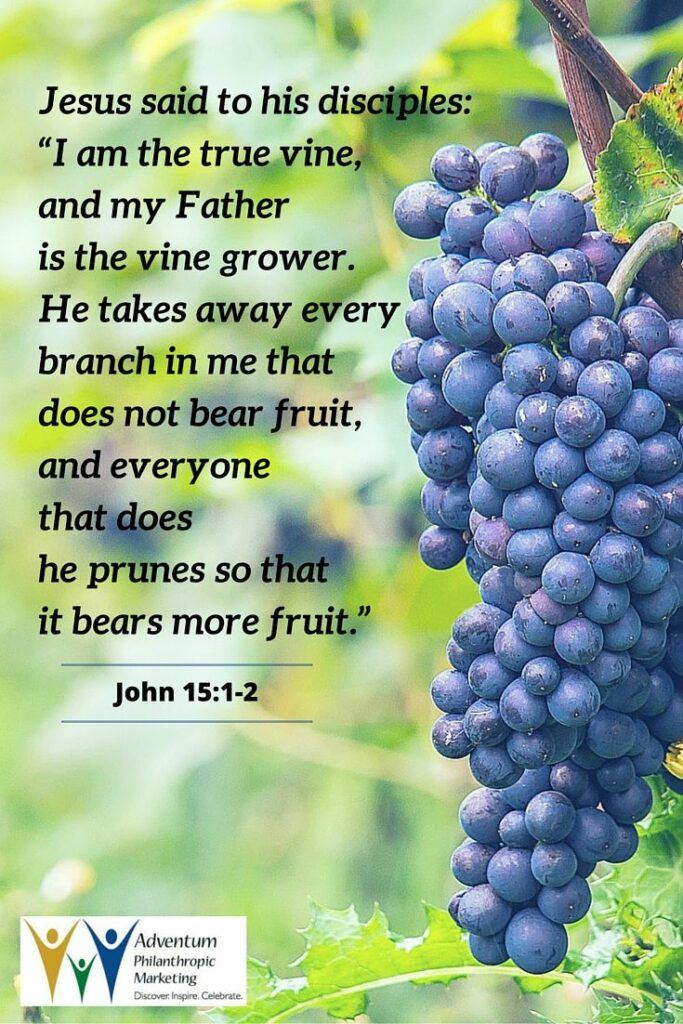 after pledging — will be alienated from the Vine at the trunk and utterly discarded because they are worthless and frequently contaminate the rest of the vine. Therefore, fruitless followers are of no use to God’s kingdom and are good as dead.
 command. It additionally has a continuing emphasis; in that, the command to “abide” isn’t fulfilled in a one-time act. What abiding means for the disciples and all Christians presently is to make a perpetual, minute-by-minute determination to follow Christ. And we must not be passive. Instead, we Christians must be active because we have a lot to do.
 godliness as a cloak of respectability while denying God’s power over their lives by the way they live. This is simply hypocrisy.


 attending of church services. He is trying to get our attention. For more on this, please read the article,




 reveal the mind of God, how He thinks, and even some of His plans.
 one? Probably a bad thing right? But that may not always be the case, as we will see in this article as we look at growing through temptation.
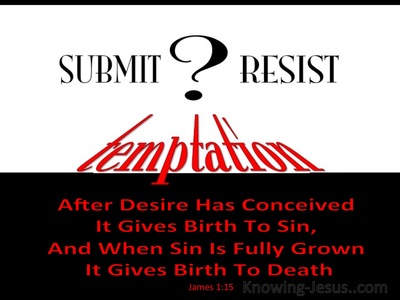 because we are faced with temptation doesn’t mean we have to give into it. We always have a choice to give in to it or reject it. Just know that every time we overcome temptation, we become more like Jesus.
 an enemy to his camp. So, they are coming and will continue to come. Scripture reads, “…But when you are tempted…” [1 Cor. 10:13 NIV] not if.
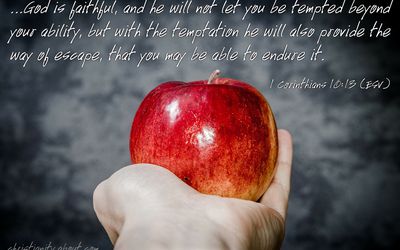 The Scripture reads in James 4:7-8, “Submit yourselves therefore to God. Resist the devil, and he will flee from you. Draw nigh to God, and he will draw nigh to you…”
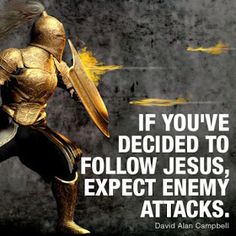
 after the flesh, but after the spirit. (Rom 8:1). It concluded that it is the Holy Spirit of Christ that enables us to overcome carnality; that we as Christians should sift everything through the Holy Spirit—spiritualize everything as it has been addressed, in order to be guided in the right direction which enabling us to overcome carnality. In this article we are going to continue covering the Holy Spirit and carnality extensively, and at the same time, we’re going to look at a question that comes up from time to time which is, does Satan know our thoughts?
 your back with? These are some of the things we must know about an enemy.
 what he wants or feel that he needs. Additionally, to protect himself by misleading, deceiving, and twisting the truth.
 mind is where all of our battles take place. Our spiritual enemy, Satan, attempts to defeat us with strategy and deceit, through well laid plans and deliberate deception. He could never do this without knowing our thoughts.
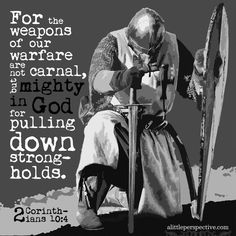 principles. These are human, carnal, weapons. They cannot stand against the attacks of spiritual forces.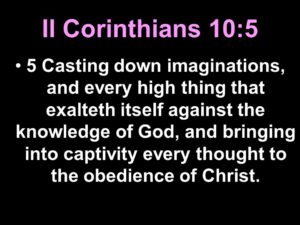

 him? But we have the mind of Christ.”
  things that allow us to serve God successfully, all the while eliminating any thoughts that would trip us up. [Heb. 12:1]
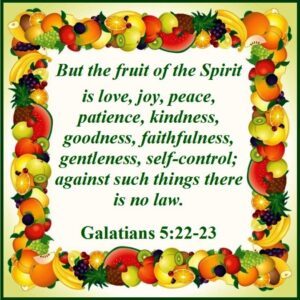 goodness, faith,
 he may abide with you for ever;
 Christian believer. But notice that this promised is bracketed by the first and last verses, based on obedience. God’s promise of the Holy Spirit is based on obedience to His commands—living righteous lives. This manifestation in a Christian’s life is paramount—for His survival as a child of God.
 back to faith, only to later go back to doubt and unbelief. We tend to be a little capricious with our faith, and we end up being miserable roller-coaster Christians, allowing our faith to take swells and dips. Many of us are double minded in our faith. One day, we’re a child of God and a disciple of Christ, and the next day, we’re in the flesh, acting like the world. The scripture says, “from faith to faith.” Also, “that ye may abound in hope, through the power of the Holy Ghost.” [Rom. 1:17; 15:13] But if we have doubt and unbelief, we will quench the Holy Ghost, and will not receive from God. Again to repeat what the bible tell us in Hebrews 11:6: “but without faith it is impossible to please Him.” If God is not pleased, we certainly cannot receive from Him.
 identified the problem of indwelling sin; that there is a problem between the law, sin and the flesh. Also, while the law identified sin, it was powerless because of his flesh. In verse 18 he Wrote “for I know that in me (that is in my flesh,) dwelleth no good thing; for to will is present with me; but how to perform that which is good I find not. So what he said I, while he has the will to do good, he couldn’t perform it because of his flesh. So I concluded by acknowledging just how powerful the flesh really is. How the flesh makes wrong seem right, and right seem wrong. I also pointed out the effects of being carnal—led by the flesh—how the flesh manifests itself according to
 law of sin and death.
 nature is such that it cannot be subject to God’s law. It is not only the aspiration that is missing, but the capability as well.
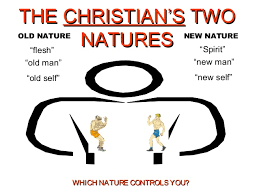 opposition to the spirit of Christ, how can one be a carnal Christian? It won’t work! [James 1:8] The flesh—stifles—quenches—stamps out —the Spirit. [1 Thess 5:19; Eph. 4:30] Jesus said: “no man can serve two masters: for either he will hate the one, and love the other…Ye cannot serve God and mammon.”


 Galatian believers a sample listing of the works of the flesh, even though such works should be as the scripture says, “manifest.” This means that the source of these vices was “obvious” or “readily apparent.” They illustrate the kind of things the flesh will do when it is uncontrolled. Looking at verse 19 it reads:
 private. It means unrestrained